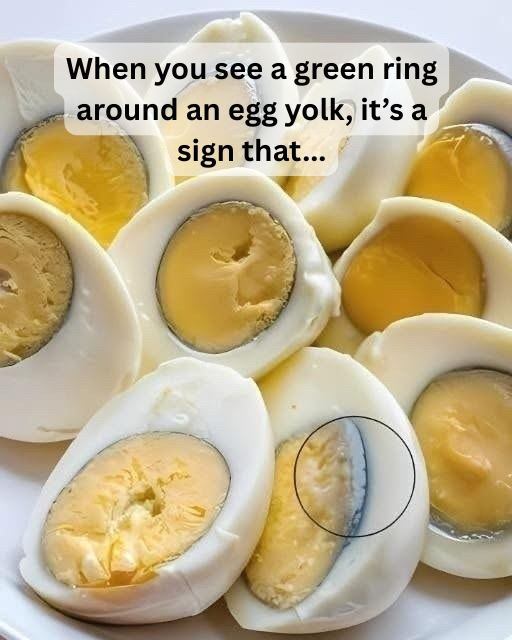
Have you ever prepared a batch of hard-boiled eggs for a family gathering or a healthy lunch, only to discover a faint green ring surrounding the yolk when you sliced them open?
Many home cooks have experienced this surprising sight. At first glance, it can seem unusual, leading some people to wonder whether the eggs were cooked incorrectly or if something went wrong during preparation. Across different cultures and generations, kitchen mysteries like this often inspire a variety of explanations, ranging from traditional beliefs to practical cooking advice passed down through families.
For centuries, eggs have symbolized nourishment, renewal, and even prosperity in many parts of the world. Because they are such a familiar food, any unexpected change in their appearance naturally sparks curiosity. Fortunately, modern food science offers a clear explanation for the green ring phenomenon, and understanding it can help anyone prepare more attractive hard-boiled eggs.
The good news is that this common discoloration is generally harmless. In fact, it provides a fascinating example of how chemistry works in everyday cooking.
The Curious Appearance of the Green Ring
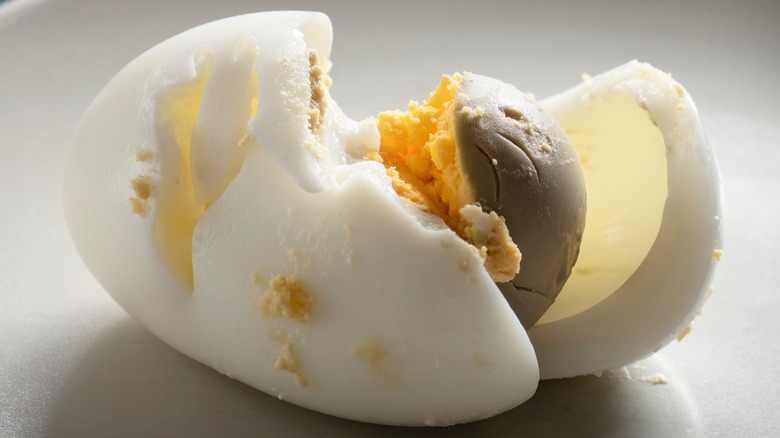
When a hard-boiled egg is cut open, the ideal yolk is often expected to be bright yellow and evenly colored. Sometimes, however, a thin greenish-gray layer forms around the outer edge of the yolk.
This ring may vary in intensity. In some eggs, it appears as a faint shadow, while in others it can be more noticeable. The difference depends largely on cooking time and temperature.
Because appearance plays a significant role in how people perceive food, the green ring often raises questions. Many people assume it indicates spoilage or poor quality. However, food experts consistently explain that the discoloration is usually the result of a natural chemical process that occurs during cooking.
The Science Behind the Green Ring
The explanation begins with two naturally occurring elements found inside every egg: sulfur and iron.
Egg whites contain sulfur compounds, while egg yolks contain iron. During cooking, heat causes sulfur compounds in the white to break down and release hydrogen sulfide gas.
As the egg continues to cook, this gas moves toward the yolk. When hydrogen sulfide comes into contact with iron in the yolk, a chemical reaction occurs. The result is a compound known as iron sulfide.
Iron sulfide forms a thin layer at the boundary between the egg white and the yolk. This layer creates the greenish-gray ring that becomes visible when the egg is sliced open.
The reaction is entirely natural and does not mean the egg has become unsafe to eat. It simply reflects the effects of prolonged heat exposure.
Why Overcooking Increases the Effect
Although the green ring can occasionally appear even when eggs are cooked carefully, it becomes more likely when eggs are exposed to excessive heat.
Higher temperatures and longer cooking times accelerate the interaction between sulfur and iron. As a result, more iron sulfide forms, making the ring more visible.
This is why many cooking guides recommend avoiding vigorous boiling for extended periods. The goal is to cook the eggs thoroughly without exposing them to unnecessary heat.
Temperature control is one of the simplest ways to improve both the appearance and texture of hard-boiled eggs.
Cultural Interpretations of Unusual Food Changes
Long before modern chemistry explained kitchen reactions, people often relied on observation and tradition to understand changes in food.
In many cultures, unusual colors or patterns in food sometimes inspired symbolic interpretations. Families passed down practical wisdom through generations, blending cooking techniques with cultural beliefs.
A green ring around an egg yolk might have been interpreted differently depending on the region or household. Some may have viewed it as a sign of overcooking, while others may have considered it an ordinary variation in food preparation.
Today, scientific understanding provides clear answers, yet these traditional perspectives remain an interesting reminder of how people have always sought meaning in everyday experiences.
Rather than replacing cultural traditions, science often complements them by explaining the processes occurring behind familiar observations.

Is It Safe to Eat?
One of the most common concerns involves food safety.
According to food science experts, a green ring caused by iron sulfide formation is generally harmless. The discoloration affects appearance more than flavor or nutritional value.
The egg remains suitable for consumption if it has been properly handled, cooked, and stored according to food safety recommendations.
However, as with any food, proper storage remains important. Hard-boiled eggs should be refrigerated if they are not eaten immediately. Maintaining appropriate storage conditions helps preserve freshness and quality.
The presence of a green ring alone is not typically a sign that the egg should be discarded.
How Professional Cooks Prevent the Green Ring
Chefs and experienced home cooks often follow simple techniques to minimize discoloration.
The process begins with controlled cooking rather than aggressive boiling. Many experts recommend bringing water to a boil first and then reducing the heat to maintain a gentle simmer.
Cooking times generally range from nine to twelve minutes, depending on the size of the eggs and the desired firmness of the yolk.
Once cooking is complete, rapid cooling becomes essential.
Transferring the eggs immediately into an ice bath or very cold water helps stop the cooking process. This technique prevents residual heat from continuing the sulfur-iron reaction inside the egg.
By cooling the eggs quickly, cooks can significantly reduce the likelihood of developing a visible green ring.
The Importance of the Ice Bath
The ice bath serves several purposes beyond preventing discoloration.
First, it rapidly lowers the egg’s internal temperature. This interrupts ongoing chemical reactions that continue even after the egg is removed from hot water.
Second, cooling helps maintain a more appealing texture. Eggs that are not cooled promptly may become slightly rubbery or dry due to continued cooking.
Third, the process often makes peeling easier.
As the egg cools, the shell and inner membrane contract slightly, creating conditions that can simplify peeling. For anyone preparing deviled eggs, salads, or decorative dishes, this additional benefit is especially valuable.
Why Older Eggs Are Often Easier to Peel
Another frequently shared kitchen tip involves using eggs that are not extremely fresh.
Many cooks notice that slightly older eggs tend to peel more easily than newly laid eggs. This occurs because changes inside the egg gradually affect the relationship between the shell, membrane, and egg white.
As eggs age, the pH level of the white increases slightly, reducing the tendency of the membrane to cling tightly to the egg.
The result is a smoother peeling experience and a more attractive finished appearance.
While freshness remains important for quality, eggs that have been stored properly for a short period often perform well for hard-boiling purposes.
Common Mistakes That Lead to Discoloration
Several cooking habits can increase the chances of a green ring forming around the yolk.
One common mistake is leaving eggs in rapidly boiling water for too long. Excessive cooking encourages the sulfur and iron reaction responsible for discoloration.
Another issue is neglecting the cooling process. Even if eggs are removed from heat at the correct time, residual heat can continue cooking them internally.
Some cooks also overcrowd the pot, creating uneven heat distribution that can affect cooking consistency.
Paying attention to timing, temperature, and cooling generally produces the best results.
The Role of Food Science in Everyday Cooking
The green ring around hard-boiled eggs offers a simple yet fascinating example of food chemistry in action.
Cooking involves countless transformations that occur beyond what we can immediately see. Heat changes proteins, influences texture, alters flavor, and triggers chemical reactions that shape the final appearance of food.
Understanding these processes empowers cooks to achieve more consistent results. Rather than relying solely on trial and error, knowledge of food science provides practical solutions to common kitchen challenges.
Even small observations, such as the color of an egg yolk, reveal the remarkable complexity hidden within everyday meals.
Tips for Perfect Hard-Boiled Eggs Every Time
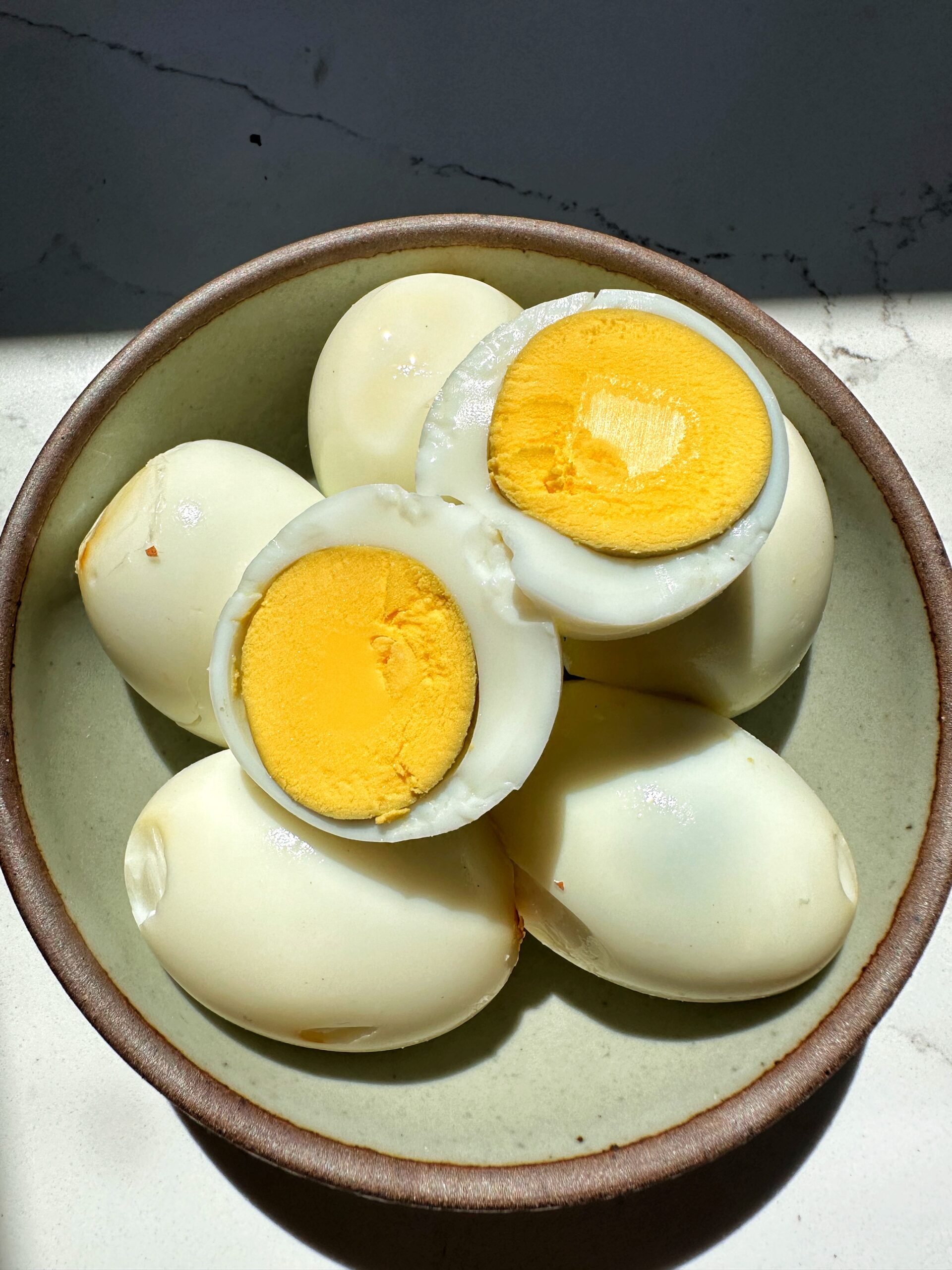
For attractive hard-boiled eggs with smooth yellow yolks, consider the following guidelines:
Choose eggs that have been stored properly and are not extremely fresh.
Place eggs in a single layer within the cooking pot.
Bring water to a boil and then maintain a gentle simmer rather than a vigorous boil.
Cook for approximately nine to twelve minutes depending on egg size.
Transfer the eggs immediately into an ice bath or cold water.
Allow sufficient cooling time before peeling.
Store hard-boiled eggs in the refrigerator if they will not be eaten right away.
These simple steps can greatly improve both appearance and texture.
Conclusion: A Small Mystery That Reflects Human Curiosity
The green ring around a hard-boiled egg may seem like a minor kitchen mystery, but it reflects something much larger about human nature.
Throughout history, people have noticed unusual details in everyday life and searched for explanations. Cultural traditions, family wisdom, and scientific discovery all represent different ways of understanding the world around us.
Today, food science explains that the green ring results from a harmless reaction between sulfur and iron during cooking. Yet the curiosity it inspires remains timeless. A simple egg can spark questions about chemistry, cooking techniques, and the traditions passed down through generations.
Perhaps that is part of what makes everyday experiences so fascinating. Even the most familiar foods can remind us that there is always something new to learn, observe, and appreciate. The next time you slice into a hard-boiled egg, you may see more than a yolk and a white—you may see a small lesson in the remarkable intersection of science, culture, and human curiosity.

Sources
United States Department of Agriculture (USDA) Food Safety and Inspection Service
American Egg Board
Harvard T.H. Chan School of Public Health Nutrition Source – Eggs
Encyclopaedia Britannica – Egg Biology and Structure