Square Waves: The Science, Safety, and Myth Behind Cross Seas
Introduction: A Mesmerizing Coastal Mystery
Spending time by the sea is a universal pleasure. Whether it’s swimming, surfing, walking on the sand, watching the horizon, or simply soaking in the ocean’s expanse, coastlines draw people in every season. Yet, the ocean is not a static stage—its scenery is sculpted by wind, tides, currents, weather changes, wave actions, and the shapes of the seabed. Among the most visually arresting and oft-misunderstood ocean phenomena are “square waves” or, more accurately, cross seas. This article explores the science behind these patterns, their safety implications, and the realities behind widely shared viral warnings.
What Are Square Waves (Cross Seas)?
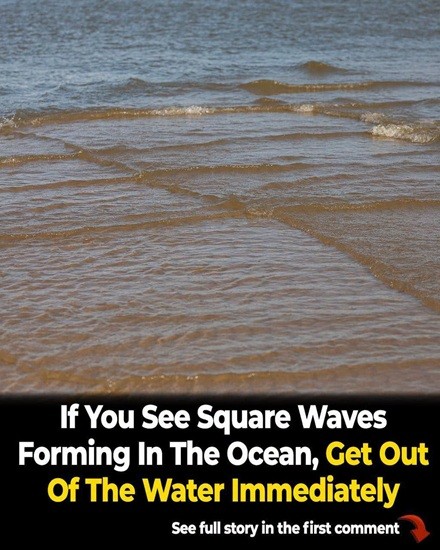
Videos and images of neat, crisscrossed squares on the ocean’s surface frequently capture popular imagination. Online, these are dubbed “square waves”—an evocative term, though scientists prefer “cross seas,” as true geometric squares rarely occur in nature. The pattern results when two distinct wave systems, often from different weather events, meet at near-right angles, overlapping and creating a checkerboard effect on the water’s surface.
Unlike the organized lines of surf people expect, cross seas highlight the ocean’s dynamism: swells from distant storms can intersect local wave patterns shaped by current winds. This produces temporarily regular-looking patches, sometimes likened to a moving chessboard. From above—whether a drone, an aircraft, or a lighthouse—the visual is strikingly geometric. Yet, this appearance is fleeting, dissolving as one wave system fades or shifts course.
How Do Cross Seas Form?
To understand cross seas, it helps to know that waves travel vast distances—even after the wind that generated them dissipates. When these lingering swells arrive in a region where another set of waves, triggered by a local wind or weather, is present, both groups intersect. If the angle of intersection is significant—often near 90 degrees—their crests form a visible surface grid.
The result is not a fixed “square wave” structure but a temporary, dynamic pattern. The grid only endures as long as the wave systems remain energetic and properly aligned. Any change in wind, wave height, or direction will break up the checkerboard, making such patterns rare and unpredictable.
The Allure and Reality of Viral Images
The internet is full of mesmerizing photos and videos of square waves, frequently labeled as mysterious or even “dangerous phenomena.” This sense of unnatural orderliness is captivating—yet the ocean is not arranging itself into rigid squares for effect. Viral images often exaggerate the frequency, stability, and danger of cross seas; in reality, such patterns are brief and require a confluence of specific, shifting conditions.
A photograph can freeze a rare moment, lending an impression of permanence. The most dramatic viral images usually benefit from an aerial vantage point and ideal light, making the phenomenon seem more pronounced than it typically appears at sea level.
Scientific Interest and Maritime Safety
For oceanographers and maritime professionals, cross seas hold more than visual interest—they affect vessel behavior. When waves strike a ship from multiple angles, they generate complex motions: rolling, pitching, surging, and heaving. Such multidirectional forces can challenge navigation, comfort, and safety, especially for large vessels operating in rough or rapidly building seas.
Notably, research published in 2004 and subsequent studies have shown that mixed swell and wind wave fields contribute to hazardous sea states, meriting attention in marine forecasting, risk assessment, and vessel design. However, while cross seas can increase risk in already rough conditions, their mere presence does not mean disaster is imminent—context such as wave height, period, vessel size, and weather interplay is vital.
Interpreting the Risks: Fact Versus Fiction
Much online advice about square waves warns that their appearance signals immediate danger to swimmers, often conflating cross seas with deadly currents. This claim is misleading. While powerful cross seas can create rough surface conditions offshore, smaller crossed patterns near beaches do not automatically present a lethal threat to swimmers.
Beach safety is far more nuanced. Local wave size, current strength, weather alerts, underwater topography, and real-time advice from lifeguards or coastal authorities are all critical. Conversely, missing a checkerboard pattern is not evidence that a location is safe. Context-aware, official guidance is always superior to simplified, viral warnings.
Distinguishing Cross Seas from Rip Currents
Though both are marine hazards, cross seas and rip currents are different phenomena. Rip currents are fast-moving streams of water leading away from shore, dangerous because they can quickly carry swimmers into deeper water. Unlike cross seas, they do not create visible grid patterns—indeed, they are often hard to spot at all from the beach.
Thus, the presence or absence of a cross sea does not directly determine the risk of rip currents. Caution is warranted around unfamiliar or energetic surf, but misidentifying hazards may detract from real-life safety measures.
Famous Locations and Viral Legends: Île de Ré and Cape Reinga
Some of the world’s most beloved images of square waves originate from specific locations, chief among them the French island Île de Ré, near La Rochelle. Here, the island’s elevated viewpoints provide perfect settings for observing and photographing the phenomenon when conditions allow. As a result, Île de Ré has become iconic in the lore of cross seas.
It’s important to remember, however, that cross seas can occur anywhere wave systems from separate weather events interact. Photographs from Île de Ré are famous, but the pattern is not unique to the region. Those visiting in hopes of reliably observing square waves should temper expectations—the pattern does not appear every day and depends on ever-changing marine conditions.
Tourism authorities in the region advise people participating in water sports to check tide and weather information, observe necessary safety precautions, and heed local advice. Certain surf spots nearby are suitable only for experienced participants—a practical reminder that local factors outweigh any universal rule drawn from pictures alone.
Another dramatic meeting of water occurs at Cape Reinga (Te Rerenga Wairua) in northern New Zealand, where the Tasman Sea and the Pacific Ocean converge over the Columbia Bank. The results are turbulent patches of foamy, surging water, visible from land. However, experts advise visitors not to conflate this meeting of currents with every photo labeled as square waves—the forces at work are complex and, in this location, intertwined with significant cultural meaning in Māori tradition. The Department of Conservation emphasizes observing from safe land-based viewpoints and respecting local protocols.
The Mathematics of Cross Seas
Scientists use advanced fluid dynamics and mathematical models—such as the Kadomtsev–Petviashvili (KP) equation—to analyze how intersecting wave systems interact. These models account for factors like wave energy, direction, wind, and underlying seabed topography. Despite the allure of describing every checkerboard pattern as “KP equation in action,” real oceans require rich, multidimensional models and measured data. Cross seas stem from the non-linear superposition of long-traveling swells, reminding us of the subtlety of oceanic motion.
Perspective and Perception: Why Cross Seas Seem Extraordinary
The human mind expects coastal waves to approach as more-or-less parallel lines. The sudden appearance of neatly intersecting rows contradicts these expectations, enhancing the phenomenon’s mystique. Yet, from sea level, these patterns are often subtle or undetectable—the aerial context, distance, and light all conspire to make cross seas more photogenic than apparent in person.
Moreover, waves arriving at a beach can carry the “memory” of remote storms, traveling over great distances. A calm sky above is no guarantee that only local winds affect the surf—a cross sea may be the visible vestige of distant weather events, converging at the shore.
Practical Safety Guidance for Swimmers and Boaters
The most important lesson for swimmers, surfers, and recreational boaters is not to panic when observing visually striking water, but to respect the natural power of the sea. Not all cross seas are inherently dangerous at the shore, yet strong, confused, or multidirectional waves can be challenging, even for experienced individuals. Following official guidance, monitoring beach warnings, understanding personal skill limits, and consulting marine forecasts are the most effective safety strategies.
For boaters, relying on professional marine forecasts and honest assessment of conditions always trumps reacting to appearance alone. Vessel size, equipment, sea state, and wind must all be considered. Research on maritime safety consistently shows that hazard assessments depend on a host of details beyond the mere existence of visible grid patterns.
Dispelling Myths and Embracing Scientific Context
The rise of viral warnings and dramatic social media posts about square waves illustrates how natural beauty can be reframed by risk—sometimes accurately, often exaggerated. A cross sea is not a universal alarm for swimmers, nor does its absence guarantee calm. Overstating the risk can draw attention away from genuine threats like rip currents, changing weather, or location-specific dangers.
Accurate, context-sensitive advice recognizes that significant cross seas can pose real risks—especially for vessels offshore or during severe conditions—while a small intersecting pattern at a beach does not demand reflexive fear.
The True Wonder of Cross Seas
The allure of cross seas is rooted in ocean complexity. Swells journey hundreds or thousands of kilometers, each with distinct origins, speeds, energies, and periods. Their occasional intersection at the coast creates glimpses of order within apparent chaos, hinting at grand scales of atmospheric and marine interaction far beyond what is visible on the sand.
Safety at the sea always comes down to local judgment—reading warnings, respecting experienced advice, understanding local geography, and maintaining healthy respect for rapidly shifting ocean conditions. When in doubt, observing from a safe vantage point ensures one can admire the intricacies of the ocean without unnecessary risk.
Square waves, or cross seas, are both a fascinating manifestation of ocean physics and a reminder that scientific understanding and practical caution often offer more enduring safety than viral slogans.
Sources
- BBC: What are square waves?
- The Guardian: Is the sea a giant chessboard?
- Reuters: Cross seas can make for dangerous conditions
- New Zealand Department of Conservation: Cape Reinga
- Mayo Clinic: Water safety tips for swimmers
- World Health Organization: Drowning facts
Disclaimer: This content is intended for entertainment purposes only and is not based on real events.