Preparing dinner is usually a simple routine. You take the ingredients out of the refrigerator, place them on the kitchen counter, and begin cutting everything into the portions you need. Most of the time, nothing unexpected happens. But occasionally, one small detail can turn an ordinary meal into a mystery.
That is what happened to one shopper who brought home a package of ham and began preparing it for a meal. The meat appeared familiar at first, and there was no obvious reason to expect anything unusual. However, partway through cutting it, the knife encountered an area that looked and felt noticeably different from the surrounding meat.
When the shopper examined the spot more closely, the discovery became even more puzzling.
An Unexpected Texture Inside an Ordinary Piece of Ham
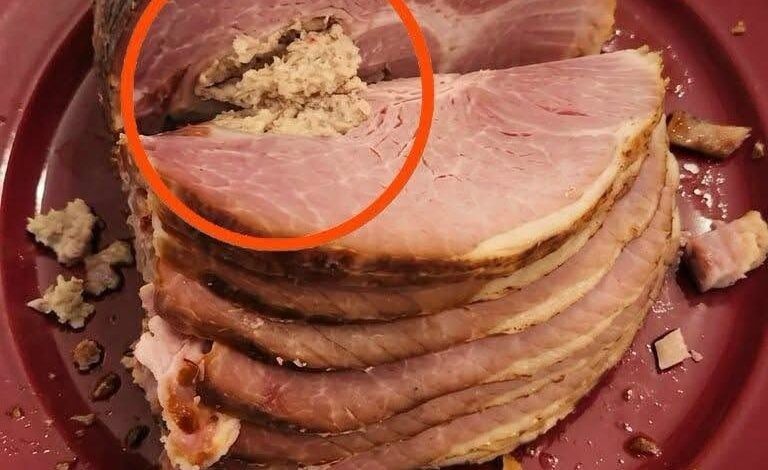
The photograph shared with the story shows a close-up of the ham after it had been cut open. Most of the visible meat appears relatively uniform, but one section stands out because of its unusual texture.
Instead of resembling the surrounding slices, the patch looks dense and grainy. Its appearance creates a noticeable contrast with the smoother portions of the meat around it.
For the person preparing dinner, the discovery was unexpected. Ham is a familiar food in many households, and shoppers generally expect a consistent appearance when they open a package. Finding an unfamiliar area inside a product can naturally raise questions about how it formed and whether the food is still suitable to eat.
The family initially wondered whether the unusual material could indicate contamination. They examined the piece and tried to understand why one section looked so different.
According to the accompanying account, they eventually attributed the mass to materials already present in the cured meat. However, that explanation remains specific to the story. There is no product label, inspection result, or laboratory analysis accompanying the photograph to establish the exact composition of the patch.
That distinction matters because an unusual appearance alone cannot identify what a substance is.
Why Can Ham Have Different Textures?
Ham is not always perfectly uniform from one section to another. Its appearance and texture can depend on the cut of meat, the amount of fat, the presence of connective tissue, and the processing methods used to prepare the product.
Natural muscle structure can create visible seams and differences in texture. Fat may appear in small pockets or along particular sections, while connective tissue can produce firmer areas that feel different when sliced.
The direction of the cut also makes a difference. Cutting across muscle fibers can produce a different appearance from cutting along them. In processed or cured meat, these variations may become more noticeable depending on how the product was prepared.
This does not mean every unusual patch is harmless or that shoppers should automatically assume an unfamiliar substance is a normal part of the meat.
The photograph provides only a limited view of one section. It cannot establish whether the material is fat, connective tissue, a processing-related feature, or something else entirely.
Without examining the actual product, it would be irresponsible to identify the patch with certainty.
Why One Photograph Cannot Answer Every Question
Pictures can make unusual food discoveries easier to share, but they also have important limitations.
Lighting can change how meat appears. A darker area may look more pronounced under certain kitchen lights, while differences in surface texture can create shadows that make one section appear more solid or unusual.
A close-up photograph also removes important context. It may show the patch clearly, but it does not reveal the complete condition of the product, how it was transported, how long it was stored, or whether the packaging was damaged.
Even a photograph that looks clear cannot determine whether food is safe to eat.
For this reason, shoppers should consider more than appearance when evaluating an unexpected discovery. Packaging condition, storage instructions, expiration or use-by dates, and any unusual odor or other signs of deterioration may all be relevant.
If a product appears abnormal or raises concerns, the safest approach is not to taste it to find out what it is. Keep the remaining meat and its packaging, take photographs of the product, and contact the retailer or manufacturer for guidance. If there are signs of spoilage or uncertainty about its safety, avoid eating it.
The original packaging can be especially useful because it may contain a lot code, product name, and production information that help the seller investigate the issue.
A Routine Dinner Turns Into an Unexpected Mystery
What made this discovery memorable was not simply the appearance of the ham. It was the sudden interruption of an ordinary kitchen routine.
The shopper had purchased a familiar product with a simple plan: bring it home, cut it into portions, and prepare dinner.
Then the knife encountered something unexpected.
Within moments, a routine task became a conversation about what might be hidden inside an everyday food product. The family considered possible explanations, while the unusual patch became the center of attention.
That reaction is understandable. People naturally compare unfamiliar things with objects and materials they have encountered before. One person might see a texture resembling fat, while another might think it looks like something unrelated to meat.
But resemblance is not proof.
The same photograph can inspire several explanations, especially when viewers have only a small amount of information. Without a product inspection or reliable testing, none of those guesses should be treated as a confirmed identification.
What Should You Do If You Find Something Unusual in Meat?
An unexpected texture does not automatically mean a product is contaminated, but it is worth taking seriously when something appears unusual.
Start by checking the packaging and product information. Look for the use-by date, storage instructions, brand name, and batch or lot number. These details can help the retailer or manufacturer identify the specific product.
Take a photograph of the entire piece as well as a closer image of the unusual area. A wider view can provide useful context, particularly if the texture appears near a natural seam or extends through several slices.
Avoid eating the product until your concern has been addressed. If the packaging is damaged, the meat has been stored improperly, or there are other signs of spoilage, do not take chances.
You can then contact the store where the ham was purchased or the manufacturer using the information on the package. They may be able to explain whether the appearance is consistent with the product or whether further investigation is needed.
The Detail That Changed the Meal
For the shopper in this story, the unusual patch transformed a familiar food into an unexpected mystery. What began as an ordinary preparation task ended with the family examining the meat and trying to understand what they had found.
The accompanying account offers one possible explanation, but the photograph alone cannot confirm the material’s identity.
That is an important reminder when looking at surprising food discoveries online. An image can show us something unusual, but it cannot always tell us why it happened or whether it presents a safety concern.
Sometimes, the most responsible answer is to recognize what is visible, acknowledge what remains unknown, and let the product information and proper inspection provide the rest.