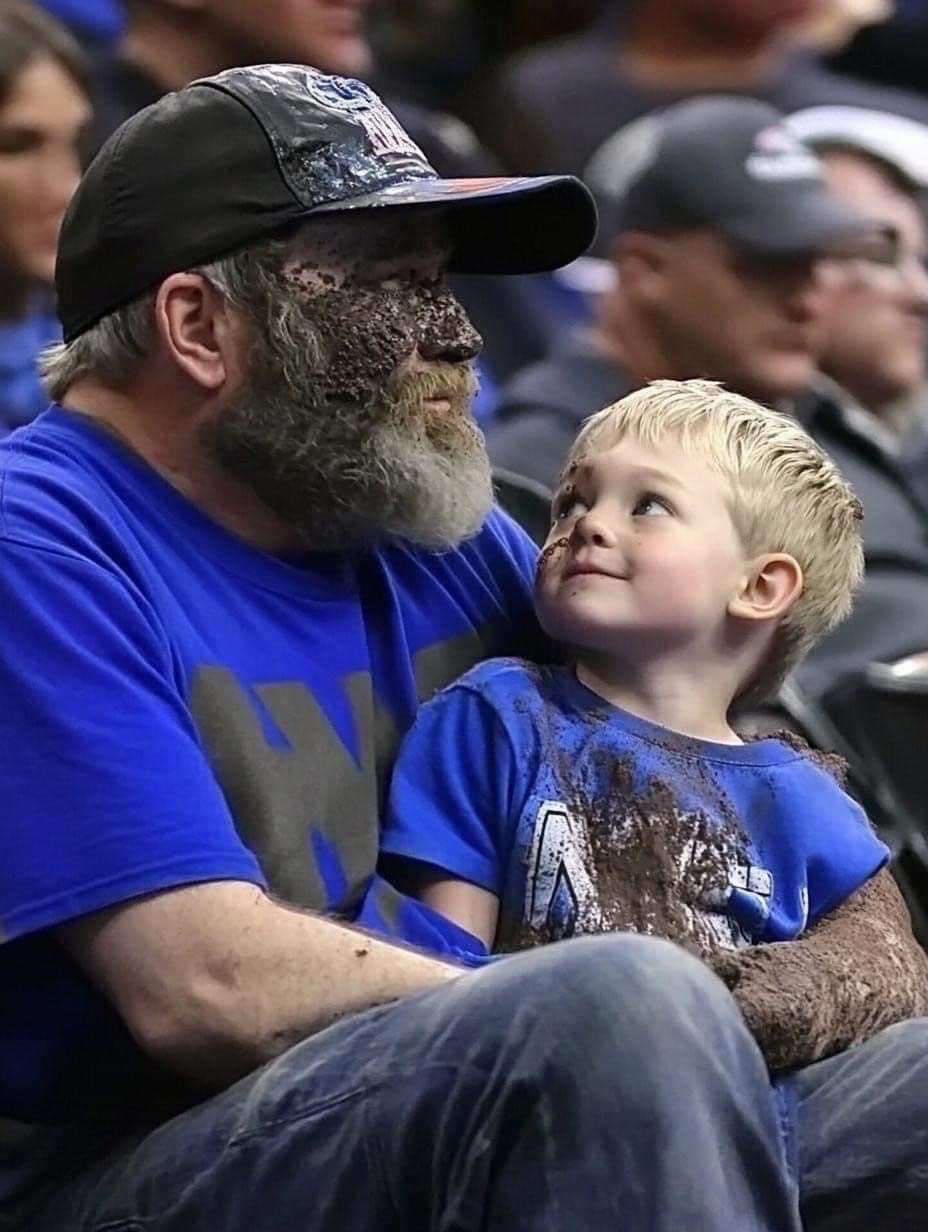
Coal Miner Michael McGuire’s Family Moment at Rupp Arena Inspires National Support

A photograph of coal miner Michael McGuire attending a University of Kentucky basketball game with his young son became a widely shared reminder of the everyday choices many working parents make for their families. In the image, McGuire appeared at Rupp Arena shortly after a mining shift, still wearing work clothes marked by the dust and demands of his job.
The moment drew attention not because of a major sporting result, but because of what it represented: a father making time for his child after a long day of physically demanding work. University of Kentucky men’s basketball coach John Calipari shared the story and later helped arrange a special experience for the McGuire family.
For many people who saw the image, the story resonated with broader themes of family commitment, dignity in work, and the importance of recognizing people whose efforts are often unseen. It also prompted an outpouring of support from businesses, fans, and members of the public.
A Father and Son at a Kentucky Basketball Game
Michael McGuire’s visit to Rupp Arena took place after he had completed a shift in the coal industry. Rather than miss time with his son, he went directly to the basketball game. The photo of the pair captured a straightforward family outing, yet its context made it especially meaningful to people across Kentucky and beyond.
Kentucky basketball has a uniquely prominent place in the state’s culture. Games at Rupp Arena, located in Lexington, regularly bring together people from communities across Kentucky, including families from rural areas and regions shaped by mining, manufacturing, agriculture, and other essential industries. For many fans, attending a game is more than entertainment; it is a shared tradition and an opportunity to spend time with relatives and friends.
In McGuire’s case, that tradition came after a difficult workday. His decision to attend in his work clothes became a symbol of his desire to be present for his child. Reports about the family emphasized that McGuire’s appearance was not intended to attract attention. Instead, it reflected the practical reality of moving quickly from work to a family event.

McGuire’s wife, Mollie, described him publicly as a devoted and selfless father. Her comments helped explain why the image struck such a chord: it showed an ordinary parent prioritizing a promise or shared experience with his child, even when doing so required effort and sacrifice.
John Calipari’s Personal Connection to Coal Mining Communities
Coach John Calipari responded to the photograph with empathy shaped by his own family history. Calipari has spoken about his family’s connection to West Virginia coal-mining communities and about the opportunities and sacrifices that shaped his family’s life in the United States.
That personal background gave added meaning to his reaction. In sharing the story, Calipari praised McGuire’s commitment to his son and underscored a message that extended beyond sports: people should not be judged by their appearance after work, but by their character, responsibilities, and care for others.
Calipari contacted the McGuire family and arranged for them to receive special recognition and a memorable Kentucky basketball experience. His response was widely reported as an example of a public figure using his platform to acknowledge a family whose story had touched many people.
The coach’s message also reflected an important principle in communities with strong working-class traditions. Jobs that are physically taxing or conducted away from public view remain central to the economy and daily life of many regions. Workers in mining, construction, transport, health care, agriculture, manufacturing, and public services often balance long shifts with parenting and family obligations.
Why the Photo Resonated With So Many People
The image of McGuire and his son was shared widely on social media because it communicated a familiar experience without requiring many words. Parents and caregivers frequently face competing demands involving work schedules, travel, fatigue, household responsibilities, and the desire to participate in their children’s lives.
Experts and family advocates often note that quality time does not need to be elaborate to be meaningful. A game, meal, conversation, school event, or ride home can become an important memory when it allows a child to feel supported and valued. The McGuire family’s story was seen by many readers through that lens.
It also offered a counterpoint to assumptions that people should always look polished or formally dressed in public settings. McGuire had come to the game directly from work. His clothing was evidence of labor, not a reflection of his worth or his place in the arena. Many supporters praised the family for showing that a parent’s effort and presence can matter far more than appearances.
The widespread reaction highlighted how stories of care and perseverance can create connection across different communities. Although the setting was a college basketball arena in Kentucky, the core message was widely relatable: working people often make difficult choices to ensure they can share important moments with their children.
Coal Mining, Work, and Community Identity
Coal mining has played a major role in the history and economy of Kentucky, West Virginia, and other Appalachian states. The industry has supported generations of workers and helped shape local identities, while also facing significant economic, technological, environmental, and labor-related changes over time.
Mining work can involve long hours, travel, strict safety procedures, and physically challenging conditions. The U.S. Mine Safety and Health Administration oversees federal safety and health standards for miners, while employers and workers are responsible for following site-specific rules and training requirements. Public conversations about mining often focus on economics and energy policy, but stories like McGuire’s also bring attention to the people and families connected to the industry.
Coal communities have long maintained strong traditions of mutual support. Families, schools, local businesses, faith organizations, and sports teams often play important roles in community life. The response to the McGuire family reflected that culture of recognition and solidarity, with people seeking ways to show appreciation for a father they viewed as hardworking and committed.
At the same time, it is important to avoid reducing miners or other workers to stereotypes. Every family’s circumstances are different. McGuire’s story became notable not because it was meant to speak for all workers, but because it showed one family’s sincere effort to enjoy time together.
Public Support and Acts of Generosity
After the photograph became widely known, businesses and individuals reportedly offered assistance and gifts to the McGuire family. Offers included meals, hotel accommodations, and other forms of support. A car dealership also publicly offered a vehicle, illustrating the scale of attention the story received.
Such gestures were driven by admiration, but they also demonstrated how quickly social media can amplify personal stories. Online attention can bring encouragement and useful support, though it can also place families unexpectedly in the public eye. In the McGuires’ case, the public focus remained centered on appreciation for a father’s commitment and on the positive role of community support.
Coach Calipari’s outreach gave the story further visibility. His response was consistent with a broader tradition in college sports, where coaches and programs often support charitable efforts, community events, and family-focused initiatives. At its best, this kind of outreach can use the visibility of athletics to recognize people whose daily work may otherwise receive little public acknowledgment.
The Role of Sports in Building Shared Experiences
College sports can provide a common meeting point for people from different backgrounds. At major venues such as Rupp Arena, fans may include students, alumni, workers, retirees, families, visitors, and longtime supporters who have followed a team for decades. The shared experience of attending a game can create memories that extend far beyond the final score.
For children, participating in a parent’s interests can be especially meaningful. Whether the activity is a basketball game, a community festival, a school performance, or a weekend outing, shared experiences help families build routines and traditions. The McGuire story reminded many readers that these moments can be valuable precisely because they are simple and personal.
It also showed why sports figures can have an impact outside competition. Calipari’s response focused on respect, family, and appreciation for working people. Rather than making the story about celebrity, he helped direct attention to McGuire’s decision to show up for his son.
A Lasting Message About Family and Respect
The attention surrounding Michael McGuire’s visit to Rupp Arena was rooted in a basic but powerful idea: being present matters. After completing a demanding shift, he chose to spend time with his child. The photograph preserved that choice in a way that people around the world could understand.
The story also encouraged a broader appreciation for workers whose efforts support households and communities every day. Their contributions may take place in mines, factories, hospitals, warehouses, classrooms, farms, offices, roads, and countless other settings. Respecting those workers includes recognizing that they are also parents, partners, neighbors, and fans.
For the McGuire family, the game became a moment of unexpected national attention. For others, it became a reminder to value the people who make time for loved ones despite demanding circumstances. The enduring significance of the story lies not in the viral photograph alone, but in the compassion, recognition, and sense of community that followed.

Sources
Disclaimer: This content is intended for entertainment purposes only and is not based on real events.