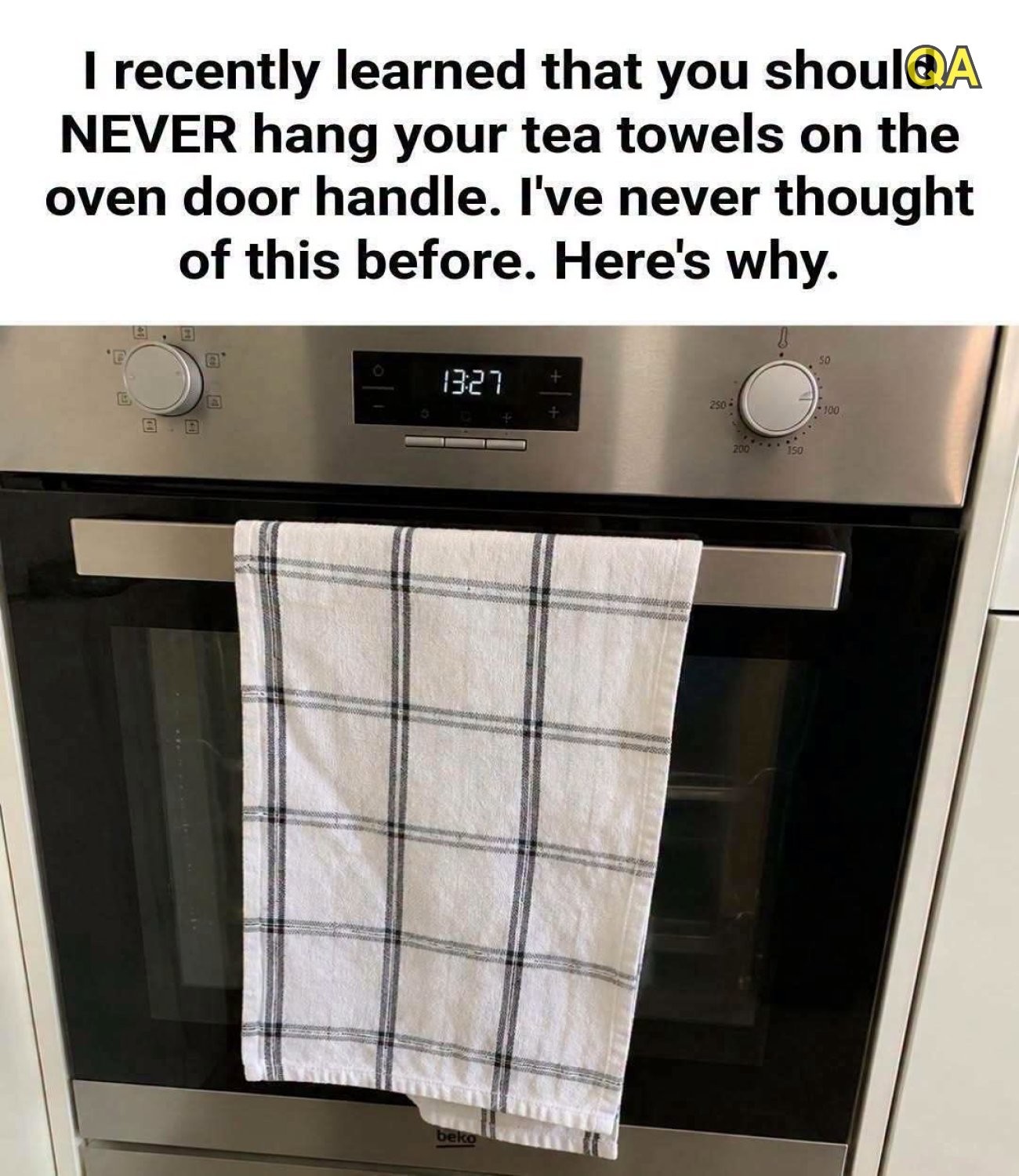
A tea towel draped over an oven handle is a familiar sight in many homes. It can make a kitchen feel welcoming and practical, and it provides a quick place to reach for a cloth when drying hands, cleaning a small spill, or wiping a worktop. Yet this everyday storage habit deserves a second look, especially while cooking is underway.
A towel on an oven handle is not automatically dangerous. Modern oven handles are generally designed to remain cooler than the oven cavity, and a towel hanging on a closed oven door will not necessarily create an immediate problem. The concern is the wider cooking environment: loose fabric can move, be knocked, touch hot cookware, come too close to an active burner, or create an obstruction when someone is carrying a heavy dish.
Kitchen fire-prevention organizations consistently advise keeping anything that can burn away from stovetops and other sources of heat. That includes dish towels, oven mitts, paper towels, food packaging, recipe cards, and loose clothing. Reconsidering where tea towels are stored is a small, realistic step that can support a safer and more organized kitchen.
Why Tea Towels Near an Oven or Stove Can Create a Safety Concern
Cooking requires people to work around heat, steam, hot oil, sharp utensils, and heavy cookware. Good kitchen safety is often less about one dramatic hazard and more about reducing several small risks at once. A loose towel on an oven handle may be convenient, but it can become less convenient when the area is crowded or when the stovetop is in use.
The National Fire Protection Association (NFPA) advises keeping items that can catch fire at least 3 feet away from the stovetop. This “kid-free zone” and clearance guidance is primarily intended to reduce burn and fire risks around active cooking equipment. While every kitchen layout is different, the principle is straightforward: fabrics and other combustible items should not be stored where they could reach a burner, heating element, flame, or hot pan.
Loose Fabric Can Come Into Contact With Heat
A tea towel hanging from an oven door handle may appear well away from danger, particularly when the oven is being used but the stovetop is not. However, towels are lightweight and can shift easily. A person opening the oven door, reaching across the range, moving a pan, or brushing past the appliance may cause the fabric to swing or fall.
In kitchens with a combined oven and stovetop range, the towel may be closer to front burners than it seems. A long towel can also hang near a hot oven door, especially if the door is open. Gas flames, electric coil elements, radiant glass cooktops, and hot cookware all require attention. The risk rises when the towel is dry, loose, or left unattended near an active heat source.
It is important to be precise: an oven handle itself is not necessarily a fire hazard. Appliance design, oven temperature, ventilation, and the model’s instructions all affect how hot exterior surfaces become. But safety guidance does not depend on assuming that a particular handle will stay cool. Keeping flammable fabric away from cooking zones offers a more reliable margin of safety.
A Towel Can Cause Distraction or Snagging
Not every kitchen accident involves fire. Loose items can also create a practical tripping, snagging, or distraction hazard. A tea towel can catch on clothing, a drawer, a pan handle, or the edge of a baking tray. If this happens while someone is lifting a casserole dish or draining a saucepan, even a brief loss of focus can be inconvenient and potentially unsafe.
This is especially relevant in busy households. Children, pets, guests, and other family members may walk through the kitchen while food is being prepared. A clear path around the oven and stovetop helps the cook move more freely and gives everyone better visibility of hot items.
Kitchen organization is therefore part of kitchen safety. Removing loose fabric and unnecessary clutter from appliance handles, counter edges, and the floor can make cooking easier as well as safer.
Damp Towels Have Hygiene Limitations Too
Tea towels serve many useful purposes, but they should be used thoughtfully. A towel that has repeatedly dried hands, wiped a counter, or absorbed a spill can become damp and soiled. Food safety guidance emphasizes handwashing and cleaning practices that help prevent the spread of germs in food-preparation spaces.
Using separate cloths for separate tasks can be helpful. For example, one clean towel may be reserved for drying washed hands, while another is used for routine surface cleaning. A dedicated, dry oven mitt or potholder should be used for handling hot cookware. An ordinary kitchen towel is not a dependable substitute for heat-resistant equipment, particularly if it is damp. Moist fabric can transfer heat more quickly and may contribute to burns when used to grip a hot pan.
Understanding the Difference Between Oven Handles and Active Cooking Zones
It is reasonable to ask whether a tea towel on an oven handle is always unsafe. The answer is more nuanced than a simple yes or no. When an oven is off and cool, a towel hanging neatly on its handle may present little immediate risk. Even when the oven is in use, many appliance handles are engineered to remain relatively cool during ordinary operation.
However, kitchen safety recommendations focus on preventing foreseeable mistakes and changing conditions. A cook may turn on a front burner, place a hot pan on the stovetop, open the oven, or step away briefly. A towel may slip lower than expected or be pulled by a child. These are ordinary situations, not unusual failures.
For that reason, a designated storage point away from appliances is often the safer default. It removes the need to assess the towel’s position every time cooking begins and reduces the chance that fabric will end up too close to heat.
Safer Places to Store Tea Towels in the Kitchen
Convenience matters in a functional kitchen. Fortunately, moving tea towels away from the oven handle does not mean storing them out of reach. Several alternatives can keep towels accessible while supporting better heat safety and hygiene.
Use a Dedicated Hook on a Cool Cabinet Area
A hook mounted on the side of a cabinet, pantry wall, or another cool location can be a practical solution. Choose a spot that is easy to reach from the sink or preparation area but away from the range, toaster oven, air fryer, and other appliances that become hot during use.
Before installing a hook, consider how people move through the room. Avoid placing it where a hanging towel could block a walkway, brush against food-preparation surfaces, or interfere with cabinet doors. A small hook near the sink is often useful for a hand towel, provided it can dry fully between uses.
Keep Folded Towels in a Drawer or Basket
A drawer, basket, or shelf can keep spare towels clean, dry, and ready for use. This approach is particularly useful for households that use multiple cloths throughout the day. Folded towels are less likely to snag on cookware or drift toward a heat source than towels draped over an appliance.
For added organization, consider keeping a small supply of clean towels near the sink and storing soiled towels separately until laundry day. Regular washing is important, especially after towels have been used to clean food spills or have remained damp for long periods.
Use Purpose-Made Oven Mitts and Potholders for Hot Cookware
Oven mitts and potholders are specifically designed to provide a protective barrier between hands and hot cookware. Their effectiveness depends on the material, thickness, condition, and whether they are dry. Follow the manufacturer’s instructions for use and replacement, and discard heat-protective items that are worn, damaged, or heavily stained.
Keep these tools in a location that is accessible but not directly beside an active burner. A drawer, cabinet, or hook positioned outside the immediate cooking zone can work well. The goal is to have protection available when needed without leaving combustible materials close to heat.
Choose an Apron Carefully
An apron can protect clothing from splashes and light food spills, and pockets can be useful for small nonflammable items. Still, an apron is not a storage solution for loose towels near heat. Long apron ties, dangling towels, and loose sleeves should be kept away from burners, flames, and hot cookware.
When cooking over high heat, it is sensible to check that clothing fits closely enough not to hang over the stove. This is a simple precaution supported by the same principle that applies to tea towels: keep combustible fabrics away from ignition sources.
Creating a Clearer and Safer Cooking Area
Tea towels are only one part of kitchen safety. The space around a stove and oven can quickly become crowded with grocery bags, paper towels, wooden utensils, recipe printouts, plastic containers, and cooking tools. Many of these items are useful, but they should not remain close to active heat.
A quick pre-cooking check can help. Before turning on the stove or oven, look around the appliance and remove towels, oven mitts, paper products, food wrappers, and any other items that could burn or get in the way. Turn pan handles toward the back or side of the stove where they are less likely to be bumped. Keep children and pets away from the cooking area, and stay nearby while food is frying, grilling, boiling, or baking.
These habits align with public safety advice from organizations including the NFPA and the U.S. Fire Administration, which identify unattended cooking and combustible materials near cooking equipment as important contributors to home cooking fires. The purpose of this guidance is not to create anxiety about everyday meal preparation. It is to make routine cooking more predictable and manageable.
What to Do if a Kitchen Towel Starts to Burn
Preparation also means knowing how to respond calmly if something goes wrong. If a small fire starts in a pan or on a cooking surface, do not throw water on it, particularly if grease or oil is involved. Water can spread burning oil and worsen the situation.
If it is safe to do so, turn off the heat and cover a small pan fire with a metal lid or baking sheet to cut off its oxygen supply. Leave the cover in place until the pan has cooled. For an oven fire, keep the oven door closed and turn off the heat if possible. If a fire cannot be controlled immediately, leave the home, close the door behind you, and call emergency services from a safe location.
Households may also consider keeping a suitable fire extinguisher in accordance with local safety advice and learning how to use it before an emergency occurs. However, no one should attempt to fight a fire that is spreading, producing substantial smoke, or making escape difficult. Personal safety comes first.
Small Kitchen Habits Can Make a Meaningful Difference
Good kitchen safety does not require an expensive renovation or a complicated set of rules. It often comes down to repeatable habits: keeping the stovetop clear, using dry oven mitts, washing towels regularly, staying attentive while cooking, and storing loose fabrics in a cool, dedicated location.
Hanging a tea towel on the oven handle may be a long-standing habit, and in some situations it may not cause a problem. Still, moving it elsewhere is an easy precaution that reduces the chance of fabric being exposed to heat or becoming an obstacle during a busy moment.
A dedicated hook, drawer, or basket can provide the same convenience with fewer potential downsides. By keeping towels, paper products, and other combustible materials away from the stove and oven, home cooks can create a calmer, cleaner, and more practical space for everyday meals.
The Bottom Line
A tea towel on an oven handle is not inherently hazardous in every circumstance, but it is not the safest all-purpose storage spot during cooking. Loose fabric can shift, snag, or end up too close to burners, hot cookware, and oven surfaces. Public fire-safety guidance supports keeping materials that can burn away from active cooking areas.
Store towels on a cabinet hook, in a drawer, or in another cool and accessible place. Use clean, dry, purpose-made oven mitts for hot pans, and keep the area around the stove free from clutter. These simple choices can help make the kitchen more comfortable, organized, and safer for everyone who uses it.
Sources
Disclaimer: This content is intended for entertainment purposes only and is not based on real events.