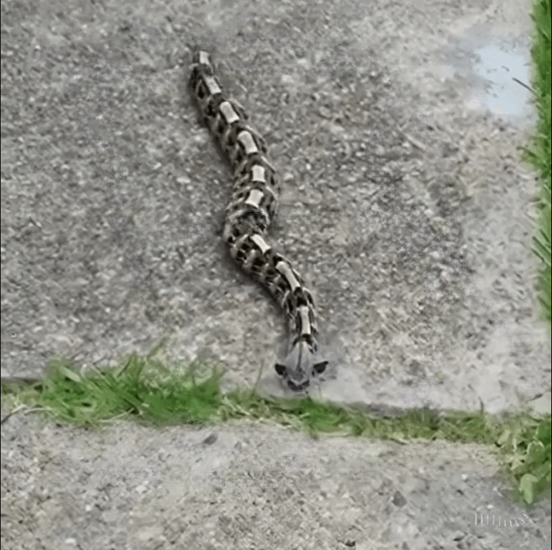
An Unexpected Snake Sighting in the Yard Highlights the Importance of Outdoor Safety!!
Seeing a snake in a garden or yard can be surprising, particularly when an otherwise quiet morning suddenly requires careful attention. While many snakes are harmless and play useful roles in local ecosystems, an unexpected encounter is an important reminder that outdoor safety begins with awareness, calm decision-making, and respect for wildlife.

A Quiet Morning Can Bring an Unexpected Wildlife Encounter
It began as an ordinary morning. Stepping outside, many people expect to find familiar sights: dew on the grass, birds in nearby trees, and the peaceful routine of a yard before the day begins. A snake sighting can interrupt that routine, but it does not automatically mean there is an emergency.
Snakes are often highly private animals. They may pass through a garden while searching for warmth, shelter, water, or food. Depending on the species and climate, they may be active during warmer parts of the day, at dusk, or overnight. They can also be difficult to notice because their coloring often helps them blend into leaves, mulch, rock borders, long grass, and woodpiles.
The most important first step is simple: create distance. Avoid approaching, touching, feeding, trapping, or attempting to identify the snake at close range. Give it a clear path away from people, pets, and buildings whenever possible. In many cases, a snake that is not disturbed will move on by itself.
Why Snakes Appear in Residential Yards
A yard can offer several conditions that attract wildlife. Snakes do not usually enter residential spaces because they are seeking human contact. Instead, they may be following the resources available in the surrounding environment. Understanding these conditions can help homeowners respond sensibly and reduce future encounters without harming local wildlife.
Common reasons a snake may be found near a home include:
- Food sources: Rodents, frogs, insects, slugs, eggs, and small animals can attract different snake species.
- Shelter: Dense shrubs, stacked firewood, compost areas, stone walls, stored materials, and garden debris may provide cover.
- Warmth: Sunlit patios, driveways, rocks, and paths can be appealing to cold-blooded animals that regulate body temperature using their environment.
- Water: Ponds, birdbaths, drainage areas, and pet-water bowls may draw wildlife, especially during dry conditions.
- Seasonal movement: Snakes may travel more visibly during breeding periods, changing weather, flooding, or seasonal searches for suitable shelter.
Not every snake in a yard is a sign of a larger problem. However, repeated sightings may indicate that the area offers reliable cover or prey. Addressing those conditions can make a property less appealing to snakes and can also support broader pest-control efforts.
How to Respond Safely When You See a Snake
Public-health and wildlife agencies consistently advise people to avoid handling unknown snakes. Even experienced individuals can misidentify species, and an animal that feels cornered may act defensively. A calm response protects both people and the animal.
If a snake is seen outdoors, take the following precautions:
- Stop and move slowly away. Sudden movements can startle wildlife and make it harder to keep track of the animal.
- Keep children and pets indoors or at a safe distance until the snake has left the area.
- Do not try to pick it up, move it with a tool, spray it with water, or block its exit route.
- Observe from a safe distance only if doing so does not place anyone at risk.
- Contact a local wildlife authority, animal-control service, or licensed wildlife professional if the snake is indoors, cannot leave safely, or is in an area with frequent foot traffic.
Local guidance matters because snake species vary substantially by country, region, and habitat. A harmless species in one area may resemble a medically significant species elsewhere. Residents should use official regional wildlife resources rather than relying on social-media photographs or assumptions based on color and pattern alone.
Identification Should Never Require Close Contact
People often want to know immediately whether a snake is dangerous. That concern is understandable, especially for families with children or pets. Yet visual identification from nearby can be unreliable and may encourage unsafe behavior.
A better approach is to maintain distance and note only general details that can be observed safely, such as approximate size, location, time of day, and broad markings. If local authorities request a photograph for identification, it should be taken only from a secure distance and never by moving closer to the animal.
It is also important to avoid common myths. Features such as head shape, behavior, or color alone are not dependable ways for untrained observers to determine whether a snake poses a medical risk. Regional wildlife experts and official identification guides are more reliable sources of information.
Protecting Children and Pets During Outdoor Activities
Children and pets are naturally curious, which makes supervision especially important in areas where snakes may be present. Before allowing children to play outdoors, adults can take a quick look around common hiding places, including beneath outdoor furniture, near garden edging, around sheds, and beside piles of leaves or wood.
Teach children a straightforward safety rule: if they see a snake, they should stop, step back, and tell an adult. They should not throw objects, attempt to touch it, or try to guide it away. Clear, simple instructions are easier for children to remember than frightening warnings.
Pets should be kept on a lead in unfamiliar areas, on trails, and in yards with dense vegetation or limited visibility. Dogs may investigate movement in bushes or under decking, increasing the chance of a close encounter. Pet owners who believe an animal may have been bitten or is suddenly unwell should contact a veterinarian promptly. Symptoms and appropriate treatment can differ by species, location, and animal size, so professional advice is essential.
Practical Yard Maintenance to Reduce Snake Habitat
Wildlife-friendly landscaping and sensible safety measures can coexist. The goal is not necessarily to eliminate every wild animal from an outdoor space, which is unrealistic in many environments. Instead, homeowners can reduce the sheltered areas and food sources that make a yard especially attractive to snakes.
Useful maintenance steps include keeping grass and ground cover trimmed, clearing excess leaf litter, and storing firewood neatly off the ground and away from the home where practical. Sealing gaps around sheds, garages, crawl spaces, pipes, and utility openings can also reduce the likelihood that animals enter structures.
Rodent management is another key consideration. Secure rubbish bins, clean up fallen fruit or birdseed, and store pet food in sealed containers. Reducing rodents is often more effective than relying on products marketed as snake repellents. Many commercial repellents have limited evidence of consistent effectiveness, and some may be unsuitable around pets, children, or beneficial wildlife. Local extension services or wildlife agencies can provide location-specific advice.
The Ecological Role of Snakes
Although a snake sighting can be unsettling, snakes are part of healthy ecosystems in many parts of the world. They often help control populations of rodents and other small animals. In turn, snakes are food for birds of prey and other wildlife, making them an important part of local food webs.
Respecting this ecological role does not mean ignoring legitimate safety concerns. It means responding proportionately: protect people and pets, avoid unnecessary harm, and seek qualified help when removal or assessment is needed. Wildlife conservation organizations frequently emphasize that coexistence is possible when communities understand animal behavior and take practical preventative steps.
What to Do If a Snake Enters a Home or Building
A snake inside a house, garage, or occupied building requires additional caution. Keep people and pets away from the room if it is safe to do so. Close interior doors to limit the animal’s movement, but do not attempt to corner it. If the snake can be seen from a safe location, note where it is and contact local animal control, a wildlife rescue service, or a licensed professional.
Do not attempt improvised removal methods. Using glue traps, chemicals, or household tools can injure the animal and may increase risk to people. Professionals have the training and equipment to assess the situation while following local wildlife regulations.
Seeking Medical Help After a Possible Bite
In the uncommon event of a suspected snake bite, emergency medical advice should be sought immediately. Call the local emergency number or contact an appropriate poison-information service. The person should remain as calm and still as possible while waiting for professional guidance, as unnecessary exertion can complicate assessment and care.
Health authorities advise against attempting to cut or suck the bite area, applying ice, using a tourniquet, or trying to capture the snake. These actions can cause further injury or delay treatment. Medical professionals can determine the appropriate next steps based on the location, symptoms, and likely species involved.
Outdoor Awareness Supports Safer Communities
An unexpected snake sighting is a useful reminder that gardens, parks, and yards are shared environments. A few practical habits—wearing suitable footwear in long grass, using a torch outdoors after dark, watching where hands are placed while gardening, and keeping outdoor spaces tidy—can reduce risk without creating fear.
Community education also makes a difference. Accurate local information can prevent unnecessary panic, discourage harmful myths, and help residents know when expert assistance is appropriate. For many people, the safest outcome is also the simplest one: step back, allow space, and contact qualified local services if the situation cannot be safely managed from a distance.
What began as a peaceful morning in the yard can become a memorable reminder of the wildlife living nearby. With patience, awareness, and trusted guidance, an unexpected encounter can be handled responsibly while protecting people, pets, and the natural environment.
Sources
Disclaimer: This content is intended for entertainment purposes only and is not based on real events.