
A new trend is quietly making its way across social media.
The idea sounds simple: if people are naturally attracted to scent, perhaps the best thing to do before a date is… nothing.
No shower.
No deodorant.
No attempt to cover your natural smell.
The trend has been given a catchy internet name: “pheromone-maxxing.”
It has reportedly become particularly popular among some young men online, with videos suggesting that a person’s natural body scent could make them more attractive to potential partners.
At first glance, the idea sounds scientific.
After all, smell plays an important role in how humans experience the world. Scents can influence memories, emotions, food preferences, and even how we perceive other people.
But there is a major problem with the viral claim.
Scientists have not established that humans use pheromones in the same clearly demonstrated way that many other animals do.
And there is even less evidence that skipping a shower or deodorant makes someone more attractive.
So what exactly is pheromone-maxxing, and what does science actually say about human attraction and body odor?
What Does “Pheromone-Maxxing” Mean?
The word “maxxing” has become common internet slang.
It generally refers to deliberately trying to maximize or improve a particular characteristic.
There are countless examples online, from looks-maxxing and jaw-maxxing to trends focused on fitness, grooming, facial appearance, and other aspects of physical presentation.
Pheromone-maxxing applies the same idea to scent.
People promoting the trend suggest that instead of masking natural body odor with soap, deodorant, or fragrance, someone should allow their natural scent to remain noticeable.
The theory is that this natural scent could contain chemical signals that influence attraction.
Some videos take the idea even further, suggesting that showering before a date could actually work against you.
But that conclusion goes far beyond what current evidence can support.
There is a difference between humans responding to smells and humans having proven pheromones that automatically influence attraction.
Those two ideas are often treated as if they are identical online.
They are not.
What Exactly Are Pheromones?

Pheromones are chemical substances released by one individual that can trigger a specific response in another member of the same species.
They are well documented in many animals.
For example, pheromones can help animals communicate information related to reproduction, territory, alarm signals, or social behavior.
The concept is therefore scientifically established in the animal kingdom.
The question is whether humans have pheromones that work in the same way.
That remains unresolved.
Researchers have investigated numerous chemicals found in human sweat and other bodily secretions to determine whether they function as human pheromones.
But despite decades of interest, scientists have not identified a human pheromone with the same clear, universally accepted effects seen in many other species.
A review published in Proceedings of the Royal Society B noted that the evidence for human pheromones remains uncertain and that several proposed candidates have not been conclusively established. (royalsocietypublishing.org)
That means the statement “humans have pheromones that make us sexually attractive” should be treated cautiously.
But Can Smell Influence Attraction?
Here is where the story becomes more interesting.
The lack of confirmed human pheromones does not mean that smell has nothing to do with attraction.
Our sense of smell is closely connected with emotion and memory.
People can form impressions of others based partly on scent, and research has explored whether body odor can communicate information about identity, health, emotional state, and compatibility.
One particularly interesting area of research involves the major histocompatibility complex, or MHC.
Some studies have investigated whether people show preferences for the body odors of individuals with different immune-system-related genetic profiles.
However, results have been inconsistent, and researchers have not established a simple rule such as “this particular smell means genetic compatibility.”
Human attraction is much more complicated.
Scent may be one piece of the puzzle.
It is not the entire puzzle.
Natural Body Odor Is Not the Same as Pheromones
This distinction is one of the most important things to understand about pheromone-maxxing.
Everyone has a natural body odor.
It comes from a combination of factors including sweat, skin microorganisms, hormones, diet, genetics, and personal hygiene.
Sweat itself is not necessarily strongly odorous.
The characteristic smell associated with body odor develops largely when substances in sweat interact with microorganisms living on the skin.
That natural scent can vary substantially between individuals.
But simply having a distinctive body odor does not prove that it contains a pheromone.
A person’s natural smell can be noticeable without acting as a special chemical attraction signal.
In other words:
Natural scent exists. Human pheromones remain unproven.
That distinction is often lost in social-media discussions.
Does Skipping a Shower Make You More Attractive?

There is currently no strong scientific evidence supporting that claim.
People can have individual preferences about natural scent.
Some may find a partner’s familiar scent pleasant or comforting.
Others may strongly prefer the smell associated with freshly washed skin, deodorant, soap, or fragrance.
Those preferences can also change depending on the situation.
A scent that feels pleasant after someone has exercised may not be equally appealing in a crowded office, restaurant, or other social environment.
And there is a difference between having a subtle natural scent and deliberately allowing sweat and accumulated body odor to build up.
The latter is not a scientifically established dating strategy.
As psychiatrist Dr. Gayatri Bhatia explained in comments to Firstpost, human attraction involves many factors, including sensory cues, personality, familiarity, context, and reciprocal behavior. (firstpost.com)
That is a considerably more complicated picture than simply smelling “natural.”
Why Does the Idea Sound So Scientific?
Part of the appeal of pheromone-maxxing comes from the word itself.
“Pheromone” is a real scientific term.
Scientists have documented pheromones in numerous animal species.
So when someone says that humans naturally produce pheromones that attract romantic partners, the statement can sound authoritative.
Social media then adds another layer.
A short video can take a complicated scientific question and turn it into a simple formula:
Natural scent + no deodorant = more attraction.
The problem is that scientific evidence rarely works that neatly.
A study might find that people can detect differences in body odor.
Another might find that certain smells influence mood.
A third might investigate possible links between scent and mate preference.
None of those findings automatically proves that humans possess a specific “attraction pheromone.”
This is a common way that scientific ideas become distorted online.
Why Do People Recognize a Partner’s Natural Scent?

There is a perfectly ordinary explanation for why someone might enjoy the natural scent of a person they are close to.
Familiarity matters.
The brain learns associations.
A particular scent can become connected with a person, a place, or a memory.
That is why the smell of someone’s clothing, shampoo, perfume, or skin can sometimes remind you of them almost instantly.
This does not require a mysterious chemical signal.
The brain is exceptionally good at connecting sensory information with emotional experiences.
If a particular person’s scent becomes associated with comfort, affection, safety, or positive memories, that scent can become meaningful.
The effect can feel surprisingly powerful.
But meaningful does not necessarily mean pheromonal.
Your Brain Plays a Bigger Role Than You Might Think
Human attraction is influenced by a huge number of factors.
Appearance can matter.
Voice can matter.
Body language can matter.
Personality can matter.
Humor can matter.
Shared interests and experiences can matter.
Context matters.
And yes, scent can matter too.
But attraction is not controlled by one switch in the brain.
Instead, the brain combines information from many different senses and experiences.
That helps explain why there is no universal scent that makes everyone attractive.
One person might love a particular fragrance.
Another might dislike it.
Someone may find a partner’s natural scent comforting.
Another person may prefer very little body odor at all.
Human preferences are diverse.
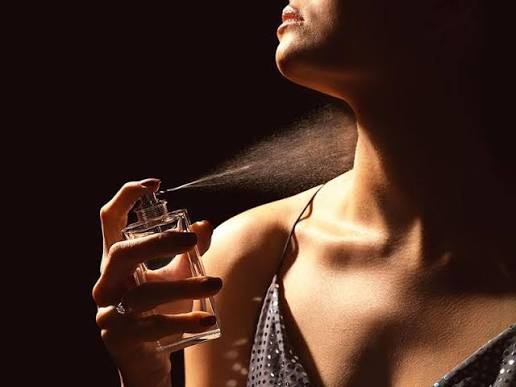
What About “Pheromone Perfumes”?
Pheromone-maxxing is also connected to another long-running idea: pheromone-based perfumes.
Some products are marketed as containing special chemicals supposedly capable of increasing attraction.
These products often make impressive-sounding claims.
But the scientific evidence does not support the idea that commercially available “pheromone” products reliably produce a universal attraction effect in humans.
That does not mean fragrance has no effect.
A pleasant fragrance can influence how someone perceives another person.
Wearing a scent you enjoy can also increase confidence, which may indirectly affect social interactions.
But that is very different from saying a perfume contains a scientifically proven human attraction pheromone.
The distinction is important.
Why Hygiene Still Matters
There is nothing wrong with appreciating someone’s natural scent.
In fact, natural scent can be part of intimacy and familiarity.
But that does not mean basic hygiene should be abandoned.
Regular bathing helps remove sweat, oils, dirt, and microorganisms from the skin.
Deodorants and antiperspirants can also reduce or manage body odor and sweating.
These practices exist for practical reasons, particularly in shared social environments.
A date is not a controlled laboratory experiment.
You are interacting with another person who has their own preferences.
Even if scent plays a small role in attraction, deliberately creating a strong body odor may simply make the other person uncomfortable.
And there is no scientific evidence showing that unpleasant body odor gives someone a biological advantage in dating.
Why Is Pheromone-Maxxing Appealing to Young People?
Internet trends often become popular because they offer a simple explanation for something complicated.
Dating can feel uncertain.
Attraction can feel unpredictable.
People naturally look for strategies that promise an advantage.
Pheromone-maxxing offers an intriguing idea:
Maybe there is something hidden in your biology that can make you more attractive without requiring expensive products or major changes to your appearance.
That is an appealing concept.
It also fits perfectly with the broader “maxxing” culture, where everyday behaviors are presented as optimization strategies.
But optimization language can make ordinary behaviors sound more scientifically established than they really are.
A trend can be entertaining without being evidence-based.
The Science Is More Interesting Than the Myth
The reality behind pheromone-maxxing is actually more fascinating than the viral claim.
Scientists know that smell can influence human perception.
Researchers know that body odor contains many chemical compounds.
Scientists continue to study how humans detect and interpret those compounds.
And researchers have explored possible relationships between scent, genetics, emotion, health, and social behavior.
What remains uncertain is whether humans possess pheromones that produce specific, predictable behavioral responses comparable to those observed in many animals.
That question remains an active area of research.
So instead of asking, “Which pheromone makes me irresistible?” a more scientifically useful question might be:
How does the human brain turn a smell into a social and emotional experience?
That is a much bigger mystery.
Natural Scent, Attraction, and the Reality of Dating
Pheromone-maxxing may continue to spread across social media because it combines science, dating, self-improvement, and a little mystery.
But there is no need to treat it as a secret dating hack.
Your natural scent is part of you.
It can be noticed.
It can influence perception.
And it can become meaningful to people who know you well.
But there is currently no solid scientific basis for believing that skipping showers or deodorant activates a hidden attraction mechanism.
Human attraction is far more complicated.
Sometimes chemistry really does matter.
But “chemistry” does not necessarily mean pheromones.
It can mean conversation.
Comfort.
Humor.
Confidence.
Familiarity.
Shared experiences.
And the way two people respond to one another.
That may be less mysterious than a secret biological signal, but it is probably much closer to reality.
The Bottom Line
Pheromone-maxxing is an entertaining example of how scientific language can become transformed into an internet trend.
The underlying idea contains a small grain of truth: human beings can respond to smells, and scent may play a role in social perception and attraction.
But the leap from that observation to “don’t shower because your pheromones will make you irresistible” is not supported by current evidence.
Scientists have not established a human pheromone that reliably produces sexual attraction.
And there is no good evidence that deliberately avoiding basic hygiene makes someone more appealing.
So if you are preparing for a date, you probably do not need to choose between science and soap.
Take care of yourself.
Wear whatever makes you feel confident.
And remember that attraction is influenced by far more than the molecules coming from your skin.
The most powerful “maxxing” strategy may still be much simpler:
be comfortable in yourself, treat the other person well, and let the conversation do some of the work.
Sources
-
Wyatt, T. D., Royal Society Publishing — Pheromones and Animal Behaviour: peer-reviewed discussion of pheromones and the evidence surrounding proposed human pheromones. (royalsocietypublishing.org)
-
Doty, R. L. — Human Pheromones: scientific review examining the evidence for pheromonal communication in humans. (pmc.ncbi.nlm.nih.gov)
-
Firstpost — Pheromone-maxxing and human attraction: reporting featuring medical commentary on the social-media trend and the complexity of human attraction. (firstpost.com)
-
NCBI — Human Body Odor: scientific background on the biological and chemical factors contributing to human body odor. (ncbi.nlm.nih.gov)