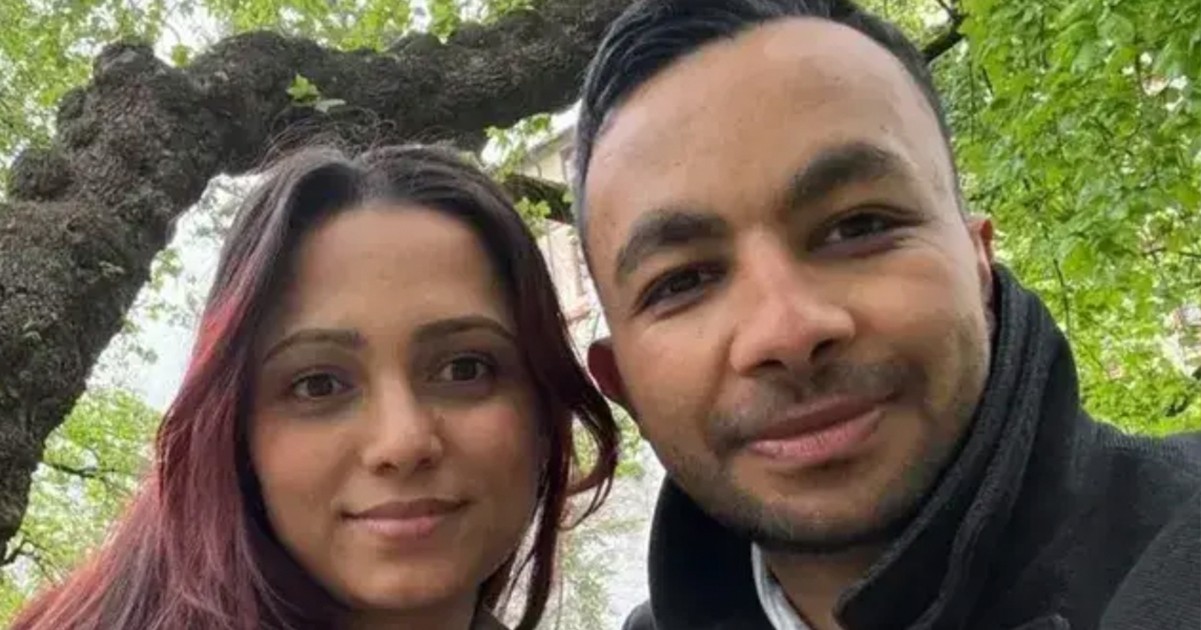
At 4:15 in the morning, Pramod “Pedro” Poudel spoke to his new wife.
It was an ordinary conversation between two people who had recently begun their life together.
She asked how he was doing.
Then she told him she loved him.
Neither of them knew it would be the last conversation they would have for days.
Hours later, a catastrophic flood swept through the region where she was staying with Pramod’s family.
His wife, his mother, his brother, and his uncle were suddenly missing.
And thousands of miles away, Pramod was left trying to find a way back to the village where he had grown up.
A Morning That Changed Everything
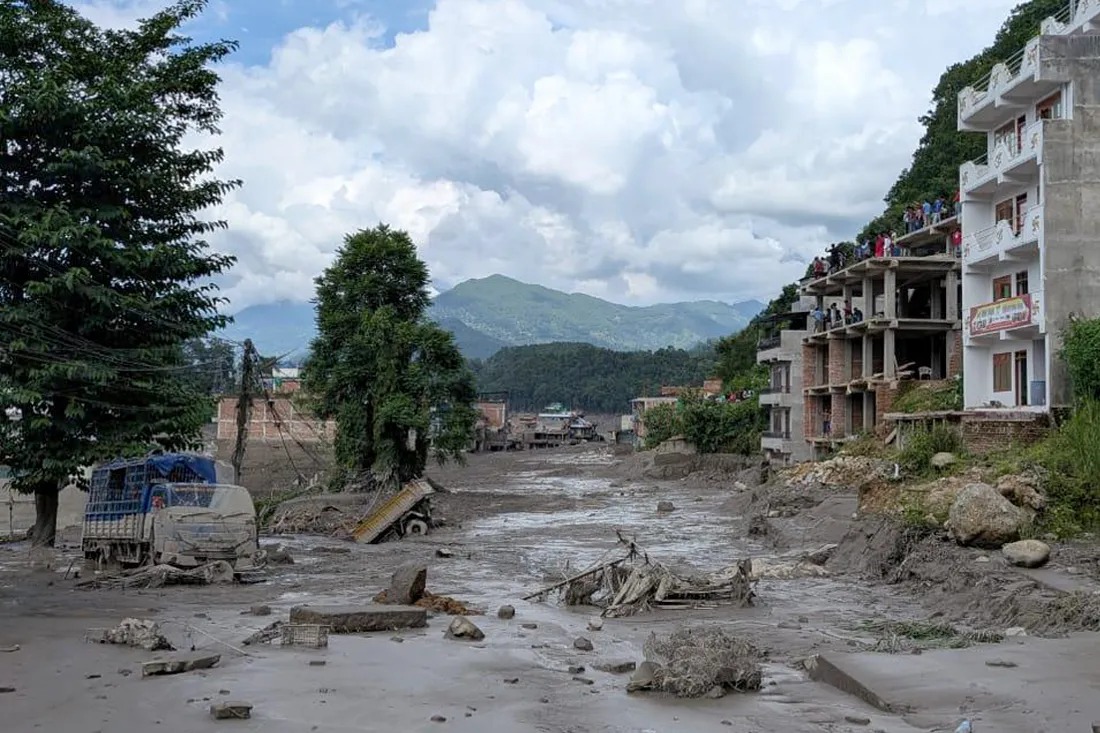
On August 26, 2026, a devastating flash flood struck Nepal’s Rasuwa district near the border with Tibet.
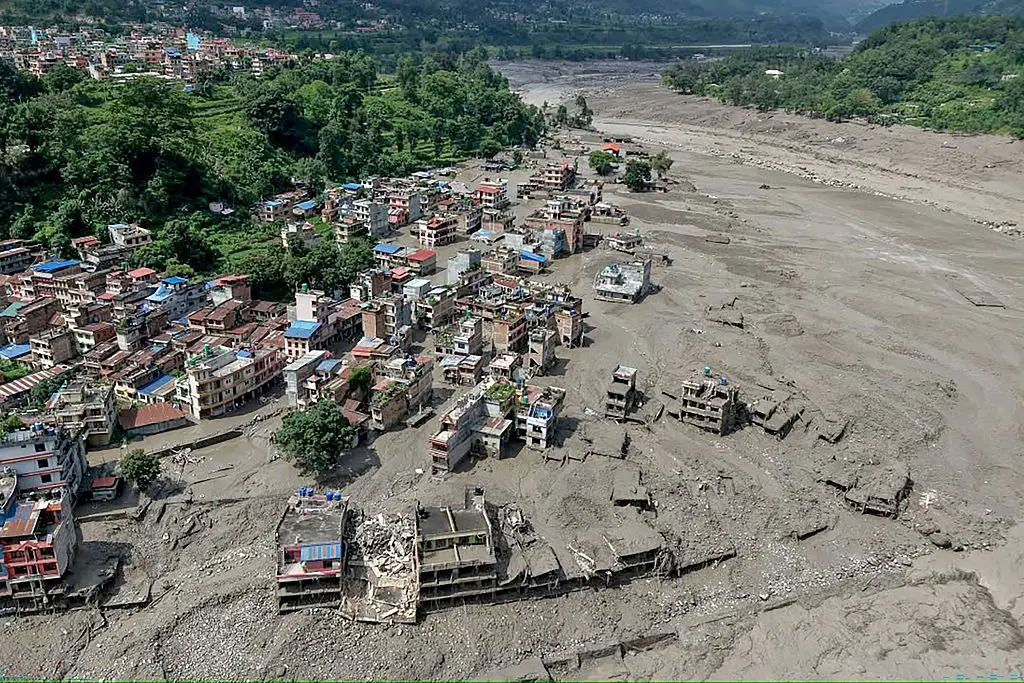
The event sent enormous amounts of water, sediment, rocks, and other debris through the Bhote Koshi and Trishuli river systems.
The destruction was widespread.
Roads and bridges were damaged.
Communities were isolated.
Homes and other structures were swept away or buried beneath debris.
According to the International Centre for Integrated Mountain Development, water levels in parts of the Trishuli River rose dramatically within minutes, illustrating just how quickly the disaster developed.
Scientists investigating the event believe it may have begun with an ice-and-rock avalanche at high altitude, which then generated a powerful flood downstream.
The U.S. Geological Survey also determined that seismic activity initially detected during the event was associated with the glacial collapse rather than a conventional earthquake.
For people living downstream, there was very little time to react.
Among those caught in the disaster was Pramod Poudel’s family.
A Newly Married Couple Separated by Distance
Pramod, 34, grew up in the Nepalese village of Sole before moving to the United Kingdom when he was 18.
He eventually settled in Uckfield, East Sussex, where he runs a Nepalese street-food business.
In June 2026, he married Sumitra, 25.
But after the wedding, the couple were separated again by work.
Pramod returned to Britain while Sumitra remained in Nepal with members of his family.
Then came the flood.
According to reports, Sumitra disappeared along with three other members of Pramod’s family: his mother Tulisa, his brother Pardip, and his uncle Madhav.
The four were among thousands of people whose whereabouts became unknown after the disaster.
For Pramod, the uncertainty was especially painful.
He had no way of knowing where they were.
And the destruction had made communication and travel extraordinarily difficult.
“My Family Needs Me”
Pramod did not remain in Britain.
He flew back to Nepal on August 28, determined to get as close to his village as possible.
But returning home was not simple.
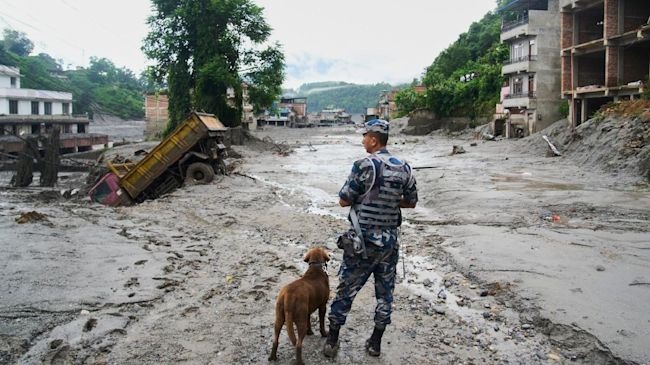
The flood had damaged bridges and roads, while some communities had become extremely difficult to reach.
Communication systems were also disrupted.
In an interview with the BBC, Pramod described the situation as extremely difficult because people did not know where missing relatives were and many normal routes into affected areas were no longer usable.
His reason for returning was simple.
“My family needs me.”
It was not a journey he was making because he knew exactly where his relatives were.
He was going because he needed to search.
The Last Words From His Wife
Perhaps the most difficult part of the story for Pramod is remembering the final conversation he had with Sumitra.
It happened before the flood.
At around 4:15 a.m. UK time, the newly married couple spoke by phone.
According to Pramod’s account, Sumitra asked how he was doing and told him:
“I love you so much.”
Then the call ended.
He has not been able to reach her since.
For someone waiting for news about a loved one, uncertainty can be uniquely difficult.
There is no clear answer.
No ordinary phone call.
No simple way to know what happened.
Only the hope that the next piece of information might finally bring clarity.
A Disaster Born High in the Himalayas
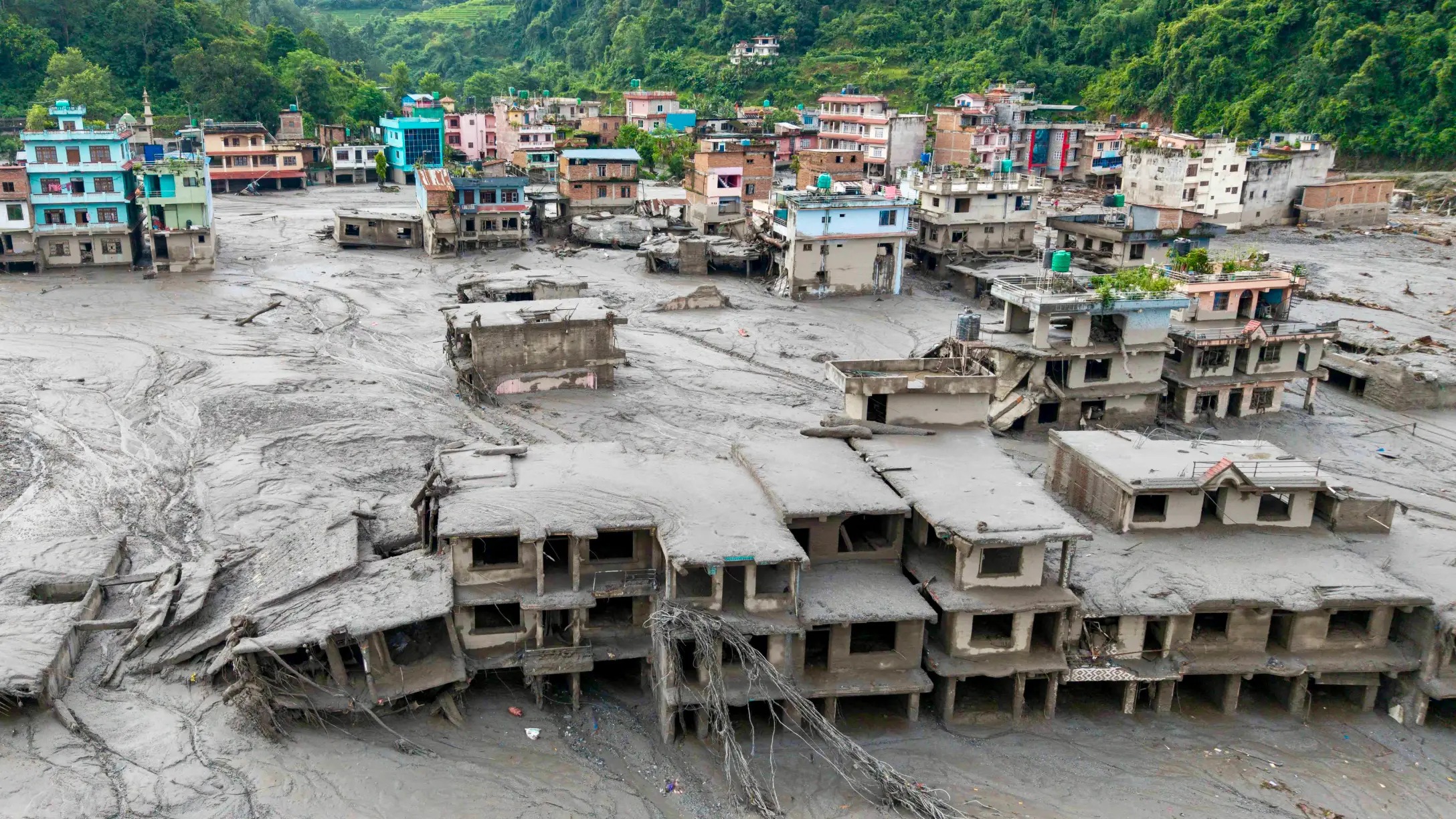
The story of Pramod’s family is connected to a much larger natural disaster.
Investigators believe the flood was triggered by a high-altitude collapse involving ice and rock.
ICIMOD reported that a large volume of ice and rock debris may have entered a tributary of the Bhote Koshi River, producing a sudden surge of water, sediment, and boulders downstream.
Other scientific assessments have pointed to a section of the Lirung massif at roughly 5,000 to 5,200 meters above sea level as the likely source area of the cascading event.
The result was not simply a conventional river flood.
It was a cascading mountain disaster.
Ice and rock moved downslope.
Water and sediment were displaced.
River channels were overwhelmed.
And communities far downstream suddenly faced an enormous flood wave.
Why the Search Has Been So Difficult
Searching for missing people after a disaster of this scale is extremely complicated.
The landscape itself has changed.
Roads may no longer connect communities.
Bridges can be unusable.
Mud and debris can cover large areas.
Communication networks may be interrupted.
And rescuers must work across steep and difficult terrain.
The latest reports show just how extensive the challenge has become.
By August 31, Nepalese authorities reported 903 recovered bodies and more than 4,200 people still listed as missing, while more than 10,000 people had been rescued.
The numbers continue to change as authorities verify information and search more remote locations.
This means every family affected by the disaster may be dealing with a different situation.
Some have received answers.
Others are still waiting.
Hope Amid the Uncertainty
For Pramod, hope remains central to the search.
He has spoken publicly about his desire to reach the areas that have become difficult to access and find information about his family.
That hope exists alongside an understandable sense of worry.
His wife had only recently become part of his life as his partner.
His mother, brother, and uncle were also missing.
Four people he loved had disappeared at the same time.
Yet he continued traveling toward the affected region.
His journey reflects what many families around the disaster have been doing: trying to turn uncertainty into information.
The Human Cost Behind the Numbers
Large disasters are often described through statistics.
Hundreds affected.
Thousands missing.
Roads destroyed.
Bridges damaged.
Rescue teams deployed.
Those numbers are necessary for understanding the scale of an event.
But every number represents an individual story.
A person who was expected home.
A parent waiting for a child.
A spouse waiting for a phone call.
A family searching for someone whose whereabouts remain unknown.
Pramod’s story is one example of that much larger human experience.
His family is not simply part of a disaster statistic.
They are four people with names, relationships, memories, and people waiting for them.
The Disaster Is Still Unfolding
The immediate flood has passed, but the risks associated with the disaster have not disappeared.
ICIMOD has warned that debris and changes to river systems can create additional downstream hazards, meaning authorities and communities must continue monitoring the affected waterways.
Rescue operations are also facing new challenges.
Thousands of people remain unaccounted for, while rescue teams are working in areas where roads and infrastructure have been heavily damaged.
Some hydropower facilities in the affected region were also severely impacted, with workers reported missing from underground tunnels.
The scale of the operation means that finding every missing person may take time.
For families waiting for information, every additional hour can feel enormous.
A Journey Back to Where He Began
Pramod left Nepal as a teenager.
He built a new life in Britain.
He started a business.
He married.
But when disaster struck the place where his family lived, he immediately turned back toward the country he had left years earlier.
The journey was no longer about business or work.
It was about family.
He was traveling toward a village that had been devastated, searching for people he could not contact.
And he was doing so while carrying the memory of a conversation with his new wife that had ended with a simple expression of love.
That final sentence has become part of a much larger story.
More Than a Story About a Flood
The Nepal disaster is a reminder of how quickly conditions can change in mountainous regions.
A high-altitude collapse can transform into a powerful downstream flood, affecting communities many kilometers away.
Modern technology can help scientists monitor glaciers, rivers, and hazards, but mountain disasters can still develop with extraordinary speed.
The event has also highlighted the importance of early warning systems, communication networks, resilient infrastructure, and international cooperation in regions where communities can be separated by difficult terrain.
But for families like Pramod’s, those broader lessons come later.
Right now, they are waiting for answers.
Waiting for a Phone Call
There is something especially difficult about the final ordinary conversation before an unexpected disaster.
At 4:15 that morning, Pramod and Sumitra were simply talking.
There was no reason to believe their conversation was significant.
She asked how he was.
She told him she loved him.
Then life continued.
Hours later, everything had changed.
That is perhaps what makes Pramod’s story so difficult to forget.
The final words between two people do not always sound important when they are spoken.
Sometimes they are just ordinary words shared between people who assume there will be another conversation tomorrow.
For Pramod, that next conversation has not yet come.
And as rescue teams continue searching through the devastated areas of Nepal, he is holding on to the hope that his wife and other family members will still be found.
His journey is one among thousands unfolding across the Himalayan region.
Behind every missing-person figure is a family waiting.
A family searching.
A family hoping.
And, for now, Pramod Poudel is still searching for his.
Sources
-
International Centre for Integrated Mountain Development (ICIMOD) — official assessment of the August 26 Rasuwa flash flood and its potential connection to an ice-rock avalanche.
-
Reuters — reporting on the glacial collapse and the evolving humanitarian situation following the disaster.
-
Associated Press — reporting on the flood, missing people, infrastructure damage, and rescue operations.
-
OnlineKhabar — August 31 figures from Nepal’s disaster-management authorities, including recovered bodies, missing people, and rescues.
-
Radio Nepal — government briefing on rescue and relief operations and the number of people still missing.