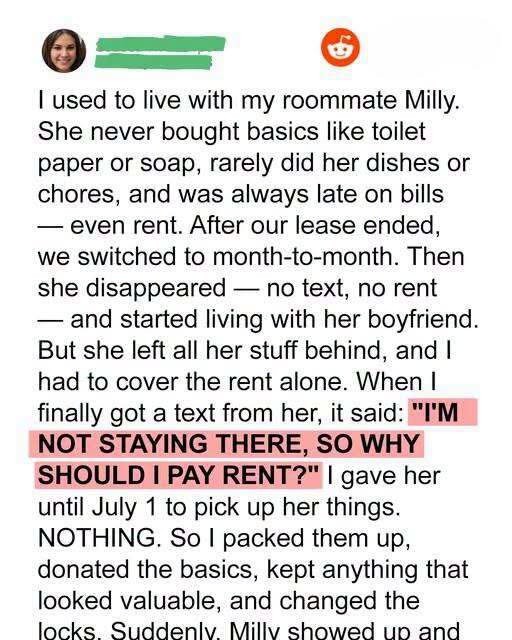
Roommate Dispute Over Unpaid Rent and Abandoned Belongings
Sharing an apartment can make housing more affordable, but it also requires clear communication, reliable financial arrangements, and mutual respect for shared space. When one roommate stops paying rent, leaves without a clear agreement, or does not respond to messages, a difficult personal situation can quickly become a complicated housing dispute.
In this situation, one tenant believed she had found an easygoing roommate named Milly. At first, Milly seemed friendly and pleasant to live with. Over time, however, disagreements developed over everyday expenses, household responsibilities, rent payments, and the condition of common areas. The conflict became more serious after Milly left the apartment while her belongings remained there and she stopped contributing to rent.
The case raises important questions that apply to many shared-housing arrangements: What should a tenant do when a roommate disappears? Can someone remove another person’s belongings from a shared rental? Who remains responsible for rent when a lease becomes month-to-month? And how can roommates protect themselves before a dispute reaches this point?
How Small Roommate Problems Can Become Major Housing Conflicts
Roommate tensions often begin with issues that may initially seem minor. Shared supplies, dishes, cleaning, utilities, groceries, and personal borrowing can all become sources of frustration when expectations are not discussed clearly. A person may feel taken advantage of if they repeatedly replace household items, clean common areas alone, or cover expenses that another roommate has promised to repay.
In the account described here, Milly regularly used toiletries, coffee, and household supplies without replacing them. She also reportedly borrowed money without repaying it, fell behind on rent, and left dishes and trash for someone else to manage. These behaviors created an unequal arrangement in which one roommate felt responsible for both the apartment’s finances and daily upkeep.
It is understandable that frustration can build under those conditions. Still, household disagreements are usually easier to address when they are documented early and discussed calmly. A simple roommate agreement can establish rules for rent due dates, utility bills, cleaning schedules, guests, shared purchases, notice before moving out, and responsibility for personal belongings.
Even when roommates are friends, informal assumptions can create problems. A written agreement does not necessarily mean people distrust one another. Instead, it can provide a useful reference point if memories differ or circumstances change.
Why a Month-to-Month Lease Can Create Uncertainty
A month-to-month tenancy can offer flexibility, but it can also create uncertainty for people sharing a home. Unlike a fixed-term lease with a specific end date, a month-to-month arrangement typically continues until either the tenant or landlord gives notice in accordance with local law and the terms of the rental agreement.
However, leaving an apartment does not automatically end a person’s financial responsibilities. Whether someone remains responsible for rent may depend on several factors, including whose name appears on the lease, whether each occupant has a separate agreement with the landlord, what written notice was given, and the laws where the property is located.
In many shared rentals, every person who signs the lease may be jointly responsible for the full rent. This means a landlord may be able to seek the entire amount from one tenant if another tenant fails to pay. That can feel deeply unfair to the person who remains in the apartment, but it is one reason tenants should understand the lease before signing it.
In this case, the remaining roommate reportedly paid both shares of rent for May and June after Milly moved in with her boyfriend. Milly’s position was that she should not pay because she was no longer staying in the apartment. But if she remained a tenant under the lease or had not properly ended her tenancy, her physical absence may not by itself have settled the issue.
Because rental laws differ widely by country, state, province, and city, tenants should avoid relying solely on general online advice. A local tenants’ rights organization, housing authority, legal aid clinic, or qualified attorney can explain the rules that apply to a particular lease and location.
Communication Breakdowns and the Importance of Written Records
One of the most significant elements in this dispute was the lack of reliable communication. The roommate who remained in the apartment said she sent repeated messages about rent and the belongings left behind. The other roommate reportedly read the messages but did not respond for an extended period.
When a housing disagreement develops, written communication can be important. Text messages, emails, letters, payment records, photographs, lease documents, and dated notes may help establish what was discussed and when. Documentation does not guarantee a legal outcome, but it can provide clarity if the parties later disagree about notice, payments, property, or move-out arrangements.
A practical written message in a similar situation might include the exact amount owed, the dates covered, the requested deadline for a response, and a request to arrange collection of personal belongings. It should remain factual and respectful. Emotional language, threats, or personal attacks often make a difficult disagreement harder to resolve.
When someone is going through a personal hardship, compassionate communication is appropriate. At the same time, a roommate’s difficult circumstances do not necessarily remove the financial obligations connected to a lease. Both realities can be true: someone may need empathy and support, while the other tenant may still need help paying rent and managing the apartment.
Abandoned Belongings: Why Tenants Should Be Careful
The most sensitive part of this situation concerns Milly’s belongings. After receiving no response, the remaining roommate contacted the landlord, arranged for items to be packed, donated some ordinary possessions, and kept items believed to be valuable or sentimental. The locks were then changed with the landlord’s approval.
When personal property is left in a rental home, it can be tempting to assume the items have been abandoned. Yet abandonment is often a legal question, not simply a personal conclusion. Local laws may set specific procedures for handling property left behind by a former tenant or roommate. These procedures can include written notice, a waiting period, secure storage requirements, and rules about disposal, sale, or donation.
Rules may also differ depending on whether the person was formally removed from the lease, whether they had moved out permanently, whether rent was unpaid, and whether the landlord or another tenant handled the property. Some jurisdictions place most of the responsibility on landlords, while others may provide different requirements for co-tenants.
For that reason, a tenant should be cautious before donating, selling, discarding, or keeping another person’s possessions. Items that look ordinary may have substantial personal value. In this account, Milly later said that an unmarked cardboard box contained her grandmother’s wedding dress. Whether or not the other roommate knew the dress was there, the incident illustrates why unknown boxes and personal possessions should be handled carefully.
A safer approach may include photographing the items, making an inventory, storing them securely when possible, and following written legal guidance from the landlord or a local housing professional. If belongings must be collected, arranging a documented pickup time can reduce uncertainty for everyone involved.
What Responsibility Did Each Roommate Have?
From a personal perspective, both parties appear to have contributed to an escalating conflict, though their responsibilities were not identical. Milly’s reported failure to pay rent, respond consistently, communicate a move-out plan, or retrieve her belongings placed a substantial burden on the roommate who remained. Leaving someone else to pay the full rent can create serious financial stress, particularly in areas with high housing costs.
At the same time, removing or donating another person’s possessions without first confirming the legal process can carry risks. The remaining roommate may have acted out of financial pressure and frustration rather than malice, especially after attempts to make contact. Nevertheless, good intentions do not always determine whether a procedure was appropriate under local housing law.
The landlord’s involvement is also significant. Landlords have obligations that vary by jurisdiction, and their approval may be relevant. However, a landlord’s informal permission may not always replace the notice requirements or legal procedures that apply to a tenant’s possessions. A written record of the landlord’s instructions is generally more useful than a verbal conversation.
Rather than viewing the situation as entirely one person’s fault, it may be more helpful to recognize the separate issues involved: unpaid rent, failure to communicate, household conflict, tenancy status, and personal property. Each issue may require a different solution.
Practical Steps for Handling an Unresponsive Roommate
People facing a similar problem can take measured steps before making major decisions about a roommate’s tenancy or belongings. The best course of action depends on local rules, but several general practices can help reduce risk.
- Review the lease carefully. Determine who signed it, whether tenants are jointly responsible for rent, and what notice requirements apply to a month-to-month arrangement.
- Communicate in writing. Send clear, respectful messages that state the amount owed, deadlines, and requests for a response or pickup arrangement.
- Keep records. Save messages, receipts, payment confirmations, photographs, and copies of any notices provided to the roommate or landlord.
- Contact the landlord promptly. Inform the landlord about the situation and request written guidance. Do not assume that a verbal conversation resolves every issue.
- Seek local tenant support. A tenant union, legal aid service, housing counselor, or local attorney may explain applicable rules at low or no cost.
- Handle belongings carefully. Avoid disposing of property until the appropriate notice and storage requirements have been confirmed.
- Protect personal finances. If one tenant must temporarily cover rent, keep detailed records and ask a local legal professional about available options for recovering money owed.
Preventing Future Roommate Disputes
Many roommate conflicts can be reduced before anyone moves in. A written roommate agreement can be especially useful when multiple people share one lease. It can cover how rent and utilities are divided, how late payments are handled, whether shared groceries are permitted, who performs cleaning tasks, and how much notice is required before moving out.
It is also wise to discuss what happens if someone loses a job, begins spending more time elsewhere, enters a new relationship, or wants to leave before the other tenant is ready. These conversations may feel uncomfortable at the beginning of a living arrangement, but they can prevent greater stress later.
Roommates should also avoid lending money or sharing expensive supplies unless they are comfortable with the possibility that repayment may be delayed. Clear boundaries are not unkind; they are part of maintaining a sustainable household.
A Balanced View of a Difficult Roommate Situation
This dispute shows how quickly a shared apartment can become emotionally and financially difficult when communication stops. The roommate who remained had understandable concerns about covering rent alone and managing property that was left behind. Milly, meanwhile, may have been experiencing personal instability, but she still had a responsibility to communicate clearly about her housing plans and financial obligations.
The strongest lesson is that people should not rely on assumptions when tenancy and belongings are involved. A person may believe a roommate has permanently left, while the roommate may believe they can return later. A landlord may offer practical advice, yet local law may require additional steps. Clear documentation, early communication, and qualified local guidance can help prevent a painful disagreement from becoming more complicated.
For anyone in a similar position, the safest response is usually calm, documented, and legally informed. Compassion matters, but so do financial boundaries and proper procedures. Addressing both can protect relationships, reduce uncertainty, and support a fairer outcome for everyone involved.
Sources
- USA.gov: Housing Help and Rental Assistance Information
- U.S. Department of Housing and Urban Development: State and Local Housing Resources
- Consumer Financial Protection Bureau: Housing and Rental Information
- Legal Services Corporation: Finding Civil Legal Assistance
- Nolo: General Tenant Rights Information
Disclaimer: This content is intended for entertainment purposes only and is not based on real events.