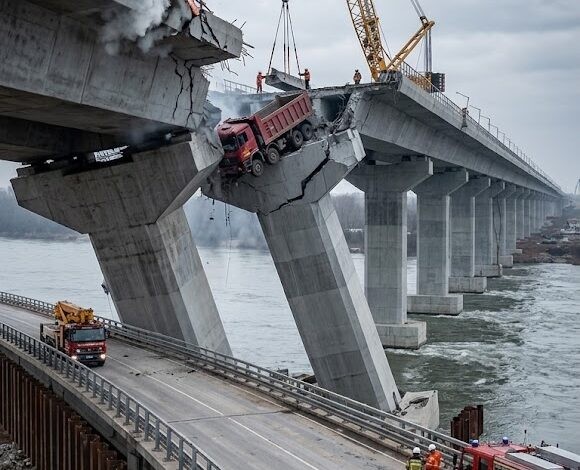
The Earthquake That Shook Central Colombia: A Detailed Examination of Its Impact and Aftermath
Introduction
On a typical morning in central Colombia, life was suddenly and violently disrupted by one of the most powerful earthquakes in recent history for the region. The event, marked by a magnitude 6.3 tremor, originated near Villavicencio and had wide-reaching consequences, both physically and psychologically, on the country’s inhabitants. This article presents a comprehensive account of the seismic event, delving into its causes, the immediate response, the aftermath, and the lessons learned for future disaster preparedness.
Understanding the Seismic Event in Colombia
Colombia, situated on the Pacific Ring of Fire, is prone to seismic activity due to the convergence of the South American, Nazca, and Caribbean tectonic plates. The earthquake in question struck at approximately 10:47 AM local time and was felt most acutely in the capital city of Bogotá, as well as in Villavicencio, situated about 80 kilometers to the southeast, and extended tremors were reported in cities like Medellín and Cali.
With an epicenter near Villavicencio and a shallow depth, the earthquake’s energy was concentrated closer to the Earth’s surface. According to the United States Geological Survey (USGS), shallow earthquakes generally cause more severe shaking and potential damage compared to those deeper underground. The shake lasted about 45 seconds, a brief moment that profoundly altered countless lives and properties.
The Immediate Impact: Scenes of Devastation
The initial effects of the quake were instantaneous and alarming. Reports coming from all over the central region described buildings swaying and windows rattling violently. Cracks snaked across roads, and emergency vehicles rushed through chaotic streets, sirens blaring. Many residents, startled by the suddenness, evacuated their homes and offices, gathering in open spaces as a precaution against aftershocks.
Inside buildings, books and household items tumbled from shelves, and the noise of shifting furniture, falling glass, and creaking infrastructure contributed to a spike in public anxiety. The visual aftermath was stark—broken walls, collapsed ceilings, debris-strewn streets, and sporadic power outages.
Response From Community and Emergency Services
Almost immediately following the tremors, emergency protocols swung into action. The National Unit for Disaster Risk Management (UNGRD), alongside local firefighters, police, and medical teams, responded swiftly. Their initial tasks involved assessing structural integrity of buildings, rescuing individuals trapped under debris, and providing first aid on site.
Officials urged the public to remain calm, stay outside buildings until further notice, and listen for updates via radio or mobile alerts. Schools and public institutions initiated evacuation procedures. In Bogotá, both government and private organizations activated emergency contingency plans, including temporary shelters for those unable to return to their homes. Elsewhere, volunteers joined efforts to distribute water, food, and essential supplies where disruptions were most severe.
Assessing the Damage
While the full extent of economic and human losses continued to emerge hours and days after the main event, preliminary reports indicated extensive but localized structural damage, particularly in older or less-reinforced buildings. Roads were closed in several places due to cracks or landslides triggered by the quake. Communication lines experienced temporary disruptions in some rural communities, complicating rescue efforts.
Despite the magnitude and emotional impact of the event, loss of life was comparatively limited thanks to effective building codes in major urban centers and prompt community response. Nonetheless, personal injuries, property loss, and emotional trauma were significant, and many families faced uncertainty regarding the safety and stability of their homes.
Historical Context of Earthquakes in Colombia
Colombia’s history is marked by powerful earthquakes. Past events, such as the 1999 Armenia earthquake, have shaped both public awareness and government policy regarding seismic risks. Lessons from those tragedies have informed strict building codes and early-warning systems that played a role in minimizing casualties during the most recent event. However, experts from the Colombian Geological Service emphasize that continued vigilance and updated infrastructure are essential for coping with inevitable future quakes.
The Science Behind the Shaking
Earthquakes occur when stored energy in the Earth’s crust is suddenly released, usually along fault lines. The central region of Colombia sits atop complex fault systems, including the Eastern Cordillera Fault and the Llanos Orientales Fault. The proximity of the epicenter to populated areas amplified the human impact, and the shallow focus of the quake meant that seismic waves reached the surface with substantial force in a short amount of time.
Seismologists and geologists use each event as an opportunity to gather new data and refine models for future risk prediction. According to Dr. Juan Carlos Morales, director of seismology at Colombia’s National Geological Service, every earthquake delivers critical information about the behavior of local faults and the effectiveness of the country’s preparedness systems.
Emotional and Psychological Consequences
Natural disasters like earthquakes can leave deep emotional scars, as well as physical ones. For nearly a minute, fear and uncertainty dominated the thoughts of those affected. Parents clutched children, neighbors helped one another to safety, and in the hours that followed, many grappled with anxiety about returning to damaged structures.
Mental health professionals report an uptick in requests for counseling after such incidents. Post-traumatic stress disorder (PTSD), anxiety, and sleep disturbances are not uncommon, especially among those directly impacted or who suffered property loss. The Colombian Red Cross and other humanitarian organizations provided emotional support in addition to physical aid.
Government and International Response
In the wake of the disaster, Colombian government officials, including the President and regional governors, pledged coordinated efforts to rebuild infrastructure and provide relief. International agencies, such as the Red Cross and United Nations, offered technical support and stood ready to assist as needed. The event also elicited messages of solidarity from leaders around Latin America and beyond, including disaster organizations in countries with similar seismic risk profiles.
The quick activation of emergency protocols drew praise from international observers, highlighting the importance of investment in disaster response capabilities and community education. Colombia’s collaborative approach—with government agencies, local groups, and global partners—offers a valuable model for other nations facing similar risks.
The Importance of Preparedness and Education
This seismic event served as a powerful reminder of the need for constant preparedness. Educational campaigns before and after the quake emphasized safety measures such as identifying safe spots in buildings, having emergency kits ready, and knowing evacuation protocols. Regular drills in schools and offices, alongside community forums on disaster awareness, help embed a culture of readiness.
Experts note, however, that ongoing vigilance is crucial. Urban planning, enforcement of building codes, and public awareness cannot lapse, particularly given Colombia’s location in a seismically active region. Improving communication infrastructure, especially in rural areas, remains a central goal for future mitigation efforts.
Societal Reactions and Stories of Resilience
In the days and weeks that followed, stories emerged of ordinary citizens going to extraordinary lengths to help one another—pulling neighbors from the rubble, providing shelter, and contributing to rapid recovery efforts. The rapid mobilization of local and national resources highlighted the strength of civil society in Colombia.
Fundraising campaigns, both national and international, were launched to support those who lost homes and possessions. Community leaders called for continued patience and unity as rebuilding began. The resilience shown during and after the earthquake captured the spirit of Colombians determined to recover and rebuild, stronger and better prepared than before.
The Path Forward: Rebuilding and Adaptation
As the debris was cleared and damage assessments continued, attention turned to rebuilding efforts. Authorities prioritized restoring critical infrastructure—roads, bridges, schools, and hospitals. Technical teams evaluated affected buildings for safety, determining which could be repaired and which required demolition. Policies aimed at long-term sustainability and seismic resilience are expected to play a larger role in planning and construction practices moving forward.
For survivors, the path ahead involves adapting to a changed reality and advocating for reforms that can save lives in future events. The earthquake, while devastating, also spurred a renewed commitment to disaster reduction and highlighted the importance of science, community, and international cooperation in confronting nature’s unpredictability.
Conclusion
Colombia’s 6.3-magnitude earthquake served as an urgent reminder of both the vulnerability and resilience of communities in seismic zones. The chaos and destruction were tempered by effective response measures, cooperation, and a shared determination to recover. As the nation rebuilds, lessons learned from this event will inform future policies, reinforce communities, and ensure that the tragedy is not forgotten but instead becomes a catalyst for positive change and preparedness.
Sources
- Reuters – World Americas News
- BBC News – World
- Al Jazeera News
- The Guardian – Colombia
- United States Geological Survey (USGS)
- Colombian Red Cross
Disclaimer: This content is intended for entertainment purposes only and is not based on real events.