Why Do People Put Whole Cloves Into Oranges …The Beautiful Tradition of Orange Pomanders
Every holiday season, a charming old-fashioned tradition brings together two familiar ingredients: fresh oranges and whole dried cloves. What begins as a simple piece of fruit gradually becomes a beautiful natural decoration, filled with intricate patterns and a warm, spicy fragrance.
Known as an orange pomander, this traditional Christmas craft has been enjoyed for generations. Its appeal lies in its simplicity. With just a few oranges, whole cloves, and a little creativity, anyone can make a decorative piece that adds colour, texture, and seasonal fragrance to the home.
But why do people put whole cloves into oranges? The answer involves more than decoration. The tradition has connections to European fragrance customs, the historical importance of spices, seasonal celebrations, and the enduring popularity of handmade Christmas decorations.
Orange pomanders are also an interesting example of how ordinary natural materials can become part of a meaningful cultural tradition. Although their appearance and uses have evolved over time, the combination of citrus and spice remains especially popular during the winter holidays.
Here is a closer look at the history of orange pomanders, why oranges and cloves work so well together, and how to make, dry, display, and preserve your own.
What Is an Orange Pomander?
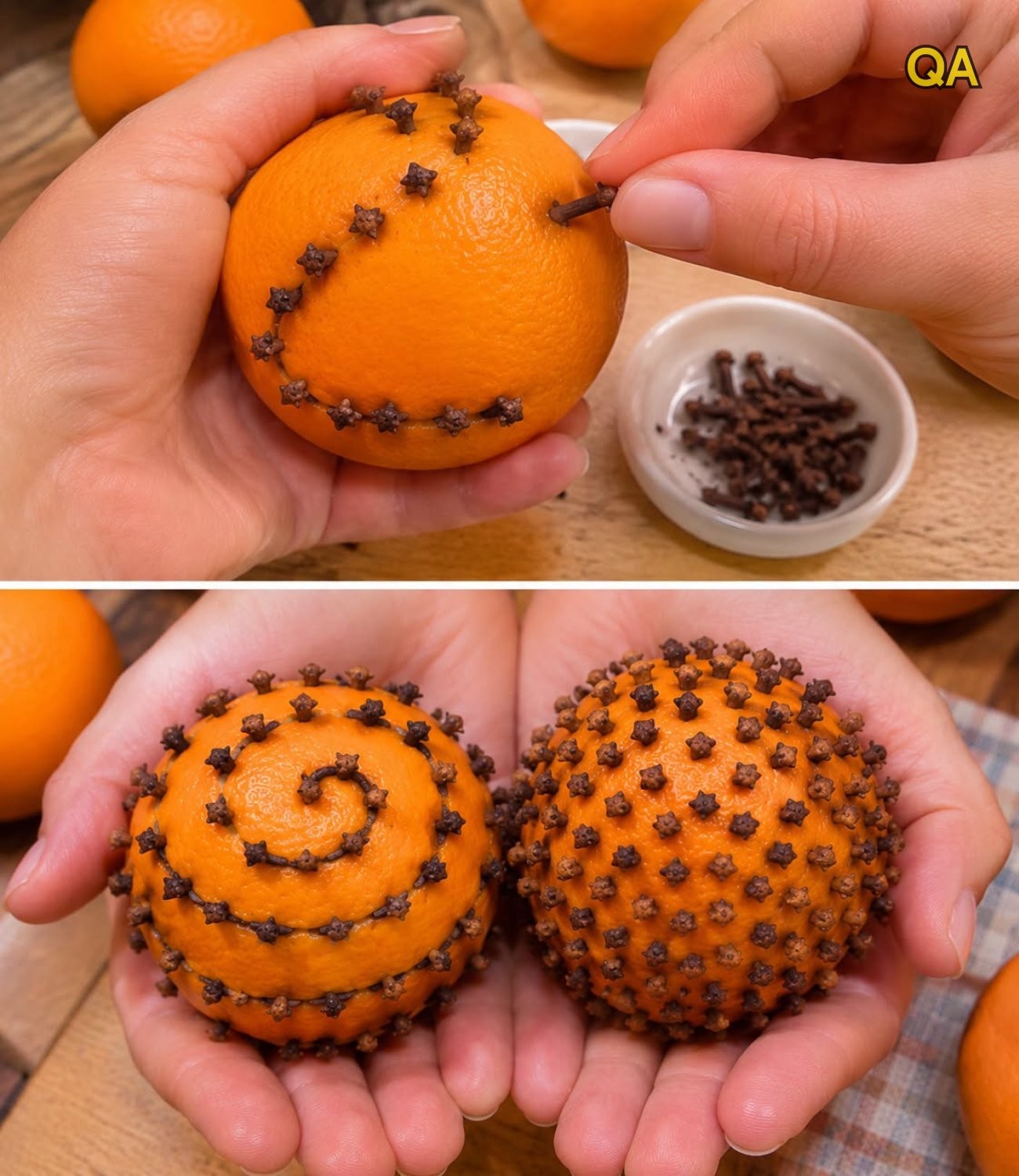
An orange pomander is a whole orange decorated with dried cloves inserted into its peel. The cloves are usually arranged in decorative patterns, such as spirals, stars, stripes, hearts, or geometric designs.
The finished decoration combines the bright appearance of citrus fruit with the dark, textured surface of whole cloves. It can be displayed in a decorative bowl, incorporated into a Christmas centrepiece, or hung with ribbon after it has been properly dried.
One of the most distinctive features of an orange pomander is its fragrance. Orange peel contains aromatic oils that produce a fresh citrus scent. Cloves contain eugenol, a naturally occurring aromatic compound associated with their characteristic warm, spicy smell.
When combined, these fragrances create an aroma commonly associated with winter cooking, traditional holiday gatherings, and seasonal decorations. The strength of the fragrance varies according to the freshness of the fruit, the quality of the cloves, and the drying conditions.
The History Behind the Orange Pomander Tradition
The history of pomanders stretches back much further than modern Christmas decorating. Historically, the term referred to small containers or objects holding fragrant substances, including spices, herbs, and aromatic materials.
The word pomander is derived from the French expression pomme d’ambre, commonly translated as apple of amber. These scented objects were particularly associated with medieval and early modern European customs.
During periods when modern sanitation, indoor ventilation, and personal fragrance products were unavailable, pleasant-smelling substances had practical and cultural importance. People carried or displayed fragrant materials as part of their everyday lives.
Some historical pomanders were made from precious materials and designed to be worn or carried. Others contained aromatic mixtures intended to release fragrance. Spices such as cloves were especially valued because they had distinctive aromas and were part of international trading networks.
Over time, the meaning and appearance of pomanders changed. Instead of being limited to elaborate containers, the tradition developed into a variety of decorative forms. Clove-studded citrus fruit became a particularly accessible version that could be made at home.
Today, orange pomanders are strongly associated with Christmas and winter decorating. However, their popularity is better understood as part of a broader history of scented decorations and seasonal crafts rather than as a practice that originated exclusively with Christmas.
Why Do People Put Whole Cloves Into Oranges?
1. They Create a Distinctive Natural Fragrance
The combination of orange and cloves is the main reason this craft has remained popular.
Orange peel contains essential oils, including limonene, which contributes to the familiar fresh citrus aroma. Cloves contain eugenol, a compound responsible for much of their characteristic warm and spicy fragrance.
These different aromatic profiles complement each other. The orange provides a bright, refreshing scent, while the cloves add a deeper, warmer note.
The result is a fragrance frequently associated with traditional winter recipes, spiced drinks, and festive kitchens. Although individual preferences differ, many people find the combination particularly suitable for seasonal decorations.
2. They Make Attractive Homemade Decorations
Orange pomanders are inexpensive but visually distinctive. Their natural colours and textures work well with traditional Christmas decorating styles, particularly rustic, vintage, and nature-inspired arrangements.
The cloves can be arranged into almost any pattern. Some people prefer a simple spiral, while others create stars, snowflakes, hearts, or carefully spaced stripes.
Pomanders also complement other natural decorative materials, including pinecones, cinnamon sticks, dried citrus slices, star anise, and evergreen branches.
Because every orange has a slightly different shape, handmade pomanders have an individual appearance. This makes them particularly appealing to people who prefer personal decorations rather than mass-produced ornaments.
3. They Preserve an Enjoyable Traditional Craft
Making orange pomanders is a relatively simple activity that can involve different age groups. Adults can prepare the fruit and handle pointed tools, while children can help choose patterns and arrange decorative materials under appropriate supervision.
The activity also encourages creativity without requiring expensive equipment. A few oranges and a container of whole cloves are enough to get started.
For many families, repeating familiar seasonal activities creates opportunities to spend time together and establish traditions that can be enjoyed year after year.
4. They Have a Connection to Traditional Spice Culture
Cloves have a long history as a valued aromatic spice. They originated in the Maluku Islands of present-day Indonesia and became part of international trade networks connecting Asia, Europe, and other regions.
Their distinctive fragrance made them useful in cooking, fragrance preparations, and traditional household customs.
Using whole cloves to decorate oranges brings this historical ingredient into a modern seasonal craft. Although the decoration is simple, it reflects the longstanding human interest in combining attractive natural materials with pleasant aromas.
5. They Are Associated With Natural Fragrance and Seasonal Comfort
Orange pomanders are sometimes described as natural air fresheners because they release the aromas of citrus peel and cloves.
However, their fragrance should not be confused with a scientifically established air-purification method. A pleasant smell does not demonstrate that a decoration removes indoor pollutants, disinfects a room, or improves air quality.
Their appeal is primarily sensory and decorative. They provide a traditional fragrance without requiring an electric diffuser or manufactured fragrance product.
Do Cloves Help Preserve an Orange?
One interesting aspect of orange pomanders is the traditional belief that cloves help protect the fruit during drying.
Cloves contain eugenol and other compounds that have demonstrated antimicrobial activity in laboratory research. This has encouraged interest in their possible role in traditional food preservation and other applications.
However, laboratory findings do not establish that inserting cloves into a whole orange will prevent mould or guarantee long-term preservation.
A fresh orange still contains substantial moisture. If that moisture remains trapped inside, the fruit can deteriorate even when its peel is covered with cloves.
Proper drying, suitable airflow, low humidity, and regular inspection are therefore much more important than relying on cloves alone. A pomander that becomes mouldy or develops an unpleasant smell should be discarded rather than treated as a reusable decoration.
What You Need to Make Orange Pomanders
One of the advantages of this traditional Christmas craft is that it requires very few supplies.
Main ingredients and equipment:
- Three or four fresh, firm oranges.
- Approximately 100–200 grams of whole dried cloves, depending on the desired pattern and coverage.
- A toothpick or wooden skewer.
- A clean kitchen towel.
- A wire drying rack or shallow plate.
Optional decorative materials:
- Decorative ribbon or natural twine.
- A pencil or washable marker.
- Ground cinnamon.
- Star anise.
- Pinecones and evergreen branches.
- Dried orange slices.
Some traditional recipes also include orris root powder, which has historically been used in perfumery as a fragrance fixative. It is optional and is not necessary for making a basic orange pomander.
How to Make Orange Pomanders Step by Step
Step 1: Select Fresh, Firm Oranges
Choose oranges with healthy, undamaged skins. Avoid fruit with soft spots, bruises, cracks, or visible mould.
Medium-sized oranges are generally convenient because they provide enough surface area for decorative patterns without being excessively heavy.
Step 2: Wash and Dry the Fruit
Rinse the oranges under running water and gently rub the skins to remove surface dirt. Dry them thoroughly with a clean towel.
A clean, dry surface makes the fruit easier to handle and helps avoid introducing unnecessary moisture into the drying process.
Step 3: Plan Your Clove Pattern
Decide whether you want a simple design or a fully covered orange. Popular patterns include spirals, vertical stripes, stars, hearts, and snowflake-inspired arrangements.
You can lightly mark your design with a pencil before inserting the cloves. Leaving two crossing bands uncovered also creates space for decorative ribbon.
Step 4: Make Small Pilot Holes
Use a toothpick or wooden skewer to make small holes in the orange peel. Space them approximately 5–10 millimetres apart, depending on your chosen design.
The holes should be large enough to accommodate the pointed stems of the cloves without damaging the fruit unnecessarily. Avoid piercing deeply into the flesh.
Step 5: Insert the Whole Cloves
Gently push each clove into a prepared hole, keeping its rounded flower head visible on the surface.
Continue until the pattern is complete. Choose cloves with intact heads for a more consistent appearance.
Step 6: Add Ribbon if Desired
For a decorative finish, wrap ribbon around the orange and secure it at the top. If you plan to hang the pomander, remember that fresh fruit can be surprisingly heavy.
It is generally better to display fresh pomanders in a bowl until they have dried completely.
Step 7: Display and Monitor Your Decoration
Place the finished pomander in a cool, dry, well-ventilated area. Fresh pomanders are perishable, so inspect them regularly for soft spots, moisture, mould, or unpleasant odours.
Do not leave a fresh pomander unattended as a long-term room decoration. Its condition can change as the fruit ages.
How to Dry Orange Pomanders So They Last Longer
Drying is essential if you want your pomanders to remain decorative beyond the immediate holiday period.
Traditional Air-Drying Method
- Prepare the orange by inserting whole cloves into the desired pattern.
- Place it on a clean wire rack to allow air to circulate around the fruit.
- Choose a cool, dry, well-ventilated location.
- Turn the pomander regularly so that different areas receive airflow.
- Inspect it frequently for mould, dampness, and soft spots.
- Continue drying until the orange becomes noticeably smaller, lighter, and firm.
Traditional air-drying may take approximately three to six weeks or longer. The actual time depends on fruit size, humidity, temperature, and airflow. There is no guaranteed drying period, and mould can develop before a whole orange dries successfully.
Smaller fruit may be easier to dry because it contains less moisture. Good ventilation is especially important in humid environments.
Using Additional Spices
Some traditional recipes recommend rolling clove-studded oranges in a mixture of ground cinnamon and orris root powder.
This creates an additional layer of fragrance and gives the pomander a more traditional spice-coated appearance. However, these ingredients do not guarantee preservation or prevent mould.
Avoid inhaling powdered spices and use suitable precautions if you have known sensitivities.
How to Tell When an Orange Pomander Is Dry
A successfully dried pomander should feel considerably lighter than it did when fresh. The orange will usually have shrunk, and its surface should feel firm rather than wet or soft.
Before storing it, check for the following characteristics:
- Noticeably reduced weight.
- A firm, shrunken appearance.
- No damp or soft areas.
- No visible mould.
- No unpleasant smell associated with decay.
If you discover fuzzy growth, leaking juice, or a strong unpleasant odour, discard the entire pomander. Removing only the visible mould is not a reliable way to make a deteriorating fruit decoration suitable for storage.
Five Beautiful Ways to Use Orange Pomanders at Christmas
1. Create a Rustic Christmas Centrepiece
Arrange several pomanders in a shallow wooden or ceramic bowl. Add pinecones, cinnamon sticks, dried orange slices, and evergreen branches for a natural festive display.
2. Hang Dried Pomanders on the Christmas Tree
Fully dried, lightweight pomanders can be used as natural Christmas ornaments. Attach a secure ribbon and hang them from sturdy branches. Avoid placing fresh, heavy oranges on delicate tree branches.
3. Decorate Your Christmas Dining Table
A small dried pomander can make an attractive addition to a festive table setting. Combine it with folded napkins, seasonal greenery, and coordinating ribbon for a simple decorative arrangement.
4. Make a Seasonal Fragrant Bowl
Place several dried pomanders in a decorative bowl near an entryway or living area. Add star anise, cinnamon sticks, and dried citrus slices to create an attractive natural arrangement.
5. Give Handmade Pomanders as Gifts
Completely dried pomanders can make thoughtful handmade gifts. Place one in a suitable gift box or wrap it in breathable decorative packaging with a handwritten seasonal message.
How Long Do Orange Pomanders Last?
The lifespan of an orange pomander depends on its moisture content and storage conditions. Fresh and dried pomanders should be treated differently.
| Pomander condition | General lifespan |
|---|---|
| Fresh clove-studded orange | Short-lived decoration requiring regular inspection |
| Orange undergoing air-drying | Several weeks, depending on conditions |
| Completely dried pomander | Potentially several months or longer with suitable storage |
These are general expectations rather than guaranteed storage periods. Temperature, humidity, fruit condition, and the effectiveness of the drying process all influence longevity.
How to Store Dried Pomanders
Before putting pomanders away after Christmas, make sure they are completely dry and free from mould.
- Store them in a clean, dry container or breathable box.
- Choose a cool location away from direct sunlight.
- Avoid airtight plastic packaging if residual moisture is possible.
- Keep them away from damp storage areas.
- Inspect them before displaying them again.
The fragrance may gradually become weaker over time, but properly dried pomanders can remain attractive decorative objects between holiday seasons.
Common Orange Pomander Mistakes to Avoid
Although making pomanders is straightforward, a few simple mistakes can affect their appearance and durability.
- Choosing damaged fruit: Overripe or bruised oranges may deteriorate more quickly.
- Skipping pilot holes: Pushing cloves directly into tough peel can break their delicate flower heads.
- Using a humid drying location: Excess moisture increases the risk of mould.
- Assuming cloves prevent spoilage: Their aromatic compounds do not guarantee preservation.
- Storing fruit before it is dry: Trapped moisture can encourage deterioration.
- Ignoring changes in condition: Softness, visible mould, and unpleasant smells are reasons to discard a pomander.
- Placing decorations near flames: Dried fruit, ribbon, and natural decorative materials should be kept away from candles and other heat sources.
Frequently Asked Questions About Orange Pomanders
Can You Use Mandarins Instead of Oranges?
Yes. Mandarins and clementines can be used to make smaller pomanders. Their compact size works particularly well for table decorations, although their thinner skins require gentle handling.
Do Orange Pomanders Attract Insects?
Fresh fruit may attract fruit flies and other insects as it ages, particularly when it begins to deteriorate. Keep pomanders clean, inspect them regularly, and discard any fruit showing signs of spoilage.
Can You Use Ground Cloves Instead of Whole Cloves?
Whole cloves are needed to create the traditional decorative appearance. Ground cloves can be included in an optional spice mixture, but they cannot replace whole cloves when decorating the orange peel.
Do Orange Pomanders Work as Natural Air Fresheners?
They can provide a pleasant seasonal fragrance through the aromatic oils in orange peel and the natural scent of cloves. However, they should not be considered air purifiers or substitutes for proper indoor ventilation.
Can You Make Orange Pomanders Before Christmas?
Yes. Making them several weeks in advance gives you time to attempt the traditional drying process. Start early, allow sufficient time, and inspect the fruit regularly. Because whole oranges may develop mould before drying completely, successful preservation cannot be guaranteed.
A Beautiful Christmas Tradition Worth Bringing Back
There is something special about the simplicity of orange pomanders. A fresh orange, a handful of whole cloves, and a little patience can produce a decoration that combines natural colour, interesting texture, and a familiar seasonal fragrance.
Beyond their appearance, these decorations offer a connection to centuries of fragrance traditions and the historical appreciation of aromatic spices. They also provide an enjoyable opportunity to slow down, make something by hand, and create seasonal decorations using accessible materials.
Whether displayed in a rustic Christmas centrepiece, arranged on a dining table, or hung from a tree after proper drying, orange pomanders bring a traditional touch to holiday decorating.
They are not guaranteed to last forever, and fresh fruit requires careful monitoring. Nevertheless, their charm does not depend on expensive materials or elaborate equipment.
Sometimes the most memorable holiday traditions are also the simplest. This Christmas, making your own orange pomanders could be a lovely way to introduce an old-fashioned craft into your home and create a seasonal tradition worth repeating.
Sources
- Encyclopaedia Britannica – Historical background on spices, European traditions, and cultural history.
- Victoria and Albert Museum – Historical decorative arts, fragrance objects, and European material culture.
- Royal Horticultural Society – General guidance on seasonal plants, natural materials, and home gardening.
- National Center for Complementary and Integrative Health – Evidence-based information about herbs, spices, and their constituents.
- National Library of Medicine – Scientific literature on eugenol, aromatic compounds, and antimicrobial research.
- USDA Food Safety and Inspection Service – General information about food spoilage, mould, and safe handling practices.
Disclaimer: This content is intended for entertainment purposes only and is not based on real events.