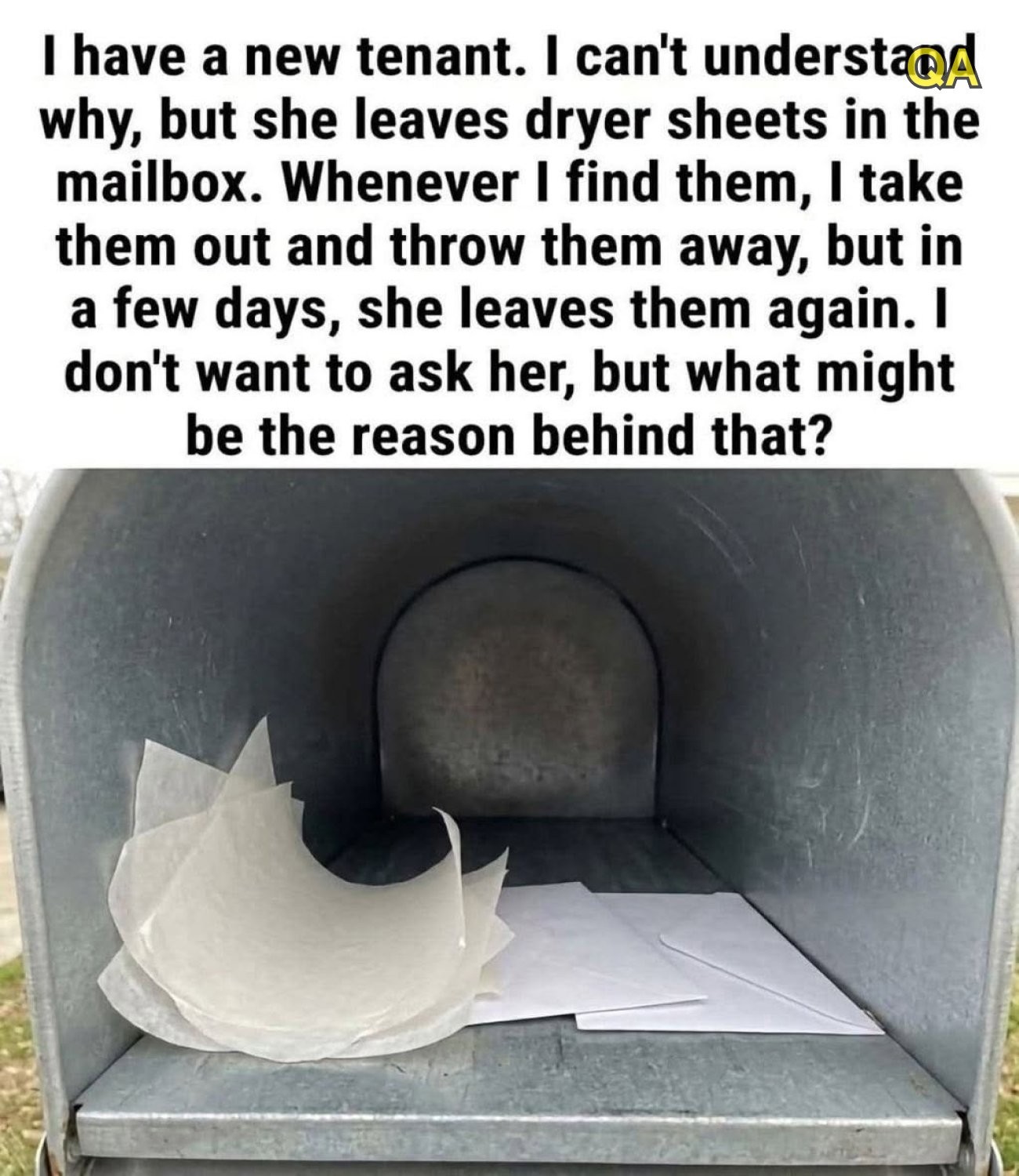
What It Means If You Find a Dryer Sheet in Your Mailbox …The Surprising Reason Behind This Simple Trick
Have you ever opened your mailbox expecting to find letters, bills, or packages, only to discover something unexpected tucked inside? Among the usual pieces of mail, you might occasionally come across a small, scented dryer sheet. At first, the discovery can seem confusing. Why would someone put a laundry product inside a mailbox? Was it left behind accidentally, or does it serve a particular purpose?
Although finding a dryer sheet in your mailbox may seem unusual, there is a possible explanation that has attracted attention among homeowners and neighbourhood communities. Some people place scented dryer sheets inside or near mailboxes because they believe the fragrance may discourage wasps and other stinging insects from nesting in the area.
The practice is often described as a simple household trick intended to make mailboxes more comfortable and potentially safer for postal workers. During warmer months, wasps can sometimes build nests in sheltered outdoor spaces, including around mailboxes, under their roofs, and in nearby structures.
However, there is an important distinction between a popular household tip and a scientifically established pest-control method. Although dryer sheets have a noticeable fragrance, there is currently no reliable evidence establishing that ordinary dryer sheets consistently repel wasps or prevent them from building nests.
So, what does it really mean if you discover a dryer sheet in your mailbox? Why might someone put it there, and what should you do if you notice wasps nearby? Understanding the possible reasons can help you respond appropriately.
Why Would Someone Put a Dryer Sheet in a Mailbox?
One commonly suggested explanation is that someone is attempting to discourage wasps from nesting inside the mailbox. This may be a homeowner, a neighbour, or someone familiar with the challenges postal workers occasionally encounter while delivering mail.
Mail carriers regularly open mailboxes throughout their routes. Depending on the neighbourhood and mailbox design, they may encounter insects, spiders, and other small creatures that have taken shelter inside or around these receptacles.
Wasps are particularly noticeable during warmer seasons because many species become more active when temperatures rise. Some species build nests in sheltered cavities, while others attach their nests to outdoor structures.
A mailbox can occasionally provide a suitable sheltered location, especially if it is rarely opened or has spaces that offer protection from rain and direct sunlight.
People who believe in the dryer-sheet trick suggest that its fragrance may make the mailbox less attractive to nesting insects. The intention is generally presented as a small preventative gesture rather than something mysterious or harmful.
It is also possible that the sheet was left accidentally or placed there for an entirely different reason. Finding one does not establish who put it there or what they intended.
Why Do Wasps Sometimes Build Nests in Mailboxes?
Mailboxes might not seem like obvious nesting locations, but their structure can provide some of the conditions certain wasp species seek when establishing a colony.
Wasps have different nesting behaviours depending on their species. Some build exposed paper nests beneath outdoor structures, while others establish colonies in protected cavities or underground locations.
Here are several reasons mailboxes may occasionally become attractive nesting spots.
1. Mailboxes Provide Shelter From the Weather
One of the main considerations for nesting insects is finding a location that offers some protection from environmental conditions.
Many traditional mailboxes have enclosed interiors, overhanging roofs, and relatively small openings. These features can provide shelter from rain, wind, and direct sunlight.
For certain wasp species, protected spaces can offer suitable conditions for beginning or maintaining a nest.
However, not every mailbox is equally attractive to insects. Its design, location, accessibility, and surrounding environment all influence whether it becomes a potential nesting site.
2. Quiet Mailboxes May Go Unnoticed
Another possible factor is how frequently a mailbox is opened.
A mailbox that receives little mail or is not checked regularly may provide a relatively undisturbed space. This can allow insects to investigate the area and potentially establish a nest without being noticed immediately.
By comparison, mailboxes that are opened frequently may be less suitable for nesting, although regular use does not guarantee that insects will stay away.
Homeowners can reduce surprises by periodically inspecting the exterior of their mailboxes, particularly during spring and summer.
3. Small Spaces Can Be Suitable Nesting Locations
Wasps do not always require large spaces to begin constructing nests.
Depending on the species, they may use small protected areas beneath roof overhangs, inside sheds, around garden structures, or in cavities within buildings.
Some species construct distinctive paper-like nests using plant fibres mixed with saliva. Others create nests underground or inside enclosed spaces.
Mailboxes and their surrounding structures may occasionally offer similar shelter. This explains why homeowners sometimes discover insect activity around mailbox openings, underneath mailbox roofs, or on nearby supports.
Do Dryer Sheets Actually Repel Wasps?
The idea behind using dryer sheets as an insect deterrent is relatively simple. Dryer sheets contain fragrance ingredients and other substances designed to reduce static electricity and provide a pleasant scent to laundry.
Because many insects use chemical signals and their sensory systems to navigate their environments, some people believe that strong artificial fragrances might discourage wasps from approaching certain locations.
However, this explanation should be treated cautiously. The presence of a noticeable fragrance does not automatically mean that a product is an effective insect repellent.
There is no established scientific evidence demonstrating that placing an ordinary dryer sheet inside a mailbox reliably prevents wasps from nesting there.
1. The Theory Behind Strong Fragrances
Dryer sheets are designed to leave fabrics smelling fresh after laundry has been dried. Their fragrance can remain noticeable for some time, depending on the product and environmental conditions.
Some household discussions suggest that these scents may interfere with the chemical signals insects use when exploring their surroundings.
Nevertheless, insect behaviour is complicated. Different species respond to different chemical compounds, and a fragrance that affects one insect species may have little effect on another.
Without controlled scientific testing, it is not possible to conclude that the fragrance in a typical dryer sheet provides meaningful protection against wasps.
2. The Idea of Making a Mailbox Less Attractive
Another explanation is that the scent creates an environment that wasps might prefer to avoid.
This theory is frequently mentioned in discussions about household pest prevention. However, it remains an informal suggestion rather than a proven method of controlling nesting insects.
Professional pest-management guidance generally focuses on identifying the insect species, understanding its nesting behaviour, reducing attractive food sources where relevant, and addressing established nests appropriately.
For this reason, dryer sheets should never be considered a substitute for established insect-management practices.
3. Why Results May Differ
Even if someone believes a dryer sheet has helped keep insects away from their mailbox, that observation does not necessarily demonstrate that the product caused the result.
Wasps may simply have selected another nesting location because of environmental conditions, the availability of suitable shelter, or changes in their seasonal activity.
Different wasp species also have different nesting preferences. A method that appears successful in one location may have no noticeable effect elsewhere.
Anyone looking for reliable protection should therefore focus on practical prevention rather than depending on an unverified household remedy.
Is Finding a Dryer Sheet in Your Mailbox a Warning Sign?
Generally, finding an ordinary dryer sheet in your mailbox is not, by itself, a reason to become concerned.
One possible explanation is that someone has heard about the popular wasp-deterrent trick and decided to try it. A neighbour may have placed it there as a thoughtful gesture, or someone may have intended to make the mailbox less attractive to insects.
It is also possible that the dryer sheet was left accidentally or placed there for another reason.
There is no reliable basis for assuming that an ordinary dryer sheet in a mailbox indicates suspicious activity, surveillance, or a deliberate attempt to communicate something unusual.
If you are curious about its origin, you can simply ask a neighbour or check with your local postal service if you have a specific concern.
The important point is to avoid jumping to conclusions based on an everyday household item. Its presence alone does not establish anything about the person who placed it there.
Why Mailbox Safety Matters for Postal Workers
Although the dryer-sheet method has not been scientifically established, the concern behind it highlights an important issue: outdoor mailboxes can occasionally expose postal workers to unexpected environmental hazards.
Mail carriers visit numerous properties during their working hours. They must regularly approach mail receptacles, open them, insert letters, and retrieve outgoing mail.
Insects nesting inside or around a mailbox can make these routine activities uncomfortable and potentially unsafe.
The United States Postal Service has previously reminded homeowners to watch for wasps building nests under mailboxes and to keep surrounding vegetation properly maintained. Its seasonal safety guidance also highlights the importance of keeping mailbox areas clear and accessible.
Maintaining a clean and accessible mailbox is therefore a practical way to support reliable mail delivery and reduce avoidable hazards.
A simple inspection of the mailbox and its surroundings can help identify developing problems before they become more difficult to manage.
How to Keep Wasps Away From Your Mailbox
Rather than relying on dryer sheets, homeowners can take several practical steps to make mailbox areas easier to inspect and maintain.
1. Inspect the Mailbox Regularly
Make a habit of looking at your mailbox periodically, particularly during warmer months when many wasp species are more active.
Check the exterior, the underside of the roof, the supporting post, and nearby sheltered spaces for signs of insect activity.
Look for repeated wasp activity around a particular opening or location. If you notice insects regularly entering and leaving the same space, there may be a nest nearby.
Do not put your hand inside an area where insect activity is suspected.
2. Keep Surrounding Vegetation Trimmed
Overgrown plants and dense vegetation can make it harder to inspect the area around a mailbox.
Keeping nearby bushes and plants reasonably trimmed improves visibility and makes it easier to identify potential nesting locations.
The United States Postal Service has specifically included keeping vegetation around mailboxes maintained among its seasonal safety recommendations.
Regular garden maintenance also helps ensure that postal workers have convenient access to the mailbox.
3. Avoid Leaving Food and Sweet Drinks Nearby
Some wasps, particularly yellowjackets, are attracted to food and sugary drinks. Outdoor rubbish, uncovered food containers, and fallen fruit can provide additional sources of food.
The University of California Statewide Integrated Pest Management Program recommends keeping food covered, using tightly sealed rubbish containers, and removing fallen ripe fruit to reduce yellowjacket activity.
Although these measures do not guarantee that wasps will avoid a mailbox, reducing available food sources can help make the surrounding property less attractive to foraging insects.
4. Keep the Mailbox Clean and Accessible
A mailbox should remain free of unnecessary objects and clutter that could interfere with ordinary mail delivery.
If you find a dryer sheet inside, you can remove it if there is no visible insect activity and doing so is safe.
Avoid placing additional household products, chemicals, or materials inside the mailbox without a clear reason. Such items may interfere with mail delivery or create unnecessary maintenance problems.
5. Do Not Disturb an Active Wasp Nest
If you discover a nest inside or around your mailbox, the safest initial response is to keep your distance.
Do not reach inside, shake the mailbox, knock down the nest, or attempt to remove it with an ordinary household object.
Wasps may defend their nests when they perceive a disturbance. Approaching or attempting to remove an established colony can increase the likelihood of being stung.
The University of California’s Integrated Pest Management Program recommends avoiding nest disturbance and contacting an appropriate pest-management professional when removal is necessary.
6. Contact a Qualified Pest-Control Professional
If a nest has formed inside your mailbox, professional advice is generally the most sensible option, especially when the nest is difficult to access or contains a large number of insects.
A qualified pest-control professional can help identify the species, assess the situation, and determine an appropriate treatment method.
This is particularly important for people with known insect-sting allergies or anyone who is uncomfortable working around stinging insects.
If the nest affects mail delivery, contacting your local post office may also help you understand the available arrangements for receiving mail while the problem is addressed.
Are Wasps Always Harmful?
Although wasps can create concerns around mailboxes and outdoor living spaces, they also serve important ecological functions.
Many wasp species help control populations of other insects by hunting caterpillars, flies, and other small invertebrates. Some species also contribute to pollination when visiting flowers.
According to university extension specialists, many wasps are not naturally aggressive when left undisturbed. Defensive behaviour is more likely when their nests are threatened or when insects become trapped or crushed.
This does not mean that homeowners should ignore a nest located in a frequently used mailbox. Instead, it highlights the importance of considering the insect species, nest location, and potential risks before deciding what to do.
When a nest is away from people and does not create a safety concern, leaving it undisturbed may sometimes be appropriate. When it creates a hazard near a mailbox or another frequently accessed area, professional assessment can help determine the best solution.
What Should You Do If You Find a Dryer Sheet in Your Mailbox?
If you discover a dryer sheet in your mailbox, there is no need to panic. A sensible approach is to consider the surroundings and check for any obvious signs of insect activity.
First, observe the mailbox from a safe distance. Look for wasps repeatedly flying into or out of the same opening, visible nesting material, or other indications that insects may have established themselves nearby.
If there are no signs of insects, the dryer sheet may simply have been placed there as an informal preventative measure or left accidentally.
If you notice wasps entering the mailbox, avoid opening it or reaching inside. Keep other people away from the area and seek appropriate professional assistance.
There is no need to add more dryer sheets or assume that the existing one provides protection. Remember that the method has not been established as an effective way to prevent wasp nests.
Frequently Asked Questions About Dryer Sheets in Mailboxes
Does a dryer sheet in a mailbox mean the mail carrier put it there?
Not necessarily. A postal worker or neighbour may have placed it there because of the popular household wasp-deterrent idea, but there is no way to identify who left it simply by finding it inside your mailbox.
Can dryer sheets prevent wasps from building nests?
There is no reliable scientific evidence showing that ordinary dryer sheets consistently prevent wasps from nesting. They should not be relied upon as a substitute for practical pest-management measures.
Should I remove a dryer sheet from my mailbox?
If there is no sign of insect activity and you can remove it safely, you may do so. If wasps are entering or leaving the mailbox, do not reach inside. Keep your distance and seek professional advice.
Are wasps attracted to all types of mailboxes?
No. Nesting preferences vary among species. Some wasps prefer sheltered cavities, while others build exposed nests or use underground spaces. Mailbox design and location can influence whether it becomes a potential nesting site.
When are wasps most likely to become active?
Many wasp species become more noticeable during warmer months, although their seasonal activity varies according to species, climate, and local environmental conditions.
A Small Gesture With a Thoughtful Intention
So, what does it mean if you find a dryer sheet in your mailbox?
One possible explanation is that someone is trying a popular household trick intended to discourage wasps from nesting inside or around the mailbox. It may be a neighbour, a homeowner, or someone who wants to make everyday mail delivery a little more comfortable for postal workers.
Although the idea sounds simple, it is important to distinguish between good intentions and proven results. Dryer sheets have noticeable fragrances, but their effectiveness as wasp repellents has not been reliably demonstrated.
The more dependable approach is to inspect your mailbox regularly, maintain the surrounding area, remove potential food sources that attract nuisance insects, and seek professional assistance if an active nest develops.
It is also worth remembering that small acts of consideration can make a difference in everyday neighbourhood life. Whether the dryer sheet was placed there deliberately or accidentally, its presence is not, by itself, a reason to assume something suspicious has happened.
The next time you open your mailbox and discover an unexpected dryer sheet, you will have a better understanding of one possible reason behind this curious household habit.
Sometimes, an unusual discovery has a surprisingly ordinary explanation.
Sources
The following sources provide additional information about wasp behaviour, nesting habits, household pest management, and mailbox safety:
- United States Postal Service (USPS): Summer Safety Hints From the Post Office – Seasonal advice about mailbox maintenance, vegetation, and wasp nests.
- University of California Statewide Integrated Pest Management Program: Yellowjackets and Other Social Wasps – Information about wasp behaviour, prevention, and nest management.
- Penn State Extension: Getting Rid of Paper Wasps, Yellowjackets, and Other Stinging Insects – Educational guidance on identifying and managing stinging insects.
- University of Maryland Extension: Social Wasps, Yellowjackets, Hornets, and Paper Wasps – Information about wasp species, nesting behaviour, and management options.
- Oklahoma State University Extension: Paper Wasps, Yellowjackets and Other Stinging Wasps – Practical information about avoiding stings and understanding wasp activity.
Disclaimer: This content is intended for entertainment purposes only and is not based on real events.