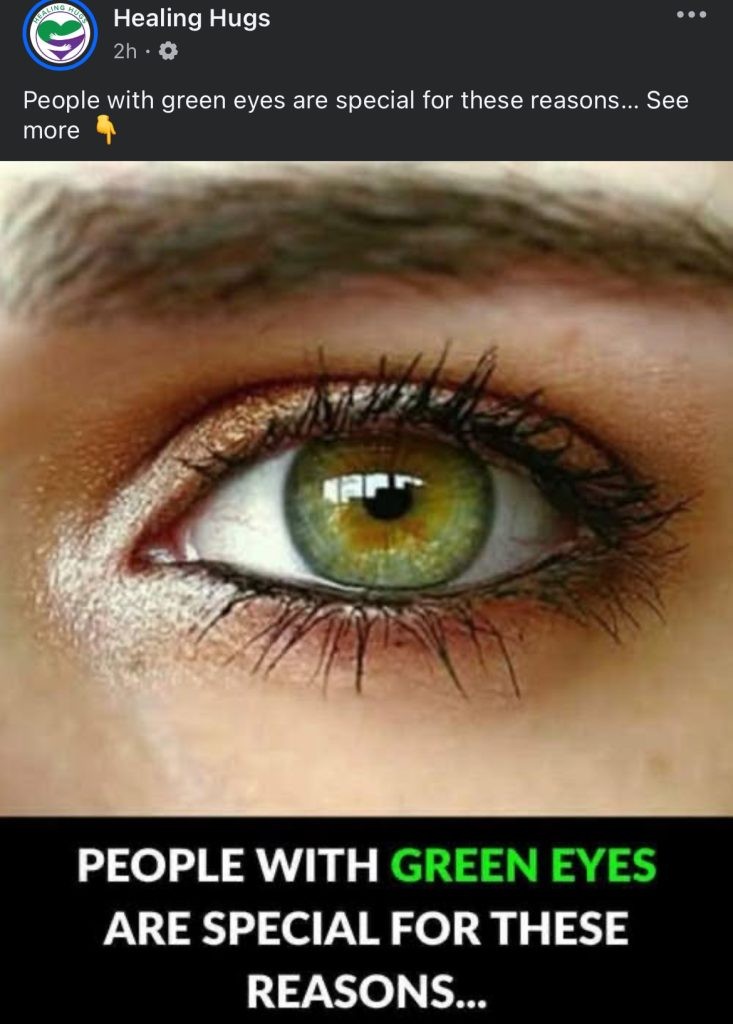
Green eyes are often described as unusual, striking, and difficult to define. Their appearance can range from pale gray-green to deep emerald or hazel-green, and it may seem to change in different lighting. While green eyes have inspired centuries of art, folklore, and popular culture, their color is the result of ordinary biology: genetics, pigmentation, and the way light interacts with the iris.
How Rare Are Green Eyes?
Green is generally considered one of the rarest naturally occurring eye colors. Commonly cited estimates suggest that around 2% of the world’s population has green eyes, although precise global figures are difficult to establish because eye color is not measured consistently across every country. The proportion also varies significantly by region and ancestry.
Green eyes are more frequently reported in parts of Northern, Central, and Eastern Europe than in many other regions of the world. They can be found in countries including Ireland, Scotland, England, Iceland, the Netherlands, Germany, and parts of Central Europe, but they are not limited to any single nationality or ethnic group. People with green eyes live across the globe, reflecting migration, family history, and the complex inheritance of traits across generations.
The rarity of green eyes contributes to their cultural appeal. When a characteristic is uncommon within a community, it may be especially noticeable. However, eye color does not indicate personality, intelligence, health, or character. It is primarily a visible physical trait shaped by biology.

What Causes Green Eye Color?
Eye color is determined by the iris, the colored ring of tissue surrounding the pupil. The iris contains melanin, a natural pigment that also contributes to skin and hair color. In general, higher levels of melanin in the front layers of the iris are associated with darker brown eyes, while lower levels are associated with lighter eye colors.
Green eyes do not result from green pigment in the iris. Instead, they are produced by a combination of relatively low-to-moderate melanin levels and the scattering of light within the iris. This optical effect, sometimes compared with the way the sky appears blue, can create green, gray, blue, amber, or hazel tones depending on the amount and distribution of pigment.
In many people with green eyes, small amounts of yellowish or golden pigment combine visually with blue-gray light scattering. The result can appear green. Because the balance of pigment and reflected light differs from person to person, no two green irises look exactly the same. Some have brown or amber flecks near the pupil, while others appear cooler and more gray-green around the outer edge.
Why Green Eyes Can Look Different in Different Light
People often notice that green eyes seem to shift in color. A pair of eyes that appears olive green outdoors may look gray, blue-green, or hazel under indoor lighting. This does not usually mean that the eye color itself is changing. Rather, the appearance of the iris is influenced by lighting conditions, clothing colors, makeup, surroundings, camera settings, and pupil size.
Bright natural light can make subtle patterns in the iris more visible. Warm light may emphasize gold or amber tones, while cool lighting can bring out gray or blue shades. The pupil also changes size in response to light and emotion. When the pupil becomes larger or smaller, the visible proportion of the iris changes, which can affect how the eye color is perceived.
Temporary changes in eye appearance should be distinguished from a true change in iris color. A noticeable, persistent change in one eye’s color, especially if it occurs suddenly or is accompanied by pain, redness, blurred vision, sensitivity to light, or other symptoms, should be evaluated by an eye-care professional. The American Academy of Ophthalmology advises people to seek medical advice for unusual changes in vision or eye appearance.
The Genetics of Green Eyes
The genetics of eye color are more complex than the simplified classroom idea that brown eyes are always dominant and blue eyes are always recessive. Scientists have identified multiple genes involved in pigment production, pigment transport, and the development of the iris. Variations near genes known as OCA2 and HERC2 are particularly important in the inheritance of lighter eye colors, but they do not explain every individual case.
Green eye color is therefore a polygenic trait, meaning it is influenced by several genes rather than one single “green-eye gene.” This complexity helps explain why parents with similar eye colors can have children with different eye colors, and why family patterns may not always follow simple predictions.
Eye color develops during infancy and early childhood. Many babies are born with eyes that appear blue-gray because pigment in the iris has not fully developed. Over time, melanin production may increase, causing the eyes to become brown, hazel, green, or remain blue. By early childhood, eye color is often relatively stable, although subtle changes in shade can occur over a lifetime.
It is not scientifically accurate to assign a single ancient population, era, or ancestry group as the origin of all green eyes. Genetic traits emerge and spread through populations over long periods, influenced by inheritance, population movement, and chance. Green eyes may be more common in some ancestral populations, but they are not proof of a specific family origin.
Green Eyes in History, Art, and Folklore
Green eyes have carried different meanings in different cultures and historical periods. In poetry, painting, and storytelling, they have often been used to suggest individuality, beauty, nature, mystery, or emotional intensity. Artists may use green eyes to create contrast and visual focus because the color is relatively uncommon and can appear vivid beside many skin and hair tones.
Historical attitudes toward unusual physical characteristics were not always positive. In parts of Europe, especially during periods marked by superstition and social fear, traits such as uncommon eye color or red hair could be included in folklore and stereotypes. However, it is important not to overstate a direct connection between green eyes and accusations of witchcraft. Historical witch trials were driven by complicated religious, political, social, and gender-based forces, not by eye color alone.
Modern views tend to frame green eyes as one example of human physical diversity. In contemporary media and fashion, they are often celebrated as distinctive, but beauty standards vary widely among cultures and individuals. Every natural eye color, from dark brown to gray, reflects the diversity of human genetics.
Do Green Eyes Need Special Sun Protection?
People with lighter-colored eyes, including green, blue, gray, and some hazel eyes, may experience greater discomfort in bright sunlight than people with darker irises. Lower levels of iris pigment can allow more light to scatter within the eye, which may contribute to light sensitivity, also called photophobia. This sensitivity varies widely, and having green eyes does not automatically mean a person will have eye problems.
There is also research suggesting associations between light iris color and certain eye conditions, including uveal melanoma, a rare form of eye cancer. Association does not mean that eye color alone causes disease, and most people with green or blue eyes will never develop this condition. Still, ultraviolet radiation can damage the eyes and the delicate skin around them, so sun protection is sensible for everyone, regardless of eye color.
The U.S. Centers for Disease Control and Prevention and eye-health organizations recommend wearing sunglasses that block 99% to 100% of both UVA and UVB rays. Wraparound styles can provide additional protection by reducing light that enters from the sides. A wide-brimmed hat can further reduce exposure, particularly during long periods outdoors.
Regular comprehensive eye examinations are also valuable. Eye exams can help detect vision problems and some eye diseases before symptoms become obvious. People should arrange prompt medical care if they experience sudden vision loss, flashes of light, a curtain-like shadow over vision, severe eye pain, injury, or a new and persistent change in the appearance of an eye.
Common Myths About Green Eyes
Myth: Green eyes reveal a person’s personality.
There is no reliable scientific evidence that eye color determines temperament, trustworthiness, creativity, or emotional traits. Personality develops through many factors, including life experiences, environment, relationships, and biology.
Myth: Green eyes are caused by emotion.
Emotions can affect pupil size, tear production, and facial expression, which may alter the way eyes appear. They do not permanently turn an iris green or change a person’s genetic eye color.
Myth: Green eyes are always inherited from green-eyed parents.
Because eye color is influenced by multiple genes, inheritance can be unpredictable. Parents with brown, hazel, blue, or green eyes may have children with a range of eye colors depending on the genetic variants they carry.
Myth: Lighter eyes are inherently better or more attractive.
Attractiveness is subjective and shaped by culture and personal preference. Eye color is not a measure of health, value, or identity.
Why Green Eyes Continue to Fascinate People
Green eyes remain a source of interest because they combine rarity with visual variation. Their color can appear different under changing light, and the iris often contains detailed patterns that are unique to each individual. Scientific understanding does not reduce that fascination; instead, it explains why the effect can be so visually compelling.
At the same time, green eyes are a reminder that visible human differences are usually more complex than simple labels suggest. A single description such as “green” can include a broad spectrum of shades, pigment patterns, and inherited genetic influences. The most useful perspective is one that appreciates this diversity without attaching unsupported assumptions to it.
Whether green eyes appear bright, muted, hazel-toned, or gray-green, their appearance is shaped by the same basic processes that create every other natural eye color: genes, melanin, anatomy, and light. Protecting eye health through regular examinations and UV protection matters far more than the particular shade of the iris.
Sources
- American Academy of Ophthalmology — eye health information, symptoms, examinations, and sun safety.
- Centers for Disease Control and Prevention — guidance on healthy eyes and vision protection.
- MedlinePlus Genetics — overview of the genetics and inheritance of eye color.
- National Eye Institute — public information on eye conditions, prevention, and vision research.
- World Health Organization — global information on vision and eye health.
Disclaimer: This content is intended for entertainment purposes only and is not based on real events.