Editor’s note: The account below is presented as a personal family narrative. Its individual names, events, financial figures, and legal outcomes have not been independently verified. The practical information about classic-car ownership, restoration, and title transfers is based on publicly available guidance from official sources.
A classic car can be much more than a collectible vehicle. For many families, it is a connection to earlier generations, major life events, road trips, first jobs, weddings, and the everyday routines that eventually become treasured memories. Restoring an older automobile can therefore involve both mechanical work and emotional care, especially when the car belonged to someone who has died.
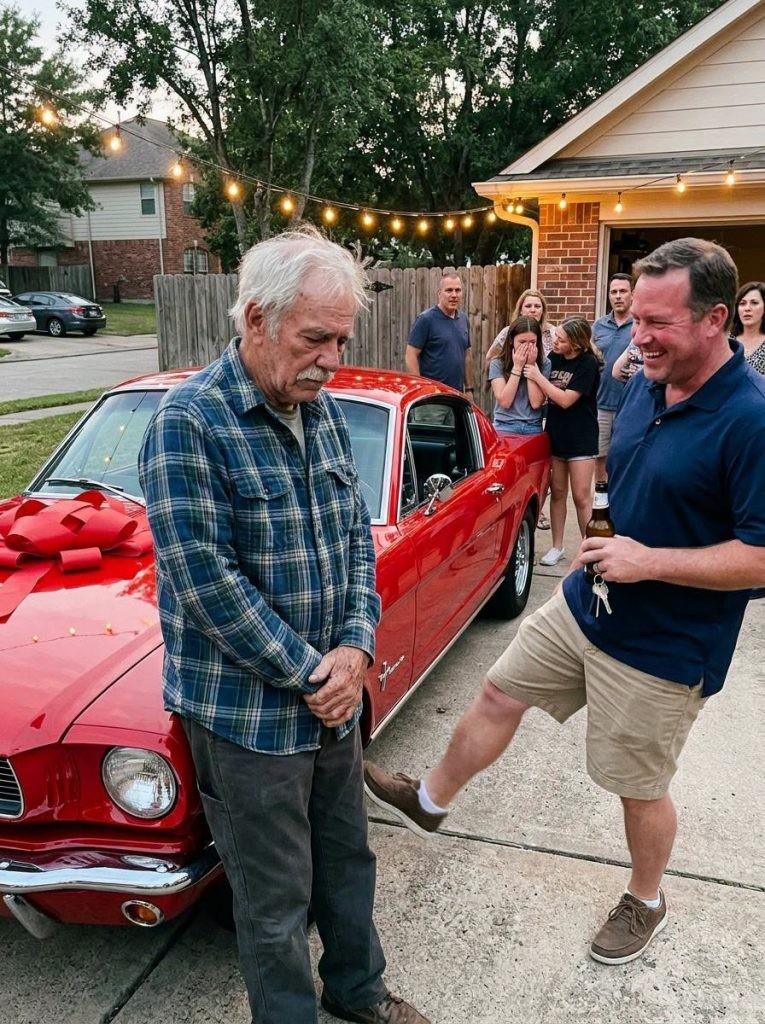
In the family story of Gus Kowalski, a retired mechanic from Toledo, Ohio, a 1966 Ford Mustang represented exactly that kind of connection. The candy-apple-red Mustang had belonged to his late wife, Dottie, who reportedly bought it in 1971 with her own savings. Over the years, the vehicle became part of the family’s history. After Dottie’s death, Gus kept the car stored in his garage and hoped that one day it could be passed to their granddaughter, Lily.
The story offers a useful starting point for understanding why classic car restoration, estate planning, clear vehicle titles, and family communication matter. While sentimental possessions can have deep personal value, they also involve practical responsibilities. A vehicle must be safely restored, properly insured, legally titled, and transferred through the appropriate state process before a new owner can use it on public roads.
Why a 1966 Ford Mustang Holds Lasting Cultural Value
The Ford Mustang is one of the most recognizable American cars ever built. Introduced in 1964, the Mustang quickly became associated with a new category of affordable sporty cars often called “pony cars.” Its long hood, short rear deck, broad range of engines, and relatively accessible price helped make it a major commercial success.
By 1966, the Mustang had become firmly established in American automotive culture. Today, examples from the mid-1960s remain popular among collectors, hobbyists, and first-time classic-car owners. Their appeal is not limited to resale value. Many enthusiasts are drawn to the straightforward mechanical design of older cars, the availability of reproduction parts, and the opportunity to learn hands-on maintenance skills.
However, owning a classic Mustang also requires realistic expectations. A vehicle manufactured in the 1960s does not offer the same crash protection, braking technology, fuel efficiency, emissions controls, or driver-assistance systems found in modern cars. Anyone planning to drive a vintage vehicle regularly should consider professional inspections, tire condition, brake performance, lighting, seat belts, insurance coverage, and local safety requirements.
For a family, the special value of a classic car may come from its documented history. Original photographs, service receipts, registration documents, owner’s manuals, and stories from previous owners can add meaning that cannot be measured solely in dollars. In Gus’s account, the Mustang was not simply a restored vehicle; it was a reminder of Dottie’s independence, personality, and place in the family.
The Emotional Importance of Restoring a Family Heirloom
Personal belongings can play an important role in remembrance after the death of a loved one. A familiar object may evoke memories through its appearance, sound, smell, or routine use. In this context, restoring an heirloom can be a way to preserve a relationship rather than erase the passage of time.
According to the family narrative, Lily first noticed the covered Mustang when she was 16. Her enthusiasm reportedly inspired Gus to begin a two-year restoration project that he hoped to complete for her 18th birthday. He rebuilt mechanical components, replaced worn or damaged parts, and restored the car’s white interior. He also retained small personal items associated with Dottie, including sunglasses kept in the glove compartment.
For restoration professionals and hobbyists, the question of what to preserve is often central to a project. Some owners seek a factory-correct restoration using original specifications. Others prefer a “restomod,” combining historic styling with updated brakes, suspension, steering, ignition, or safety features. Neither approach is inherently right for every vehicle. The best decision depends on the car’s condition, intended use, historical significance, available budget, and the owner’s goals.
When a car has strong family meaning, preserving selected original details can be as important as replacing damaged materials. A handwritten service note, an old photograph, a period-correct accessory, or a carefully stored personal item may help future generations understand why the vehicle mattered. At the same time, items left inside a vehicle should be stored safely and should not interfere with driving, visibility, or emergency access.
Planning a Safe and Realistic Classic Car Restoration
A classic-car restoration can be rewarding, but it can also require substantial time, money, specialized tools, and patience. Before beginning, owners should conduct a detailed inspection and create a written plan. Rust, structural damage, missing parts, engine problems, electrical faults, and incomplete documentation can all change the scope and cost of a project.
A practical restoration plan often includes the following steps:
- Confirm the vehicle identification number and review the title and registration records.
- Document the car’s condition with photographs before disassembly begins.
- Inspect the frame, body, floors, suspension mounting points, brakes, fuel system, and steering components.
- Set a realistic budget that includes parts, labor, transportation, storage, taxes, insurance, and unexpected repairs.
- Prioritize roadworthiness and safety before cosmetic upgrades.
- Keep receipts and maintenance records for future ownership, insurance, and resale purposes.
Older vehicles may contain worn rubber hoses, degraded fuel lines, corroded wiring, aging tires, or brakes that need significant attention. A car that looks attractive after new paint and upholstery may still be unsafe without careful mechanical work. Qualified technicians, marque-specific clubs, and reputable restoration shops can help owners identify concerns that are easy to overlook.
It is also wise to discuss insurance before driving a restored vehicle. Standard auto insurance may not always reflect the needs of a collector car. Specialty insurers may offer agreed-value or stated-value policies, subject to their own eligibility rules and coverage terms. Owners should carefully review restrictions related to mileage, storage, regular use, and who is allowed to drive the car.
Vehicle Titles and Ownership: Why Documentation Matters
The most important practical lesson in this family narrative concerns vehicle ownership. Possession of car keys, access to a vehicle, or a family relationship does not automatically give someone legal authority to sell or transfer a car. In the United States, a vehicle title is generally the primary document establishing ownership, although specific legal requirements vary by state and individual circumstances.
In the story, Gus discovered that the title still listed him and Dottie as owners. He concluded that another family member did not have authority to sell the Mustang. The account describes a conflict after the vehicle was reportedly listed for sale online and a buyer made a deposit. Because the details have not been verified, this should not be read as a legal finding or a guide to a specific case.
For Ohio residents, title, survivorship, estate, and transfer questions should be addressed through the Ohio Bureau of Motor Vehicles, the county clerk of courts title office, or a qualified attorney. The correct procedure can depend on how the title is worded, whether an owner has died, whether probate is involved, whether there is a surviving spouse, and whether liens exist against the vehicle.
People who inherit or receive a vehicle should avoid making assumptions. Before accepting a deposit, advertising a vehicle, signing documents, or attempting a transfer, they should confirm the current title status. A buyer should also verify that the person selling a car has authority to do so and that the title is properly completed. These steps can prevent expensive disputes and protect all parties from misunderstandings.
How Families Can Avoid Conflict Over Sentimental Property
Family heirlooms often create difficult conversations because emotional value and financial value are not always the same. One person may see an old vehicle as a costly burden, while another sees it as an irreplaceable link to a parent or grandparent. Open communication can help families address these differences before they become conflicts.
It can be helpful to discuss important possessions while the original owner is still able to explain their wishes. A written estate plan, clear title records, a will, beneficiary designations where applicable, and organized documentation can reduce uncertainty. For valuable personal property, photographs, appraisals, maintenance records, and a written statement of intent may provide useful context.
Families should also recognize that an inheritance can carry obligations. A young adult receiving a classic car may need help understanding maintenance schedules, safe driving practices, insurance requirements, fuel costs, seasonal storage, and repair expenses. Giving someone a vehicle is not only a transfer of property; it can also be an opportunity to pass along practical knowledge.
In the narrative, Gus ultimately took Lily to complete a formal title transfer. That action reflects an important general principle: ownership should be documented through the legal process required where the vehicle is registered. A properly completed transfer can protect both the giver and the recipient while making it easier to insure, register, and maintain the vehicle responsibly.
Classic Cars and Young Drivers: Balancing Heritage With Safety
For a young driver, receiving a vintage car can be memorable and meaningful. Yet it also requires careful consideration. Modern vehicles typically include safety technologies that were unavailable in 1966, including airbags, anti-lock braking systems, electronic stability control, advanced restraint systems, and crash structures designed to manage impact forces.
A classic car should not be treated as a direct substitute for a modern daily driver without evaluating its condition and the driver’s needs. Families may choose to use a collector vehicle for weekend trips, local events, and special occasions rather than long commutes or harsh-weather travel. They may also invest in safety-conscious upgrades where appropriate and legally permitted, such as improved brakes, better lighting, modern radial tires, and properly fitted seat belts.
Driver education remains essential regardless of the vehicle’s age. New drivers should understand defensive driving, distraction-free driving, road conditions, routine maintenance checks, and the limitations of the car they operate. A classic vehicle can offer a powerful lesson in responsibility because it demands more awareness than a newer model with automated systems and digital warnings.
The Value That Cannot Be Put Up for Sale
The central message of Gus and Lily’s story is that the worth of a family car may extend beyond its market price. Restoration costs, collector values, and online listings are tangible figures, but they do not fully capture the significance of an object that has traveled through decades of family life.
A well-preserved classic car can become a living archive. It can encourage conversations between generations, create opportunities to learn mechanical skills, and carry forward the memory of a loved one in a constructive and meaningful way. At the same time, preserving that legacy requires responsible choices: keeping ownership records current, prioritizing safety, respecting legal procedures, and communicating clearly with family members.
Whether a vintage Mustang remains in a family garage, appears at local car events, or is passed to a new generation, its strongest legacy may be the story attached to it. For many owners, the real restoration is not only of paint, chrome, and machinery. It is the careful preservation of memory, trust, and family connection.
Sources
Disclaimer: This content is intended for entertainment purposes only and is not based on real events.