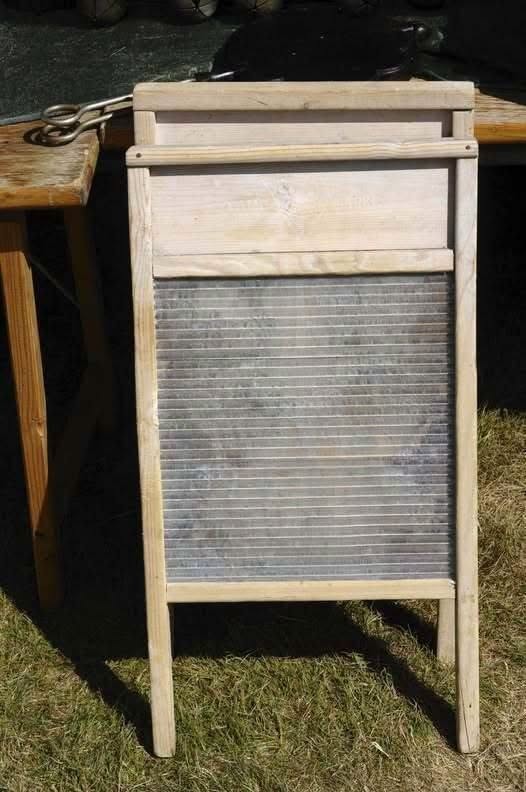
At a yard sale, flea market, or estate auction, an old laundry wringer can easily be mistaken for an unfamiliar piece of machinery. Its heavy metal frame, hand crank, rollers, and weathered finish may look out of place among modern household goods. Yet this practical device was once a central part of laundry day in homes across the United States and in many other parts of the world.
Before automatic washing machines and electric dryers became widely available, washing clothes required substantial time, planning, water, heat, and physical effort. The laundry wringer, also known as a mangle in some contexts, did not wash garments itself. Instead, it removed much of the water from freshly washed fabrics before they were hung on a line or placed near a heat source to dry. Though simple in principle, the wringer helped reduce one of the most demanding stages of traditional laundry work.
Today, antique laundry wringers are valued as reminders of domestic history, industrial design, and the often-overlooked labor involved in maintaining a household. Their story also helps explain how household technology changed daily life, particularly for the people who performed routine unpaid work at home.

What Is an Old-Fashioned Laundry Wringer?
A traditional laundry wringer is a mechanical device designed to press water from wet textiles. Most examples consist of two rollers mounted close together in a sturdy frame. A person feeds an item of clothing, a towel, or a sheet between the rollers while turning a hand crank. As the rollers rotate, they compress the fabric and force excess water into a tub, basin, or drain below.
Many early wringers were made with cast-iron frames because the material was durable and could withstand repeated use in damp environments. The rollers themselves varied by period and manufacturer. Some were made of wood, while later models often used rubber-covered rollers that were gentler on fabric and created more even pressure. Adjustment mechanisms allowed users to vary the gap between the rollers depending on the thickness of the material being processed.
A wringer could be mounted on a wash tub, attached to a washstand, or built into a wringer washing machine. The basic design was straightforward, but it offered an important advantage: clothes emerged significantly less saturated with water. That made line drying faster and reduced the effort required to handle heavy, wet textiles.
Laundry Day Before Modern Appliances
For much of the nineteenth and early twentieth centuries, laundry was among the most labor-intensive household responsibilities. It was commonly scheduled as a weekly task because it involved extensive preparation. Water had to be drawn, carried, and heated, especially in homes without indoor plumbing or a reliable hot-water supply. Soap had to be prepared or purchased, tubs had to be cleaned, and clothing had to be sorted according to color, material, and level of dirt.
Garments were soaked, scrubbed on washboards, rinsed several times, and sometimes boiled. Boiling white linens and other washable textiles was a common practice intended to help clean fabrics, although methods differed widely according to region, household income, available fuel, and the type of clothing involved. After washing and rinsing, the laundry remained extremely heavy because it retained large amounts of water.
Removing that water by hand was difficult. Twisting or squeezing garments manually could be slow and tiring, and it could put stress on fabric fibers. Larger items such as bed sheets, blankets, work clothes, and towels were especially challenging. The laundry wringer offered a mechanical alternative that saved time and reduced the amount of lifting and hand-wringing required.
The device did not eliminate the work of laundry, but it changed the pace of the task. A household still needed access to water, soap, washing equipment, drying space, and favorable weather if clothes were dried outdoors. Even so, the wringer became a useful tool in an era when every improvement in household efficiency could have a meaningful effect on daily routines.

How a Hand-Crank Laundry Wringer Worked
The operating principle of a hand-crank laundry wringer was based on compression. After an item had been washed and rinsed, the user placed one edge between the two rollers. Turning the crank caused the rollers to grip the fabric and pull it through. Water was pressed out as the garment passed through the narrow gap.
Using the machine properly required care. Clothing had to be fed evenly to prevent bunching, and buttons, hooks, zippers, or other hard objects could potentially damage the rollers or catch in the mechanism. Thick items were sometimes passed through more than once, while delicate fabrics required a wider roller setting or a more cautious approach.
Some models used spring-loaded mechanisms to maintain pressure while allowing the rollers to separate slightly for thicker fabrics. Others included a release feature intended to open the rollers quickly if material became caught. Over time, manufacturers introduced various refinements, including improved roller materials, locking mechanisms, and designs intended to make the machine easier to attach to a tub or washing machine.
The wringer’s effectiveness depended on the amount of pressure applied, the condition of the rollers, and the type of fabric. It was particularly useful for sturdy everyday items such as cotton clothing, towels, linens, and work garments. By removing a substantial portion of retained water, it could shorten drying time on a clothesline and reduce the chance that heavy fabrics would drip excessively indoors.
The Social Importance of Laundry Technology
The history of the laundry wringer is also part of the wider history of domestic labor. In many households, laundry duties were performed primarily by women, including mothers, daughters, domestic workers, and laundresses. This division of labor was shaped by social expectations, economic conditions, and limited access to labor-saving appliances.
Historians of everyday life have noted that household appliances did not simply create leisure time overnight. They often changed standards of cleanliness, altered the amount of laundry families expected to wash, and shifted how domestic work was organized. Nevertheless, equipment such as wringers, washing machines, indoor plumbing, and electric irons did reduce some of the physically demanding aspects of household work.
For families without hired help, these tools could make a noticeable difference. A wringer reduced the need to twist wet items by hand, while the later development of powered washers helped automate agitation and rinsing. The gradual spread of household electricity in the twentieth century made these changes more accessible, although adoption varied considerably between urban and rural communities and between households with different incomes.
The appliance’s history therefore reflects broader changes in public infrastructure, manufacturing, consumer culture, and family life. A simple machine found in a basement or barn can reveal much about how previous generations managed routine tasks with limited resources and considerable practical skill.

Safety Concerns With Vintage Laundry Wringers
Although a wringer was useful, it required close supervision. The rollers could pull in fabric quickly, and users needed to keep hands, loose sleeves, long hair, and other objects away from the moving parts. Older models generally lacked the safety protections expected in contemporary household appliances.
Children were especially vulnerable if they were allowed to play near a working wringer. Families that used these machines often taught children to keep their distance or assigned them only safer tasks, such as carrying clothespins or sorting dry laundry. Manufacturers eventually added improvements such as pressure-release features and more protective roller assemblies, but no vintage machine should be assumed safe simply because it appears sturdy or functional.
Collectors who restore antique wringers should inspect them carefully for rust, damaged gears, unstable mounting hardware, cracked rollers, and weakened springs. A decorative restoration may be appropriate for many items, while operating an old wringer may not be advisable without expert assessment. Anyone using a vintage model should follow applicable safety guidance, keep children away from the equipment, and avoid using damaged machinery.
How Automatic Washing Machines Replaced the Wringer
The decline of the standalone laundry wringer was linked to the expansion of electric washing machines, improved plumbing, and the eventual popularity of automatic washers with spin cycles. Early electric washing machines often still used wringers, combining powered washing action with manually operated rollers. These wringer washers remained common in many homes for decades.
Later automatic machines simplified the process further by washing, rinsing, draining, and spinning garments in one appliance. A high-speed spin cycle removed water without requiring users to guide fabric through exposed rollers. Electric clothes dryers, while not universal in every country or household, added another layer of convenience by reducing reliance on outdoor weather conditions.
These technologies helped make laundry faster and less physically demanding. They also changed the design of homes, with dedicated laundry rooms, utility spaces, electrical outlets, water connections, and dryer vents becoming more common in some regions. In places where line drying remains practical, economical, or culturally preferred, washing machines still commonly handle water extraction through spinning rather than a separate wringer.
The transition was gradual rather than immediate. Rural households and communities with limited infrastructure often continued using manual equipment long after automatic appliances appeared in advertisements and city stores. In some parts of the world, hand-operated laundry tools remain useful where electricity, water supply, or appliance repair services are less dependable.
Why Antique Laundry Wringers Still Interest Collectors
Antique laundry wringers appeal to collectors for several reasons. They are durable examples of practical engineering, and many carry manufacturer names, patent information, or decorative details that help identify their age and origin. Their solid construction also makes them visually distinctive objects for museums, heritage sites, farm displays, and historically inspired interiors.
For families, a wringer may hold personal meaning. It can recall the routines of parents or grandparents, a childhood home, or the resourcefulness of relatives who repaired and reused household items rather than replacing them. In this sense, the object is more than an antique. It is a connection to lived experience and family memory.
Collectors should avoid assuming that every old wringer is rare or highly valuable. Value depends on factors including condition, brand, completeness, age, local demand, historical documentation, and whether the device retains original parts. Cleaning should be done carefully, as aggressive polishing or repainting can remove original finishes and markings that may be important to historians or collectors.
When identifying a wringer, look for cast lettering, stamped serial numbers, patent dates, company logos, and distinctive design features. Local historical societies, appliance museums, antique-tool organizations, and qualified appraisers may be able to help establish its background. Photographs taken before restoration can also preserve useful evidence of the item’s original condition.
A Lasting Symbol of Everyday Household History
The old-fashioned laundry wringer remains a powerful symbol of the work hidden within ordinary domestic life. It represents long wash days, practical craftsmanship, and the gradual transformation of household routines through technology. Its scratches, worn handle, and rusted frame may suggest age, but they also point to years of repeated use in the service of a household.
Modern appliances have made washing and drying clothes far more convenient for many people, but the history of the wringer offers valuable perspective. It reminds us that routine tasks once demanded significant physical energy and careful coordination. It also shows that technological change is often built from modest improvements: a pair of rollers, a hand crank, and a device designed to make a difficult job a little more manageable.
Whether found in a yard sale, displayed in a museum, or preserved in a family collection, a vintage laundry wringer provides a tangible link to the past. It invites a closer look at the tools that shaped everyday life and at the generations whose labor kept homes, clothing, and communities functioning.
Sources
Disclaimer: This content is intended for entertainment purposes only and is not based on real events.