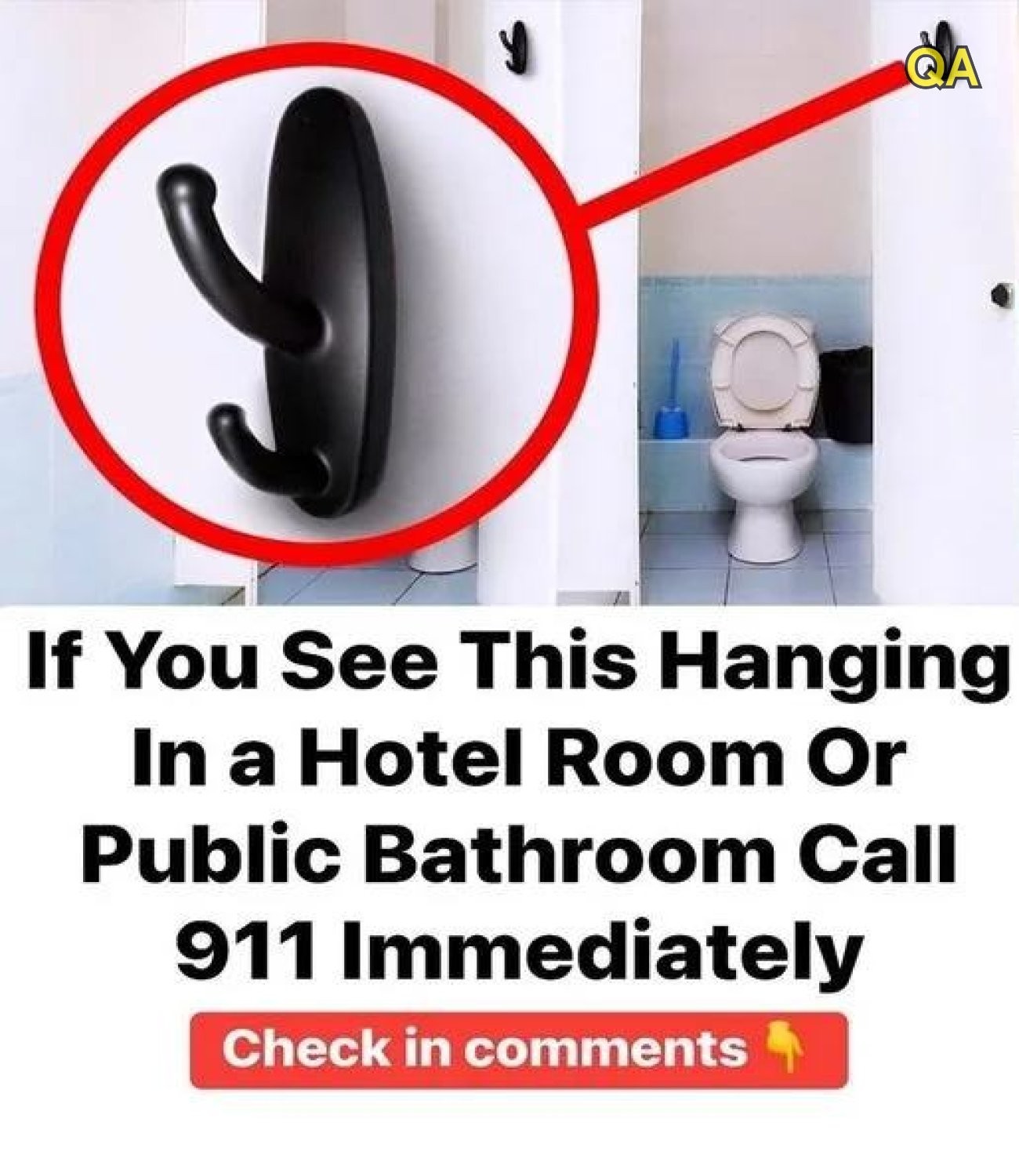
Coat hooks, wall fixtures, hangers, smoke alarms, clocks, and charging adapters are familiar items in hotels and public facilities. In nearly all cases, they are exactly what they appear to be: ordinary objects designed for convenience, safety, or maintenance. However, concerns about privacy can arise when an item seems unusually placed, modified, or directed toward an area where a person would reasonably expect privacy.
Reports of concealed recording devices have circulated for years, including claims involving cameras disguised as hooks or other common objects. The possibility is understandably unsettling, particularly in hotel bathrooms, changing rooms, locker facilities, and public restrooms. Still, the most useful response is not panic. It is calm awareness, respect for evidence, and prompt reporting through the appropriate channels.
If you see an object that appears genuinely suspicious in a private area, do not touch, remove, dismantle, or publicize it online. Leave the area if you feel unsafe, notify the property manager or staff, and contact law enforcement when there is a credible concern that an unlawful recording device may be present. In the United States, 911 is intended for emergencies or situations requiring immediate police, fire, or medical assistance. For concerns that are not urgent, local non-emergency police services may be more appropriate.
Why Suspected Hidden Cameras Are a Serious Privacy Concern
People have a strong and reasonable expectation of privacy in places such as bathrooms, fitting rooms, changing areas, hotel bedrooms, and locker rooms. Secret recording in these settings can cause emotional distress, undermine personal safety, and violate privacy laws. Laws differ by country, state, and local jurisdiction, but unauthorized recording in places where someone expects privacy is often prohibited and may lead to criminal or civil consequences.
The issue is not the existence of small cameras themselves. Cameras can have lawful and helpful uses, including home security, business security, wildlife observation, video calls, and accessibility technology. The concern arises when any device is used to record someone without their knowledge or consent in a location where recording would be inappropriate or unlawful.
Hotels and public facilities have responsibilities to maintain safe environments, respond seriously to credible reports, and cooperate with law enforcement investigations when necessary. Guests and visitors also have a role: report concerns responsibly, avoid making unsupported accusations, and protect the privacy of any potential victim.
Can a Coat Hook Really Conceal a Camera?
Modern cameras can be very small, and some commercially available products are designed to resemble everyday items. That does not mean every unusual fixture is a recording device. Many legitimate items have holes, seams, screws, sensors, indicator lights, or unusual shapes because of how they are manufactured or installed.
A standard coat hook may include screw holes, mounting plates, decorative details, or recessed sections. Some public restrooms also contain occupancy sensors, ventilation controls, accessibility equipment, emergency alarms, or maintenance hardware. These features should not automatically be treated as evidence of surveillance.
Context matters. A concern may be more credible if an unfamiliar object appears recently attached in a changing area, points toward a toilet, shower, bed, or undressing space, or has a small lens-like opening positioned in a way that does not seem connected to its stated function. Even then, only trained staff or law enforcement can properly assess the object and preserve possible evidence.
Warning Signs That May Justify Reporting an Object
There is no single visual sign that can reliably prove an object contains a hidden camera. It is better to look for several factors rather than relying on one detail. The following signs can justify asking staff or authorities to inspect an item:
- An unfamiliar fixture appears to have been placed where it has a clear view of a shower, toilet, dressing area, bed, or changing space.
- A hook, clock, detector, mirror, or other object seems loosely attached, recently installed, or inconsistent with similar fixtures in the room.
- An object has unexplained openings or reflective points that appear directed toward a highly private area.
- There are visible wires, batteries, electronic components, memory cards, or adhesive attachments that do not appear necessary for the object’s ordinary purpose.
- Hotel staff cannot identify the item, explain its purpose, or confirm that it belongs in the room or facility.
These observations are not proof of wrongdoing. Avoid confronting another guest, employee, or visitor based only on suspicion. A mistaken accusation can unfairly harm someone and may complicate an investigation. The safest approach is to document basic details for authorities without handling the item.
What to Do If You Suspect a Hidden Camera in a Hotel Room
If you are in a hotel room and notice a fixture or device that causes genuine concern, prioritize your immediate comfort and safety. You do not need to stay in a room that makes you feel unsafe. Move to a public area, such as the lobby, front desk, or another occupied space, and ask hotel management to address the concern.
- Do not touch the suspected object. Moving or dismantling an item could damage potential evidence, create confusion, or place you at risk if the object is not what it appears to be.
- Leave the private area if necessary. Take your personal belongings and go to a safer public location, especially if you feel threatened or believe active recording could be occurring.
- Notify hotel management. Ask for a manager or security representative and clearly describe what you saw, where it is located, and why it seems out of place.
- Request a different room. A hotel may be able to relocate you while the matter is reviewed. If you do not feel comfortable with the response, consider leaving and finding alternative accommodation.
- Contact police when appropriate. If there is immediate danger, evidence of a crime, or an urgent risk to another person, call emergency services. Otherwise, ask local police about the appropriate non-emergency reporting route.
- Record simple factual details. Write down the time, location, room number, names of staff members spoken to, and any incident report number. Avoid sharing images that could expose private spaces or other guests.
If you are traveling internationally, save local emergency numbers before your trip. In many countries, 112 can connect callers to emergency services, while the United States and Canada use 911. The United Kingdom uses 999 for emergencies and 101 for non-emergency police matters. Hotel reception staff can also help travelers identify the appropriate local contact.
What to Do in a Public Restroom, Changing Room, or Locker Facility
In a public restroom or changing facility, leave the area without interfering with the object. If possible, tell a supervisor, building manager, store manager, recreation center employee, or security officer immediately. State the facts: where the item is, what it looks like, and why it raised concern.
It is generally best not to remain in the area to investigate. Do not attempt to cover a suspected device, pull it from the wall, or search through nearby property. If authorities determine that a crime may have occurred, preserving the scene can be important.
When reporting a concern, be precise and neutral. For example: “There is an unfamiliar device or hook attached to the wall facing the changing area, and I am concerned it may be a camera.” This is more helpful than making a definite claim before the object has been inspected.
Why Social Media Is Not the Best First Response
People often turn to social media when they feel alarmed, but posting immediately can create additional problems. A photo or video of a restroom, hotel room, or changing area may accidentally reveal another person’s private information. It can also spread unverified claims, identify a business before facts are established, or alert a suspect that an investigation is underway.
Reporting to the property owner and police first is usually the most responsible choice. If a law enforcement agency confirms an incident and issues a public safety notice, share information from that official source rather than reposting rumors or dramatic claims. Reliable updates protect the public without unnecessarily causing fear.
Practical Privacy Habits for Hotel Guests and Travelers
Most travelers will never encounter an unlawful recording device. Nevertheless, a few sensible habits can help people feel more confident in unfamiliar accommodation. When entering a hotel room, take a moment to look around for basic safety features, including door locks, window latches, smoke detectors, and clearly identified hotel equipment.
Pay attention to objects that seem out of place rather than trying to inspect every item in the room. A device located in a public-facing living area may have a different purpose and legal context than an object directed toward a bathroom or sleeping area. Travelers should also remember that hotel policies, local laws, and accommodation standards vary widely.
Technology-based “camera detector” apps and devices are widely marketed, but their results can be unreliable. Many everyday electronics emit signals or reflect light, and a consumer tool cannot determine whether an object is recording unlawfully. Such tools should not replace a report to hotel management or police when there is a credible concern.
Legal and Ethical Considerations Around Recording
Privacy rules are not identical everywhere. Some jurisdictions regulate audio recording differently from video recording, and laws may distinguish between public spaces and private places. However, bathrooms, changing rooms, locker rooms, and hotel rooms are widely recognized as locations where privacy expectations are particularly high.
For hotel operators and facility managers, clear maintenance procedures can reduce concern and improve trust. Fixtures should be securely installed, identifiable, and consistent throughout a property. Staff should know how to respond respectfully when a guest reports a potential privacy issue, including escalating concerns to management and law enforcement when warranted.
For members of the public, the ethical principle is straightforward: every person deserves dignity and privacy when using facilities intended for personal care, changing clothes, or resting. Awareness should support that principle without encouraging fear of ordinary objects or unsupported accusations.
Stay Aware Without Becoming Alarmed
The idea of a camera concealed in a coat hook or other everyday fixture can be disturbing. Yet it is important to keep the risk in perspective. The overwhelming majority of hooks, hangers, and fixtures in hotels and public restrooms are normal and harmless. Treating every small hole, screw, or wall-mounted object as suspicious can cause needless stress.
A balanced approach is the most effective one. Trust your instincts when something is clearly out of place, remove yourself from the situation if you feel uncomfortable, and report a credible concern through official channels. Do not tamper with possible evidence, do not accuse someone without facts, and do not circulate private images or unverified claims online.
By responding calmly and responsibly, guests, businesses, and public facilities can help protect privacy while ensuring that genuine concerns receive the serious attention they deserve.
Sources
Disclaimer: This content is intended for entertainment purposes only and is not based on real events.