
Stool can provide useful day-to-day clues about digestive health. While it may not be a topic people discuss often, bowel movements can reflect changes in diet, hydration, physical activity, stress, medications, and the way the digestive system is functioning.
Most changes in stool are temporary and harmless. A meal rich in leafy vegetables can turn stool green, iron supplements can make it darker, and a busy or stressful week may affect how often someone uses the bathroom. However, persistent changes in stool color, shape, texture, frequency, or accompanying symptoms can sometimes warrant medical advice.
The key is not to judge a single bowel movement in isolation. Instead, pay attention to your usual pattern and note changes that continue, recur, or occur alongside symptoms such as abdominal pain, fever, unexplained weight loss, dehydration, or visible blood.
What Is Considered Normal Stool?
There is no single bowel pattern that is normal for every person. According to commonly used clinical guidance, healthy adults may have bowel movements anywhere from three times a day to three times a week. What matters most is whether the pattern is typical for you, comfortable, and not associated with pain, substantial straining, or a persistent feeling that you cannot fully empty your bowels.
Normal stool is often brown, soft but formed, and relatively easy to pass. Brown coloring comes largely from bile, a fluid made by the liver that helps digest fats. As bile travels through the intestines, its pigments change and contribute to the familiar brown appearance of stool.
Healthcare professionals may use the Bristol Stool Form Scale to describe stool consistency. This seven-point scale ranges from separate hard lumps to entirely liquid stool. Types 3 and 4, which are generally sausage-shaped with either cracks on the surface or a smooth, soft appearance, are often considered typical stool forms. Harder types may suggest constipation, while loose or watery types can occur with diarrhea.
Hard, Dry Stool and Constipation
Small, hard, dry stools that are difficult to pass can be associated with constipation. This often happens when stool moves slowly through the colon and too much water is absorbed from it. Occasional constipation is common and does not necessarily signal a serious problem.
Several everyday factors can contribute to constipation, including inadequate fluid intake, low fiber intake, reduced physical activity, changes in routine, travel, and delaying a bowel movement when the urge occurs. Some medicines, including certain pain medicines, may also slow bowel activity. Medical conditions can contribute as well, which is why persistent symptoms should be discussed with a clinician.
For many people, gradual dietary changes can help. Fiber-rich foods such as vegetables, fruit, beans, lentils, whole grains, nuts, and seeds add bulk to stool and may support regularity. It is important to increase fiber gradually and drink enough fluids, since a sudden increase in fiber can cause gas or bloating in some people.
Seek medical advice if constipation is new and persistent, significantly affects daily life, or is accompanied by bleeding, unexplained weight loss, ongoing abdominal pain, vomiting, or a major change in bowel habits.
Loose or Watery Stool and Diarrhea
Loose, frequent, or watery stool is commonly described as diarrhea. A short episode may result from a viral illness, foodborne illness, a reaction to medication, or a temporary dietary change. Some people also experience diarrhea related to food intolerances, anxiety, or chronic digestive conditions.
The main immediate concern with diarrhea is dehydration, especially in children, older adults, and people with certain medical conditions. Warning signs can include intense thirst, dry mouth, dark urine, urinating less often, dizziness, weakness, or unusual tiredness. Replacing fluids and electrolytes can be important during an acute episode.
Medical advice is appropriate when diarrhea is severe, lasts more than a few days in adults, keeps returning, or occurs with fever, blood in the stool, dehydration, significant pain, or unintentional weight loss. A healthcare professional can consider recent travel, food exposure, medicines, medical history, and other symptoms before deciding whether testing is needed.
What Stool Color May Mean
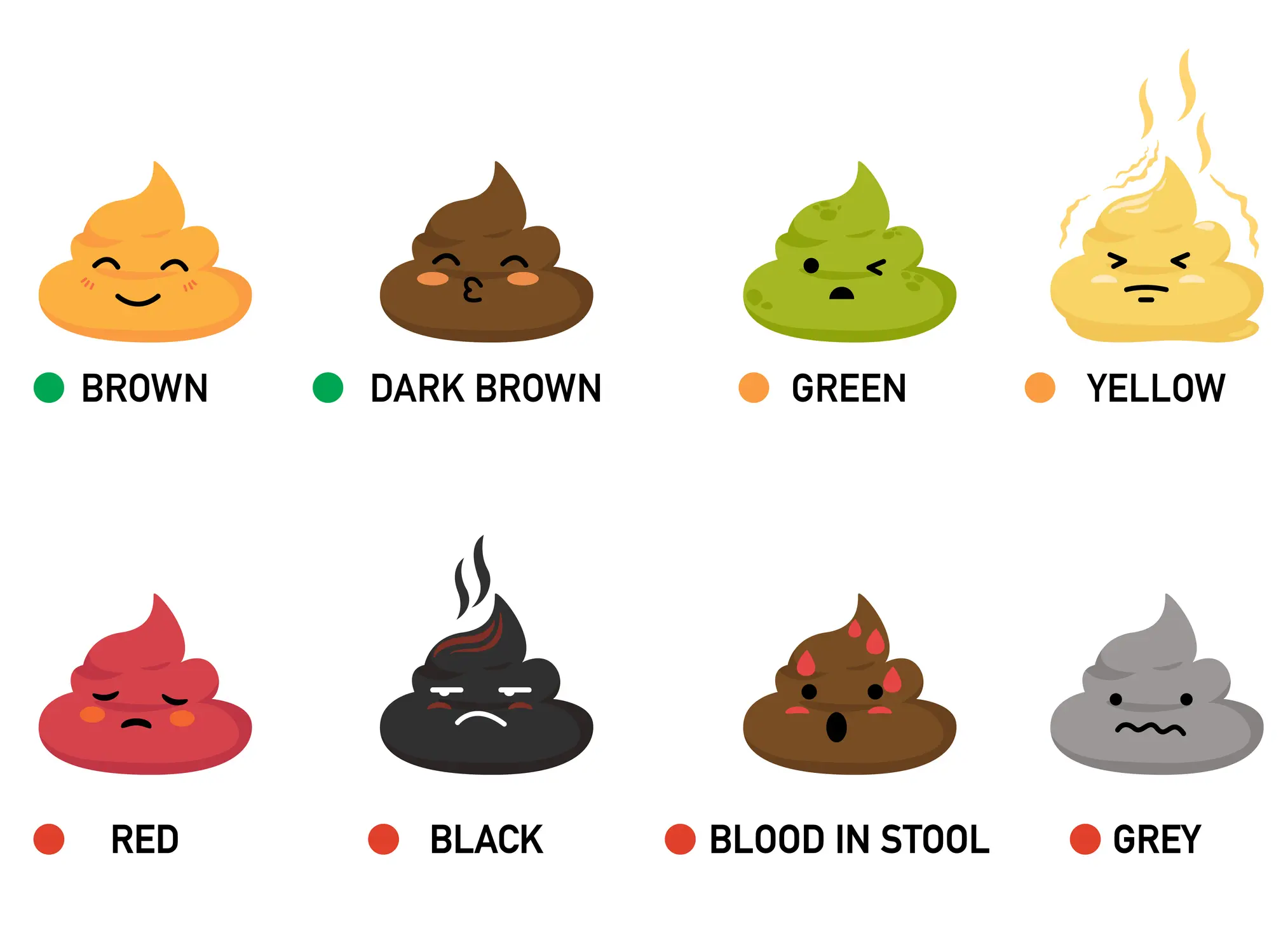
Stool color can vary for many ordinary reasons. Foods, food dyes, supplements, medications, and the speed at which material moves through the digestive tract can all affect its appearance. Color alone cannot diagnose a medical condition, but some persistent changes deserve attention.
Green Stool
Green stool is often harmless. It may follow meals containing spinach, kale, broccoli, or other green vegetables. Green or blue food coloring can also affect stool color. In other cases, stool may appear green because it moved through the intestines more quickly than usual, leaving less time for bile pigments to change from greenish to brown.
An occasional green bowel movement without other symptoms is usually not concerning. If green stool continues with diarrhea, fever, abdominal discomfort, or a notable change in bowel habits, it is reasonable to contact a healthcare professional.
Yellow, Greasy, or Oily Stool
Yellow stool can occur after dietary changes, but persistent stool that is pale yellow, greasy, oily, foul-smelling, floating, or difficult to flush may require assessment. These features can sometimes be associated with fat malabsorption, meaning the body is not digesting or absorbing fats as expected.
Fat malabsorption can have different causes involving the digestive system, liver, pancreas, or small intestine. Because appearance alone cannot identify the cause, recurring oily stool should be evaluated, particularly if it occurs with weight loss, fatigue, nutritional deficiencies, bloating, or abdominal pain.
Brown Stool
Brown remains the most common stool color. Shades can range from light brown to dark brown depending on food intake, bile pigments, and individual digestion. A small variation in shade is generally normal when stool remains formed and bowel habits are otherwise unchanged.
Black Stool
Some foods, medicines, and supplements can produce dark stool. Iron supplements are a common example, and products containing bismuth may also darken stool. However, black stool that is tar-like, sticky, and unusually foul-smelling can be a sign of bleeding higher in the digestive tract. Clinicians refer to this appearance as melena.
Black, tarry stool without a clear explanation should be assessed promptly. Urgent care is particularly important if it occurs with lightheadedness, fainting, weakness, shortness of breath, rapid heartbeat, or abdominal pain. Do not assume dark stool is harmless if these symptoms are present.
Red Stool or Blood in Stool
Red-colored stool may be linked to foods such as beetroot or to red food dyes. Nevertheless, bright red blood can also come from the lower digestive tract. Common causes include hemorrhoids and anal fissures, but blood can have other causes that require medical evaluation.
It is important not to self-diagnose rectal bleeding. Contact a healthcare professional if blood appears in the stool, particularly if it is recurrent or accompanied by a change in bowel habits, persistent pain, weakness, black stool, or unexplained weight loss. Heavy bleeding, fainting, severe weakness, or severe pain requires urgent medical care.
Pale, Gray, or Clay-Colored Stool
Very pale, gray, or clay-colored stool may indicate that too little bile is reaching the intestine. Bile contributes to normal brown stool color, so problems affecting bile flow may change stool appearance. Conditions involving the liver, gallbladder, bile ducts, or pancreas can sometimes be involved.
One isolated pale bowel movement may not be significant, but persistent pale stool should be assessed. Prompt medical advice is especially important if it occurs with yellowing of the skin or eyes, dark urine, fever, abdominal pain, or persistent itching.
Floating Stool, Odor, and Mucus
Stool that floats is not automatically a sign of illness. Extra intestinal gas can make stool less dense and cause it to float. However, repeated floating stool combined with an oily appearance, difficulty flushing, a greasy film in the toilet, or weight loss may suggest that fat is not being absorbed normally.
Stool naturally has an odor because it contains bacteria and digestive waste products. A temporary change in smell often reflects diet. Persistently unusually foul-smelling stool, especially with diarrhea, greasy stool, abdominal discomfort, or weight loss, should be considered in the context of other symptoms and discussed with a clinician if it continues.
The intestines naturally make mucus to lubricate the digestive tract. A small amount may occasionally be noticed in stool. Larger or recurring amounts of mucus, particularly when accompanied by blood, fever, persistent diarrhea, pain, or changes in bowel habits, should be medically reviewed.
How Diet, Hydration, Stress, and Medication Affect Bowel Movements
Daily habits often influence bowel movements more than people realize. Fiber helps support stool bulk and regularity, while adequate fluid intake helps keep stool from becoming excessively hard. Individual fluid needs vary with climate, activity level, health conditions, and diet, so there is no universal amount that suits everyone.
Physical activity may also support regular bowel function. In contrast, inactivity, disrupted routines, and ignoring the urge to have a bowel movement can contribute to constipation in some people.
The gut and brain communicate closely, sometimes called the gut-brain connection. During stressful periods, some people notice bloating, constipation, looser stools, or changes in appetite. Stress management, regular sleep, and movement may help overall well-being, but persistent digestive symptoms should not simply be attributed to stress without appropriate medical consideration.
Medicines and supplements can alter stool appearance and frequency. Iron can darken stool, some pain medicines can cause constipation, and antibiotics may cause diarrhea in some people. If symptoms begin after starting a new medication or supplement, ask a doctor or pharmacist whether it could be related. Do not stop prescribed medicine without professional advice.
When to Seek Medical Care for Stool Changes
Most occasional changes are not emergencies. Still, it is important to seek professional advice for persistent or concerning symptoms. Contact a healthcare professional for ongoing constipation or diarrhea, repeated blood in the stool, persistent pale stool, recurrent greasy stools, unexplained weight loss, or a sustained change from your normal bowel pattern.
Seek urgent medical help for significant rectal bleeding, black tarry stool with weakness or dizziness, severe abdominal pain, fainting, severe dehydration, or symptoms that become rapidly worse. These symptoms need timely assessment because they can have causes that cannot be safely evaluated through stool appearance alone.
Practical Ways to Support Digestive Health
Healthy digestive habits do not require restrictive cleanses or unproven supplements. A balanced approach is generally more useful:
- Eat a varied diet that includes fiber-rich plant foods.
- Increase fiber gradually rather than making sudden large changes.
- Drink fluids regularly according to your individual needs.
- Stay physically active when possible.
- Respond to the natural urge to have a bowel movement.
- Keep track of new medications, supplements, and dietary changes.
- Seek medical guidance for symptoms that persist or raise concern.
Final Thoughts
Your stool can be a useful indicator of digestive patterns, but it is not a stand-alone diagnostic tool. Food, hydration, medication, stress, and routine changes can all affect color and consistency. Looking for trends over time is more helpful than worrying about a single unusual bowel movement.
Brown, soft, formed stool is common, but normal varies from person to person. If a change persists, is unexplained, or is accompanied by warning signs such as blood, black tarry stool, severe pain, dehydration, weight loss, or ongoing diarrhea or constipation, seek advice from a qualified healthcare professional.
Sources
Disclaimer: This content is intended for entertainment purposes only and is not based on real events.