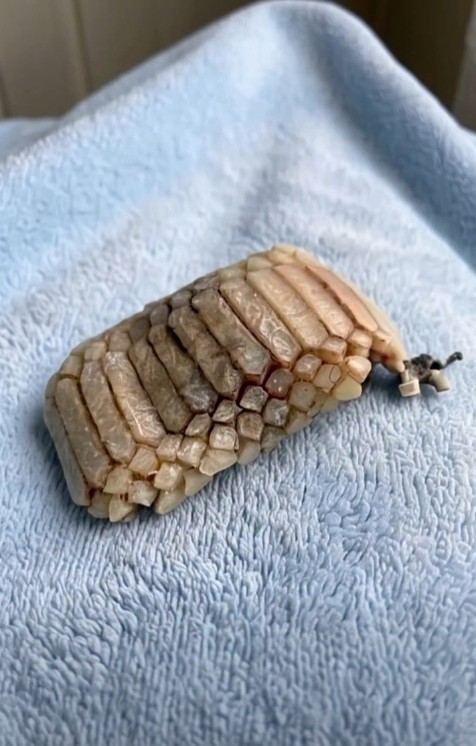
I Spotted a Strange Object Floating Near the Beach. What Could It Be?
An unfamiliar object drifting near the shoreline can prompt a surprising number of questions. Is it part of a shell, coral, a sea urchin, a rock shaped by the waves, or a piece of weathered human-made debris? While a single observation rarely provides a certain answer, careful attention to shape, texture, location, and safety can help narrow the possibilities.
A Hard Surface Is an Important First Clue
When a strange object appears in shallow water, its firmness is often the first noticeable feature. Seaweed, seagrass, and many pieces of drifting plant material tend to bend or compress. An object that remains rigid may instead be a shell fragment, a mineral-rich marine structure, a stone, or durable debris that has spent time in the sea.
However, hardness alone cannot identify a beach find. Many natural materials found along coastlines are hard because they contain minerals, particularly calcium carbonate. Mollusk shells, coral skeletons, and parts of sea urchins are common examples. At the same time, certain plastics, ceramics, glass, wood, and fishing-related materials can become smooth and unusually shaped after exposure to waves and sand.
The most useful next step is to look beyond the initial impression. Does the object have a curved outer surface? Are there layers, fine ridges, holes, or repeating patterns? Is one edge sharp and freshly broken, or is it rounded from long-term abrasion? These details are generally more informative than simply noting that the object feels solid.
Common Natural Explanations for a Strange Beach Object
Shell Fragments From Mollusks
Shell fragments are among the most common hard objects found near the waterline. Clams, oysters, mussels, scallops, snails, and many other mollusks produce protective shells. Most shells are made largely of calcium carbonate, a mineral that can remain recognizable after the animal is no longer present.
A broken shell may show a smooth inner surface and a more textured outer surface. Depending on the species, it may also retain growth lines, radial ribs, spiral patterns, a hinge area, or a thin layered edge. Some fragments have a glossy appearance, while others become dull after being worn by sediment and saltwater.
Wave action can make shell identification difficult. A shell that was once clearly shaped like a clam or snail may be reduced to a small curved piece with only a faint ridge. Even so, the presence of visible layers or an interior that differs in color and texture from the exterior can be useful evidence that the object originated from a shell.
Coral Skeletons and Other Reef Material
Coral is another possible explanation in coastal regions where coral reefs or coral-bearing waters occur. Although coral is often mistaken for a plant or rock, reef-building corals are animals. Many species produce hard calcium carbonate skeletons that remain after the living tissue is gone.
A coral fragment may have a porous appearance, with small cups, chambers, or repeated openings that reflect the structure of individual coral polyps. Yet not every porous beach object is coral. Some rocks naturally contain holes, and marine organisms such as boring sponges, worms, and mollusks can alter shells and stones over time.
Because coral reefs are vulnerable ecosystems, visitors should avoid removing coral, especially in protected areas. Regulations differ by location, and even apparently dead coral may be ecologically important habitat or part of a protected shoreline environment. A photograph is often a better option than collecting an uncertain specimen.
Sea Urchin Tests and Marine Skeletons
A sea urchin may leave behind a hard internal framework called a test. Sea urchins are echinoderms, a group that also includes sea stars and sand dollars. Their tests are formed from tightly fitted calcium carbonate plates. When the spines are absent, an urchin test can look surprisingly unfamiliar to someone expecting a shell.
An intact sea urchin test is often rounded or flattened and may display a patterned arrangement of small openings. Sea urchin fragments can retain curved sections and subtle rows of tiny bumps where spines were attached. Sand dollars, which are closely related to sea urchins, can also leave flattened skeletal remains with distinctive petal-like patterns.
It is important not to handle living urchins. Some species have sharp spines, and certain species can cause painful injuries. A hard object that resembles a marine animal should therefore be observed carefully before it is touched. When in doubt, keep a respectful distance and seek help from a local naturalist, lifeguard, ranger, or marine education center.
Barnacles, Tubeworms, and Encrusting Organisms
Hard objects at the shore may also include colonies or remains of smaller marine animals. Barnacles, for example, are crustaceans that attach themselves to rocks, shells, pilings, boats, and floating debris. Their outer plates can remain after the animal is gone, forming small cone-shaped structures with visible segments.
Marine tubeworms can also create hard tubes attached to other surfaces. These structures may appear as irregular white, gray, or off-white ridges, curls, or clusters. If an unfamiliar object has several small hard structures attached to it, it may be a piece of shell, rock, wood, or debris that has become a surface for marine life.
Why Waves and Sand Make Beach Finds Difficult to Identify
The shoreline is a highly active environment. Tides move water in and out, currents transport material along the coast, and waves repeatedly roll objects through sand, shell fragments, and small stones. This process can transform a recognizable item into something far more ambiguous.
Scientists often refer to this physical wearing process as abrasion. As an object moves in the surf, sharp edges can become rounded, delicate features can break away, and surface details can fade. A shell fragment may lose its original color. A piece of coral may lose some of its finer structure. A stone may become polished enough to resemble a bone, tooth, or part of an animal.
Where an object is found does not necessarily reveal where it originated. It may have formed in nearby shallow water, washed in from a reef or rocky outcrop, traveled along the coast, or arrived from offshore after a storm. Floating objects can be especially difficult to interpret because buoyancy may allow them to move long distances before reaching the shallows.
For this reason, the beach itself is part of the identification process. A rocky shore, a sandy beach, an estuary, a mangrove area, and a reef-adjacent coastline each have different natural materials and marine communities. Local context can help an expert distinguish a common shell fragment from something less familiar.
Could the Object Be a Rock or Mineral Fragment?
Natural stones can imitate the appearance of marine remains remarkably well. Water-worn limestone, for example, may have a pale color and a surface that resembles shell or coral. Sedimentary rocks can contain shell fragments or fossil impressions, while volcanic rocks may have holes formed by trapped gases.
A rounded stone can also look artificial or biological simply because wave action has created a regular shape. The human brain is especially good at recognizing familiar forms, including faces, animals, and bones, in uncertain patterns. This tendency can make an ordinary rock seem more mysterious than it is.
Looking for mineral grains, uneven natural fractures, and a consistent rocky texture can help distinguish a stone from a shell. Still, visual inspection is not always enough. A local geology museum, university extension program, coastal visitor center, or natural history organization may be able to provide guidance from clear photographs.
Weathered Marine Debris Is Another Possibility
Not every unusual object in the water comes from nature. Plastic, rubber, rope, foam, ceramic, glass, and fishing equipment can be reshaped by long periods in the marine environment. Sunlight, saltwater, and friction with sand can fade colors and smooth edges, making manufactured debris harder to recognize.
A straight seam, evenly repeated pattern, molded edge, lettering, or uniform thickness may suggest a manufactured origin. Fragments of equipment can also become covered with algae, barnacles, or other organisms, further disguising their original purpose.
If an item appears to be debris, it should not automatically be handled. Sharp edges, fishing hooks, tangled line, chemical containers, and unknown materials can create risks. Beachgoers can report hazardous debris to local authorities, park staff, or coastal cleanup organizations. If it is clearly safe and local rules permit, removing small pieces of litter can help protect wildlife from entanglement or ingestion.
How to Identify an Unfamiliar Object Found Near the Beach
The most reliable way to investigate a beach find is through careful, non-destructive observation. Before moving an object, consider whether it may be alive, protected, sharp, or potentially hazardous. A photograph taken in place can preserve valuable details while reducing disturbance.
Useful photographs include an image from above, side views, close-ups of the surface, and a picture with a familiar object for scale, such as a coin or ruler. Do not place a scale item directly beside an organism if doing so would disturb it. Note the date, general location, tide conditions if known, shoreline type, and whether the object was floating, resting in sand, or attached to something else.
Features worth documenting include:
- Overall shape: flat, rounded, cone-shaped, spiral, tubular, or irregular.
- Surface texture: smooth, layered, porous, ridged, segmented, or grainy.
- Patterns: growth lines, holes, repeating cups, plates, seams, or small spine attachment points.
- Edges: freshly broken, thin and layered, naturally fractured, or heavily rounded.
- Color and material: chalky white, pearly, translucent, stony, plastic-like, or fibrous.
- Nearby habitat: sand, rocks, tide pools, seagrass, mangroves, docks, or reef-associated waters.
Citizen-science communities and local marine organizations can sometimes help identify an object from photographs. However, online suggestions should be treated as preliminary unless confirmed by a qualified local expert. Species and geological materials vary widely by region, and an identification that is plausible in one country may be unlikely in another.
Respect Wildlife and Local Coastal Rules
Coasts are shared habitats for wildlife, residents, researchers, and visitors. Many beaches have rules governing the removal of shells, coral, rocks, fossils, driftwood, or living organisms. Protected parks, marine reserves, and nesting areas may have stricter requirements. Checking local guidance helps ensure that curiosity does not unintentionally damage a sensitive ecosystem.
It is also wise to avoid touching unfamiliar animals and animal remains. Some marine creatures are fragile, while others may have spines, stinging cells, or irritating surfaces that are not immediately obvious. Observing from a safe distance is usually enough to learn more, especially when clear photographs are available.
For anyone interested in coastal life, a field guide written for the local region can be valuable. Museums, aquariums, universities, and government coastal agencies often publish educational resources about common shells, invertebrates, marine debris, and shoreline safety.
The Most Likely Answer May Depend on Details That Were Missed
A hard, unfamiliar object floating near a beach could plausibly be a shell fragment, a coral piece, part of a sea urchin test, a barnacle-covered item, a water-worn stone, or weathered debris. The original observation of a hard surface is useful because it makes soft seaweed less likely, but it does not settle the question.
The answer often lies in small features: a shell’s layered edge, coral’s repeating skeletal structure, an urchin test’s patterned plates, a stone’s mineral grain, or a manufactured object’s seam. Shoreline conditions may obscure these clues, which is why photographs from multiple angles and knowledge of the local coast are so helpful.
Until those details are available, the most accurate conclusion is that the object remains unidentified. That uncertainty is not a failure of observation. Beaches constantly reshape natural materials and carry objects from many different environments, making them fascinating places where geology, marine biology, weather, and human activity meet.
Sources
Disclaimer: This content is intended for entertainment purposes only and is not based on real events.