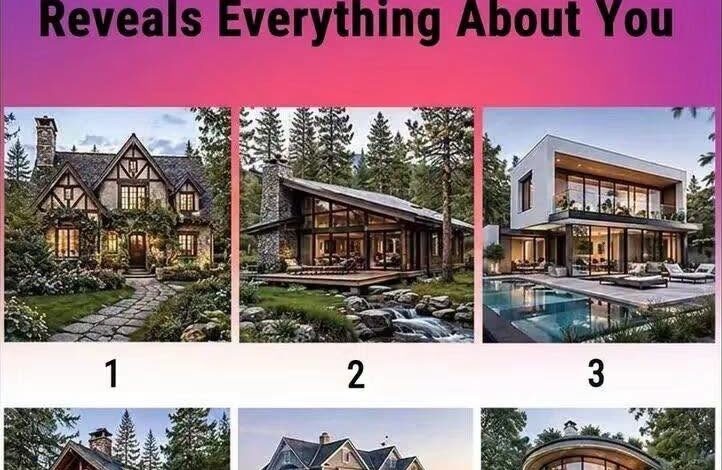
Which House Would You Choose to Live In for the Rest of Your Life?
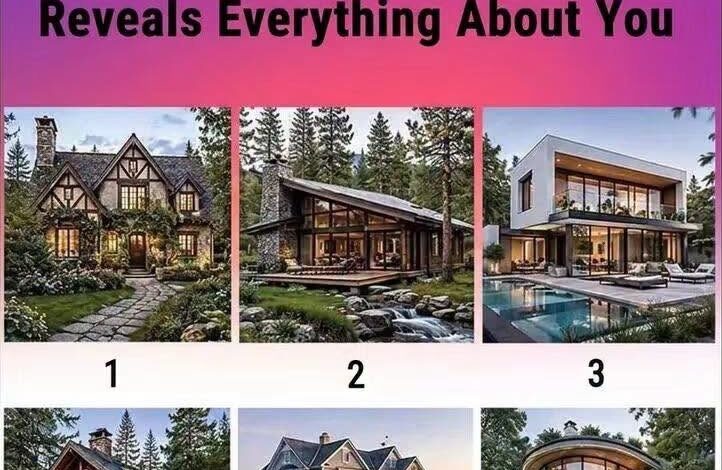
Imagine being offered six very different homes and being asked to choose only one: the place where you would live for the rest of your life. There would be no later exchange, no major change of plan, and no opportunity to begin again somewhere else. Would you select a welcoming cottage, a private retreat, a sleek modern villa, a mountain lodge, a coastal home, or a contemporary house surrounded by nature?
At first, this may seem like a simple visual preference challenge. Yet a home choice often reflects more than architecture or decoration. It can encourage people to think about the routines, relationships, surroundings, and practical priorities that matter most to them. Some people picture a busy home filled with visitors and family meals. Others imagine calm mornings, a short walk to nature, a view of the sea, or a space designed for creativity and efficient living.
This exercise is intended as a thoughtful and entertaining way to explore lifestyle preferences. It is not a scientific personality test, psychological assessment, or prediction of future success. A single housing preference cannot define an individual’s character. However, the type of home that feels most appealing may offer a useful snapshot of what someone values at this moment in life.
Why Home Preferences Can Feel So Personal
A home is more than a building. It can provide shelter, privacy, stability, community, and a setting for everyday life. Housing decisions are often shaped by a combination of personal taste and real-world considerations, including household size, work arrangements, access to services, affordability, climate, transport, and safety.
Research and public policy discussions about housing regularly emphasize that suitable housing affects well-being. The World Health Organization notes that healthy housing involves factors such as adequate space, safety, indoor conditions, and protection from environmental risks. Meanwhile, decisions about where to live may also influence access to education, health care, employment, social networks, and recreation.
For that reason, a dream home may look different for every person. A compact house in a close-knit neighborhood could be ideal for one household, while another may prefer a more secluded property with room for hobbies, remote work, or outdoor activity. The best choice is rarely determined by size or cost alone. It depends on whether the home supports the life its residents want to live.
House 1: A Warm and Welcoming Home
House 1 represents warmth, loyalty, familiarity, and meaningful connection. People who are drawn to this kind of home may be attracted to the idea of shared meals, family traditions, comfortable rooms, and a space where friends or relatives feel welcome. Its appeal may come from a sense of continuity rather than a desire for the newest or most impressive features.
If this is your preferred home, you may value a lifestyle centered on belonging and everyday comfort. A practical kitchen, flexible dining area, guest room, garden, or living space that encourages conversation might matter more than high-end finishes. For many households, these features can make a home feel adaptable as circumstances change over time.
There are practical questions to consider as well. A home intended for gatherings may require enough storage, durable materials, and a layout that accommodates children, visitors, or multigenerational family members. Prospective buyers may also want to assess local schools, transport links, health services, and ongoing ownership costs. The emotional appeal of a welcoming home is important, but long-term comfort often depends on matching that feeling with a realistic budget and manageable maintenance needs.
House 2: A Private Retreat for Peace and Reflection
House 2 reflects privacy, quiet, and the appeal of a slower pace. It may be especially attractive to people who enjoy peaceful surroundings, personal space, and a small circle of trusted relationships. Choosing this home does not necessarily mean avoiding people; instead, it may suggest that time alone or in a calm environment is an important way to rest and recharge.
A private home can support activities such as reading, gardening, creative work, meditation, or simply spending time away from busy streets and crowded schedules. In an era when many people balance digital communication, commuting, and demanding work routines, the idea of a peaceful refuge can be particularly appealing.
However, privacy should be balanced with accessibility. A secluded location may involve longer travel times, limited public transport, fewer nearby shops, or more complicated access to emergency and health services. Buyers should consider internet reliability if they work remotely, as well as road conditions, utilities, local planning rules, and the cost of maintaining a property that is far from urban centers. A quiet home can be deeply rewarding when its location supports both independence and practical daily needs.
House 3: The Modern Villa and the Appeal of Achievement
House 3, a luxury modern villa, may symbolize ambition, confidence, and a desire to enjoy the results of hard work. Its clean design, contemporary features, and polished appearance can appeal to people who value achievement, comfort, and efficient spaces. For some, this type of home represents a personal milestone or the freedom to create a living environment that matches their goals.
Modern homes may offer benefits such as open layouts, updated appliances, smart-home technology, improved insulation, and spaces designed for entertaining or working from home. Yet luxury is not always synonymous with long-term value. A larger or more elaborate property can bring higher insurance premiums, property taxes, utility bills, landscaping expenses, and repair costs.
Anyone considering a high-value property should review the full cost of ownership, not just the purchase price. This can include mortgage terms, homeowners’ association fees where applicable, maintenance reserves, local taxes, and insurance coverage. Consumer finance guidance commonly advises buyers to leave room in their budgets for unexpected repairs and changing household circumstances. A home can feel like an achievement while still being financially sustainable.
House 4: A Mountain Lodge for Independence and Adventure
House 4, the mountain lodge, represents freedom, resilience, and a connection with the outdoors. It may appeal to people who enjoy hiking, changing seasons, open landscapes, or the feeling of being away from dense urban environments. The attraction may not be about isolation alone. It can also be about choosing a lifestyle with more direct contact with nature and more opportunities for physical activity.
Mountain living can offer impressive scenery and recreational opportunities, but it requires thoughtful preparation. Weather patterns may affect travel, heating needs, road access, water supply, and property maintenance. In some regions, residents should understand local risks related to severe weather, wildfire conditions, landslides, or snow and ice. The specific risks vary significantly by country and location, so local authorities and qualified professionals are important sources of advice.
A mountain home may be a strong fit for someone who values self-reliance and outdoor access, provided they are prepared for its responsibilities. Before choosing such a property, it is wise to examine year-round access, emergency services, insulation, drainage, energy sources, and the availability of reliable communications. The right lodge can offer both adventure and comfort when planning is grounded in local conditions.
House 5: A Coastal Home and a Balanced Lifestyle
House 5, a coastal dream home, may evoke optimism, relaxation, and emotional balance. Water views, open skies, and access to beaches or waterfront paths often make coastal communities attractive to people who want a more restorative daily setting. This choice may suggest a preference for shared experiences, leisure, and making time to appreciate the environment.
Living near the coast can support outdoor recreation and tourism, but prospective homeowners should carefully assess environmental conditions. Coastal properties may face elevated exposure to flooding, storm surge, wind, salt-air corrosion, and changing insurance requirements. These issues are not the same in every coastal area, and risk can differ even between nearby streets.
Reliable local flood maps, building inspections, insurance information, and government guidance can help buyers make informed decisions. Climate resilience is increasingly part of responsible property planning in many parts of the world. A coastal home can remain a wonderful choice, but it is important to understand construction standards, evacuation routes where relevant, and the likely long-term cost of protecting and maintaining the property.
House 6: A Nature-Inspired Modern Oasis
House 6 represents creativity, curiosity, and interest in fresh ideas. A modern home integrated with natural elements may appeal to people who enjoy design, innovation, flexible spaces, and sustainable living. This type of home can combine contemporary architecture with gardens, natural light, efficient systems, and materials selected for comfort and environmental performance.
Energy-efficient housing can offer practical benefits. Depending on the building and climate, features such as insulation, efficient windows, heat pumps, solar panels, water-saving fixtures, and well-designed ventilation may help reduce energy use or improve indoor comfort. The effectiveness of any feature depends on installation quality, maintenance, local weather, and the broader design of the building.
People attracted to House 6 may enjoy imagining a home that evolves with their interests. A flexible room might become an office, studio, exercise area, or guest space. Native planting and thoughtful landscaping can also support local biodiversity in appropriate settings. Still, sustainability claims should be checked carefully. Buyers should ask for credible energy ratings, maintenance records, and documentation for installed systems rather than relying solely on marketing language.
What Your Choice May Say About Your Priorities
Choosing one of these six homes may reveal less about a fixed personality type than about current priorities. House 1 may reflect a desire for closeness and tradition. House 2 may highlight the importance of peace and personal space. House 3 may appeal to goals, achievement, and contemporary comfort. House 4 may represent independence and outdoor adventure. House 5 may suggest a wish for balance and shared enjoyment, while House 6 may point to creativity and sustainable design.
None of these preferences is inherently better than another. They simply reflect different visions of a fulfilling life. A person may even feel drawn to more than one option. For example, someone might love the warmth of House 1 while also wanting the environmental features of House 6. Another person may admire the coastal setting of House 5 but prefer the privacy associated with House 2.
Preferences also change. A first-time buyer, a growing family, a retiree, and a remote worker may prioritize very different features. Career changes, health needs, financial circumstances, and family responsibilities can all reshape what “home” means over time. That is why a visual choice exercise works best as a conversation starter rather than a permanent label.
How to Choose a Home for the Long Term
When making an actual housing decision, it helps to look beyond first impressions. Start by identifying non-negotiable needs, such as affordability, location, accessibility, nearby services, and enough space for the household. Then consider preferences, including design style, views, outdoor space, entertaining areas, and proximity to recreation.
A responsible long-term home search should include a realistic financial review. Buyers and renters should account for regular housing payments as well as utilities, taxes, insurance, repairs, furnishings, transportation, and possible future changes in income. Independent inspections and advice from qualified local professionals can help identify issues that may not be visible during an initial visit.
It is also useful to imagine ordinary days rather than only special occasions. How easy will it be to get groceries, commute, work, care for children or older relatives, manage waste, maintain the property, and stay connected with friends? The ideal home is not necessarily the largest, most expensive, or most photogenic option. It is the one that supports safety, comfort, stability, and the rhythms of everyday life.
Final Thoughts: The Home That Feels Right
Whether you choose House 1, 2, 3, 4, 5, or 6, your first instinct may reflect the kind of environment that feels most appealing today. Perhaps you are drawn to connection, privacy, accomplishment, adventure, calm, or innovation. Each choice can invite a useful reflection on the life you would like to build within those walls.
Ultimately, a meaningful home is not defined only by its location, appearance, or price. It is a place where people can rest, grow, celebrate, adapt, and feel secure through life’s changing seasons. Take another look at the six options and ask yourself not only which house you would choose, but what kind of daily life you hope it would make possible.
Sources
Disclaimer: This content is intended for entertainment purposes only and is not based on real events.