You Cut Into Cooked Chicken and Notice Something Unexpected
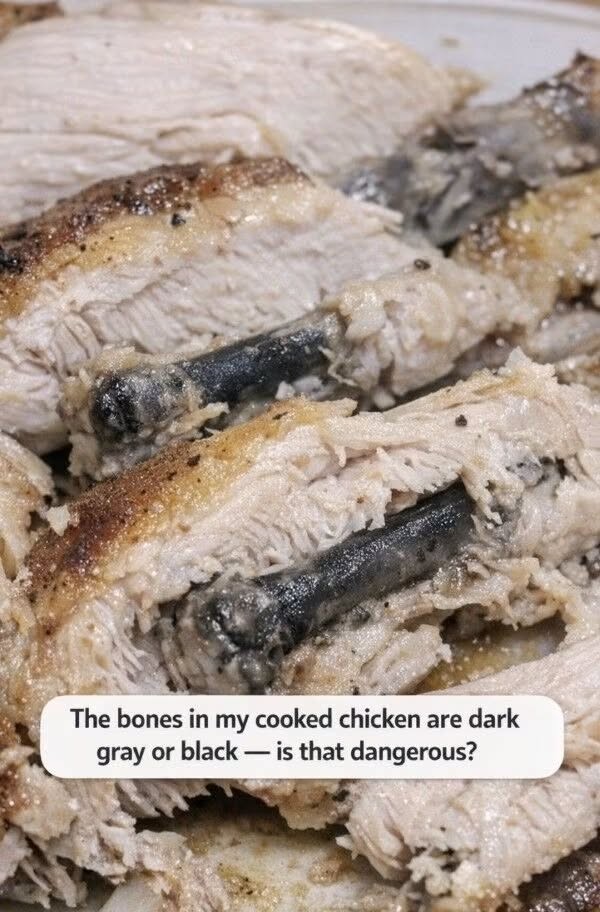
You have prepared dinner, the chicken looks perfectly cooked, and everything seems ready to serve. Then you cut into a drumstick or thigh and notice something unusual: the bone is dark gray, almost black.
Perhaps the meat immediately surrounding it has a darker color, too.
It is understandable to feel concerned. Most people associate dark discoloration with spoiled food, contamination, or something that has gone wrong during cooking. When the change appears inside a piece of chicken that otherwise looks normal, the discovery can be particularly unsettling.
But there is reassuring news: dark gray or black bones in cooked chicken are often the result of a natural process involving bone marrow pigments. This discoloration does not automatically mean the chicken is spoiled or unsafe.
However, appearance alone cannot establish whether poultry is safe to eat. Proper cooking, storage, and handling remain essential.
Understanding why chicken bones change color can help you distinguish a common appearance issue from genuine food safety concerns.
1. Bone Marrow Pigments Can Make Chicken Bones Look Black
One of the most common explanations for dark bones in cooked chicken is the movement of pigment from the bone marrow into the surrounding tissue.
This happens particularly often in young broiler chickens.
Their bones have not yet fully hardened or calcified. Because the developing bone structure is more porous, pigments from the marrow can seep through and become visible in nearby tissues.
When the chicken is cooked, heat changes the appearance of these pigments, making the bones and surrounding meat look dark gray, brown, or nearly black.
According to the United States Department of Agriculture (USDA), this phenomenon is primarily associated with young poultry and is considered an appearance issue rather than a food safety problem.
In other words, a dark bone does not necessarily indicate that the chicken has gone bad.
The discoloration may be especially noticeable around the ends of leg bones, joints, and areas where the bone is close to the meat.
2. Freezing Can Contribute to Dark Bone Discoloration
Another factor that can contribute to this appearance is freezing.
When poultry is frozen and later thawed, changes in the bone structure and surrounding tissues can allow marrow pigments to seep into nearby areas.
The effect may become more noticeable after cooking because heat darkens the pigments.
This explains why some chicken pieces develop darker areas around the bones even when they have been stored and prepared properly.
It is important to understand that freezing does not automatically make chicken unsafe. Properly frozen poultry can remain safe, although its quality and texture may change over time.
The appearance of dark bones alone is therefore not a reliable reason to assume that previously frozen chicken has spoiled.
3. Does Dark Chicken Bone Mean the Meat Is Unsafe?
In most cases, no.
If the discoloration comes from natural bone marrow pigments, it does not make the surrounding meat dangerous by itself.
However, this does not mean every piece of chicken with dark bones is automatically safe to eat.
There are two separate questions to consider:
First, why has the bone changed color?
Second, was the chicken handled, stored, and cooked safely?
A piece of chicken can have naturally dark bones and still be perfectly safe when properly prepared. On the other hand, poultry contaminated with harmful bacteria may look and smell normal.
That is why visual inspection alone cannot guarantee food safety.
If the chicken has an unpleasant odor, a noticeably slimy or sticky surface, or visible mold, it should be discarded. These characteristics can indicate spoilage, although their absence does not prove that food is free from harmful bacteria.
When in doubt about how the chicken was stored or whether it was left at an unsafe temperature, it is better not to take the risk.
4. The Most Important Safety Check Is Internal Temperature
Regardless of the color of the bones, the most reliable way to check whether chicken has been cooked safely is to use a food thermometer.
The USDA and the Centers for Disease Control and Prevention (CDC) recommend cooking all poultry to an internal temperature of 165°F (74°C).
This includes chicken breasts, thighs, drumsticks, wings, and ground poultry.
For accurate results, insert the thermometer into the thickest part of the meat without touching the bone. If you are cooking several pieces, check more than one because different portions may heat at different rates.
A few important points are worth remembering:
Clear juices do not prove that chicken is fully cooked.
White meat does not necessarily mean harmful bacteria have been destroyed.
Pink or darker areas do not automatically mean that properly cooked chicken is unsafe.
A thermometer provides a much more dependable answer than color, texture, or appearance.
If the chicken has not reached 165°F, continue cooking it until it does.
5. How to Recognize Chicken That May Have Spoiled
Dark bones are not the same as spoiled chicken. Nevertheless, knowing the common warning signs of spoilage is important.
Before cooking, inspect the raw poultry and pay attention to its condition.
Unpleasant odor: Chicken that has developed a strong, sour, rotten, or otherwise unusual smell should not be used.
Slimy or sticky texture: A noticeably slippery or sticky surface can be a warning sign of spoilage.
Visible mold: Any visible mold on chicken is a reason to discard the product.
Uncertain storage history: Chicken that has been left unrefrigerated for too long may be unsafe even if it looks normal.
It is important not to rely on these signs alone. Harmful bacteria, including Salmonella and Campylobacter, may be present without producing obvious changes in smell, color, or texture.
If you suspect the chicken has been stored improperly, cooking it again is not a reliable way to make spoiled food safe.
6. Store Cooked Chicken Properly to Reduce Food Safety Risks
Safe storage is just as important as proper cooking.
After preparing chicken, refrigerate leftovers promptly rather than leaving them on the kitchen counter for several hours.
The USDA and FDA recommend refrigerating perishable foods within two hours. If the surrounding temperature is above 90°F (32°C), the limit is one hour.
For better storage:
Place leftover chicken in clean, covered containers.
Divide large portions into smaller containers so they cool more quickly.
Keep the refrigerator at 40°F (4°C) or below.
Avoid leaving cooked chicken at room temperature while waiting for everyone to finish eating.
According to USDA guidance, cooked chicken can generally be refrigerated for three to four days. If you do not plan to eat it within that period, freezing is a practical alternative.
These simple habits help reduce the risk of bacterial growth and make leftovers safer to enjoy.
7. What Should You Do If Your Chicken Bones Are Black?
If you discover dark gray or black bones after cooking chicken, there is no need to panic immediately.
Start by considering the overall condition of the food and how it was prepared.
If the chicken was stored correctly, shows no signs of spoilage, and reached an internal temperature of 165°F (74°C), dark bones may simply reflect natural marrow pigmentation.
If the meat has an unusual odor, a slimy texture, visible mold, or an uncertain storage history, do not assume it is safe just because it has been cooked.
When the cooking temperature was never checked, appearance alone cannot confirm that the chicken is safe.
The important lesson is to separate harmless discoloration from genuine food safety risks.
The Bottom Line: Dark Chicken Bones Are Not Automatically Dangerous
Finding black or dark gray bones inside cooked chicken can be surprising, but the discoloration is often caused by marrow pigments passing through the porous bones of young birds. Freezing can contribute to the process, and cooking makes the pigments appear darker.
According to USDA guidance, this type of bone darkening is generally an appearance issue rather than a safety concern.
Still, the color of the bones should never be used as the only test of whether chicken is safe to eat.
Cook poultry to 165°F (74°C), use a food thermometer, refrigerate leftovers promptly, and discard chicken that shows signs of spoilage or has been stored under questionable conditions.
A dark bone does not automatically mean a dangerous meal. Proper food handling and temperature control are what matter most.