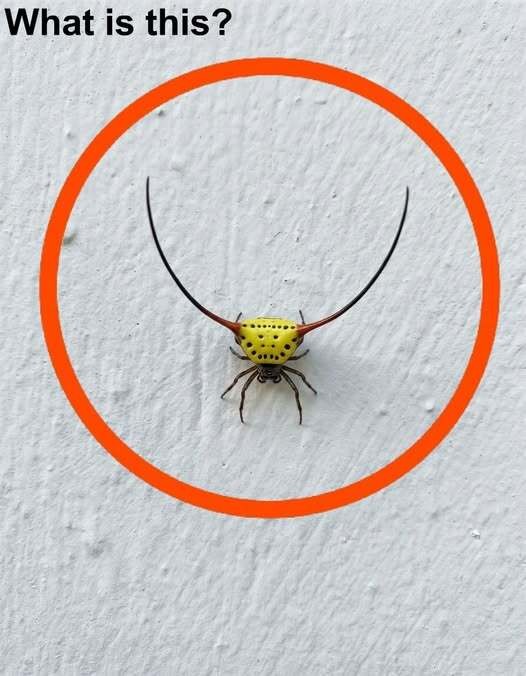
Understanding the Spiny Orb-Weaver Spider
Finding an unfamiliar spider on a wall, in a garage, or near a garden can be startling. Bright colors, sharp-looking spines, and an unusually still posture can make a small arachnid appear much more threatening than it really is. This reaction is understandable: people often rely on quick visual cues to judge whether an animal may pose a danger, and unfamiliar shapes can trigger caution before identification is possible.
One spider that commonly produces this response is the spiny orb-weaver, a member of the genus Gasteracantha. These spiders are known for their distinctive, armor-like abdomens, vivid coloring, dark spots, and prominent spines. Although their appearance can seem dramatic, spiny orb-weavers are generally considered harmless to people and are valued as web-building predators of small insects.
Learning to recognize these spiders can turn an uneasy encounter into an opportunity to understand a useful and highly specialized part of the local ecosystem. Their presence near homes often reflects the availability of insects and suitable places for webs rather than any attempt to enter human spaces.
What Is a Spiny Orb-Weaver?
Spiny orb-weavers belong to the family Araneidae, commonly called orb-weaver spiders. Orb-weavers are named for the circular, wheel-like webs they build to capture flying insects. The genus Gasteracantha includes several species found in tropical and subtropical regions around the world. In the Americas, one of the best-known species is Gasteracantha cancriformis, often called the spiny-backed orb-weaver.
Female spiny orb-weavers are especially recognizable. Their broad, hardened abdomen often has six noticeable spines: two at the sides, two toward the rear, and two that may project in other directions depending on the species. Colors vary considerably. Individuals may be white, yellow, orange, red, or darker shades, often with black spots or markings. This variation means that color alone is not always enough for a precise identification, but the combination of a flattened abdomen, bold markings, and spines is highly distinctive.
Males are much smaller and less conspicuous than females. In many spider species, males and females differ greatly in size and appearance, a pattern known as sexual dimorphism. As a result, a person who recognizes the familiar spiny female may not immediately associate a much smaller male with the same species.
Why the Spider Can Look So Unusual
The appearance of a spiny orb-weaver can feel almost artificial at first glance. Its bright yellow body and carefully arranged black markings may look unusually symmetrical, while its spines resemble tiny projections of armor. Yet these are natural anatomical features rather than signs of aggression.
Scientists study coloration and body shape in spiders for several reasons. Strong colors and unusual outlines may make a spider less appealing to potential predators, help it blend into complex vegetation, or simply reflect inherited variation within a species. The exact role of every pattern can differ by environment and species. It is important not to assume that vivid coloring automatically means an animal is dangerous or venomous. Many harmless insects and spiders use bold colors, while some species that can deliver medically important bites are relatively plain in appearance.
The spines on a Gasteracantha spider are part of the abdomen and are not stingers. They are not used to inject venom, and they do not function like the defensive quills of a porcupine. They are structural features that contribute to the spider’s distinctive profile.
Are Spiny Orb-Weaver Spiders Dangerous?
Spiny orb-weavers are not generally regarded as dangerous to humans. Like nearly all spiders, they possess venom used to subdue small prey. However, their venom is adapted for insects, and they are not known as medically significant spiders. They are not aggressive and typically remain in or near their webs rather than seeking contact with people.
A spider may bite if it is trapped, handled, or pressed against skin, but such encounters are uncommon. The most practical approach is to avoid touching an unidentified spider. This protects both the person and the animal. If a spider is in an inconvenient indoor location, it can often be moved carefully using a cup and a piece of stiff paper, then released outdoors near vegetation.
Anyone who experiences concerning symptoms after any arthropod bite or sting should seek advice from a qualified healthcare professional or local poison-control service. Symptoms may have causes other than the bite itself, and accurate medical guidance is more reliable than online speculation.
Why Spiny Orb-Weavers Remain So Still
A motionless spider can seem more unsettling than an active one, especially when it is positioned on a wall or near a doorway. However, stillness is normal behavior for many web-building spiders. A spiny orb-weaver may wait quietly at the center of its web, rest near it, or remain stationary while monitoring vibrations transmitted through silk threads.
Orb-weaver webs are highly effective sensory tools. When a small flying insect becomes caught in the sticky spiral threads, the resulting vibrations can alert the spider. The spider can then move quickly toward the prey, wrap it in silk, and feed. This strategy allows it to conserve energy instead of actively searching for food.
Spiny orb-weavers also tend to be most noticeable when their webs are built in visible locations between shrubs, branches, fences, or structures. A garage, porch, garden shed, or exterior wall may provide useful anchor points for web silk. The spider is not necessarily “living in” the building; it may simply be using the area as part of a hunting site.
Where Spiny Orb-Weavers Live
Spiny orb-weavers are associated with warm habitats, including gardens, woodland edges, citrus groves, shrubs, and areas with abundant vegetation. Gasteracantha cancriformis has been documented across parts of the southern United States, Mexico, Central America, the Caribbean, and South America. Its range and seasonal visibility can vary by local climate.
They are often seen in late summer and autumn in places where adult females build their largest webs. The spiders may be more visible after vegetation has grown dense and populations of flying insects are high. Their webs can appear overnight, leading homeowners to believe that a spider has suddenly arrived in large numbers when, in reality, the spiders may have been present in the surrounding landscape all along.
Because several species can share similar colors or body forms, a photograph may not always allow a definitive species-level identification. Location, web structure, body size, and close details of the abdomen can all be important. Local university extension services, natural history museums, and regional arachnology resources can often help distinguish similar species.
The Ecological Role of Orb-Weaver Spiders
Spiny orb-weavers are part of a larger group of predators that help regulate populations of small insects. Their webs may capture flies, mosquitoes, moths, leafhoppers, and other flying arthropods. This does not mean that a single spider can eliminate pests from a yard, but it does show how spiders contribute to food webs around homes, gardens, and natural areas.
Spiders are also food for birds, lizards, wasps, and other animals. In this way, they connect multiple levels of an ecosystem. Their presence can indicate that an area contains vegetation, insect prey, and relatively undisturbed spaces where webs can be built.
Gardeners increasingly recognize that not every arthropod near a home is a pest. Beneficial predators such as spiders can reduce the need for broad-spectrum chemical treatments, which may affect pollinators and other non-target species. Leaving a harmless web in a quiet corner can be a small but practical way to support biodiversity.
How to Respond When You Find One Near Your Home
The best response depends on where the spider is located. If it has built a web in an area that does not interfere with daily activities, leaving it alone is often the simplest option. Spiny orb-weavers are temporary residents, and their life cycle is seasonal. A web may disappear after weather changes, after prey becomes scarce, or once the spider reaches the end of its adult life.
If a web blocks a frequently used doorway or walkway, relocation may be appropriate. Avoid spraying the spider with pesticides or trying to crush it. Instead, use a clear container to gently cover the spider, slide paper underneath, and carry it to a sheltered outdoor area with shrubs or low branches. This approach reduces direct contact and preserves the spider’s opportunity to rebuild its web.
It is also sensible to keep garages, porches, and storage areas reasonably tidy. Reducing clutter can limit places where insects and spiders shelter, while sealing gaps around doors and windows may reduce the number of animals that enter indoor spaces. These measures are generally more targeted than routine pesticide use.
From Initial Fear to Informed Curiosity
An encounter with a striking spider can create an immediate sense of discomfort, particularly when the animal looks unfamiliar. Photographs shared with friends may lead to exaggerated guesses, jokes, or alarming descriptions. Online searches can be helpful, but they can also amplify uncertainty when images are misidentified or presented without scientific context.
Taking a moment to observe safely can change the experience. The vivid colors, rigid spines, and still posture of a spiny orb-weaver are not evidence of hostility. They are features of a small web-building predator adapted to catching insects and surviving in a complex outdoor environment.
Recognizing that a garage, garden, or porch is shared with many small forms of life does not require anyone to enjoy close contact with spiders. It simply encourages an evidence-based response: keep a respectful distance, avoid handling wildlife, and use relocation rather than unnecessary harm when possible. What first appears strange can become a reminder that even familiar human spaces are connected to the wider natural world.
Sources
Disclaimer: This content is intended for entertainment purposes only and is not based on real events.