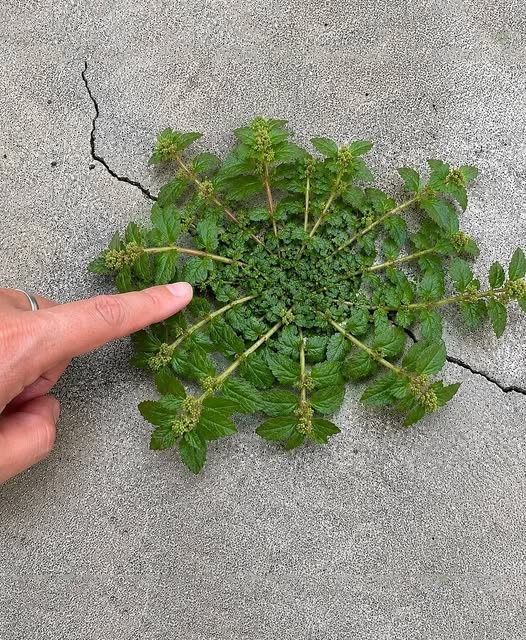
Santa Lucía herb is a name used in some communities for Euphorbia hirta, a small flowering plant that often grows in disturbed ground, gardens, paths, pots, lawns, and other warm, damp environments. It is easily dismissed as a weed because it can appear in cracks in pavement and around cultivated plants. However, the species has a long history in traditional medicine in parts of Asia, Africa, the Caribbean, and Latin America.
In English-language herbal traditions, Euphorbia hirta is sometimes called asthma-plant because of its historic use for coughs and breathing complaints. It has also been used in home preparations for digestive discomfort, loose stools, fever, urinary concerns, and general wellness. These traditional uses are culturally important, but they should not be confused with proven medical treatments. Research on the plant is still limited, and the available evidence is not strong enough to establish that Santa Lucía herb can safely or effectively treat any disease.
Anyone considering an herbal product should approach it carefully. Natural products can have active compounds, side effects, interactions with medicines, and risks related to contamination or mistaken identification. This is especially important with plants in the Euphorbia genus, many of which produce a milky sap that may irritate the skin, eyes, or digestive tract.
What Is Santa Lucía Herb?
Euphorbia hirta belongs to the Euphorbiaceae family, a large plant family that includes many species with milky latex. Botanical databases describe Euphorbia hirta as an annual or short-lived herb that is widely distributed in tropical and subtropical regions. It may grow upright or spread close to the ground, depending on local conditions.
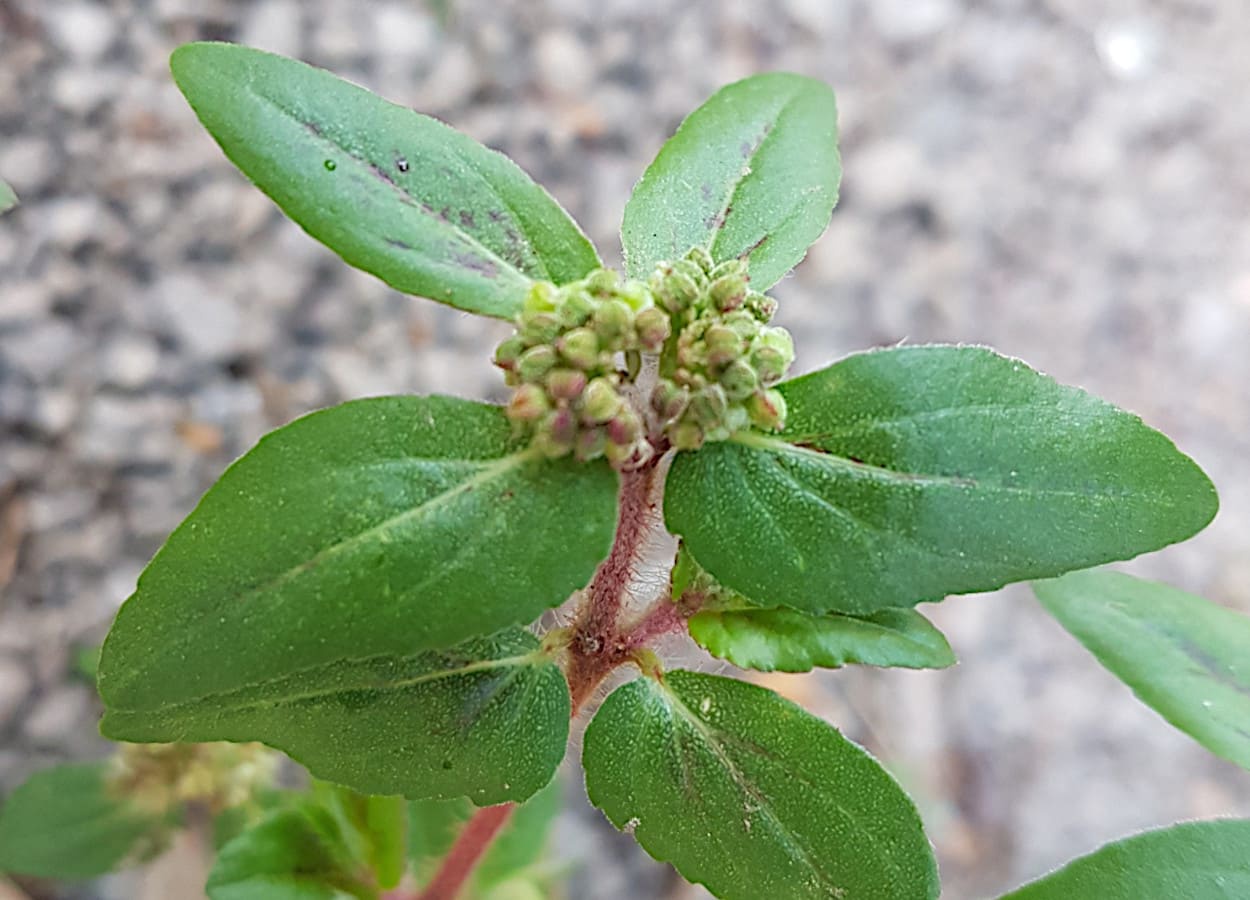
The plant typically has opposite leaves, often with a reddish or darker marking along the center vein. Its stems may be hairy and can release a white latex when broken. The flowers are very small and clustered near the leaves. Although these traits may help experienced growers recognize the species, visual identification alone can be unreliable. Plant names also vary by region, and “Santa Lucía herb” may sometimes refer to different plants in different countries.
For that reason, a common name should never be the only basis for collecting or consuming a wild plant. A trained botanist, an accredited herbarium, or a reliable regional plant-identification resource can provide more dependable guidance. This precaution matters because some look-alike species may be unsuitable for consumption or have different chemical properties.
Traditional Uses of Euphorbia hirta
Traditional medicinal systems have used Euphorbia hirta in several ways, including teas, decoctions, topical preparations, and mixtures with other plants. Historical uses differ significantly by culture and location. In some communities, the aerial parts of the plant have been prepared as a warm infusion for occasional coughs, throat irritation, or feelings of chest congestion. In others, the herb has been used after meals for stomach discomfort, gas, or a sense of digestive heaviness.
Traditional users have also associated the plant with fluid balance and urinary comfort. This reputation is sometimes described as a mild diuretic effect, meaning it may increase urination. However, increased urination is not the same as “detoxification,” a term often used broadly in wellness marketing without a precise medical definition. In healthy people, the liver, kidneys, lungs, and gastrointestinal system already work continuously to remove metabolic waste from the body.
Some folk practices have included Santa Lucía herb in routines for colds, digestive upset, skin concerns, or general vitality. These traditions deserve respectful recognition as part of local knowledge and cultural history. At the same time, a traditional use does not establish a product’s dosage, quality, safety, or clinical effectiveness. Modern medical decisions require evidence from carefully designed human studies, especially when symptoms are persistent, severe, or associated with an underlying condition.

What Does Scientific Research Say?
Laboratory and animal studies of Euphorbia hirta have identified plant compounds such as flavonoids, tannins, phenolic compounds, and other naturally occurring constituents. Researchers have explored whether extracts may show antioxidant, antimicrobial, anti-inflammatory, smooth-muscle, or respiratory-related activity under experimental conditions. These findings can be useful starting points for scientific investigation, but they do not prove that a tea, capsule, or homemade preparation will have the same effect in people.
A major limitation is that herbal research frequently uses different plant parts, extraction methods, concentrations, and testing procedures. An alcohol extract used in a laboratory experiment, for example, is not equivalent to a mild household infusion prepared with fresh leaves. Results from cells or animals also cannot automatically be applied to human health outcomes.
Human clinical evidence for Euphorbia hirta remains limited. There is not enough high-quality evidence to recommend it as a treatment for asthma, bronchitis, diabetes, urinary infections, digestive disorders, or other medical conditions. In particular, people should not rely on the plant in place of prescribed inhalers, antibiotics, diabetes medication, blood-pressure treatment, or other care recommended by a qualified clinician.
Respiratory symptoms deserve special attention. Wheezing, shortness of breath, chest tightness, high fever, coughing up blood, or symptoms that worsen quickly require professional medical assessment. Asthma can become serious without appropriate treatment, and respiratory infections may have causes that need specific care. A traditional herbal drink may feel soothing to some people, but it should not delay evaluation when warning signs are present.
Why “Natural” Does Not Always Mean Risk-Free
Herbs can contain biologically active substances. This is one reason they may be of scientific interest, but it is also why they can cause unwanted effects. The milky latex produced by many Euphorbia plants can be irritating. Contact with the sap may cause discomfort or inflammation of the skin in sensitive individuals, and eye exposure can be particularly concerning. Hands should be washed after handling unknown plants, and sap should be kept away from the face and eyes.
Ingesting a plant product may also lead to stomach upset, nausea, diarrhea, allergic reactions, or other adverse effects. The risk depends on the species, plant part, preparation, amount consumed, individual health status, and whether the product has been contaminated or adulterated. Wild-harvested plants may also contain pesticides, heavy metals, bacteria, or pollutants if collected from roadsides, industrial areas, sprayed gardens, drainage sites, or contaminated soil.
Herbal supplements are not regulated in the same way as prescription medicines in many countries. Product labels may not always accurately reflect the contents, strength, or purity of a supplement. The U.S. Food and Drug Administration notes that dietary supplements can interact with medications and may pose risks for certain people. Consumers should be cautious about products that promise rapid cures, guaranteed results, or treatment for serious illnesses.
Who Should Avoid Using Santa Lucía Herb Without Medical Advice?
People who are pregnant, trying to become pregnant, or breastfeeding should avoid self-treating with Euphorbia hirta unless a healthcare professional specifically advises otherwise. Reliable safety information in pregnancy and breastfeeding is insufficient. The same caution applies to infants and young children, who may be more vulnerable to dehydration, digestive effects, and dosing errors.
Individuals with chronic health conditions should speak with a doctor, pharmacist, or qualified healthcare professional before using herbal remedies. This includes people with kidney disease, liver disease, heart conditions, diabetes, gastrointestinal disorders, allergies, or a history of reactions to plants or latex. Medical guidance is also important for anyone taking prescription medicines, including blood thinners, diabetes medications, diuretics, blood-pressure medicines, asthma treatments, or drugs processed by the liver or kidneys.
It is also sensible to seek medical advice if a person has ongoing abdominal pain, unexplained weight loss, persistent diarrhea, painful urination, fever, repeated cough, or breathing difficulty. These symptoms can have many causes, and treating them only with a home remedy may postpone diagnosis and appropriate care.
Safe and Responsible Herbal Practices
For people interested in traditional herbal knowledge, safety begins with accurate information rather than assumptions. First, confirm the scientific name of the plant. Common names can be inconsistent, even within the same country. Second, avoid harvesting plants from polluted locations or areas that may have been treated with herbicides or pesticides. Third, do not consume a plant simply because it is described online as medicinal.
Home recipes often recommend steeping leaves, flowers, and stems in hot water. However, there is no universally established, clinically validated dose of Euphorbia hirta for self-treatment. The concentration in a homemade tea can vary widely according to the age of the plant, growing conditions, plant parts used, amount of material, and preparation time. More is not necessarily better, and a stronger preparation may raise the likelihood of unwanted effects.
Anyone who chooses to use an herbal product should stop using it and seek professional advice if they experience rash, swelling, eye irritation, vomiting, severe diarrhea, dizziness, difficulty breathing, or other concerning symptoms. In the case of accidental eye exposure to plant sap, rinse the eye gently with clean water and obtain prompt medical guidance, particularly if pain, redness, blurred vision, or persistent irritation occurs.
Santa Lucía Herb in the Context of Modern Wellness
The continuing interest in Santa Lucía herb reflects a broader interest in traditional plants and accessible forms of self-care. For many families, knowledge of local herbs is passed between generations and can be part of cultural identity. Such knowledge may also inspire scientific research into plant chemistry and potential future therapies.
Still, the most responsible approach combines respect for tradition with evidence-based healthcare. A balanced diet, adequate sleep, regular physical activity, vaccination where appropriate, safe food and water practices, and timely medical care remain the foundations of health. Herbal products may have a role in personal cultural practices or comfort routines, but they should not be promoted as substitutes for diagnosis, preventive care, or established treatment.
Santa Lucía herb, commonly identified as Euphorbia hirta, is more than an overlooked garden plant. Its long record of traditional use makes it a subject of cultural and scientific interest. Yet the available research does not support strong health claims, and uncertainty about identification, dosage, contamination, and interactions means caution is essential. People who wish to explore herbal remedies can do so more safely by consulting qualified health professionals and relying on credible scientific sources.
Sources
- Royal Botanic Gardens, Kew — Plants of the World Online
- U.S. National Library of Medicine — PubMed research on Euphorbia hirta
- National Center for Complementary and Integrative Health — Herbs at a Glance
- U.S. Food and Drug Administration — Dietary Supplements
- World Health Organization — Traditional, Complementary and Integrative Medicine
- Centers for Disease Control and Prevention — Asthma Information
Disclaimer: This content is intended for entertainment purposes only and is not based on real events.