The Back Bedroom
Editor’s note: This is a fictional narrative. The caregiving themes discussed reflect widely recognized challenges faced by older adults, family caregivers, and multigenerational households.
A Quiet Sign That Something Was Wrong
On the first Monday in November, Nicole found Grandma Lorraine sitting alone in Darla’s back bedroom. The television played unattended in the living room, and the house was unusually quiet. Lorraine had asked Nicole not to come in, but concern outweighed hesitation.
At ninety-one, Lorraine had always been particular about her appearance. For decades, her white hair had been softly curled, brushed into place, and cared for with the precision of someone who understood that personal grooming could be more than routine. It could be identity, comfort, and pride.
But now her hair was tangled and unwashed. Her scalp was irritated. Her left wrist remained weak after a summer fall, and she could no longer comfortably lift her arm or lean over a sink. Lorraine had not asked for help. Instead, she had withdrawn from church, avoided visitors, and stayed behind a closed bedroom door.
Nicole, a hairstylist and Lorraine’s granddaughter-in-law, recognized that the issue was not simply hair care. It was a quiet expression of loss: loss of independence, loss of privacy, and fear of being seen as dependent by someone with whom Lorraine had a difficult history.
Lorraine’s History at the Beauty Nook
Before age and injury changed her daily life, Lorraine had been a familiar figure in her Wisconsin community. For forty years, she operated Lorraine’s Beauty Nook, a small salon on Main Street. The shop had pink walls, a black-and-white floor, and the steady rhythm of local conversation.
Lorraine served generations of clients. She styled hair for weddings, holidays, funerals, school dances, and ordinary Saturdays. Her work gave her a role in the community, but it also shaped her understanding of care. She believed that the most important part of a stylist’s work was helping another person feel secure while vulnerable.
Years later, Nicole opened her own salon in Lorraine’s former building. When Lorraine walked in and saw the familiar floor, she began visiting every Saturday for a wash and set. She offered instructions, corrections, and old-fashioned professional advice. Over time, she became both a client and a mentor.
She taught Nicole how to create a lasting pin curl, how to make a client comfortable at the shampoo sink, and how to use gentle hands. Her most enduring lesson was simple: people need to feel safe when they close their eyes and trust someone else to care for them.
A Fall That Changed the Family’s Routine
In July, Lorraine fell while hanging laundry outside her home. She broke her wrist and spent time in hospital care and rehabilitation. Medical professionals advised that she should no longer live alone without substantial support. Her balance had declined, and her injured wrist made everyday tasks more difficult.
Nicole and her husband Joel wanted to help, but their upstairs apartment was unsuitable for someone using a walker. Darla, Joel’s mother, offered Lorraine a room in her ranch house on the edge of town.
The arrangement made practical sense, but it carried decades of unresolved tension. Lorraine had often criticized Darla’s household, cooking, and appearance. Darla had endured those comments for years, often without openly responding. Now she was responsible for medication schedules, meals, laundry, transport to appointments, and nighttime assistance.
Family caregiving can become especially complex when old resentments coexist with urgent practical needs. A caregiver may be managing work, finances, appointments, fatigue, and emotional strain at the same time. Meanwhile, an older adult may struggle with grief, reduced mobility, fear, and the shame of needing assistance.
Why Personal Care Can Feel So Difficult
When Nicole gently asked Lorraine why she had not asked Darla to wash her hair, the answer was not about shampoo or combs. Lorraine could not bear to let Darla see how limited she had become. She feared being handled roughly, judged, or pitied. More deeply, she feared that accepting care would force her to confront her dependence.
Personal care is often one of the most sensitive aspects of aging. Bathing, dressing, toileting, grooming, and hair care can involve physical vulnerability as well as emotional exposure. For people who have spent a lifetime caring for others or maintaining a strong public identity, asking for assistance can feel overwhelming.
Nicole also learned that Lorraine had stopped attending church. She had been a lifelong member of the congregation, but she was too embarrassed by her appearance to return. Isolation can develop gradually in these circumstances. One missed gathering becomes several, and a person’s social world can narrow quickly.
For families, the lesson is not that every concern should become an accusation. It is that changes in grooming, routines, mobility, participation, mood, or communication may signal a need for more support, clearer planning, or a more compassionate conversation.
Darla’s Unseen Caregiving Burden
Nicole initially felt angry when Darla said Lorraine’s hair had not been washed since August. Yet she paused when she looked around the kitchen. There was a filled pill organizer, medical appointments on the calendar, clean laundry, nutritional drinks, and evidence of a household operating under pressure.
Darla had reduced her work hours to help Lorraine. She prepared meals, drove her to therapy, managed medications, and assisted during the night. But she was exhausted. Lorraine had refused Darla’s help with hair care, and after repeated rejection, Darla had stopped asking.
This moment changed Nicole’s understanding of the situation. Darla had not been indifferent. She had been overwhelmed, isolated, and emotionally wounded. No one in the family had consistently asked what she needed or offered a reliable share of the work.
Caregiver stress is a well-documented public health concern. Family caregivers may experience sleep disruption, financial pressure, social isolation, and reduced time for their own health needs. Support is especially important when care responsibilities involve mobility limitations, frequent medical visits, or ongoing personal assistance.
Recognizing caregiver strain does not mean dismissing an older person’s needs. It means understanding that sustainable care requires support for both people: the person receiving help and the person providing it.
A Saturday Appointment Restores Dignity
Nicole chose not to begin with a confrontation. Instead, she called Lorraine and offered her a formal appointment: Saturday at two o’clock, just as Lorraine had once scheduled at the Beauty Nook.
That framing mattered. Lorraine was not being treated as a problem to solve or a charity case. She was a valued client with an appointment, a preference, and a voice in her own care.
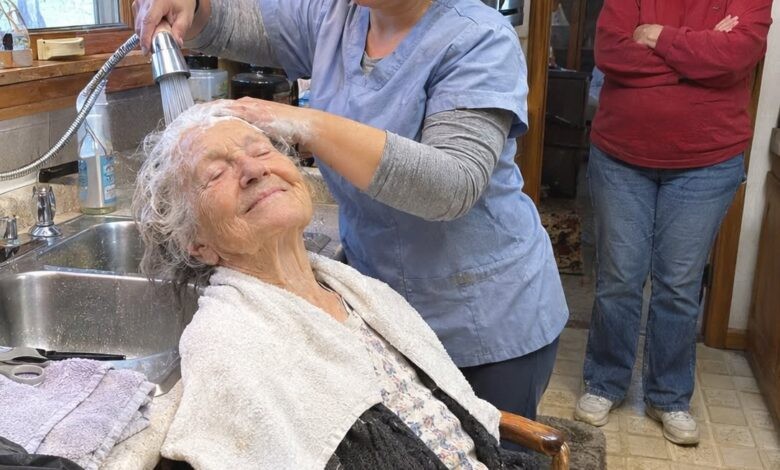
On Saturday, Nicole arrived with gentle shampoo, conditioner, towels, combs, clips, and the setting lotion Lorraine preferred. Lorraine wore her lavender cardigan, a scarf over her hair, and a little pink lipstick. She insisted on a towel around her shoulders rather than a salon cape, recalling the way her mother had washed her hair when she was young.
At the kitchen sink, Nicole tested the water carefully and protected Lorraine’s eyes with her hand at the hairline. She washed Lorraine’s hair slowly, detangled it patiently, and set it in the pin curls Lorraine knew so well.
The process was not merely cosmetic. It restored a familiar ritual and gave Lorraine a sense of control. She directed the curls, handed over the clips, and corrected Nicole when a section was too tight. By participating, she was no longer only receiving care. She was sharing knowledge and reclaiming a part of herself.
An Honest Conversation About the Past
As Nicole worked, Darla finally spoke about her own exhaustion. She explained that few relatives had visited since Lorraine moved in. Her husband Ron was frequently away for work, and the family had not created a dependable support plan.
Then Lorraine revealed why accepting Darla’s help had been so painful. Decades earlier, after Darla had given birth and was struggling emotionally, she had called Lorraine for help. Darla had asked for only an hour of relief so she could shower and wash her hair. Lorraine had refused, saying she had clients at the salon.
Lorraine had carried regret about that moment for years. In the back bedroom, unable to manage her own hair, she had been forced to recognize a painful connection between Darla’s past need and her own present vulnerability.
Their conversation did not erase forty years of conflict. But it made honesty possible. Lorraine apologized. Darla described the hurt she had carried. They both acknowledged that care, resentment, pride, and love had been tangled together for a long time.
Building a Shared Family Care Plan
After the appointment, Darla showed Nicole a written ledger of Lorraine’s expenses. It documented medication co-pays, groceries, transportation, equipment, household costs, and lost wages resulting from reduced work hours. The record clarified that caregiving had imposed real financial and practical costs on Darla.
When Ron returned from work, the family held a meeting. Rather than blaming one another, they created a schedule. Joel took an evening each week. Nicole helped with transportation and continued the Saturday hair appointments. Other relatives agreed to call, visit, and contribute financially. Ron accepted greater responsibility when he was home.
They also agreed to keep financial records visible and shared. Transparency can reduce misunderstandings and help families discuss care expenses before frustration becomes conflict. Depending on an individual’s situation, families may also benefit from guidance from social workers, aging services, legal professionals, or financial counselors.
Most importantly, Darla was no longer expected to carry the entire responsibility alone.
A New Meaning of Care
By spring, Darla had learned how to set Lorraine’s curls. She was not perfect at first. The clips went in crooked, the curls were sometimes too loose or too tight, and Lorraine continued to offer detailed instructions. But the ritual became theirs.
Each Saturday at two o’clock, Lorraine sat in the kitchen chair with a towel around her shoulders. Darla tested the water, protected her eyes, washed her hair, and listened as Lorraine explained how the curls should be placed. Nicole sometimes sat nearby with coffee, no longer needed to lead the appointment.
When Darla held up the mirror and asked whether the finished style was acceptable, Lorraine looked at herself and then at her daughter-in-law.
“You’ll do,” she said.
It was a small phrase, but it carried the weight of recognition. Care had become mutual. Lorraine was learning to receive it. Darla was learning that her work was seen. And the family was learning that dignity is not lost when help is needed; it is protected when help is offered with patience, respect, and shared responsibility.
Sources
Disclaimer: This content is intended for entertainment purposes only and is not based on real events.