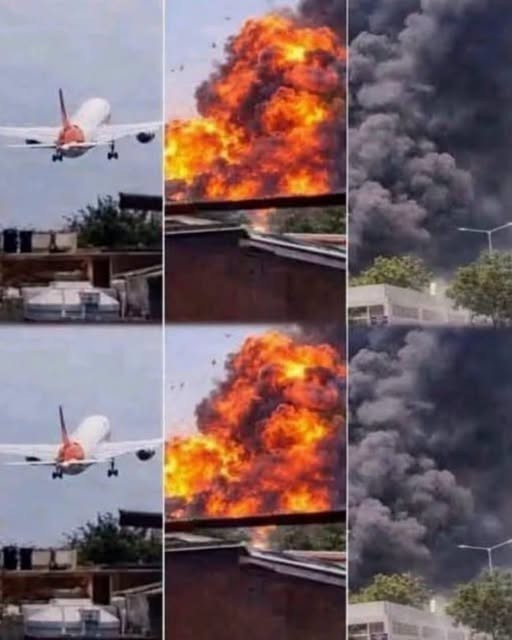
A routine skydiving flight was about to begin at Nancy-Essey Airport in northeastern France. The aircraft had already completed several trips that day, carrying instructors and passengers preparing for a parachute jump. But during the take-off, two instructors noticed something unusual inside the cabin.
“There’s smoke!”
Their warning came just moments before the aircraft experienced a change in engine performance and lost control.
The accident, which occurred near Tomblaine on June 28, 2026, claimed the lives of all 11 people on board. Months later, the preliminary investigation by France’s Bureau of Investigation and Analysis for Civil Aviation Safety (BEA) provided a detailed account of the final moments of the flight.
The findings revealed a sequence of concerning events, including a reported smoke warning, changing engine parameters, and a series of stall alerts. However, investigators had not established the precise origin of the reported smoke or the definitive cause of the accident.
The official investigation remains essential to understanding what happened and identifying any lessons that could improve aviation safety.

What Happened During the Skydiving Flight?
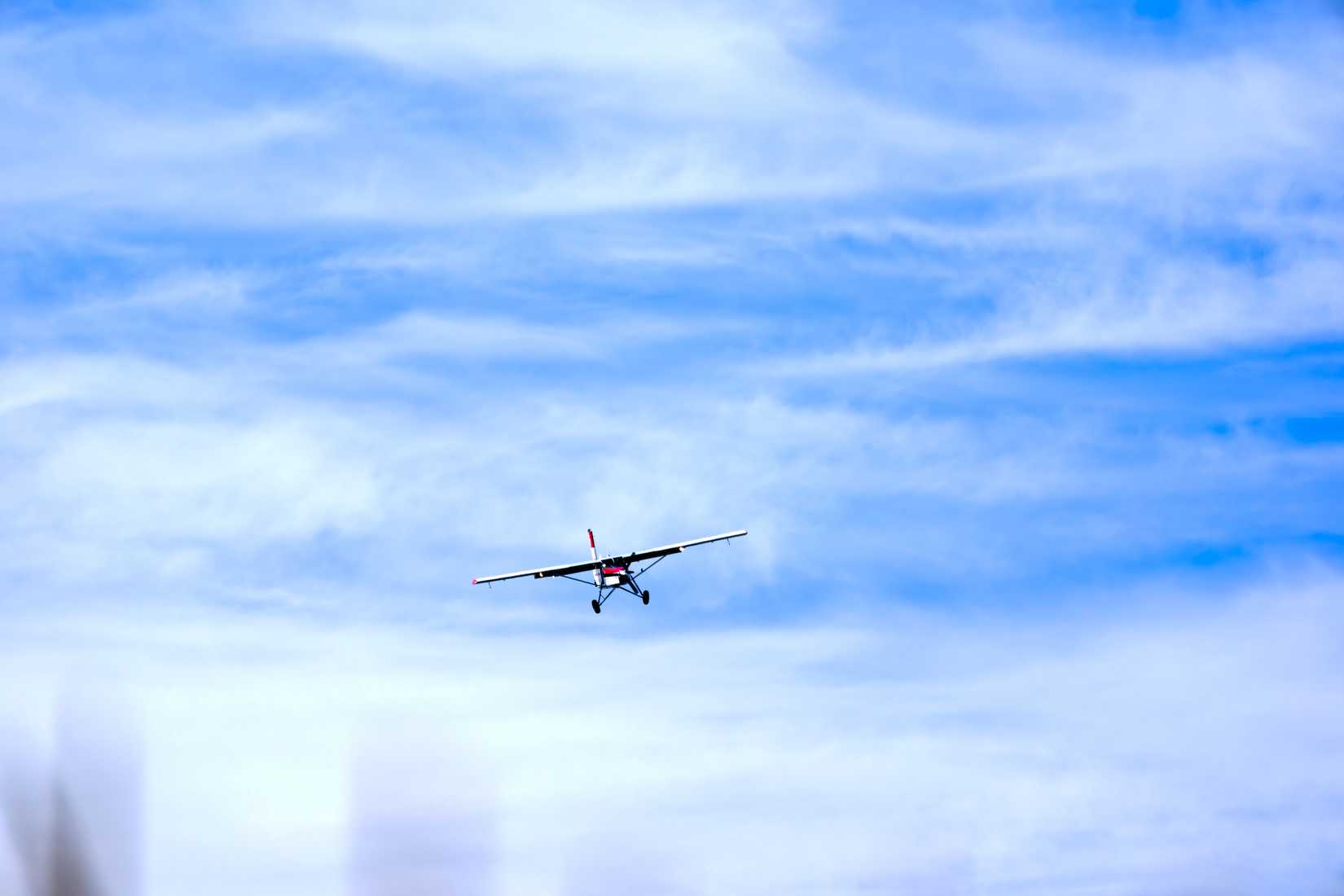
The aircraft involved was a Pilatus PC-6/B2-H4, registered as D-FIPS and operated for parachuting activities by Tandemotion Parachutisme.
On the morning of June 28, the pilot prepared for another parachute-drop flight from Nancy-Essey Airport. It was the sixth flight of the day for the aircraft, and ten parachutists were on board.
According to the BEA preliminary report, the aircraft lined up on runway 21 before beginning its take-off.
During the rotation, an instructor seated toward the rear of the cabin noticed something unusual near the front-right section of the aircraft. He called out that there was smoke and pointed toward the area.
Another instructor, seated closer to the middle of the cabin, also reported seeing smoke near the floor.
The pilot appeared not to have heard the first warning and continued the take-off. Meanwhile, the instructors agreed to open the side door slightly in an attempt to ventilate the cabin.
What happened next unfolded very quickly.
Engine Parameters Changed as the Aircraft Climbed
Shortly after the smoke warnings, investigators identified a change in the aircraft’s engine parameters.
The gas generator speed, known as Ng, decreased by approximately 10%. At the same time, the propeller speed briefly fluctuated before returning to its nominal value of 2,000 revolutions per minute.
The aircraft’s nose then rose, and the stall warning sounded briefly three times.
The pilot turned left while maintaining a high nose-up attitude. The stall warning subsequently became continuous.
According to the BEA, the aircraft entered an asymmetric stall before colliding with the ground.
An asymmetric stall occurs when the wings do not lose lift in exactly the same way. This can cause the aircraft to roll or turn unexpectedly, making recovery particularly difficult.
The aircraft struck the ground near the airport, and all 11 occupants lost their lives.
The preliminary report reconstructed this sequence using recorded flight information and video footage from cameras carried by the parachutists.

Why Did the Investigators Focus on the Smoke Warning?
One of the most important unanswered questions concerns the smoke reported by the two instructors.
Their warnings were included in the preliminary report, but investigators found an unusual detail: no visible smoke appeared in the recordings they examined.
The BEA analyzed five GoPro recordings carried by the instructors, along with footage from witnesses, a security camera, and a passing vehicle.
None of these recordings showed smoke escaping from the aircraft.
This does not automatically mean the instructors were mistaken. It means that investigators could not independently confirm the visible presence of smoke through the available recordings.
The investigation therefore examined several possible sources, including the aircraft’s electrical system, cabin equipment, and other components.
The preliminary technical examinations did not identify signs of overheating, damaged electrical insulation, or soot deposits in the electrical and air-conditioning systems that would explain the reported smoke.
Investigators also examined a witness’s account of flames observed near the front-left side of the aircraft after the accident.
However, they had not determined whether those flames resulted from the impact or were connected to an earlier technical problem.
Establishing that distinction is important because an observation made after an accident does not necessarily reveal what happened before it. <Cite refs={[“turn978803view0″,”turn491148search10”]}/>
Was the Aircraft Overloaded or Poorly Maintained?
Another important part of the investigation involved examining whether the aircraft’s loading, maintenance history, or operating conditions could have contributed to the accident.
The preliminary findings did not indicate that the aircraft exceeded its permitted take-off weight.
Based on the actual weights collected during the investigation, the aircraft weighed approximately 2,590 kilograms at take-off. Its maximum permitted take-off weight was 2,800 kilograms.
The calculated center of gravity was also within the manufacturer’s recommended operating range.
The aircraft’s maintenance history was examined as well. The last scheduled 100-hour airframe and engine inspection had taken place in April 2026 at a maintenance facility in Switzerland. Its certificate of airworthiness was valid until July 31, 2026.
These details are important, but they should not be interpreted as proof that every aircraft system was functioning perfectly. A valid certificate and a recent inspection do not rule out every possible mechanical malfunction.
The BEA continued examining the aircraft’s components to identify any technical issue that might have contributed to the loss of control.
An Experienced Pilot Was at the Controls
The pilot was 44 years old and had accumulated approximately 10,500 flight hours.
According to the preliminary report, he held the relevant professional qualifications and had recorded around 4,000 hours on the Pilatus PC-6.
The accident occurred during the third dropping flight of the second block of the day.
This information helps investigators understand the pilot’s experience and the operational context. However, experience alone cannot establish what caused an aircraft to lose control.
Investigators must consider the aircraft’s technical condition, flight data, operating environment, and the sequence of events together.
It is equally important not to assign responsibility based on preliminary information. The BEA conducts safety investigations to identify causes and improve aviation safety, not to determine legal blame.
The Technical Details Still Under Investigation
The preliminary report also identified several warning indications that may help explain the aircraft’s condition during its final moments.
Examination of the cockpit warning panel suggested that three indicators may have been illuminated when the aircraft struck the ground:
-
PROP LOW P: An indication that the propeller had reached a low-pitch condition in flight.
-
CHIP: A warning associated with metal particles detected in the engine oil.
-
F-FILTER: An indication that the fuel filter was clogged.
However, investigators had not established whether these warnings appeared before or after the loss of control.
That distinction is crucial. A warning light identified after an accident does not automatically establish that the corresponding problem initiated the accident.
The investigation also included further examination of the turboprop engine, the fuel system, recorded flight information, and video evidence.
The BEA planned to examine the engine at Pratt & Whitney’s facilities in Canada, with investigators present.
These examinations could provide additional information about the engine’s behavior and whether a technical malfunction contributed to the sequence of events. <Cite refs={[“turn978803view0”]}/>
What Can This Accident Teach Us About Aviation Safety?
The accident demonstrates how several warning signs and changing flight conditions can develop within a very short period.
It also highlights why aviation investigations rely on multiple forms of evidence rather than a single observation.
A passenger’s report, an engine parameter, a warning light, or a video recording may each provide an important clue. However, none should be interpreted in isolation.
Investigators must compare these details with technical examinations, operating procedures, aircraft performance data, and other available evidence.
Preliminary reports serve an important purpose in this process. They share factual information gathered during the early stages of an investigation while avoiding conclusions that have not yet been established.
For pilots, operators, maintenance teams, and aviation authorities, the ultimate objective is to understand what happened and identify measures that may help prevent similar accidents.
The Investigation Continues
The Pilatus PC-6 accident near Nancy remains a deeply tragic event for the families, friends, and colleagues of the 11 people who lost their lives.
The preliminary findings have provided a clearer picture of the final flight: two instructors reported smoke, engine parameters changed, stall warnings sounded, and the aircraft lost control shortly after take-off.
Yet several important questions remain unanswered.
What caused the reported smoke? Why did the engine parameters change? Were the warning indications connected to the loss of control, or did they appear afterward?
These questions require further technical analysis and evidence.
The BEA’s investigation is intended to establish the sequence of events and identify any factors that could improve aviation safety. Until its conclusions are published, the exact cause of the accident should not be presented as settled.
Behind every investigation is a larger purpose: learning from a tragedy so that future flights can be safer.