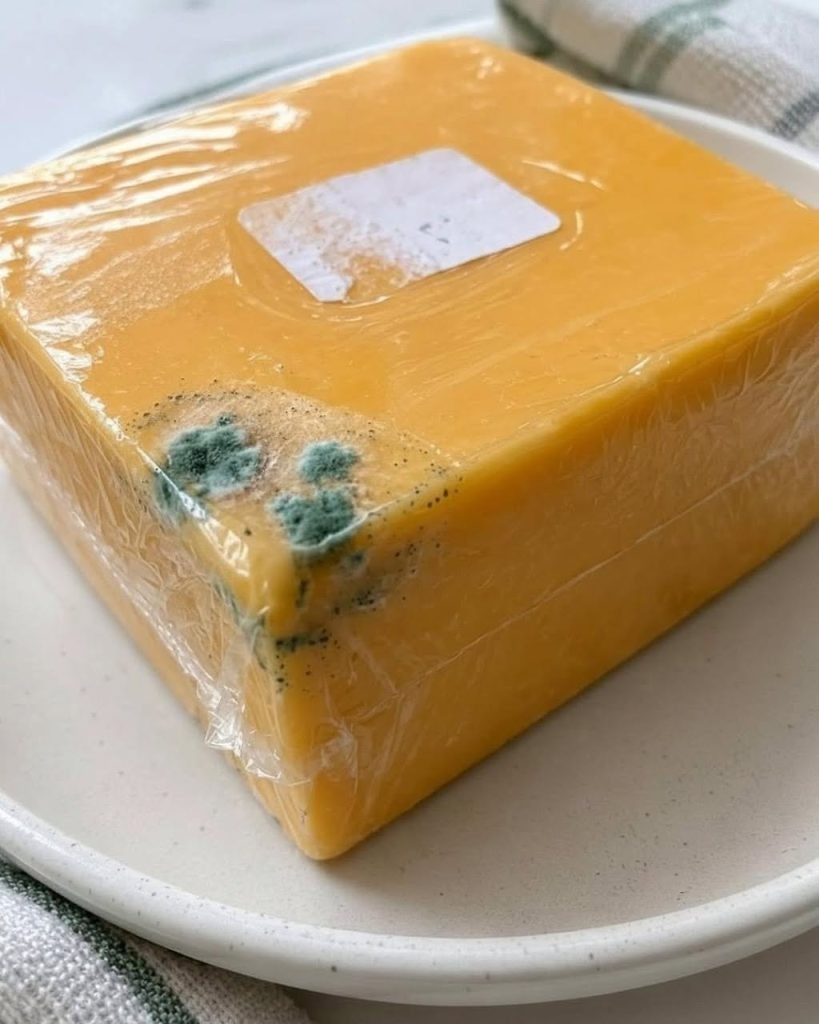
Finding a green, blue, white, or fuzzy spot on cheese can be frustrating, but it does not always mean the entire package must be discarded. The safest choice depends on the type of cheese, its moisture content, how it was stored, and whether the mold is an expected part of the product.
Cheese is made in many forms, from firm, aged Parmesan to soft, spreadable cream cheese. Those differences matter because mold can behave differently in dense, low-moisture foods than it does in moist foods. Food-safety authorities generally advise that a small area of mold on certain hard cheeses may be removed with a generous margin. In contrast, soft cheese and fresh cheese with unexpected mold should usually be thrown away.
Understanding this distinction can help reduce unnecessary food waste while keeping food safety the priority. It is also important to remember that appearance, smell, and mold color alone cannot reliably identify the kind of mold present or determine whether a food is safe to eat.
Why Mold Grows on Cheese
Molds are microscopic fungi that reproduce through spores. These spores are common in the environment and can settle on food during handling, storage, or after a package has been opened. Under suitable conditions, especially where there is moisture and oxygen, mold may begin to grow on the surface of cheese.
Cheese can be particularly susceptible after opening because it contains nutrients that support microbial growth. Refrigeration slows the growth of many microorganisms, but it does not stop mold completely. A cheese that is stored too warm, wrapped improperly, touched with unclean utensils, or kept for a long time after opening may be more likely to develop unwanted mold.
Not every mold is harmful, and some molds are deliberately used in cheesemaking. However, consumers cannot determine whether an unexpected mold is harmless simply by looking at it. A blue or green spot on a cheese that is not intended to contain mold should be assessed according to the cheese category rather than its color.
Some Cheeses Are Made With Mold on Purpose
Several well-known cheeses are produced with carefully selected mold cultures. Blue cheese, Roquefort, Stilton, Gorgonzola, and similar varieties develop characteristic blue-green veins as part of their normal aging process. Producers use specific strains of Penicillium mold under controlled manufacturing conditions to create the cheese’s flavor, aroma, and appearance.
The visible veining in these cheeses is not the same as random mold growth that develops after purchase. A properly made blue cheese may have blue, green, gray, or white internal marbling and a strong aroma that is normal for that variety. Still, even cheese made with cultures can spoil. If it develops an unusual surface growth, a noticeably different odor, excessive sliminess, or signs of poor storage, it is sensible to follow package instructions or discard it when safety is uncertain.
Brie and Camembert also have edible white rinds created with cultures used during production. Their soft, bloomy outer layer is expected. However, a pink, orange, green, black, or otherwise unusual growth that appears on a cheese beyond its intended rind may indicate spoilage or contamination. Since these are soft cheeses, the cautious approach is to discard them if unexpected mold is present.
Can You Cut Mold Off Hard Cheese?
In many cases, a small moldy area on a hard or firm cheese can be removed safely. Food-safety guidance from the United States Department of Agriculture notes that mold generally cannot penetrate deeply into hard and semisoft cheeses because of their dense structure and relatively low moisture content.
Examples of cheeses that are commonly considered hard or firm include:
- Cheddar
- Parmesan and Parmigiano Reggiano
- Pecorino
- Swiss cheese
- Gouda
- Edam
- Asiago
- Colby
For a block of hard cheese with a limited mold spot, the recommended method is to cut away at least one inch, or about 2.5 centimeters, around and below the visible mold. The cut should go beyond the surface area because mold roots, called hyphae, may extend into the cheese even when they are not visible.
Use a clean knife, and take care not to drag the blade through the mold and then across the unaffected portion. It is best to make the cut well away from the mold first, remove the affected section, and then rewrap the remaining cheese in fresh packaging. Wash the knife, cutting board, and hands afterward to avoid spreading spores to other foods.
This advice is intended for hard cheese sold in a solid block. It does not apply in the same way to shredded, crumbled, sliced, or grated cheese. Because mold can be more widely distributed through small pieces, those products should generally be discarded if mold is found.
Why Soft Cheese With Mold Should Be Discarded
Soft cheeses contain more water than hard cheeses. Their moist texture makes it easier for mold to spread below the surface, even when only a small patch is visible. Bacteria may also grow alongside mold, and these microorganisms cannot necessarily be seen or smelled.
For that reason, food-safety guidance recommends discarding soft cheese when unexpected mold appears. This includes products such as:
- Cream cheese
- Ricotta
- Cottage cheese
- Fresh mozzarella
- Goat cheese logs and fresh chèvre
- Mascarpone
- Processed cheese spreads
- Shredded or crumbled cheese
- Soft-ripened cheeses such as Brie and Camembert when mold is not part of the intended rind
Removing a visible spot from a soft cheese does not reliably remove microorganisms that may have spread through the rest of the product. The same principle applies to many other moist foods, including yogurt, sour cream, jams, soft fruits, cooked leftovers, and casseroles. In these foods, the safest response to visible mold is usually disposal.
Does Mold Color Tell You Whether Cheese Is Safe?
No. Mold color is not a dependable safety test. Green, white, blue, gray, black, or pinkish growths can appear on food for different reasons, and visual inspection cannot identify a mold species or reveal whether toxins may be present.
Some molds can produce mycotoxins, naturally occurring compounds that may pose health concerns under certain circumstances. However, not every mold produces mycotoxins, and the presence or absence of toxins cannot be established at home by smelling or examining a cheese. This is one reason food-safety recommendations focus on the type of food and the extent of contamination rather than on the mold’s color.
Smell is also an imperfect guide. Spoiled cheese may develop a sour, ammonia-like, musty, or otherwise unpleasant smell, but some contaminated food can appear relatively normal. Conversely, certain aged cheeses naturally have intense aromas. When there is uncertainty, especially with soft cheese, discarding the product is the more cautious decision.
Who Should Be Especially Careful With Moldy Cheese?
Food safety is important for everyone, but some people may face a greater risk of serious illness from foodborne pathogens. This can include older adults, pregnant people, infants and young children, and people with weakened immune systems due to medical conditions or treatments.
People in these groups should be particularly cautious about cheese that has been stored improperly, is past its use-by date, or shows unexpected mold. They should also follow public-health advice on choosing pasteurized dairy products. Certain soft cheeses can carry a higher food-safety risk when made from unpasteurized milk or when contaminated after production.
If someone develops severe or persistent symptoms after eating food they believe may have been spoiled, they should seek advice from a qualified healthcare professional. General food-safety information cannot replace individual medical guidance.
How to Store Cheese to Prevent Unwanted Mold
Proper storage can extend the life of cheese and reduce the chance of unwanted mold growth. Cheese should be refrigerated promptly and should not be left at room temperature for extended periods. The U.S. Food and Drug Administration recommends keeping refrigerators at or below 40°F, or 4°C.
Packaging matters because cheese needs protection from air exposure while also avoiding excess trapped moisture. For hard and aged cheeses, cheese paper, wax paper, or parchment paper with a loose outer layer of plastic wrap can help preserve quality. This approach allows the cheese to breathe while reducing dehydration.
Soft cheese should usually remain in its original container or be kept in a clean, tightly sealed container. Fresh mozzarella should stay covered in its liquid if supplied that way, while cottage cheese and ricotta should be returned to the refrigerator immediately after serving.
Additional practical steps include:
- Use clean knives and utensils each time cheese is served.
- Do not use the same utensil for cheese and other foods without washing it.
- Keep cheese away from raw meat, poultry, seafood, and their juices.
- Check package dates and follow manufacturer storage instructions.
- Rewrap hard cheese in clean material after trimming away mold.
- Buy quantities that can be used within a reasonable period after opening.
Freezing may be an option for some hard cheeses, especially when they will later be used for cooking. However, freezing can alter texture and make cheese more crumbly. Soft cheeses generally do not freeze as well, so it is best to check product-specific guidance before freezing.
How to Make a Safe Decision About Moldy Cheese
A simple rule can help guide most household decisions. If a small amount of unexpected mold appears on a solid block of hard cheese, cut away at least one inch around and beneath the mold, using a clean knife and fresh wrapping afterward. If the cheese is soft, fresh, shredded, sliced, crumbled, or spreadable, discard it rather than attempting to salvage it.
Cheeses intentionally made with mold cultures are an exception when their appearance matches the product’s normal characteristics. Even then, changes that seem unusual for that cheese, improper refrigeration, or uncertainty about quality are valid reasons to avoid eating it.
Preventing food waste is worthwhile, but food safety should come first. When a cheese does not clearly fit the hard-cheese exception, or when storage history is unknown, it is safer not to take chances. Following reliable guidance and storing cheese carefully can help households enjoy dairy products while reducing avoidable spoilage.
Sources
Disclaimer: This content is intended for entertainment purposes only and is not based on real events.