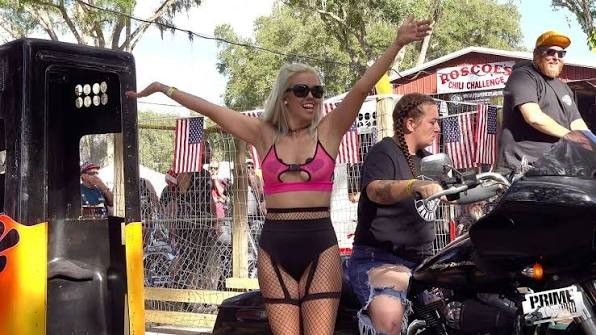
In November 2015, a gathering in Lakeland, Florida, celebrated a milestone that had taken three decades to reach. Motorcycles arrived, camping areas filled with visitors, live bands prepared to perform, and the smell of chili and campfires spread across the grounds. It was the 30th anniversary edition of Roscoe’s Chili Challenge, an event that had grown from a small backyard cooking contest into a well-known motorcycle gathering.
At first glance, it might have seemed like an unusual combination of activities. Chili cooking, motorcycle displays, live music, body painting, camping, and friendly competitions all shared the same space. Yet these different traditions helped create the event’s distinctive atmosphere.
One moment from the 2015 celebration stood out for a different reason. A large American flag was displayed near the main stage, where hundreds of attendees reportedly signed it. According to a contemporary event account, the flag was intended to be presented to a military unit serving in Afghanistan.
The story offers a glimpse into a particular part of American festival culture, where food, personal expression, friendship, and community traditions can come together. But what made this gathering last for 30 years, and why do events like it continue to attract loyal visitors?
How a Backyard Chili Contest Became a 30-Year Tradition
The history of Roscoe’s Chili Challenge began in November 1986. According to the event’s official history, the first cook-off grew out of a friendly disagreement between Roscoe and his roommate, Lil Hank. Both believed they could prepare the better chili, and what began as a personal challenge soon attracted additional participants.
More than a dozen people entered the original competition. The event’s early organization was informal, and the first gathering reportedly began before anyone had properly arranged the judging. Some of the chili had already been eaten before the winners were selected.
Lil Hank won the prize for the hottest chili, while Dawn Huffman received recognition for the best mild chili.
That simple beginning became the foundation of a recurring gathering. As interest grew, the organizers introduced more structure, including judges, cooking categories, and designated tasting periods.
Over time, the event developed beyond its original purpose. It became a meeting place for motorcycle enthusiasts and visitors who wanted to enjoy food, entertainment, and a weekend outdoors.
By 2015, the gathering had reached its 30th anniversary. The milestone represented more than the continuation of a cooking contest. It reflected the loyalty of people who had returned over the years and the organizers who had kept the tradition going.
What Happened at the 2015 Celebration?
The 30th anniversary celebration took place in November 2015 in Lakeland, Florida. A contemporary report by Old School Biker Magazine described the event beginning on Thursday, November 5, as visitors arrived with friends and prepared their camping areas.
The grounds gradually became busier. Vendors opened their spaces, motorcycles gathered, and attendees settled in for the weekend.
Friday brought more activity. Live bands performed, and the event’s master of ceremonies, known as POGO, appeared to entertain the crowd. Body painters also worked throughout the grounds, adding another creative element to the festival.
The atmosphere was shaped by a mixture of planned activities and informal social gatherings. People could enjoy music, spend time with friends, explore vendor areas, and take part in the wider motorcycle community.
The 2015 account also described campfires becoming part of the evening atmosphere. As the daylight faded, visitors gathered around the grounds while music and conversation continued.
It was not simply a cooking competition with an audience. It was a weekend gathering in which different interests and activities shared the same setting.
Chili Was the Tradition at the Center of the Event
Although Roscoe’s Chili Challenge became known for its motorcycle culture and entertainment, chili remained its central feature.
Chili con carne has a long and complicated history in the United States. Its development is closely connected to Mexican and Mexican American food traditions, particularly in Texas and the American Southwest. As the dish spread, different communities adapted it to local tastes and ingredients.
The National Park Service’s discussion of Latino food history explains how chili developed into different regional forms as it became part of American food culture. Recipes changed, commercial products helped spread the dish, and local cooks created their own interpretations.
That diversity is one reason chili works so naturally as the subject of a cooking competition.
Some cooks prefer a mild recipe with a balanced combination of meat, vegetables, and spices. Others enjoy experimenting with stronger flavors and greater heat. Ingredients, cooking methods, and personal preferences can produce very different results, even when competitors are preparing the same general dish.
At Roscoe’s Chili Challenge, the competition gave participants an opportunity to demonstrate their cooking skills and share their recipes with others.
The official event history describes how the original contest eventually developed into a more organized competition with separate categories. Later event materials also advertised hot and mild classes, allowing different styles of chili to receive recognition.
For visitors, tasting the dishes was part of the experience. For the cooks, it was an opportunity to compete, exchange ideas, and receive feedback from people who appreciated the same food.
More Than Food: The Motorcycle Festival Experience
The event’s growth also reflected the importance of motorcycle gatherings in American social culture.
For many enthusiasts, motorcycles are not simply a form of transportation. They can represent personal interests, mechanical creativity, independence, and a connection with other riders.
Motorcycle rallies provide opportunities for people with similar interests to meet outside their usual routines. Some travel long distances to attend, while others return to familiar gatherings because they enjoy the friendships and traditions associated with them.
Roscoe’s Chili Challenge developed this wider identity over time.
Its activities included motorcycle displays, live entertainment, camping, and various competitions. Historical event materials also mention horseshoe matches, mini-bike races, arm wrestling, and other games.
The 2015 anniversary report highlighted the presence of live bands and body painters, while later event materials continued to advertise a broad range of entertainment.
These activities helped make the gathering appealing to people who might not have entered the chili competition themselves.
A visitor could come for the motorcycles, the music, the cooking, or simply the opportunity to spend a weekend with friends. The event offered several ways to participate, which helped it develop an identity beyond its original backyard contest.
POGO, Body Painting, and the Spirit of Personal Expression
One distinctive feature mentioned in the 2015 report was the presence of POGO, the event’s master of ceremonies.
According to the account, he was known for interacting with the crowd and encouraging playful participation. His stage presence contributed to the informal and energetic atmosphere associated with the gathering.
Body painting was another part of the celebration. Artists used the human body as a canvas, creating colorful designs that became part of the festival environment.
Body painting has a much broader cultural history than modern music festivals. Across different societies and historical periods, people have used pigments and decorative designs for artistic, ceremonial, symbolic, and personal purposes.
Today, body painting can be found at art events, cultural festivals, performances, and entertainment gatherings. Its meaning depends heavily on the setting and the people involved.
At Roscoe’s Chili Challenge, it was presented as part of the event’s entertainment. It added visual creativity to a gathering already characterized by motorcycles, music, and outdoor activities.
Together, the MC performances and body painting reflected the event’s informal approach to entertainment. Rather than focusing on a single attraction, the festival brought together several forms of personal expression.
The American Flag That Became a Symbol of Connection
One of the most memorable details in the 2015 account involved a large American flag displayed near the main stage.
According to the report, hundreds of attendees waited for an opportunity to sign the flag. The organizers intended it to be presented to a selected military unit serving in Afghanistan.
The gesture created a different kind of moment within the festival.
For much of the weekend, visitors were focused on entertainment, cooking, and social activities. Signing the flag offered them an opportunity to express appreciation for people serving far from home.
The report described a long line of participants waiting to leave their names on the fabric. It was a simple activity, but it gave people from different backgrounds a shared purpose.
It is important to distinguish what the contemporary account reported from what can be independently confirmed. The report states that the flag was intended for a deployed unit, but the available account does not establish whether it was ultimately delivered.
Nevertheless, the gesture illustrates how community gatherings can become places for expressions of shared identity and public appreciation.
For the attendees who signed it, the flag represented more than a decoration. It provided a way to connect a local celebration with people serving overseas.
Why Shared Food and Festivals Matter to Human Connection
There is also a scientific perspective that helps explain why gatherings centered on food can become meaningful traditions.
Eating together is a common human activity across cultures. Families share meals, communities organize feasts, and local groups use food to welcome visitors or celebrate important occasions.
Researchers have examined the relationship between shared meals and social connection.
In a 2017 study published in Adaptive Human Behavior and Physiology, researcher Robin Dunbar explored the social functions of eating together. The study found that people who shared meals more frequently tended to report greater happiness, stronger feelings of trust, and closer connections with their communities.
The research does not prove that every festival creates lasting friendships. It does, however, suggest that shared meals can provide opportunities for people to strengthen social relationships.
A chili cook-off offers several of these opportunities at once.
Participants prepare food, discuss recipes, compare flavors, and spend time around other people who share their interests. Even visitors who do not compete can become part of the experience by tasting dishes and talking with the cooks.
The same principle applies to motorcycle gatherings. Shared interests provide an easy starting point for conversation, while repeated attendance gives friendships time to develop.
This may help explain why some local events continue for decades. People return not only because of the activities but also because of the relationships and memories associated with them.
How a Local Gathering Can Become Part of Regional Culture
A community event does not need to begin with a large budget or national recognition to become meaningful.
Roscoe’s Chili Challenge reportedly began with a small cooking disagreement between friends. Its development shows how a simple idea can grow when people continue to participate and organizers find ways to keep the experience engaging.
Over the years, the event gained a wider identity through its combination of food, motorcycles, music, camping, and competitions.
The 30th anniversary was particularly meaningful because it marked a long period of continuity. A gathering that began in 1986 had continued to attract people decades later.
That does not mean every year was identical. Weather, available space, organization, and changing interests can affect any long-running event. The official history itself acknowledges that the gathering developed through different stages.
Yet the central idea remained recognizable: bring people together through chili and shared activities.
This is how many local traditions survive. They preserve familiar elements while allowing new activities and participants to become part of the experience.
A Tradition Remembered Beyond the Chili
The 30th anniversary of Roscoe’s Chili Challenge in 2015 was a celebration of food, motorcycles, entertainment, and community.
The chili competition connected the gathering to its original purpose. The motorcycles and camping areas reflected its development into a broader biker event. Live music and body painting gave visitors additional ways to enjoy the weekend.
And the signed American flag offered a reminder that even a lively festival can include moments of reflection and appreciation.
There is no need to describe the gathering as a hidden secret or an extraordinary mystery. Its history is interesting enough without exaggeration. It began with a friendly cooking challenge and grew through the participation of people who wanted to return year after year.
Perhaps that is the most fascinating part of traditions like this. Their value is not always found in the size of the crowd or the number of activities. Sometimes it lies in the simple human desire to share food, enjoy music, meet familiar faces, and create memories together.
As people continue to explore the history of American festivals, events such as Roscoe’s Chili Challenge remind us that curiosity often begins with ordinary things. A pot of chili, a gathering of friends, and a shared weekend can become the foundation of a tradition that lasts for generations.
Sources
-
Roscoe’s Chili Challenge. About RCC: How It All Began. Official event history. https://roscoeschilichallenge.com/rcc/index.php/about-rcc
-
Old School Biker Magazine. Thirtieth Roscoe’s Chili Challenge 2015 – Over 600 Pics! Contemporary event report. https://oldschoolbikermagazine.com/article/thirtieth-roscoes-chili-challenge-2015/
-
National Park Service. American Latino Theme Study: Food. Background on Latino contributions to American food traditions. https://home.nps.gov/articles/latinothemefood.htm
-
Dunbar, R. I. M. (2017). Breaking Bread: The Functions of Social Eating. Adaptive Human Behavior and Physiology, 3, 198–211. https://doi.org/10.1007/s40750-017-0061-4