Thin Blue Line Road Markings in Maryland: Meaning, Rules and Community Debate
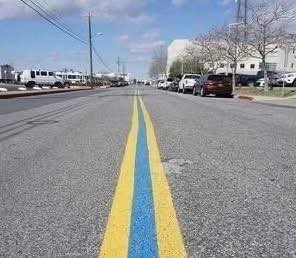
A blue stripe placed between yellow road center lines has drawn attention in parts of Maryland, including Ocean City. Supporters describe the marking as a visible expression of appreciation for police officers and their work in the community. The design is commonly associated with the “thin blue line,” a symbol used by some people to show support for law enforcement.
In Ocean City, a blue marking was added on 65th Street near the Ocean City Police Department. The placement gave the project a local purpose: it was intended as a symbolic welcome and a public acknowledgment of the officers who serve residents, visitors and businesses in the resort town. However, the marking also raises broader questions about traffic-sign standards, the role of public symbols and how communities can recognize public safety workers while ensuring roads remain clear and consistent for every driver.
It is important to distinguish between a symbolic road feature and an official traffic-control device. Standard road markings, including yellow center lines, white lane lines and crosswalks, are designed to communicate predictable safety information. A colored stripe intended as a tribute does not replace those markings or provide a formal navigation function unless it is specifically approved and identified under applicable transportation rules.
What Does the Thin Blue Line Symbol Mean?
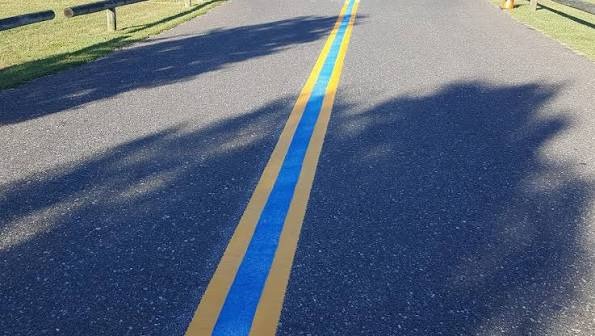
The thin blue line is widely recognized as a symbol of support for police officers. It generally depicts a blue line set against a dark background, representing law enforcement personnel positioned between communities and potential danger. Its meaning varies depending on the setting and the viewer. For many police supporters, it represents respect, remembrance and gratitude for officers who carry out demanding public-service roles.
Police work can involve emergency response, traffic enforcement, investigations, community outreach and assistance during severe weather or public events. In coastal communities such as Ocean City, officers may also manage large seasonal crowds, traffic congestion, missing-person reports, disputes, public safety concerns and emergency coordination. Local governments often seek ways to recognize these responsibilities, especially during National Police Week or after major community events.
At the same time, the thin blue line has become a subject of public debate in the United States. Some people view it as a respectful expression of support for officers and their families. Others believe its use on public property can create questions about whether a government institution is endorsing a particular political or cultural message. Those differing interpretations make public discussion, transparent decision-making and clear explanations especially important when symbols are placed on streets, municipal buildings or other taxpayer-funded spaces.
Ocean City’s Blue Road Marking
Ocean City is a Maryland beach resort community that experiences a substantial rise in visitors during the summer season. Public safety agencies in the town work in an environment where population levels, traffic patterns and service needs can change quickly. The Ocean City Police Department is responsible for a wide range of duties, from routine calls for service to crowd management and support during emergencies.
The blue stripe on 65th Street was positioned near the police department and was presented as a tribute to local officers. It was not intended to alter the meaning of the existing yellow center lines, which remain the roadway’s primary directional markings. Yellow center lines are a familiar and important part of U.S. traffic design: they separate traffic moving in opposite directions and help drivers understand where passing is restricted or permitted.
Some early descriptions of the project characterized the line as a way to guide people toward the police station. That claim should be treated carefully. Under standard traffic practice, drivers are directed to public facilities through approved signs, route markers, street names and official wayfinding systems. A decorative or commemorative colored line may help identify a location to people already familiar with the area, but it should not be relied upon as a substitute for regulated signage.
The local project also received attention because it reflects a wider trend in which towns and cities use streetscape features to recognize military personnel, firefighters, emergency medical workers, veterans and law enforcement agencies. Community recognition can take many forms, including memorial ceremonies, proclamations, designated appreciation days, public art and support programs for first responders and their families.
Why Road Marking Standards Matter
Road markings are not merely decorative. They are part of a carefully developed safety system intended to help drivers, cyclists and pedestrians make quick decisions. In the United States, the Federal Highway Administration publishes the Manual on Uniform Traffic Control Devices, commonly called the MUTCD. This manual provides national standards and guidance for signs, signals and pavement markings on public roads.
The MUTCD emphasizes consistency because people travel between states, cities and neighborhoods with the expectation that colors and symbols will carry familiar meanings. Yellow markings generally separate opposing traffic flows. White markings typically separate traffic moving in the same direction or mark roadway edges. Other colors may be used in specific circumstances, but their use is governed by engineering standards and local or state transportation policies.
When communities consider commemorative pavement designs, transportation officials must evaluate visibility, maintenance, weather conditions, driver comprehension and potential distraction. A feature that is clear in daylight may be less visible at night or when roads are wet. Pavement markings also wear down over time, particularly in areas with snow removal, sand, salt, heavy traffic or frequent resurfacing.
Local governments may work with state highway agencies and traffic engineers to ensure that nonstandard features do not interfere with required markings. This process is particularly important on roads that are part of a state highway system or receive federal transportation funding. Even where a design is allowed, officials should communicate clearly that standard road rules remain unchanged.
Support for Police and the Importance of Public Trust
Supporters of thin blue line road markings often say the designs send a simple message: police officers’ public service is recognized. Law enforcement can be challenging work, and officers may encounter stressful situations, long shifts and significant scrutiny. Community appreciation can contribute to morale and may strengthen relationships between residents and the local agencies responsible for public safety.
Public trust is equally important. Research and guidance from justice and policing organizations have consistently highlighted the value of transparency, accountability and positive non-enforcement interactions between officers and residents. Community policing strategies often encourage agencies to build relationships through neighborhood meetings, youth programs, crisis-response partnerships and clear communication about local priorities.
A road marking alone cannot create trust, nor can it address all concerns related to policing. But public recognition efforts can be most constructive when they are part of a wider commitment to dialogue and service. Communities can support officers while also making space for residents to express questions about public spending, symbolism and the policies that shape police-community relations.
Community Reactions Can Differ
Public symbols often carry multiple meanings. In Ocean City and other communities, some residents may see a blue line as an appropriate expression of gratitude for officers who respond to emergencies and help maintain public order. Business owners and visitors may also view it as a local feature that reflects support for the police department.
Others may prefer that streets and other public infrastructure remain visually neutral, particularly when a symbol has become part of national political discussion. These perspectives do not necessarily reflect a lack of appreciation for individual officers. Rather, they may reflect a preference for commemorations that are less closely associated with broader cultural debates.
Constructive civic discussion is especially valuable in these situations. Municipal leaders can explain how a project was approved, how much it cost, whether it meets traffic-safety requirements and how public feedback was considered. Residents, in turn, can participate through council meetings, public-comment periods and local advisory boards. This approach helps communities make decisions that are transparent and responsive.
Alternative Ways Communities Can Recognize First Responders
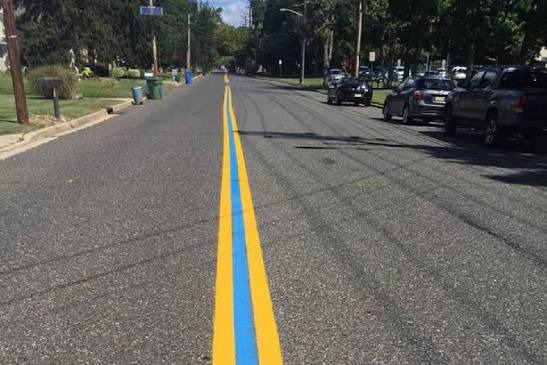
Road markings are only one possible form of recognition. Communities that want to honor police officers, firefighters, paramedics and dispatchers have several other options that may be easier to maintain and less likely to affect traffic design. These include annual appreciation events, memorial gardens, scholarships for children of first responders, wellness initiatives and fundraising for families facing hardship after a line-of-duty death or injury.
Programs that promote officer wellness can also have practical value. Federal and nonprofit organizations have emphasized the importance of mental health resources, peer support and training for first responders. Investments in these areas can support both personnel and the communities they serve.
Public education is another useful tool. Residents can learn about when to call emergency services, how to report non-emergency issues, what to do during traffic stops, and how local police departments handle community concerns. Clear communication helps reduce misunderstandings and gives residents meaningful ways to participate in public safety.
Key Takeaways About Blue Road Lines
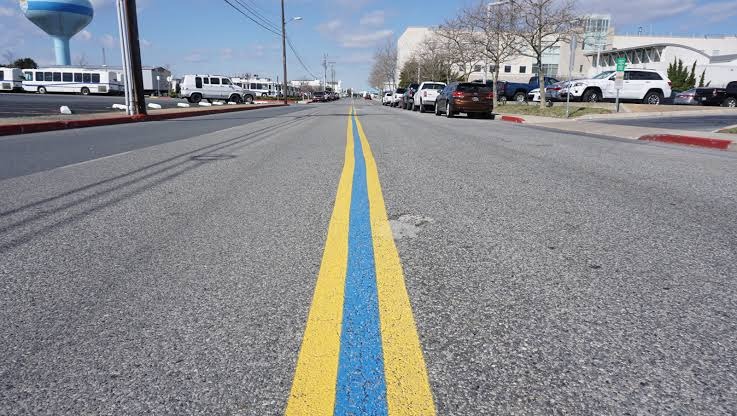
The blue line placed near the Ocean City Police Department is best understood as a local tribute rather than an official traffic instruction. Its appearance reflects support for law enforcement and recognition of the work officers perform in a busy tourism-oriented community. The reported project should not be confused with a nationwide requirement or a standardized navigation system.
For drivers, the essential safety message remains unchanged: follow official signs, signals and standard pavement markings. Yellow center lines continue to indicate the separation of opposing traffic, and motorists should obey posted speed limits, parking rules and pedestrian-crossing requirements.
For communities, the discussion around thin blue line markings demonstrates how public spaces can become places for both appreciation and civic conversation. Recognition of law enforcement can coexist with careful attention to road safety, transparent government processes and respect for differing viewpoints. When local leaders communicate clearly and follow transportation standards, symbolic projects can be considered thoughtfully alongside the practical needs of residents and visitors.
Sources
- Federal Highway Administration — Manual on Uniform Traffic Control Devices
- Town of Ocean City, Maryland — Official Website
- Ocean City Police Department — Official Information
- U.S. Department of Justice — Office of Community Oriented Policing Services
- National Highway Traffic Safety Administration — Road Safety Resources
- Maryland Department of Transportation State Highway Administration
Disclaimer: This content is intended for entertainment purposes only and is not based on real events.