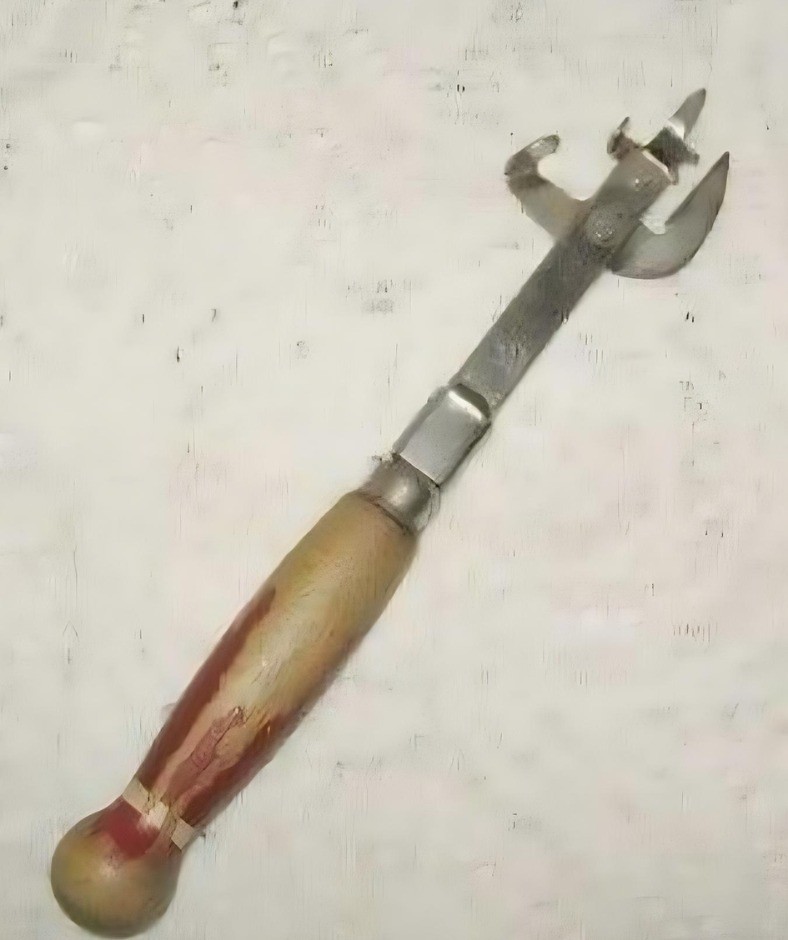
The Forgotten Can Opener That’s Making a Comeback
Few household objects reveal changing habits as clearly as the humble can opener. A small metal tool found in an old kitchen drawer can look unfamiliar today, especially when it lacks the plastic grips, large turning knob, or electric motor associated with many modern openers. Yet many vintage openers from the mid-20th century remain practical examples of straightforward mechanical design.
The renewed interest in these tools is not simply a social-media mystery. It also reflects broader interest in durable household goods, repairable products, vintage kitchenware, and low-energy tools. Collectors and everyday cooks alike are revisiting manual openers because they are compact, understandable, and often capable of lasting for decades when properly cared for.
While it is difficult to identify the precise manufacturer or date of an individual opener without markings, packaging, or a clear view of its mechanism, the object described is consistent with the many hand-operated can openers commonly used in North American kitchens during the 1940s and 1950s. Their basic purpose was simple: puncture a can lid and cut around its edge so the contents could be accessed safely.

The Forgotten Can Opener and Its Place in Kitchen History
Canned food became an increasingly important part of household life during the 19th and 20th centuries. Food was being preserved in cans before a convenient household opener had become standard, which meant that early users sometimes relied on improvised methods. The development of purpose-built can openers made packaged foods far easier and safer to use at home.
The first patented can openers appeared in the United States in the 1850s, decades after canned food entered wider circulation. Over time, inventors introduced designs with cutting wheels, serrated edges, cranks, and lever systems. By the mid-20th century, manually operated openers had become familiar kitchen tools. Their forms varied, but most depended on a blade or cutting wheel, a way to grip the can rim, and hand pressure or a rotating motion.
Not every older metal opener works in exactly the same way. Some puncture the top and are moved around the lid by hand. Others use a turning mechanism that advances a sharp cutting wheel along the rim. Still others are compact “church key” styles intended to pierce triangular openings in certain beverage and food cans. Identifying the mechanism matters because it determines how the tool should be used and cleaned.
Why Vintage Manual Can Openers Were Built Differently
Many older kitchen tools were made with steel components, simple joints, and few decorative materials. That construction can make a vintage opener feel heavier than a lightweight modern model. However, weight alone does not guarantee quality or safety: rust, bent cutting wheels, loose gears, and worn handles can all affect performance. A well-preserved opener may remain useful, while a damaged one may be better suited to display or recycling.
The lasting appeal of a manual opener comes from its mechanical simplicity. It needs no electricity, batteries, charging cable, software, or specialized storage space. In ordinary use, the user supplies the force needed to clamp, turn, or guide the cutting mechanism. This makes a manual opener useful in small kitchens, campsites, emergency kits, and homes where a power outage may interrupt access to electric appliances.
Durability is also an important part of the appeal. Products designed with replaceable or serviceable metal parts may remain in use longer than items made from mixed materials that are difficult to repair. That does not mean every old object is automatically more sustainable than a new one. The most sustainable choice depends on whether the item still works safely, how long it will be used, and whether it can be maintained rather than discarded.
How a Traditional Can Opener Works
A conventional rotary manual can opener typically has two essential working parts: a cutting wheel that pierces and slices the lid, and a toothed drive wheel that grips the rim and moves the opener around the can. The user positions the tool on the can’s upper edge, closes or clamps the handles if required, and turns the knob steadily. As the can rotates relative to the blade, the cutter travels around the lid.
Older models may require more practice than newer ergonomic designs. The blade must be placed accurately, and the can must remain stable on a firm surface. If the opener slips, fails to cut, or leaves an uneven edge, it is best to stop rather than force the mechanism. A dull blade, damaged gear, or misshapen can can make operation difficult.
Users should handle opened cans carefully. Traditional openers may leave sharp metal edges on the lid or rim. The U.S. Department of Agriculture advises consumers to avoid touching food-contact surfaces unnecessarily and to keep tools clean. After opening a can, lift the lid with care, using a utensil if needed, and avoid using a badly bent or corroded tool that may be difficult to sanitize.
Cleaning and Maintaining a Vintage Can Opener
Maintenance is one reason a simple mechanical tool can remain functional for years. Food residue can collect around the cutting wheel, gears, and hinge, particularly after opening cans containing oil, sauce, or syrup. Washing the opener after use with warm water and dish soap helps prevent buildup. A small brush can be useful for reaching the wheel and gear area.
Drying is especially important for older steel openers. Leaving metal parts wet can encourage corrosion, which can impair movement and make cleaning more difficult. If an opener has visible rust near the cutting mechanism, persistent grime, or a blade that does not move smoothly, replacing it is generally the safer option. A tool used on food packaging should be clean and in good working order.
Some antique tools may have finishes, wooden handles, or construction details that make dishwasher cleaning unsuitable. In those cases, gentle hand washing and thorough drying are more appropriate. Owners who value an item primarily as a collectible may prefer to preserve it rather than use it for food preparation, especially if its age or condition makes sanitation uncertain.

Vintage Kitchen Design Meets Modern Interest in Reuse
The visual appeal of a vintage can opener is part of its current popularity. Industrial metal finishes, compact forms, stamped logos, and visible gears can evoke the practical design language of mid-century kitchens. These objects are often displayed alongside enamelware, glass storage jars, cast-iron cookware, and other durable household items from earlier decades.
Still, vintage style should not be confused with a guarantee of authenticity or quality. Online posts may attach broad date ranges or dramatic stories to ordinary tools without documentation. For collectors, useful clues include maker’s marks, patent numbers, country-of-origin stamps, catalog listings, and original packaging. Museum collection databases and historic advertisements can also help establish when a design was made and how it was marketed.
The interest in older utensils also connects to a larger conversation about consumption. Consumers increasingly consider whether products can be repaired, whether they require electricity, and whether they will remain useful over time. A dependable manual can opener is not a solution to every sustainability concern, but it illustrates the value of choosing tools with a clear function and a long potential service life.
Why Simple Household Tools Create Online Curiosity
When an unfamiliar object appears online, people often try to identify it by comparing shapes, materials, and moving parts. That collaborative process can be entertaining, but it can also produce confident guesses that are not supported by evidence. Kitchen tools are particularly prone to misidentification because many devices from different decades look similar while serving slightly different purposes.
A vintage can opener can generate attention because it sits at the intersection of nostalgia and everyday usefulness. Older generations may recognize a familiar object from childhood kitchens, while younger viewers may see a puzzling mechanism from before convenience features became standard. The discussion becomes less about a single tool and more about how quickly common knowledge of ordinary objects can change.
There is also a practical reason for continued interest. Manual tools offer resilience. They can be used without access to electricity, are easy to store, and generally have a short learning curve. For people building emergency supplies, traveling in recreational vehicles, or reducing countertop clutter, a reliable hand-operated opener remains a sensible basic item.
Choosing a Can Opener for Today’s Kitchen
A vintage opener can be an enjoyable and useful choice if it is clean, functional, and comfortable to operate. Before using one, inspect the cutting wheel, drive gear, handles, and joints. The mechanism should move without excessive wobbling, and the metal should not have heavy corrosion or cracks. Test it carefully on a non-bulging, undamaged can, and discontinue use if the tool slips repeatedly or produces jagged, unsafe edges.
For buyers seeking a new manual opener, useful features include a secure grip, a stable cutting mechanism, easy cleaning, and a design that keeps fingers away from sharp edges. Side-cutting models, for example, are designed to cut below the lid seam and may leave a smoother edge than some traditional top-cutting designs. Preferences vary, so the best choice depends on hand strength, comfort, storage needs, and how frequently the tool will be used.
Electric openers can be helpful for some people with limited hand mobility, but they are not automatically superior for every household. A manual model may be more portable, less expensive, and easier to keep available during a power interruption. The key is selecting a tool that can be used safely and consistently.
A Small Lesson in Useful Design
The vintage can opener is more than a curiosity from a kitchen drawer. It represents a period when household tools often emphasized direct mechanical function, compact storage, and long-term use. Its renewed attention reflects genuine interest in practical design rather than a need to reject modern technology altogether.
Older tools deserve a balanced assessment. They can offer charm, durability, and a connection to domestic history, but they also require inspection and safe handling. A clean, well-maintained manual can opener can still perform its original task effectively. In that sense, the continuing appeal of the forgotten can opener is easy to understand: it is a simple object that demonstrates how thoughtful design can remain relevant across generations.

Sources
Disclaimer: This content is intended for entertainment purposes only and is not based on real events.