DIY Compost Aeration Tower: A Simple PVC Tool for Healthier Compost
A compost pile does not need expensive equipment to work effectively. With a short section of PVC pipe, a funnel, and a few basic supplies, gardeners can create a reusable compost aeration tower designed to bring air and moisture closer to the center of a pile. This practical project is especially useful in autumn, when fallen leaves, grass clippings, and kitchen scraps can quickly create a dense mass that is harder to manage.
Composting is a natural biological process in which microorganisms break down organic materials into a dark, soil-like amendment. These microbes need a suitable balance of oxygen, moisture, carbon-rich materials, and nitrogen-rich materials. While turning a compost pile remains one of the most effective ways to introduce oxygen, an aeration tower can provide an additional airflow pathway between turnings. It can also make it easier to add small amounts of water to dry material without soaking only the surface.
Why Airflow Matters in a Compost Pile
Healthy composting depends largely on aerobic microorganisms, meaning organisms that need oxygen to thrive. When enough air is available, these microorganisms can break down leaves, vegetable scraps, coffee grounds, plant trimmings, and other suitable organic materials efficiently. A well-managed pile may warm up as microbial activity increases, particularly when it is large enough and has a balanced mix of ingredients.
When compost becomes compacted or overly wet, oxygen has difficulty moving through the material. This may slow decomposition and can lead to unpleasant odors. A pile that smells sour or stagnant is often a sign that the materials need more air, more dry carbon-rich matter, or both. Adding shredded leaves, straw, untreated wood chips, or torn cardboard can help create spaces within the pile. Turning the material is also valuable, but it can take time and physical effort.
A perforated PVC aeration tower is not a replacement for good compost management. Instead, it is a simple supporting tool. Positioned in the center of a pile, it creates a vertical channel that may help air move toward the interior. The funnel at the top also offers a convenient opening for adding water gradually when compost is too dry.
Benefits of a PVC Compost Aeration Tower
This low-cost garden project is suitable for many home composting setups, including open piles, pallet bins, wire enclosures, and larger stationary compost containers. It can be particularly useful for gardeners who collect significant quantities of autumn leaves or who add kitchen scraps regularly but cannot turn their compost every few days.
The main benefit is convenience. Rather than digging into the center of the pile to assess moisture or create an opening, gardeners can use the funnel to direct a modest amount of water through the pipe. The holes along the sides distribute air and potentially moisture into the surrounding material. The tool can also be gently rotated from time to time to reduce the chance of compost packing tightly against the pipe.
Using a removable tower also keeps the system flexible. It can be lifted out for cleaning, repositioned in a different area of the pile, shortened for smaller bins, or stored during periods when it is not needed. PVC is durable and widely available, although gardeners should avoid burning PVC or exposing it to unnecessary high heat. A basic pipe used as a compost tool can last for several growing seasons when rinsed and stored properly.
Materials for the Compost Aeration Tower
Most of the supplies are inexpensive and available at hardware, home-improvement, or general retail stores. Select materials that fit together securely. The following dimensions are practical for a medium or large compost pile, but they can be adjusted to suit the size of the bin.
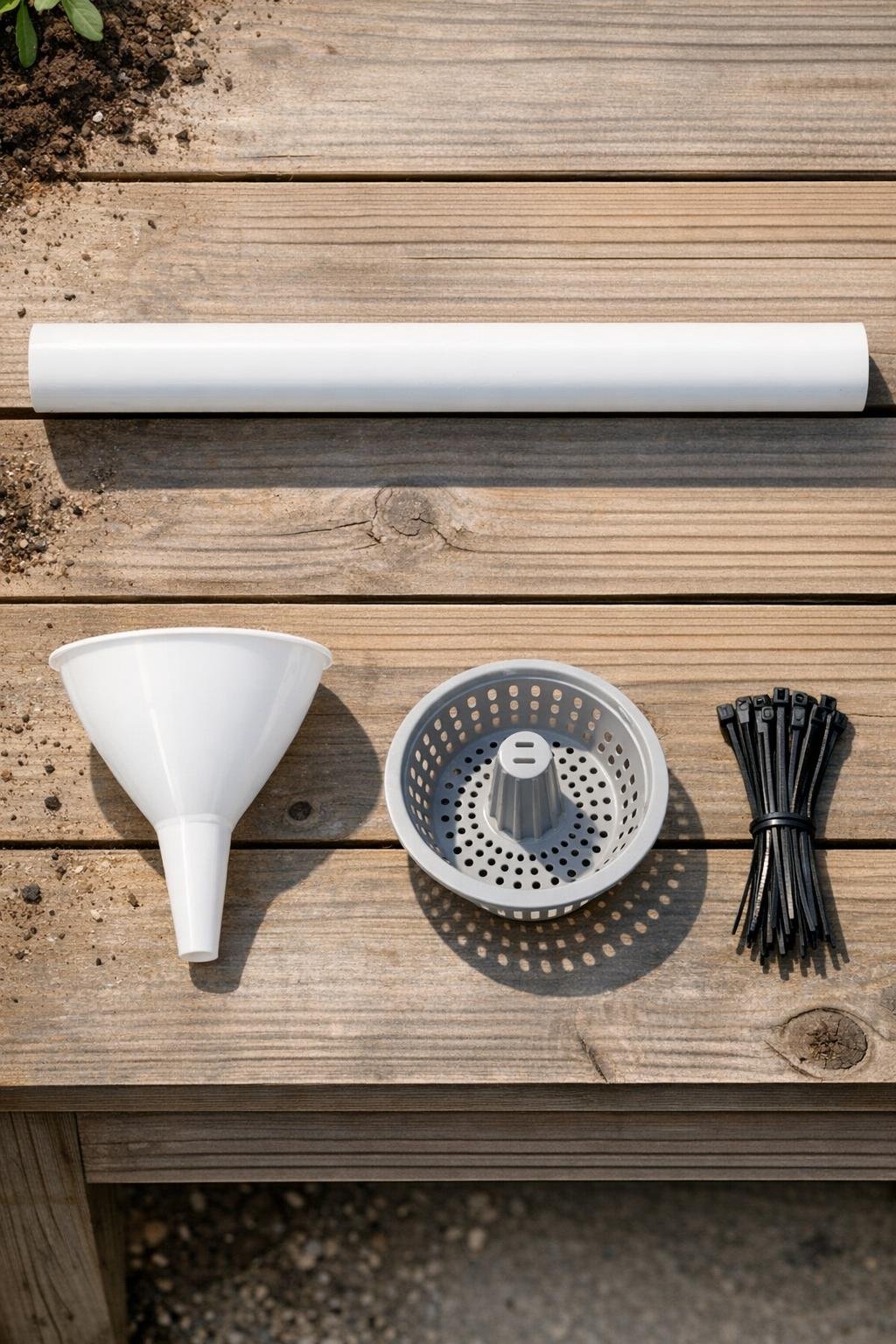
- One white PVC pipe, approximately 4 inches in diameter and 48 inches long
- One plastic funnel with a top opening about 4 to 5 inches wide
- One plastic sink strainer basket, roughly 3 to 4 inches across
- Six nylon zip ties, about 8 inches long
- A small piece of 120-grit medium sandpaper
- A drill and a 1/2-inch drill bit
- Safety glasses and work gloves
Before drilling, place the PVC pipe on a stable work surface. Wear safety glasses to protect your eyes from plastic fragments. If possible, secure the pipe with clamps or place it in a workbench vise so it cannot roll while you work. Take care not to overtighten the vise, as excessive pressure can damage some plastic pipe.
How to Build a PVC Compost Aeration Tower
1. Clean and mark the PVC pipe
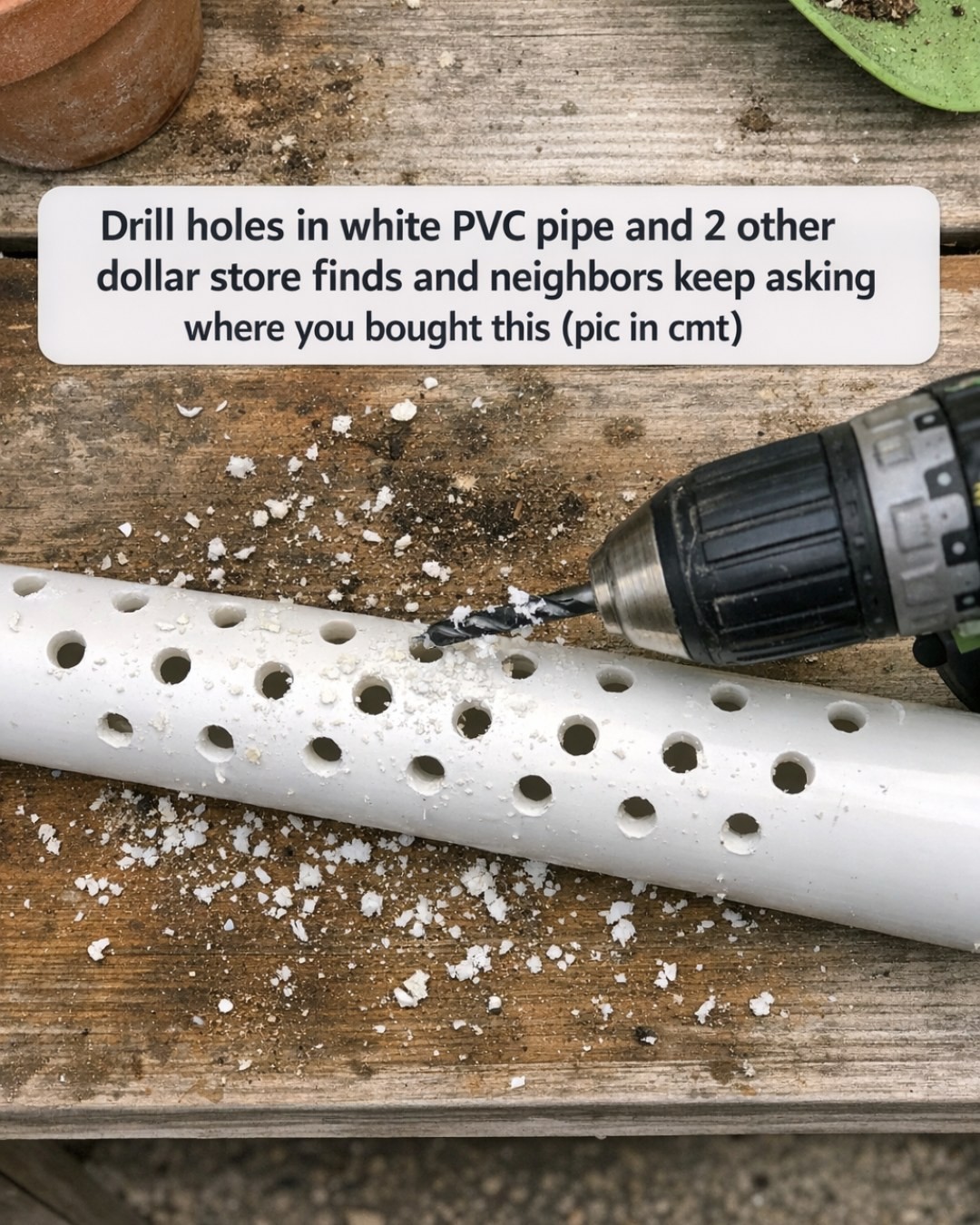
Wipe dirt and dust from the 4-foot PVC pipe. Starting about 4 inches above the bottom end, mark rows where the ventilation holes will be drilled. Continue marking until about 4 inches below the top. Keeping both ends largely solid helps preserve the pipe’s strength and provides stable sections for installation and handling.
Space the marks approximately 2 inches apart around the outside of the pipe. A staggered pattern is often more effective than straight vertical rows because it distributes openings around several sides of the pipe. The goal is not exact symmetry; it is to provide multiple routes for air to move into the compost surrounding the tube.
2. Drill the ventilation holes
Using a 1/2-inch drill bit, drill holes at the marked locations. Rotate the pipe as needed so holes are spread around its circumference. Drill carefully and avoid forcing the bit, which can crack or tear the plastic. Leave the lower 4 inches without holes. This solid section will be pushed into the compost and helps the tower stay intact during use.
The number of holes can vary. A pipe with evenly distributed openings generally allows plenty of contact between the pipe’s interior and the compost pile. Excessively large or numerous holes may allow fine material to enter the pipe more easily, so a moderate pattern is usually sufficient.
3. Smooth rough edges
Freshly drilled PVC can leave sharp edges or plastic burrs. Use 120-grit sandpaper to smooth each opening, as well as the top rim and bottom edge of the pipe. This step makes the tower safer and more comfortable to handle. It can also reduce snagging on gloves, fabric, or compost materials.
4. Attach the bottom strainer guard
Fit the plastic sink strainer basket over the bottom opening of the pipe. The strainer serves as a simple guard that can reduce the amount of large debris entering the tube from below. Secure it with three zip ties threaded through the strainer openings and around the pipe. Tighten the ties firmly, then trim the excess tails neatly.
Check that the strainer is secure but removable. Compost conditions are damp, and even sturdy plastic accessories may need replacement after extended outdoor use. Inspect the guard periodically for cracks, loosened ties, or accumulated material.
5. Secure the funnel at the top
Insert the narrow end of the funnel into the top of the PVC pipe. Use the remaining three zip ties to secure the funnel so that it does not shift when water is added. A funnel with a wide opening can be especially convenient in cool weather, when gardeners may be wearing gloves or pouring from a watering can.
The funnel should remain above the compost surface. Keeping it visible makes it easier to locate the tower and prevents leaves or mulch from blocking the opening. If rainwater regularly enters the funnel, monitor the pile’s moisture level and avoid adding extra water unless the compost feels dry.
6. Install the tower in the compost pile
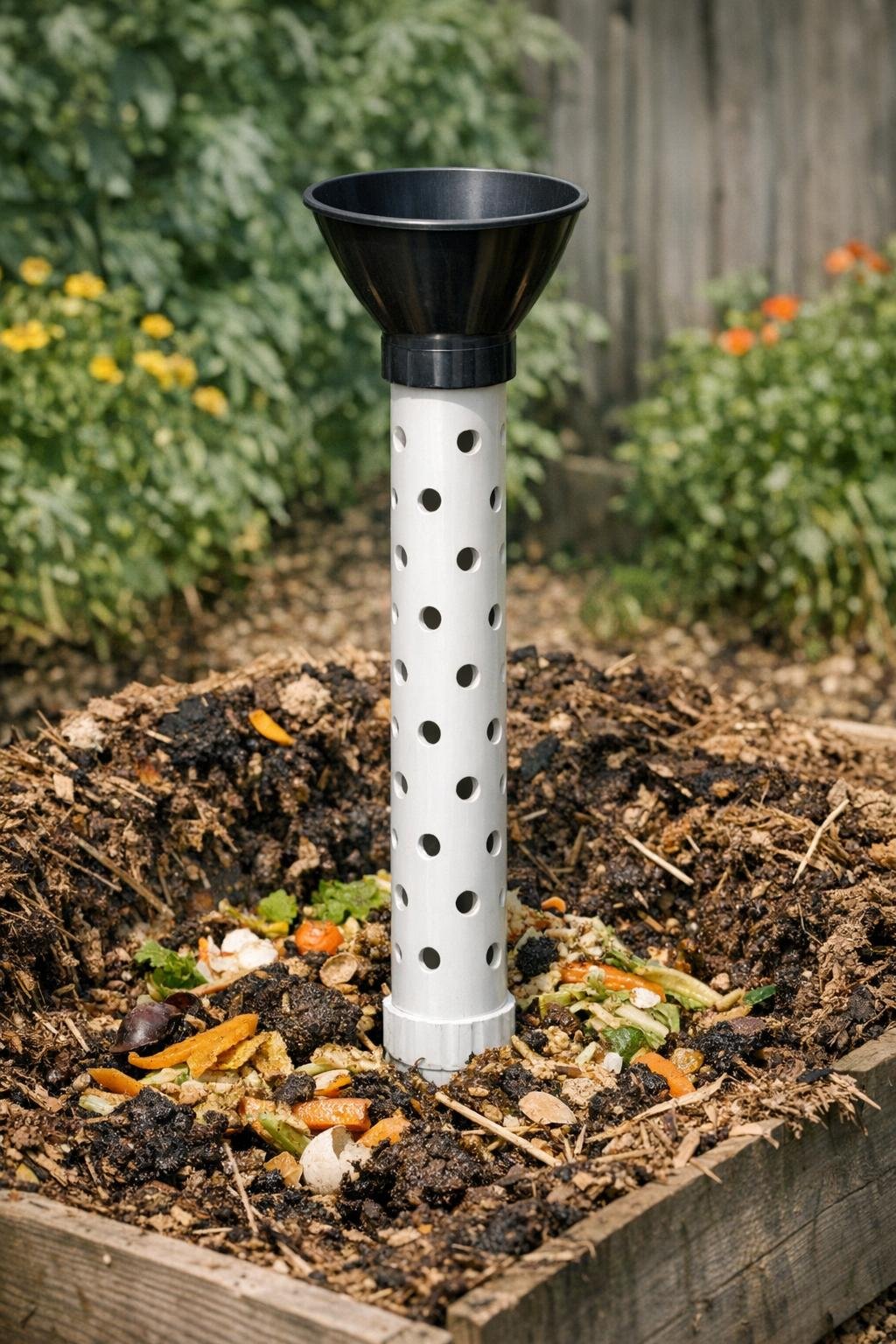
Place the finished tower vertically near the center of the compost pile. Push the solid lower section into the material for stability, leaving the funnel exposed above the pile. A pile that is at least several feet wide and tall will generally make better use of a 48-inch tower than a very small container.
For a newly built pile, install the tower as materials are layered around it. For an existing pile, create space with a garden fork or shovel before inserting the pipe. Avoid forcing the pipe through dense branches or other hard materials that could damage the strainer or crack the PVC.
How to Use the Aeration Tower Effectively
Check compost moisture regularly. A commonly recommended guideline is that compost should feel similar to a wrung-out sponge: moist enough that microbial activity can continue, but not saturated enough to release water when squeezed. If the pile is dry, add water slowly through the funnel. Pause between additions so moisture can move into surrounding material rather than collecting in one area.
In dry climates or during warm weather, the tower can make watering more targeted. In wet seasons, however, additional water may not be necessary. Covering an open pile with a breathable tarp or lid can help prevent heavy rain from making it overly wet while still allowing air exchange around the pile.
Every couple of weeks, gently twist the tower if the surrounding material has settled tightly. This small movement may help maintain a little space near the pipe. For faster composting, continue to turn the pile periodically with a fork or compost aerator. Turning redistributes materials, exposes different sections to oxygen, and helps gardeners assess whether the mix is too wet, too dry, or lacking in carbon-rich ingredients.
Balancing Browns and Greens for Better Compost
An aeration tower performs best when it is used with a well-balanced compost mixture. Compost ingredients are often described as “browns” and “greens.” Browns are typically carbon-rich materials such as dry leaves, shredded paper, untreated sawdust in limited quantities, straw, and small twigs. Greens are generally nitrogen-rich materials, including fruit and vegetable scraps, fresh grass clippings, coffee grounds, and fresh plant trimmings.
Dry leaves are particularly useful in fall because they help absorb excess moisture and create structure in the pile. Grass clippings can be valuable, but thick layers may mat together and restrict airflow. Mixing clippings with dry leaves or shredded cardboard can reduce this problem. Kitchen scraps should usually be covered with a layer of browns to discourage pests and reduce odors.
Many composting guides recommend using more brown material by volume than green material, although the ideal balance varies by material and local conditions. The most useful approach is observation. If a pile is wet and compacted, add dry browns and turn it. If it is dry and inactive, add a small amount of water and nitrogen-rich material, then mix. The compost aeration tower can support these adjustments, but it cannot correct an imbalanced pile on its own.
Compost Tower Variations for Different Garden Setups
For compact compost bins, reduce the pipe length to approximately 24 to 36 inches. The top should still extend above the compost so the funnel remains accessible. A shorter pipe is easier to use in enclosed bins where a 4-foot tower may be too tall or difficult to remove.
For dense leaf piles, use a staggered arrangement of drilled holes to encourage air movement in several directions. This can be helpful when leaves are wet or have settled after rain. Gardeners using a large open pile may also choose to install more than one tower, positioning them several feet apart rather than clustering them together.
For easier watering, choose a larger funnel and use a watering can with a gentle flow. Avoid adding large quantities of liquid compost tea or other mixtures unless they are well diluted and appropriate for the materials in the pile. In most cases, plain water and a balanced mix of organic matter are all that is needed to maintain ordinary home compost.
Cleaning and Storing Your Compost Aeration Tower
At the end of the season, remove the tower from the pile and rinse away compost residue with a garden hose. Inspect the drilled holes, funnel, strainer, and zip ties. Replace damaged parts before using the tower again. Allow the pipe to dry before storing it in a shed, garage, or covered outdoor area.
Keeping the tower clean helps prevent old material from blocking the openings. It also gives gardeners an opportunity to inspect the compost pile itself. Finished compost is usually dark, crumbly, and earthy smelling, with few recognizable original ingredients. Larger woody pieces may take longer to break down and can be returned to a new pile if desired.
A Simple Tool for More Manageable Home Composting
A DIY compost aeration tower is a practical example of how a few inexpensive materials can support better garden habits. It offers an accessible way to bring air toward the center of a compost pile, direct water where it is needed, and make seasonal compost maintenance feel more manageable. It is not a shortcut around proper ingredient balance, moisture control, and occasional turning, but it can complement all three.
For gardeners building compost piles from autumn leaves, kitchen scraps, and routine yard trimmings, the tower provides a durable and reusable tool that can be assembled in an afternoon. With careful drilling, safe handling, and regular observation of the pile, it can become a useful part of a low-waste gardening routine year after year.
Sources
Disclaimer: This content is intended for entertainment purposes only and is not based on real events.