
Can You Spot the Frog and Hidden Horse?
Optical illusions are a lighthearted way to explore how the human brain interprets visual information. One image currently drawing attention online appears to show a frog resting near a lily pad. At first glance, the frog is usually the most obvious feature. However, the illustration also contains the outline of a horse’s head and neck, created through the arrangement of the frog’s body and nearby details.
The challenge is simple: can you identify both animals in the same picture? Some viewers notice the frog immediately but need more time to recognize the horse. Others may spot the second image only after being given a clue. This does not mean that one person has better eyesight than another. Instead, it reflects the way attention, expectation, visual context, and prior knowledge influence perception.
Take a moment to look at the image without reading ahead. Do you see a frog? Can you also find the hidden horse?
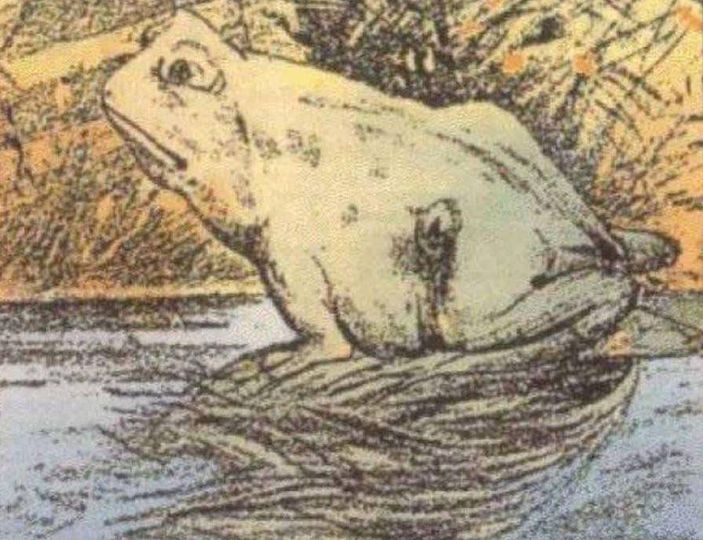
The Frog Is Usually the First Image People Notice
For most viewers, the frog is the dominant image because it is presented in a familiar and coherent way. Human vision is especially effective at recognizing common objects when their major features are clearly arranged: a rounded body, eyes, legs, and a setting that resembles a pond or lily pad.
Our brains do not process every visual detail with equal attention. Instead, they quickly organize shapes, lines, shadows, and colors into meaningful objects. This efficient process helps people navigate everyday environments, recognize faces, read signs, and react to changing surroundings. In an ambiguous image, however, that same efficiency can make the first obvious interpretation difficult to replace.
Once the brain decides that it is looking at a frog, it may continue to prioritize details that support that conclusion. The viewer sees the animal as a complete figure and may overlook the alternative arrangement hidden within it. This is a normal feature of perception, not a mistake or a test of intelligence.
Where Is the Hidden Horse in the Optical Illusion?
The key to this puzzle is that the horse is not shown as a complete animal. Viewers are looking for a horse’s head and neck rather than an entire horse standing in the scene. The horse-like profile is created by elements that initially appear to be part of the frog and the surrounding pond setting.
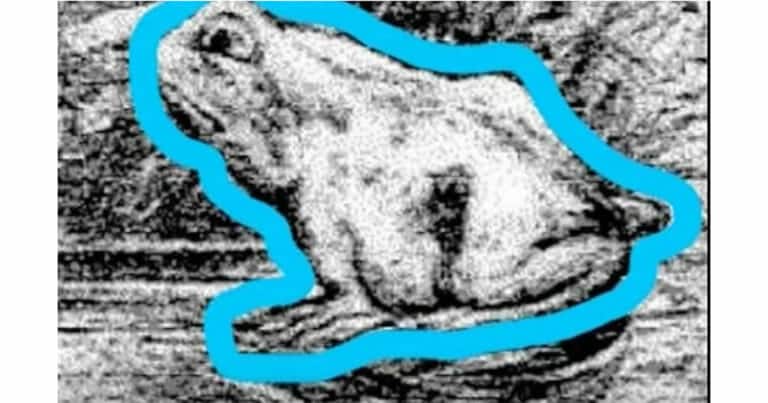
If you have only noticed the frog so far, focus on the frog’s body and its relationship to the lily pad. Look at the curves, edges, and areas of contrast rather than trying to find a separately drawn horse. The frog’s shape forms the visual suggestion of the horse’s face, while nearby details help create the impression of a neck and mane.
In other words, the image does not hide a second animal behind the first one. Both interpretations are present in the same lines and forms. The challenge comes from shifting perspective and allowing the brain to reorganize familiar visual information.
Why Ambiguous Images Can Be Difficult to See
Images such as the frog and horse puzzle are often described as ambiguous figures. An ambiguous figure is an image that can be interpreted in more than one valid way. Depending on where a person focuses and what features they notice first, the image may appear to change.
A classic example is the Rubin vase illusion, in which viewers may see either a vase in the center or two faces looking toward each other. Another well-known example is the Necker cube, a line drawing that can appear to shift orientation even though the image itself remains unchanged. These examples demonstrate that seeing is not simply a matter of the eyes recording the world like a camera.
Visual perception is an active process. Light enters the eyes and is converted into signals that travel to the brain, where those signals are interpreted using context, memory, attention, and learned patterns. The brain makes rapid judgments about edges, depth, motion, color, and object identity. Most of the time, this process happens so quickly that people are not aware of it.
In an optical illusion, the available information can support more than one interpretation. The brain may settle on one reading before it considers another. A hint can be enough to change that interpretation because it directs attention toward a different group of shapes. Once the horse becomes visible, many people find it difficult to “unsee” it.
The Role of Attention and Expectations
Attention plays an important part in visual puzzles. When someone is told to look for a frog, they are likely to search for frog-like features. When they are told that a horse is also present, they begin to inspect the image differently. This shift in expectation can make previously overlooked details suddenly appear meaningful.
Psychologists sometimes distinguish between bottom-up and top-down processing. Bottom-up processing begins with raw sensory information: lines, colors, textures, and contrast. Top-down processing involves a person’s expectations, experiences, and knowledge of the world. The frog and horse illusion relies on both. The visible shapes provide the information, while the viewer’s expectations influence how those shapes are assembled into an image.
That is why clues are useful in visual challenges. A clue does not alter the artwork. It changes the viewer’s search strategy. In this case, knowing that the horse is represented mainly by its head and neck narrows the task. Rather than searching for four legs, a tail, and a full body, the viewer can look for a profile within the frog’s outline.
Does Spotting the Horse Say Anything About Your Intelligence?
Online puzzles often make dramatic claims about what a person’s result means, such as suggesting that seeing a hidden image proves exceptional intelligence, rare vision, or a particular personality trait. Such claims should be treated cautiously. A single optical illusion cannot reliably measure intelligence, eyesight, creativity, or mental health.
Many ordinary factors can affect how quickly someone recognizes a second image. These include the size of the screen, image quality, lighting conditions, familiarity with optical illusions, visual attention, and whether the viewer has already received a hint. People may also approach the illustration from different angles, literally or mentally, and notice different patterns first.
Visual puzzles can be entertaining and may encourage observation, patience, and discussion, but they are not clinical assessments. Formal evaluations of vision, cognition, or neurological health require validated methods administered and interpreted by qualified professionals.
How to Look at Optical Illusions More Effectively
If the hidden horse remains difficult to find, try changing the way you examine the picture. Instead of staring at the frog as a whole, look at its contours and mentally separate each section from its usual meaning. Consider which curved lines could form a forehead, muzzle, or neck.
It can also help to look away briefly and return to the image. This gives the brain an opportunity to reset its first interpretation. Viewing the illustration from a slightly greater distance, reducing the screen brightness, or covering one part of the image may also make alternative shapes easier to recognize. These techniques do not improve visual ability in a medical sense; they simply change the visual cues receiving the most attention.
Most importantly, avoid rushing. Optical illusions are designed to invite a second look. There is no correct time limit and no disadvantage in needing a clue. The enjoyment comes from the moment when a familiar image is reorganized into something unexpected.
Why Optical Illusions Remain So Popular
Optical illusions continue to attract audiences because they combine art, curiosity, and science. A simple drawing can reveal how strongly the brain depends on assumptions when interpreting the visual world. They are also easy to share: one person may immediately see the hidden figure, while another may need guidance, creating a natural conversation.
Beyond entertainment, researchers use visual illusions to study perception. By examining when people see one interpretation rather than another, scientists can learn more about attention, object recognition, depth perception, and the relationship between sensory input and brain activity. Illusions do not mean that human vision is unreliable in everyday life. Rather, they show that perception is a sophisticated process of making the best possible interpretation from the information available.
The frog and hidden horse image is a good example of this process in action. The frog is visible because the picture offers familiar cues that fit a pond scene. The horse is visible because some of those same cues can also be organized into a different animal profile. Neither view is wrong. They are two ways of understanding the same illustration.
The Answer to the Frog and Horse Puzzle
The image contains both a frog and a horse. The frog is the more immediate subject, while the horse is a secondary figure formed by the frog’s body and the visual structure around the lily pad. The hidden animal is represented by its head and neck, not by a complete horse.
If you saw the frog first, you are in good company. If you spotted the horse before receiving the clue, you likely noticed how the image’s shapes could be interpreted in more than one way. Either result highlights the central appeal of ambiguous art: the picture remains the same, but the brain’s interpretation can change.
Now that you know the trick, look once more at the image. Can you clearly identify both animals? You may also want to share the challenge with friends or family and compare what each person notices first.
Sources
Disclaimer: This content is intended for entertainment purposes only and is not based on real events.