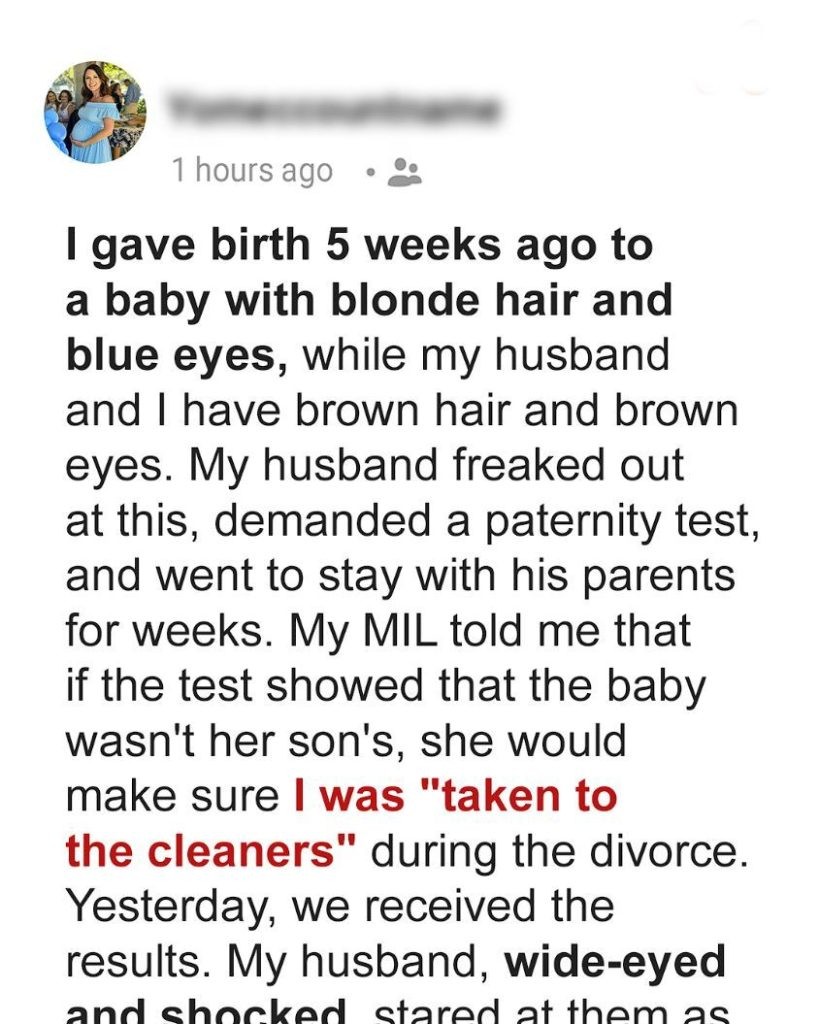
When a DNA Test Challenges Trust After Childbirth
Questions about a newborn’s appearance can create unexpected anxiety in families, especially when a baby’s hair color, eye color, or facial features seem different from those of both parents. In the story of a mother whose husband questioned their daughter Isla’s paternity because she was born with blonde hair and blue eyes, a DNA test eventually confirmed that he was the biological father. Yet the result did not immediately repair the emotional harm caused by suspicion, separation, and pressure from relatives.
This kind of situation highlights important realities about genetics, the emotional demands of the postpartum period, and the role of trust in a relationship. A child’s appearance is not a simple prediction based only on what is visible in their parents. At the same time, a request for genetic testing can carry significant emotional consequences, particularly when it is made during the first weeks after childbirth.
Although every family’s experience is different, conversations about paternity, newborn appearance, and family boundaries benefit from calm communication, accurate medical information, and compassion for everyone involved.
Why a Baby Can Look Different From Both Parents
A newborn’s hair and eye color may not match the features that parents expected. Human traits are shaped by many genes, not by a single, straightforward inheritance pattern. This is especially true for characteristics such as eye color, hair shade, skin tone, height, and facial structure.
It is common for families to assume that two brown-eyed parents cannot have a blue-eyed child, or that two dark-haired parents cannot have a blonde child. In reality, inheritance is more complex. Parents can carry genetic variants associated with traits that are not visible in their own appearance. Those variants may have been passed down through grandparents, great-grandparents, or more distant relatives.
Genetics experts explain that eye color involves several genes, including genes that affect the amount and distribution of melanin in the iris. Brown eyes are often associated with higher melanin levels, while blue eyes generally reflect lower melanin levels and the way light is scattered in the iris. Because multiple genes contribute to this process, simple charts used in basic school biology are only rough illustrations, not reliable predictions for every family.
Hair color is also influenced by many genes. A child may inherit combinations of variants that result in lighter, darker, warmer, or cooler hair than either parent had at birth. In addition, newborn hair often changes over time. Babies may lose hair in the first months of life, and the hair that grows afterward can be a different texture or color. Similarly, eye color can continue changing during infancy as melanin production develops.
Family members sometimes recognize these traits only after looking at old photographs or recalling relatives. In Isla’s case, her grandfather later remembered a blonde-haired family member whom she resembled. Such moments can remind families that traits may reappear across generations without indicating anything unusual about a child’s parentage.
The Emotional Weight of Paternity Doubts After Birth
The weeks after childbirth are often a period of physical recovery, sleep disruption, changing routines, and intense emotions. For a new mother, being questioned about a baby’s paternity can be deeply painful. It may feel like an accusation of dishonesty at a time when she needs care, reassurance, and practical support.
In the original account, Rowan’s concern led him to request a DNA test and temporarily stay with his parents. His mother, Barbara, also became involved and reportedly suggested that the relationship could end if the test did not confirm paternity. Even when the result established that Rowan was Isla’s father, the mother was left to process a different question: how could trust be rebuilt after she had been doubted so quickly?
This emotional response is understandable. A genetic test may answer a biological question, but it does not automatically resolve the relationship issues surrounding the request. The impact can include sadness, anger, embarrassment, isolation, and a sense that a partner did not offer support during a vulnerable life transition.
New parents may also experience increased stress because of financial pressures, changes in identity, reduced personal time, and worries about caring for an infant. Mental health organizations emphasize that postpartum emotional difficulties are common and deserving of support. Feelings of anxiety, persistent sadness, panic, irritability, or hopelessness should be discussed with a qualified healthcare professional, particularly if they affect daily functioning or safety.
How Fear and Misinformation Can Influence Family Conflict
In many conflicts involving paternity concerns, fear is made worse by misinformation. People may rely on simplified ideas about dominant and recessive traits, internet rumors, or assumptions based on a child’s appearance. These beliefs can lead to conclusions that are not scientifically justified.
Accurate information matters because a baby’s visible traits alone cannot determine biological parentage. Only an appropriately conducted genetic test can provide a reliable answer to that question. Even then, the decision to pursue testing should be handled thoughtfully, privately, and respectfully whenever possible.
Rowan later acknowledged that fear and lack of understanding had influenced his actions. Taking responsibility for that reaction was an important first step. An apology is most meaningful when it does more than express regret: it should recognize the specific harm caused, avoid excuses, and be followed by consistent changes in behavior.
For partners facing a similar disagreement, it may help to separate facts from assumptions. Instead of making accusations based on hair or eye color, couples can seek evidence-based medical information. A conversation with a doctor, genetic counselor, or other qualified professional may clarify how inherited traits work and reduce unnecessary conflict.
Rebuilding Trust After a Hurtful Accusation
Trust is central to a healthy relationship, but it can be damaged when one partner feels unfairly accused. Rebuilding it usually takes time. It cannot be achieved through a single conversation or a test result alone.
In the family’s story, reconciliation began slowly. Rowan apologized and admitted that he had been wrong. The couple then started reconnecting through small routines, including family meals and a familiar practice of sharing the highlight of each day. These ordinary moments can be valuable because they create opportunities for connection without forcing every interaction to focus on conflict.
For couples working through a serious breach of trust, several approaches may help:
- Use direct and respectful communication. Partners should describe their feelings without insults, threats, or personal attacks. Statements such as “I felt abandoned when you left” can be more productive than accusations.
- Acknowledge the full impact. The person who caused harm should understand that the issue may involve more than the original disagreement. It may include the timing, the public nature of the accusation, or the involvement of relatives.
- Make space for recovery. Forgiveness cannot be demanded. The hurt partner may need time before they feel ready to resume emotional closeness.
- Focus on reliable actions. Trust is often restored through repeated, dependable behavior: offering support with childcare, keeping commitments, communicating openly, and respecting boundaries.
- Consider professional support. Couples counseling can provide a structured setting for difficult conversations. A licensed therapist may help partners identify patterns of fear, defensiveness, or poor communication.
Reconciliation is not the same as pretending that nothing happened. A healthier approach recognizes the injury while allowing both people to decide, over time, whether the relationship can become secure again.
Setting Boundaries With In-Laws and Extended Family
Extended family can either help reduce tension or make it worse. When relatives become involved in a couple’s private conflict, their words may have lasting effects. Barbara’s initial reaction was driven by loyalty to her son, but her involvement added pressure during an already difficult period.
Later, she arrived with an apology and expressed regret for her assumptions. The mother accepted the gesture while also making it clear that future contact with Isla needed to be based on respect and appropriate boundaries. This is a practical example of how families can move forward without ignoring what happened.
Healthy boundaries are not punishments. They are guidelines that protect relationships and clarify expectations. For new parents, boundaries may include deciding who receives personal information, limiting unannounced visits, refusing to discuss private disputes at family gatherings, or asking relatives not to criticize either parent in front of the child.
When communicating a boundary, it can help to be clear and specific. For example: “We want you to have a relationship with the baby, but we need conversations about our marriage to remain private.” A respectful relative may not agree with every decision, but they should be able to follow the parents’ reasonable requests.
Grandparents and other relatives can play a positive role when they offer practical support, listen without escalating conflict, and recognize that the parents are responsible for decisions about their child.
Supporting New Parents During the Postpartum Period
The postpartum period deserves special care from partners, relatives, healthcare providers, and communities. New parents often need sleep, help with meals, reassurance, and time to adjust. Emotional support is particularly important when a family is also dealing with conflict or uncertainty.
Partners can provide meaningful support by sharing infant-care responsibilities, attending medical appointments when appropriate, checking in about emotional wellbeing, and protecting the home from unnecessary stress. Family members can help by asking what is needed rather than making assumptions. Sometimes the most useful support is simple: bringing food, doing household tasks, or giving parents time to rest.
If a new parent experiences ongoing low mood, severe anxiety, intrusive thoughts, difficulty sleeping even when able to rest, or feelings of being unable to cope, professional help is important. Postpartum mental health conditions are treatable, and seeking help is a sign of strength rather than failure.
What This Family’s Experience Can Teach Others
The story of Isla, Rowan, and their extended family is ultimately about more than a DNA test. It illustrates how quickly assumptions can damage trust, especially when people misunderstand genetics and act from fear. It also shows that repair may be possible when those involved accept responsibility, apologize sincerely, and make room for boundaries.
A child’s hair or eye color is not proof of infidelity, and family resemblance is often more complicated than people assume. Before reaching painful conclusions, it is important to seek accurate information and communicate with care.
Families do not need to be perfect to be loving. What matters is how people respond when they make mistakes: whether they listen, learn, respect one another, and take practical steps toward a healthier future. For new parents especially, compassion and stability can make a profound difference during one of life’s most demanding transitions.
Sources
- MedlinePlus Genetics: Is eye color determined by genetics?
- National Human Genome Research Institute: Genetics overview
- American College of Obstetricians and Gynecologists: Postpartum depression
- Centers for Disease Control and Prevention: Depression during and after pregnancy
- Postpartum Support International: Perinatal mental health information
- Mayo Clinic: Infant development and newborn health guidance
Disclaimer: This content is intended for entertainment purposes only and is not based on real events.