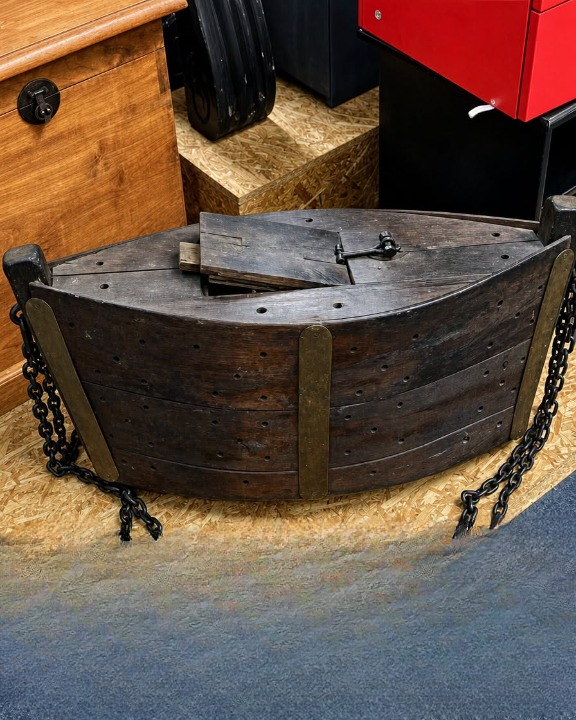
What’s the Secret Behind This Mysterious Antique Device?

Antique tools can be difficult to identify at first glance, especially when they come from a period before modern refrigeration, mass-produced packaging, and widely available household appliances. A curious metal, wooden, or woven object may look unfamiliar today, yet it could once have been an essential part of everyday life for anglers, travelers, farmers, and families.
The mysterious antique device referenced here appears in a historical context connected to fishing and food preservation. In the early nineteenth century, catching several trout or other freshwater fish created an immediate practical challenge: how could a person keep the catch usable long enough to carry it home, trade it, cook it, or preserve it? Without an electric refrigerator, insulated cooler, plastic storage bag, or commercial ice supply, people relied on skill, local resources, and specialized equipment.
Although an object cannot be conclusively identified without clear photographs, measurements, maker’s marks, and provenance, many antique fishing and food-storage devices were designed around the same basic principles. They helped keep food cool, protected it from dirt and insects, allowed water or air to circulate, or made it easier to transport a catch from stream to camp. Understanding those principles offers important clues to the purpose of unusual historical tools.
Life Before Refrigeration: Why Fresh Fish Required Fast Decisions
Fresh fish is highly perishable. Modern food-safety guidance emphasizes prompt refrigeration or freezing because bacteria can multiply rapidly when perishable foods remain at warmer temperatures. The U.S. Food and Drug Administration advises consumers to keep seafood properly chilled and to avoid leaving perishable food at room temperature for extended periods.
People in earlier centuries did not have access to these modern systems, but they understood the practical value of cold temperatures. A fisherman who caught trout in a cold mountain stream knew that the water itself could help maintain a lower temperature than the surrounding air. Cool weather, shade, moving water, snow, ice, salt, smoking, drying, and immediate cooking all played important roles in managing food before mechanical refrigeration became common.
In rural areas of Europe and North America, fishing was often more than a leisure activity. Fish could supplement household meals, support local trade, or provide food during travel. The methods used to carry and preserve fish depended on geography and season. A person near a cold stream might keep fish in the water temporarily; someone closer to home might clean and cook it quickly; and a household with access to salt or smoke could prepare fish for longer storage.
Possible Functions of Historical Fishing Devices
When examining a mysterious antique object associated with fishing, it is useful to consider several common categories of equipment. Many items that now appear decorative or puzzling were actually practical solutions to the problem of moving, cooling, and protecting food.
Fish Creels and Carrying Baskets
A fish creel is one of the best-known traditional tools used by anglers. Often made from wicker, willow, wood, leather, or metal, a creel was carried over the shoulder and used to transport a catch. Its design could include a lid, a narrow opening, ventilation holes, straps, and internal compartments. Woven materials offered a combination of strength, light weight, and airflow.
Creels were not refrigerators, and they could not keep fish cold indefinitely. However, they were useful for keeping a catch together, reducing exposure to direct sunlight, and allowing air to circulate. Some anglers may also have used damp vegetation, cloth, or stream-cooled containers to help protect fish during a journey. The specific effectiveness depended on weather, travel time, and local practice.
Live Fish Keepers and Stream Baskets
Another possibility is a device intended to hold fish in the water. A live fish keeper, sometimes made as a basket, cage, or perforated container, could be placed in a stream or tied near the bank. The flowing water allowed oxygenated water to pass through while keeping fish contained. This method could temporarily keep fish alive or help keep cleaned fish cool in cold water.
Such devices made particular sense in areas with clear, fast-running streams. Rather than carrying a catch immediately through warm air, an angler could continue fishing and retrieve the fish later. The approach was practical but depended on the stream’s temperature, current, water quality, and the construction of the container.
Food Safes, Cooling Containers, and Wire Covers
Not every antique device linked to food preservation was used directly at the water’s edge. Households also used food safes, mesh covers, and ventilated cupboards to protect food from insects and animals. These items were often placed in shaded, airy locations. They did not replace cold storage, but they could improve cleanliness and reduce some forms of spoilage risk compared with leaving food exposed.
In cooler climates, cellars, springhouses, and shaded outbuildings created naturally cooler environments. A springhouse, for example, was built near a natural spring and could use cool running water to help keep dairy products, meat, and other foods at lower temperatures. This was one of the most effective pre-refrigeration strategies available to many rural households.
How People Preserved Fish Before Modern Cold Storage
Short-term cooling was only one part of historical food management. For longer storage, people relied on preservation methods that changed the conditions needed for microorganisms to grow. These methods varied by region, culture, climate, and available ingredients.
Salting and Brining
Salt has been used for centuries to preserve fish and meat. By drawing out moisture, salt makes the environment less favorable for many microorganisms. Salted fish became an important trade good in coastal communities and was also valuable inland because it could be transported over long distances. Brining, which uses salt dissolved in water, was another established technique.
Historical salting methods required experience. Too little salt could be ineffective, while excessive salt affected texture and flavor. The process also depended on cleanliness, temperature, and the condition of the fish. Today, food preservation is better understood through microbiology and standardized safety guidance, but traditional methods remain part of culinary and cultural history around the world.
Drying and Smoking
Drying removes moisture from fish, helping reduce spoilage. In suitable climates, fish could be air-dried, sometimes with the assistance of sun and wind. Smoking added flavor while exposing food to smoke and gentle heat. Depending on the method, smoking could also contribute to drying.
It is important to distinguish between historical practice and modern food-safety recommendations. Home preservation requires careful control of temperature, curing, storage, and handling. Public-health agencies provide detailed guidance because improperly preserved fish can present health risks. Historical techniques are fascinating, but they should not be copied casually without reliable, current safety instructions.
Cooking Food Soon After Catching It
For many travelers and anglers, the simplest solution was to cook fish as soon as possible. A freshly caught trout prepared over a fire was a familiar meal in many outdoor settings. Immediate cooking eliminated the need for long-term storage, although safe handling still mattered. Cleaning utensils, fresh water, cooking temperatures, and protection from contamination were all important even when people did not use today’s scientific vocabulary.
From Natural Ice to Household Refrigerators
The development of refrigeration transformed food storage. Before mechanical refrigeration, harvested natural ice was an important commercial commodity in some countries. Ice could be cut from lakes and rivers during winter, packed in insulating materials such as sawdust, and stored in icehouses. It was later delivered to homes and businesses for use in iceboxes.
The icebox represented a major improvement over older cooling methods. It used a block of ice in an insulated cabinet to lower the temperature of food compartments. Still, it required regular ice deliveries, drainage for melted water, and careful organization. Mechanical refrigerators gradually became more accessible during the twentieth century, changing household diets, shopping habits, and public expectations around food freshness.
This technological shift also changed the meaning of a successful fishing trip. A modern angler can place fish on ice in a cooler, transport it in a vehicle, refrigerate it at home, and freeze it for later use. Earlier anglers had to make more immediate choices. They needed to know the landscape, the weather, the distance to home, and the preservation resources available nearby.
How to Identify an Antique Fishing or Food-Preservation Tool
If you have found a similar object in an attic, estate sale, antique shop, or family collection, avoid assuming its function based only on appearance. Many historic tools overlap in shape and construction. A woven container might be a creel, a market basket, a trapping tool, or household storage. A metal frame might be a cooking accessory, a fish keeper, or a protective food cover.
Start with a careful visual review. Look for hinges, handles, straps, latches, drainage holes, wire mesh, maker’s stamps, patent numbers, or signs that the object was designed to be submerged. Wear patterns can also provide clues. Smooth handle areas may suggest frequent carrying, while rust patterns and corrosion may indicate repeated contact with water.
Next, record the item’s dimensions and materials. A small container with a shoulder strap may be more consistent with an angler’s creel than with a household food safe. A larger perforated cage with a securing loop may have been intended for use near a stream or dock. Compare the object with museum collections, digitized catalogs, historical advertisements, and archives rather than relying solely on auction listings or social-media posts.
Local historical societies, fishing museums, agricultural museums, and professional appraisers may also be able to help. Provenance matters greatly. An item that came from a family known for fishing or living near a river may have a different likely use than an object found in a kitchen or farm outbuilding.
Why These Everyday Objects Still Matter
The appeal of a mysterious antique device is not limited to its identification. It opens a window into the ingenuity of ordinary people who lived with fewer manufactured conveniences. Their tools reflected close knowledge of seasons, waterways, animals, weather, and materials available in the surrounding landscape.
Fishing equipment and food-preservation tools also reveal broader social history. They show how households planned meals, how communities traded food, and how technology altered daily routines. The transition from baskets, salt, smoke, cellars, and stream cooling to iceboxes and refrigerators was not simply a story of new machines. It reshaped work, commerce, nutrition, and domestic life.
The exact secret behind a particular antique device may remain uncertain until it is examined closely. Yet its historical setting is clear: before convenient refrigeration, preserving a fresh catch demanded practical knowledge and well-designed tools. Whether the object was a creel, stream basket, cooling container, or another specialized implement, it represents a time when food storage depended on resourcefulness and a close relationship with the natural environment.
Sources
Disclaimer: This content is intended for entertainment purposes only and is not based on real events.