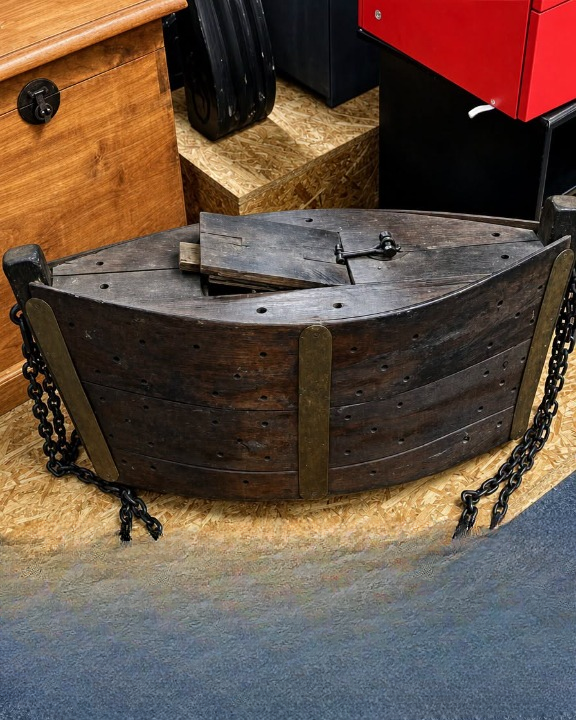
What’s the Secret Behind This Mysterious Antique Device? The Clever Ways People Kept Food Cold Before Refrigerators
Imagine standing beside a rushing, crystal-clear stream in the early 19th century. You have just caught several large, silver trout, and there is only one problem: you are living two centuries before electric refrigerators, plastic food-storage bags, and modern commercial refrigeration.
The fish are fresh, but they will not stay that way forever. Without a reliable way to keep food cold, how could people preserve their catch and prevent it from spoiling?
For generations, families, farmers, fishermen, and frontiersmen faced this everyday challenge. Their solutions relied on natural resources, practical knowledge, and ingenious devices that might look unfamiliar today.
That is why an image of a mysterious antique object can spark so much curiosity. Could it be connected to one of these forgotten methods of food preservation? Or might its unusual design have served an entirely different purpose?
Although the exact identity of the device shown in the referenced image has not been independently confirmed, the history of traditional refrigeration reveals a fascinating world of innovation that existed long before modern appliances transformed our kitchens.
Life Before Refrigerators: How Did People Keep Food Fresh?
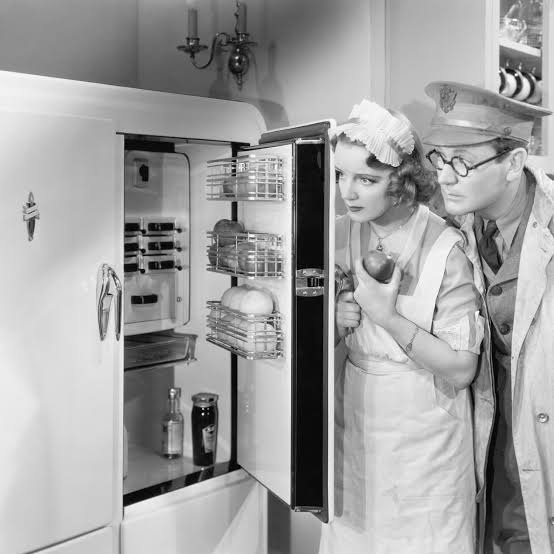
Today, keeping food cold requires little effort. We place groceries in the refrigerator, freeze meat for later, and rely on temperature-controlled transportation to bring perishable products to stores.
For people in the early 1800s, preserving fresh food required considerably more planning.
Fish and meat could spoil quickly in warm conditions. Milk and other perishable ingredients also needed careful handling. Families therefore relied on several methods, depending on the climate, available resources, and the length of time food needed to be stored.
In colder regions, snow and ice could provide seasonal cooling. Underground cellars offered relatively stable temperatures, while streams and springs sometimes provided a temporary way to cool food.
Other techniques worked by making conditions less favorable for spoilage. Salting, drying, smoking, and fermenting helped preserve different foods without requiring refrigeration.
These methods were not interchangeable, and none guaranteed that every food would remain safe indefinitely. Nevertheless, together they allowed communities to store supplies, reduce waste, and prepare for periods when fresh food was difficult to obtain.
The Icebox: An Ingenious Alternative to Modern Refrigeration
One of the best-known devices from the era before electric refrigerators was the icebox.
An icebox was essentially an insulated cabinet designed to keep food cool using blocks of natural ice. Rather than producing cold through an electrical system, it relied on ice absorbing heat from the surrounding space as it melted.
Many household iceboxes had wooden exteriors and insulated interiors. Depending on the design, they might include metal linings, removable shelves, drainage openings, and a compartment specifically intended to hold ice.
As the ice melted, the resulting water drained into a collection pan or through a drainage system. The owner needed to empty the water and replace the ice regularly to maintain cooling.
The arrangement was simple but practical. Insulation slowed the movement of heat into the cabinet, while the ice absorbed energy from its surroundings.
However, the icebox was not identical to a modern refrigerator. Its temperature could fluctuate, and its effectiveness depended on the quality of the insulation, the quantity of ice, and the conditions inside the home.
Could the mysterious antique device be related to this technology? It is one possibility, but appearance alone is not enough to establish an object’s identity. A reliable conclusion would require a closer examination of its construction, dimensions, materials, and any identifying marks.
How Did People Preserve Fish Without Modern Equipment?
Fish was an important food source for many communities, but keeping it fresh presented particular challenges.
Before refrigeration became widespread, people developed methods that suited the fish available to them and the conditions in which they lived.
Cooling with Ice or Cold Water
Where natural ice was available, fish could be placed in insulated containers with ice to slow spoilage. Cold water could also lower the temperature temporarily, although it did not necessarily provide reliable long-term storage.
The availability of ice varied by season and location, making this method easier for some communities than others.
Salting and Drying
Salting was one of the most widely used traditional preservation techniques. Salt reduces available moisture and creates conditions that inhibit many microorganisms responsible for spoilage.
Drying removes additional moisture, further limiting microbial growth. In combination, salting and drying could make fish easier to transport and store for longer periods.
The effectiveness of these methods depended on the preparation process and the surrounding conditions.
Smoking
Smoking fish often combines exposure to smoke with drying and sometimes salting. It can help preserve the fish while giving it a distinctive flavor.
Traditional smoking methods varied considerably, and modern food-safety guidance still matters when determining whether a particular product can be stored safely.
Cool Cellars and Storage Rooms
Underground cellars and shaded storage buildings often remained cooler than spaces exposed to direct sunlight. Such locations could help protect food from temperature extremes.
However, a cool cellar was not necessarily cold enough to keep highly perishable foods at modern recommended refrigeration temperatures.
These methods demonstrate that food preservation depended on more than one invention. People combined environmental knowledge, practical experience, and available materials to meet their needs.
The Science Behind Natural Cooling
The technology behind an icebox becomes easier to understand when viewed through the principles of physics.
When ice melts, it absorbs heat from its surroundings. This energy transfer, known as latent heat, allows ice to cool nearby objects and air.
Insulating materials slow the rate at which heat enters a storage compartment. By combining insulation with a source of ice, an icebox can remain cooler than the surrounding room for a period of time.
Several factors affect how well the system works:
-
Insulation: Better insulation slows heat transfer into the compartment.
-
Amount of ice: More ice generally provides a larger cooling reserve.
-
Ambient temperature: A warmer room increases the amount of heat entering the box.
-
Frequency of opening: Opening the lid or door allows warmer air to enter.
-
Drainage and maintenance: The design must accommodate melting ice and the resulting water.
The principle is straightforward, but maintaining a stable temperature requires ongoing attention.
Modern refrigerators provide more consistent temperature control. Food-safety guidance generally recommends keeping a refrigerator at or below 4°C (40°F), because many harmful microorganisms multiply more slowly at lower temperatures.
Historical cooling devices could help slow spoilage, but their performance varied and should not be assumed to meet modern food-safety standards.
The Forgotten Business of Harvesting Ice
Natural ice was once a valuable commodity.
During winter, workers cut blocks from frozen lakes, ponds, and rivers. They transported the blocks to insulated icehouses, where sawdust, straw, and other insulating materials helped reduce melting.
The stored ice could then be used during warmer months.
In the 19th century, commercial ice harvesting expanded substantially in parts of North America. Businesses developed systems for cutting, storing, transporting, and selling ice to households, hotels, restaurants, and other customers.
The trade also extended internationally. Ice harvested in colder regions could be shipped to warmer destinations where natural supplies were limited.
This required more than simply collecting frozen water. Businesses had to organize labor, maintain storage facilities, manage transportation, and account for losses caused by melting.
The industry illustrates how an ordinary natural resource became an important part of commerce and everyday life.
It also shows that the history of refrigeration began long before electric appliances became common. People had already developed complex systems for producing, storing, and distributing cold.
From Iceboxes to Electric Refrigerators
The arrival of mechanical refrigeration gradually transformed food storage.
During the 19th century, inventors and engineers developed machines that could remove heat through mechanical processes. These systems used advances in thermodynamics and the properties of refrigerants to produce cooling without relying entirely on naturally harvested ice.
Early systems were often expensive or intended for commercial and industrial use. Over time, improvements in engineering and manufacturing made refrigeration increasingly practical for homes.
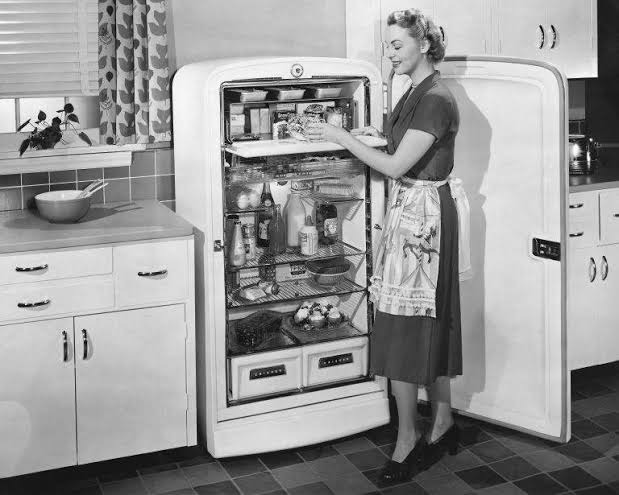
As electricity became more widely available during the 20th century, household refrigerators became a familiar part of daily life.
The consequences were significant. Families could store perishable ingredients more conveniently, food retailers gained new ways to manage supplies, and refrigerated transport helped expand the movement of meat, dairy products, fish, and produce.
The transition was gradual, and traditional preservation methods continued to be used alongside refrigeration. Nevertheless, modern refrigerators greatly reduced the need for households to purchase and replace blocks of ice.
What had once required seasonal planning and regular maintenance eventually became an appliance that could operate in the background with relatively little attention.
How Can You Identify a Mysterious Antique Device?
If you encounter an unfamiliar object in an old house, a museum, or an antique shop, it can be tempting to guess its purpose immediately.
A more reliable approach is to examine the evidence.
Start with the materials. Determine whether the object appears to be made from wood, iron, brass, copper, ceramic, glass, or another substance. Its materials may help narrow down the possibilities.
Look closely at its construction. Hinges, handles, openings, fasteners, drainage channels, and removable sections may indicate how the object functioned.
Search for identifying marks. Manufacturer names, patent numbers, model numbers, and stamped symbols can sometimes connect an item to historical catalogues or documented products.
Consider its size and weight. Measurements may help distinguish a household tool from a component of a larger machine or a piece of commercial equipment.
Research similar objects. Museum collections, historical advertisements, specialist reference books, and antique catalogues can provide comparisons.
Examine the context. An object discovered in a kitchen may have a different likely purpose from one found in a fishing shed or workshop, although location alone is not proof.
Photographs from multiple angles are especially useful. If the object appears rare or valuable, an experienced specialist may be able to help establish its origin.
Most importantly, avoid treating an online guess as a confirmed identification. Several unrelated objects can look remarkably similar in a photograph.
Why Old Technology Continues to Fascinate Us
Antique devices capture our attention because they reveal how people solved familiar problems using unfamiliar methods.
A modern refrigerator is instantly recognizable to most people. A wooden cabinet with unusual fittings, a metal container with an unfamiliar mechanism, or a collection of antique tools may be much harder to understand.
Yet these objects often reflect the same practical concerns that shape modern technology: conserving resources, improving efficiency, protecting food, and making everyday tasks easier.
They also remind us that innovation rarely happens all at once. Modern refrigeration emerged from generations of experimentation, mechanical development, and improvements in the way people stored and transported food.
The old icebox, the insulated icehouse, and traditional preservation techniques each represent a different part of that larger story.
Even when a particular antique cannot be identified immediately, examining it can lead to a better understanding of the period in which it was made and the needs it may have served.
Final Thoughts: What Is the Secret Behind the Antique Device?
The mysterious object in the image invites an obvious question: what was it designed to do?
Its exact identity cannot be established from the available description alone, so it would be misleading to declare that it was definitely a refrigeration device.
Nevertheless, the history surrounding the question is fascinating. Before electric refrigerators, people relied on natural ice, insulated cabinets, cool cellars, salting, smoking, drying, and other methods to preserve food.
These approaches helped families and communities manage food supplies long before modern cold-storage systems became widely available.
The next time you encounter an unfamiliar antique, look beyond its unusual shape. Its construction, materials, markings, and historical context may reveal a practical purpose that is no longer obvious today.
Sometimes, understanding an old device means uncovering more than the function of a single object. It means discovering how people lived, worked, and adapted to a world without the conveniences we now take for granted.
Disclaimer: This article explores the history of traditional food preservation and refrigeration. The exact identity and intended function of the device shown in the referenced image have not been independently verified.