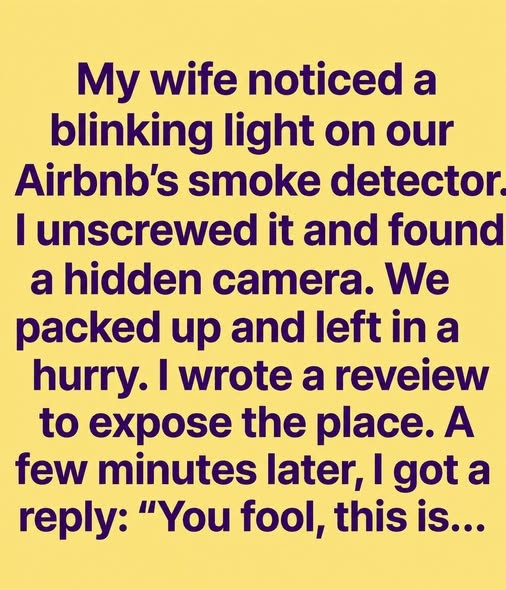
The Tiny Blinking Light in Our Home Made Us Look at Everyday Technology Differently
It was late at night when we noticed a tiny blinking light in the corner of the room. At first, it was so faint that we weren’t even sure we had seen it. The house was quiet. The lights were off. There was no television playing and no one moving through the hallway.
Then it blinked again.
A small point of light appeared in the darkness, disappeared for a moment, and returned. Once we noticed it, we could not stop looking at it. What was it coming from? Had it always been there? And why had we never paid attention to it before?
What seemed like an insignificant detail soon became a reminder of just how much technology surrounds us, even when we are not consciously aware of it.
The Little Lights We Rarely Notice
Modern homes are filled with electronic devices. Routers, televisions, chargers, security systems, smoke detectors, appliances, and smart-home equipment may all contain small indicator lights.
Some remain steadily illuminated. Others blink at regular intervals or change color depending on what the device is doing.
A tiny flashing light can indicate that a device is powered on, communicating with another device, charging, searching for a connection, or waiting for an instruction. On certain appliances, it may also signal an error or a maintenance requirement.
The meaning depends entirely on the device and its design.
Because these lights are usually small and familiar, most people barely notice them during the day. At night, however, the same light can seem surprisingly bright. When the rest of the room becomes dark and quiet, even a tiny LED can attract our attention.
Sometimes, all it takes is one unexpected flash to make us look at an ordinary object in a completely different way.
Why Does a Small Light Look Brighter at Night?
There is a simple explanation for why indicator lights often seem more noticeable after dark.
Our eyes adapt to changes in illumination. In a brightly lit room, the light emitted by a small LED may be overwhelmed by the surrounding environment. When the room becomes dark, our visual system becomes more sensitive to faint sources of light.
As a result, an indicator that seemed insignificant during the day can become one of the most noticeable things in the room at night.
Contrast also plays an important role. A tiny red, blue, or green light against a dark background stands out because there is very little competing visual information.
This does not necessarily mean the LED has become brighter. The surroundings have simply changed, making the light easier to notice.
The same effect explains why distant streetlights, illuminated clocks, and small electronic displays can seem especially vivid in a dark bedroom.
What Could a Blinking Light Actually Mean?
If you notice an unfamiliar blinking light at home, there are several ordinary explanations worth considering before assuming something unusual is happening.
1. A Wi-Fi router or modem
Routers and modems often use indicator lights to show power, internet connectivity, wireless activity, or data transmission. Depending on the model, blinking may be completely normal.
A light that changes pattern could indicate that the device is establishing a connection or communicating with other equipment.
2. A television or streaming device
Many televisions and media devices have standby indicators. A small light may remain on when the screen is switched off because the device is still receiving power or waiting for a remote-control command.
Some models also use indicator lights during software updates or startup.
3. A smoke or carbon monoxide alarm
Certain alarms use periodic flashes to indicate normal operation, while other light patterns may signal a fault, low battery, or alarm condition.
Because these devices are important safety equipment, it is essential to consult the manufacturer’s instructions rather than guessing what a particular pattern means. Audible alarms or warning signals should never be ignored.
4. A camera or security system
Security cameras and recording equipment may include status indicators showing that the device is powered, connected, or operating. However, a blinking light alone does not establish that a camera is recording or that anyone is watching.
Indicator behavior varies considerably across manufacturers and models.
5. A charger or household appliance
Some chargers, power strips, air purifiers, and other appliances use small LEDs to show that power is connected or that a particular function is active.
If a light appears unexpectedly, identifying the device first is the most useful step.
These examples illustrate why the light’s location and the equipment around it matter. Without identifying the source, it is impossible to determine its exact meaning from the blinking pattern alone.
Why Unfamiliar Lights Can Make Us Feel Uneasy
There is also a psychological reason why a tiny light can suddenly become difficult to ignore.
Human attention is naturally drawn to changes in our surroundings. A new sound, an unexpected movement, or a light appearing in darkness can prompt us to investigate, even when the stimulus turns out to be harmless.
At night, familiar surroundings can feel different. Reduced visibility makes it harder to identify objects immediately, while the quiet environment allows small details to stand out.
When we cannot explain something at once, our minds may begin generating possibilities. Is the device working properly? Did someone leave it switched on? Is it a new feature we have never noticed before?
This process is a normal part of how people interpret uncertain situations. It does not mean that the light itself is dangerous.
Often, the feeling of mystery disappears as soon as we discover the source.
A Tiny Light Can Reveal How Much Technology We Depend On
One of the most interesting things about modern technology is how much of it operates in the background.
A router quietly maintains a network connection. A thermostat monitors the temperature. A smart speaker waits for a command. A security system checks sensors, while a household appliance may continue running a low-power monitoring function after its main display has gone dark.
These activities are often designed to require little attention from the people using them.
Indicator lights provide a simple way for manufacturers to communicate some of that hidden activity. A brief flash may tell us that a device is functioning, while a different pattern may indicate that something needs attention.
Of course, not every device communicates clearly. Some indicators have meanings that are difficult to interpret without a manual, and similar-looking lights can behave differently across products.
That is why the tiny light in our story can serve as a useful reminder: everyday technology is often more complicated than it appears from the outside.
What Should You Do If You Notice an Unexpected Blinking Light?
The safest approach is to investigate calmly and methodically.
First, identify the source. Look for nearby electronics, appliances, alarms, chargers, and networking equipment. Avoid touching exposed wiring or opening electrical devices.
Second, check the manufacturer’s instructions. The manual or official support page may explain the indicator’s color, frequency, and meaning.
Third, look for other warning signs. An unusual smell, excessive heat, buzzing, visible damage, or repeated electrical interruptions deserves more attention than a normal status light.
Fourth, avoid unplugging essential safety equipment unnecessarily. Smoke alarms and carbon monoxide detectors protect occupants from serious hazards. If one appears to be malfunctioning, follow the manufacturer’s guidance and arrange a suitable replacement or inspection.
Finally, address unwanted light if the device is functioning normally. If an LED disturbs your sleep, consider the manufacturer’s approved dimming settings or repositioning the device when safe and practical. Do not cover ventilation openings or obstruct safety indicators.
A little investigation can often resolve the mystery without unnecessary worry.
Could the Light Mean Someone Is Watching?
A blinking light can sometimes raise questions about privacy, particularly when it appears on a device with a camera, microphone, or network connection.
However, the presence of an LED does not, by itself, prove that a device is recording, transmitting personal information, or being controlled remotely. Some lights indicate power or network activity, while others have specific recording-related functions.
If you are concerned about a particular device, identify its make and model and consult the manufacturer’s documentation. Review its privacy settings, connected-device list, and account security options where applicable.
For network-connected devices, using unique passwords, enabling available security updates, and securing your home Wi-Fi network are sensible general precautions.
It is better to rely on verifiable information about the specific device than to draw conclusions from a tiny light alone.
The Beauty of Paying Attention to Ordinary Things
The blinking light may not have been anything extraordinary. It might have belonged to a router, a television, or another familiar electronic device that had been quietly operating for years.
Yet the experience still offers a valuable lesson.
We move through our homes surrounded by objects whose functions we rarely consider. We press buttons, connect chargers, switch off screens, and trust that the technology around us will work as expected.
Only occasionally does a small detail interrupt that routine and encourage us to look more closely.
A tiny light can remind us that curiosity is useful. Asking a simple question about an everyday object can lead to a better understanding of how it works, why it behaves as it does, and how to use it safely.
Sometimes, the most interesting discoveries do not involve new inventions or dramatic breakthroughs. They begin with noticing something that has been right in front of us all along.
Final Thoughts
That faint blinking light in the corner of a dark room may initially seem mysterious, but there are many ordinary explanations for it. Electronic devices use indicator lights to communicate information about their power, connections, and operating status, and darkness can make these signals far more noticeable.
The important thing is not to assume that every unfamiliar light signals a problem. Identify the source, consult reliable instructions, and investigate any genuine warning signs appropriately.
In the end, the experience is a reminder that technology is woven into nearly every part of modern life. Even the smallest indicator can encourage us to pause, ask questions, and appreciate the systems that quietly support our daily routines.
Disclaimer: This article discusses general explanations for blinking indicator lights. The exact device shown in the referenced story has not been independently identified, so its specific function cannot be confirmed from the available information.