Native American Teen Wins Science Fair After Investigating the Potential Cancer-Fighting Properties of a Traditional Chokecherry Dish
Sometimes, an important scientific question begins with a conversation between generations.
For Destany “Sky” Pete, a high school student from the Duck Valley Indian Reservation, a discussion with an elder from her community sparked an investigation into a traditional food that had been prepared by her people for generations. Her project explored whether chokecherry pudding, a dish rooted in Shoshone and Paiute culinary traditions, might contain compounds capable of affecting cancer cells.
In 2017, Pete won the Elko County Science Fair in Nevada with her research, bringing attention to the potential connection between Indigenous food traditions and modern scientific investigation.
Her achievement was more than a science fair success. It highlighted the value of asking questions about traditional knowledge, investigating them carefully, and recognizing the communities that have preserved that knowledge over time.
A Conversation That Inspired a Scientific Investigation
Pete, a member of the Shoshone and Paiute Tribes, began wondering whether changes in traditional eating habits might be connected to health concerns within her community.
One food that caught her attention was toishabui, a traditional chokecherry pudding prepared by members of her community.
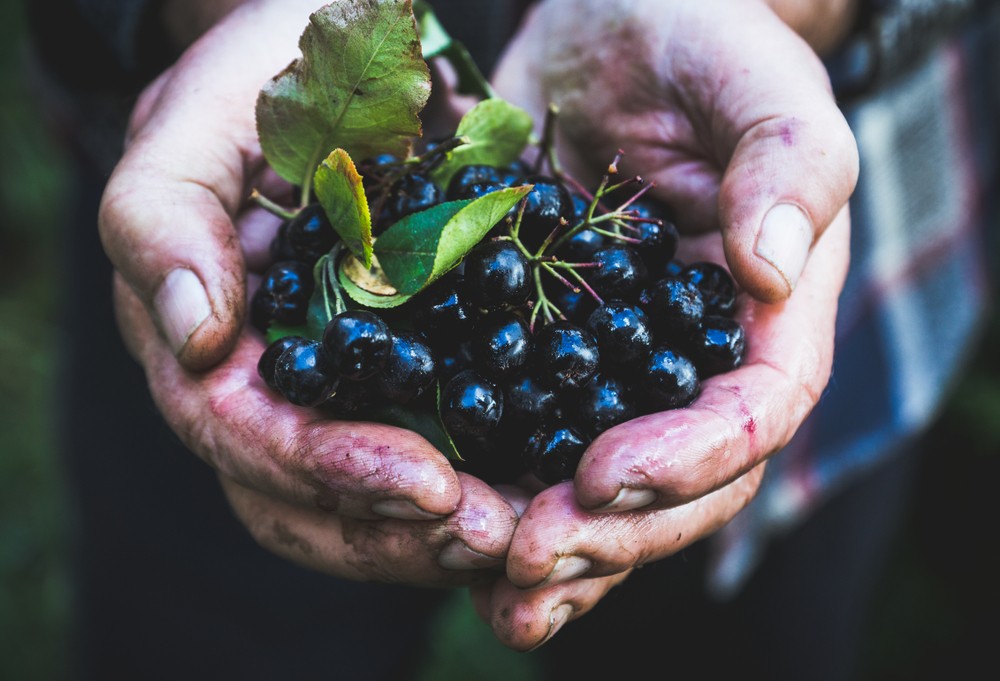
Chokecherries have long been used by Indigenous peoples across parts of North America. Depending on the community and preparation method, the fruit has been incorporated into traditional foods that carry cultural, historical, and practical significance.
Pete became particularly interested in how the pudding was traditionally prepared. Some modern preparations use the fruit’s juice while removing the seeds, whereas the traditional method she investigated included crushed seeds.
Could that difference affect the food’s biological properties?
Rather than relying solely on stories or assumptions, Pete decided to investigate the question through an experiment.
Her project demonstrated how curiosity about cultural heritage can inspire scientific research—and how traditional knowledge can generate questions worth exploring in a laboratory.
How a High School Student Brought Her Idea to a Cancer Research Laboratory
Recognizing that she needed scientific guidance, Pete connected with Dr. Ken Cornell, a biochemistry professor at Boise State University whose research involved cancer cells. A high school teacher helped facilitate the connection.
With assistance, Pete examined four chokecherry preparations to investigate whether they affected uterine sarcoma cancer cells under laboratory conditions.
The preparations included:
-
Traditional chokecherry pudding containing crushed seeds.
-
Chokecherry pudding prepared without seeds.
-
Chokecherry juice alone.
-
Chokecherry extract.
The samples were tested against the cancer cells, with an incubation period of 24 hours.
According to accounts of the project, the traditionally prepared pudding containing crushed seeds showed an inhibitory effect on the cancer cells, while the other preparations did not produce the same reported result.
The finding raised an intriguing question: Could the traditional preparation method influence the biological activity of the food?
It was an interesting starting point for further investigation, but it was not proof that chokecherry pudding could treat cancer in people.
Why the Crushed Seeds Became the Focus
The reported difference between the preparations drew attention to the role of traditional food preparation.
Pete explained that the Shoshone and Paiute method she studied included crushing the chokecherry seeds into the pudding. Some contemporary preparations, by contrast, remove the seeds when extracting the juice.
That distinction mattered because the experiment suggested that the effect observed in the laboratory was associated with the complete traditional preparation rather than the juice alone.
However, the experiment did not establish exactly which substance caused the observed effect. More research would be needed to identify the active compounds, determine how they interacted with the cells, and establish whether the result could be reproduced.
It is also important to distinguish between the potential effects of a food preparation in a laboratory and the effects of consuming that food. A substance may affect isolated cancer cells under controlled conditions without being safe, effective, or able to reach the same concentrations in the human body.
The scientific question was therefore not whether the pudding had already been proven to cure cancer, but whether the initial observation justified further study.
What Does It Mean When a Food Inhibits Cancer Cells in a Laboratory?
Pete’s project involved in-vitro research, meaning that the experiments were conducted outside a living organism, using cells under controlled laboratory conditions.
This kind of research is an important part of early scientific investigation. It allows researchers to observe how substances interact with cells and to identify possible directions for future studies.
But laboratory findings are only one stage of the research process.
Before a potential cancer treatment can be considered safe and effective for people, scientists generally need to establish several things:
1. Reproducibility
Other researchers must be able to repeat the experiment and obtain comparable results.
2. Identification of active compounds
Researchers need to determine which chemical components are responsible for the observed effect.
3. Selectivity and safety
A substance that damages cancer cells must also be evaluated for its effects on healthy cells and other tissues.
4. Further biological testing
Studies in more complex biological systems are needed to investigate how a substance behaves in the body, including its absorption, metabolism, and potential toxicity.
5. Clinical research
Human studies are required to determine whether a treatment is safe and effective for patients.
Consequently, the reported result from Pete’s project should be understood as a preliminary laboratory observation—not evidence that chokecherry pudding prevents or cures cancer.
The Importance of Preserving Indigenous Food Traditions
Beyond the laboratory, Pete’s project drew attention to something equally meaningful: the relationship between traditional knowledge, cultural identity, and scientific curiosity.
Indigenous communities across North America have maintained extensive knowledge of local plants, seasonal harvesting, food preparation, and the environments in which they live.
This knowledge has often been passed from elders to younger generations through everyday practices, stories, and shared experiences.
When younger community members investigate traditional foods scientifically, they can create opportunities to document these practices and ask new questions about their composition and properties.
Such research is most valuable when it respects the people who developed and preserved the knowledge. Indigenous communities should be involved in decisions about how their traditions are studied, represented, and used, including questions of consent, recognition, and the sharing of potential benefits.
Pete’s work illustrates how a question rooted in cultural experience can become a scientific investigation without diminishing the cultural significance of the original tradition.
Chokecherries: A Native North American Fruit With a Long History
Chokecherry, scientifically known as Prunus virginiana, is a shrub or small tree native to North America. Its fruit has been used by Indigenous peoples in various traditional preparations.
The berries can be incorporated into foods such as sauces, preserves, and puddings, depending on regional traditions.
Like many fruits, chokecherries contain plant compounds that scientists may investigate for their nutritional and biological properties. However, the composition of a preparation depends on factors such as the plant material used, how it is processed, and which parts of the plant are included.
An important safety consideration: Chokecherry seeds, leaves, and other plant tissues can contain cyanogenic compounds capable of releasing hydrogen cyanide under certain conditions. Crushing or processing seeds may affect exposure to these compounds. The safety of a particular traditional preparation cannot be established from a cancer-cell experiment alone.
People should not assume that consuming crushed chokecherry seeds is safe or medically beneficial based on the reported findings. Anyone interested in preparing or consuming wild plants should rely on reliable identification and established food-safety guidance.
A Young Researcher’s Achievement With a Larger Message
Winning a science fair can be an important milestone for any student. Pete’s achievement was particularly notable because her project connected a question from her own cultural background with laboratory research into a major area of modern medicine.
Her work encouraged people to think about how scientific investigation can begin outside a university laboratory. Sometimes, it begins with a question raised at home, a conversation with an elder, or a traditional practice that prompts someone to ask why it is done a certain way.
The next step is to test those questions carefully, interpret the results honestly, and recognize the limits of what the evidence can show.
That approach allows traditional knowledge and modern science to inform one another while maintaining a clear distinction between a promising observation and a proven medical treatment.
Final Thoughts: When Cultural Heritage Inspires Scientific Curiosity
Destany “Sky” Pete’s 2017 science fair achievement brought attention to the potential scientific questions surrounding a traditional Shoshone and Paiute food.
Her investigation reported that one preparation of chokecherry pudding, made with crushed seeds, inhibited uterine sarcoma cancer cells in a laboratory experiment. The result was intriguing, but it did not establish that the dish could prevent or treat cancer in humans.
Its broader significance lies in the curiosity that drove the project: the willingness to examine a traditional practice, seek expert guidance, and use scientific methods to investigate an unanswered question.
Traditional foods can carry generations of cultural knowledge, and research may reveal new information about their composition. But promising laboratory findings must be followed by rigorous testing before medical claims can be made.
Pete’s story is a reminder that meaningful scientific questions can emerge from many places—and that respecting cultural heritage and following the evidence can be part of the same pursuit.
Medical disclaimer: This article is for educational purposes only. Chokecherry pudding has not been established by this reported experiment as a cancer treatment. Anyone diagnosed with cancer should consult qualified medical professionals and should not replace or delay evidence-based treatment because of preliminary laboratory findings.