
Understanding Beach Warning Flags: What Every Visitor Needs to Know
Arriving at the beach sparks excitement for families and solo beachgoers alike. As you park your car and children dash toward the dunes and sea, it is crucial to pause and check for colored flags flapping near the lifeguard stations. These beacons are more than decorative—they are part of a critical international system designed to keep you safe. Before anyone in your group enters the water, understanding the meaning behind each beach flag provides vital information about current conditions and potential hazards.
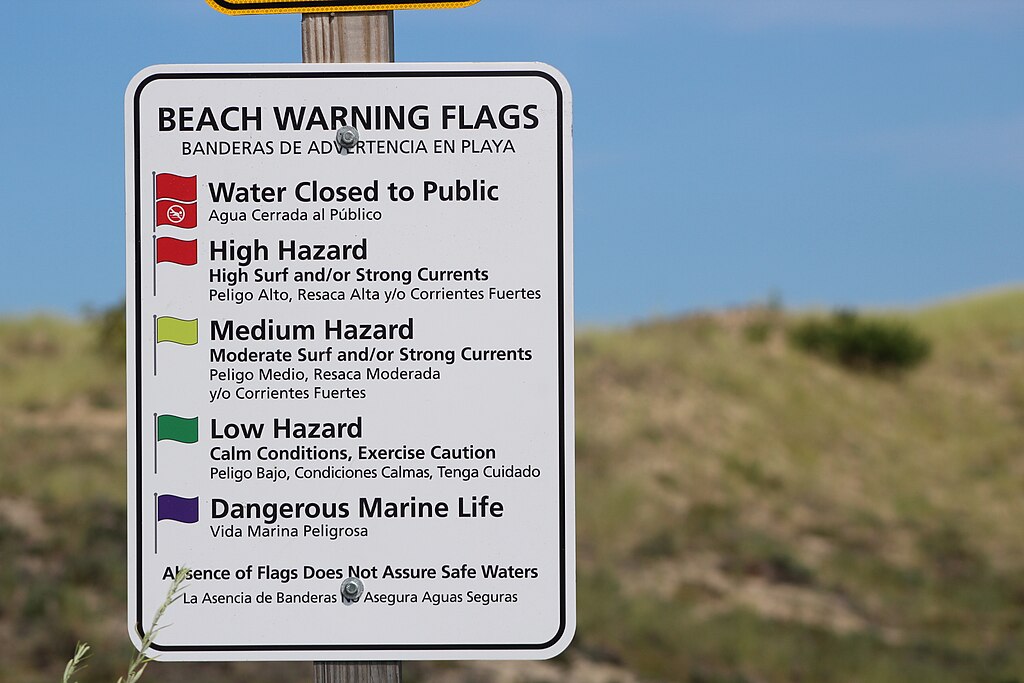
Beach flags are a visual safety protocol adopted by beaches around the world to communicate shifting ocean conditions. Established in the 1960s by the International Life Saving Federation (ILSF), these color-coded flags have played a significant role in reducing drowning deaths and water-related accidents worldwide. Over a hundred countries maintain similar systems to promote awareness and encourage safe behaviors along their coastal recreational areas.
Flags are typically posted at lifeguard stands and major beach entry points, and will often change during the day as winds, tides, and marine life migration patterns alter safety conditions. Even on days that begin calmly, water and weather can change rapidly. Staying informed about the beach safety flag system is the first step in protecting yourself and your loved ones at the shore. Below is a comprehensive guide to understanding each flag, along with additional context, expert insight, and information every beach visitor should know.
Water Condition Flags
Green Flag: Low Risk, Safe for Swimming
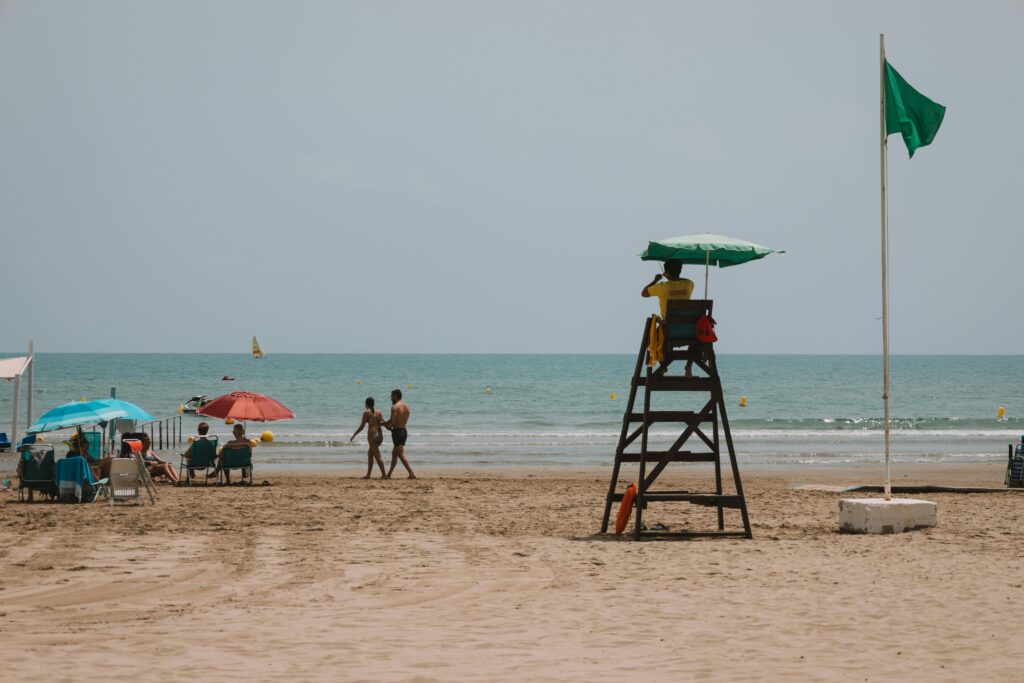
A green flag is commonly recognized as a symbol of relative safety—calm waters and minimal threats such as waves or dangerous currents. In some regions, you may see the green flag flown at lakes or dams, while some coastal beaches opt not to use it at all, following the ILSF’s recommendation. This is because, from an official standpoint, water always presents some inherent level of risk, and safety signage should primarily highlight elevated dangers rather than signal assurance of complete safety.
Regardless of how calm the conditions appear, experts urge continued vigilance—ocean and weather patterns can change quickly, creating sudden risks. It is always wise to monitor the beach and waterside conditions even when a green flag is visible, and to stay alert for flag changes or advisories from lifeguards.
Yellow Flag: Moderate Hazard, Use Caution
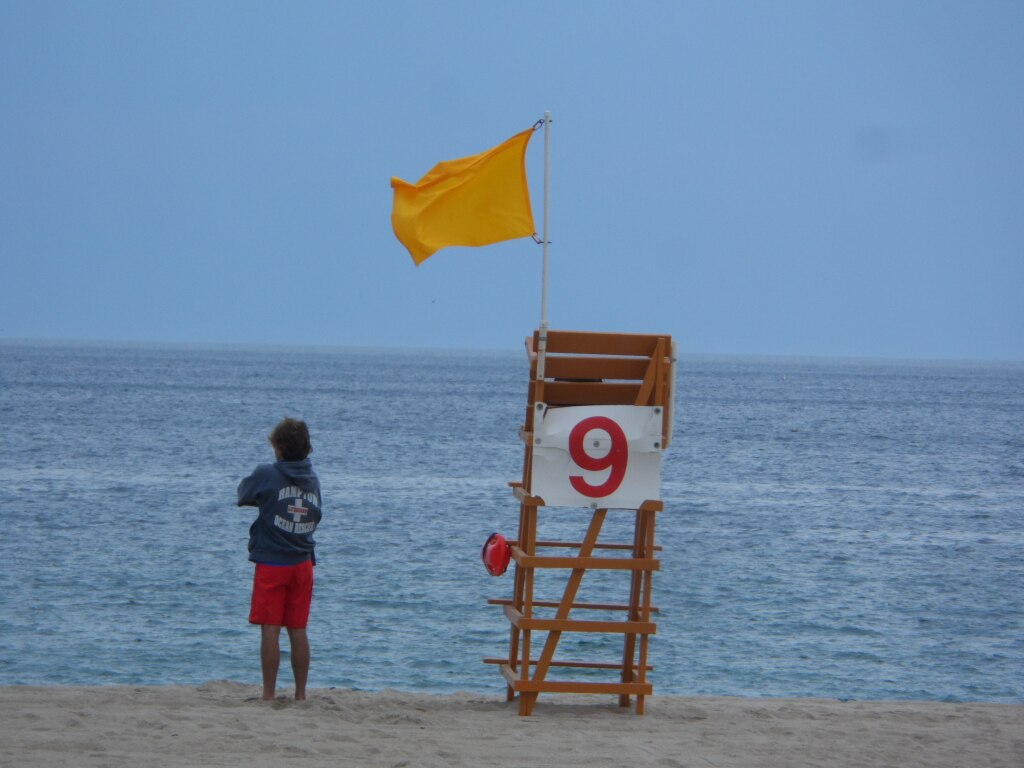
The yellow flag is a universal warning: swim with caution. It indicates medium hazards—such as moderate waves, developing currents, or shifting sandbars—that can cause swimmers to lose their footing or be pulled away from shore. According to water safety specialists, these conditions typically call for increased attention among all swimmers, but especially for families with children or less experienced swimmers. In many cases, children should stick to shallower water, while confident swimmers are advised to swim closer to lifeguard zones.
Yellow flag days may bring the presence of rip currents—powerful, narrow channels of fast-moving water that can quickly sweep swimmers out to sea. Lifeguards and safety organizations emphasize that even proficient swimmers should avoid complacency under yellow flag warnings and anyone unsure of their abilities should remain close to shore.
Red Flag: High Hazard, Swimming Is Discouraged
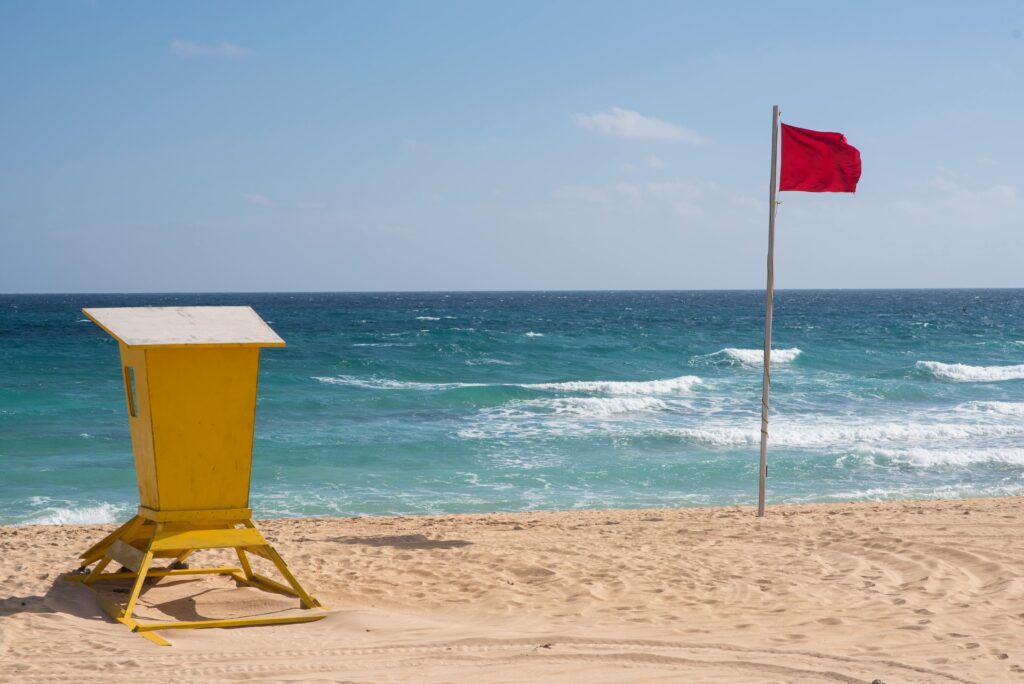
Red flags alert beachgoers to extremely hazardous conditions such as large waves, strong currents, or severe weather. Under these circumstances, entry into the water is discouraged for everyone, including skilled swimmers and lifeguards. In jurisdictions with legally enforced flag systems, attempts to swim during red flag conditions may result in fines of hundreds of dollars for violating beach safety regulations.
During red flag conditions, most families and groups choose to leave the beach altogether, heeding warnings and relocating to safer environments. Water rescues are significantly more difficult for lifeguards at this risk level, so public cooperation is essential in preventing emergencies.
Double Red Flags: Water Closed to Everyone

Two red flags signify that the water is entirely closed to all public access due to extreme danger. This status may be enforced during hurricanes, lightning storms, shark sightings, or fluid contamination events like sewage spills. During such closures, authorities will patrol the area and strictly prohibit entry; violations can result in arrest or strict penalties. These shutdowns can last until environmental or safety teams determine that the threat has subsided, which may take hours or even days.
Under double red flag conditions, residents and visitors are advised to remain out of the water and find alternative activities until notified by officials. The prohibition is unequivocal—no exceptions are made for any individual or group, and reentry is only permitted when signs and flags return to safer levels.
Read More: 30+ Most Dangerous Beaches In The World
Zone Markers
Red and Yellow Flag: Lifeguard-Protected Swimming Area
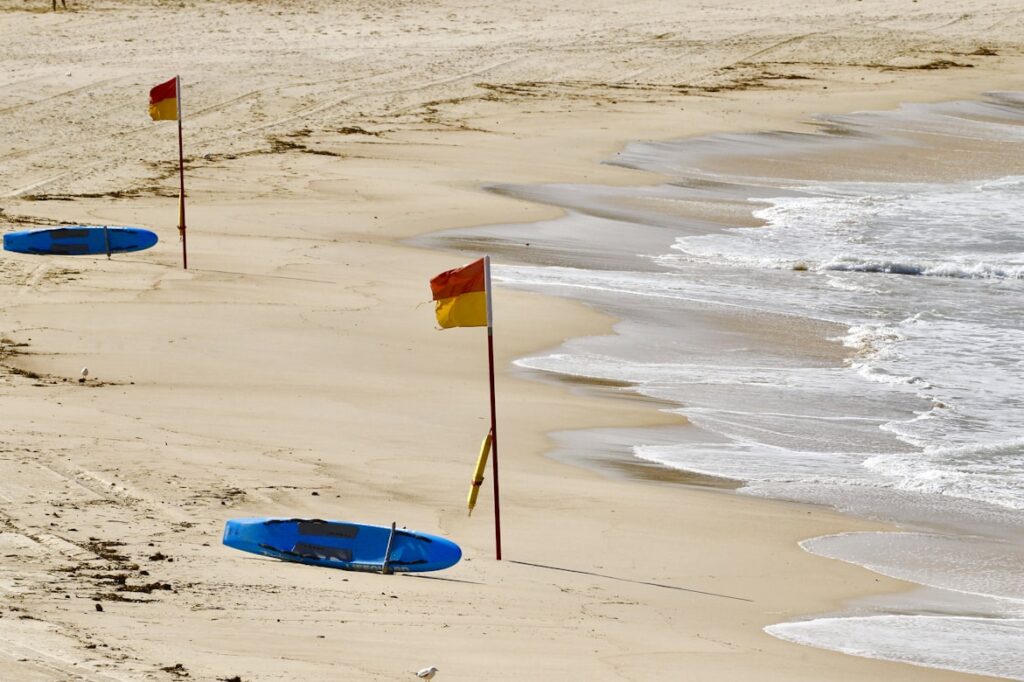
Red and yellow flags are employed to demarcate zones supervised by lifeguards—regions where swimming or wading is considered safest thanks to proximity to rescue professionals and their equipment. Setting up within these boundaries is highly recommended, especially for families and inexperienced swimmers.
These designated areas are strategically placed away from potential hazards such as rocks, piers, or localized rip currents, increasing the likelihood of a secure and enjoyable beach experience. Lifeguards focus their attention on these zones, making it easier to respond quickly if an emergency arises.
Black and White Checkered Flag: Surfing Area, No Swimming

The black and white checkered flag identifies areas set aside for surfing, kayaking, and occasionally other board sports. Swimming is not allowed in these sections due to the increased risk of collisions with fast-moving boards and equipment. Safety experts note that these impacts can result in serious injury for both swimmers and board users alike.
The visual distinction of the checkered flag makes it easily recognizable, ensuring beach users maintain proper distance and understand the separation of activities. Awareness of these boundaries helps reduce preventable accidents and allows both swimmers and surfers to enjoy the beach safely.
Yellow Flag with Black Ball: Swimming Only, No Equipment Allowed

This flag signals that the area is reserved exclusively for swimming. Equipment such as surfboards, paddleboards, and similar items are strictly prohibited to avoid collisions or interference with swimmers. The black ball symbol provides a clear, distant warning of this restriction.
Lifeguards often fly this flag in conjunction with water condition flags, making it clear which activities are permitted. Ensuring separation of equipment and swimmers reduces hazards and promotes a harmonious beach environment.
Special Alert Flags
Purple Flag: Marine Life Is Present
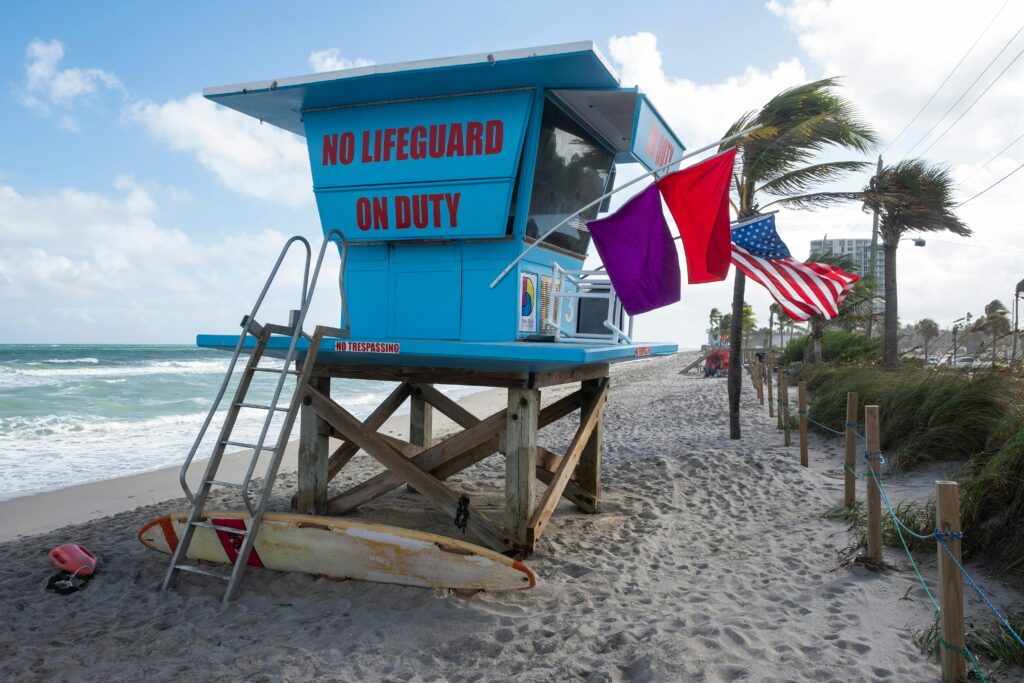
Purple flags notify visitors of the presence of potentially dangerous marine life, as outlined by the International Life Saving Federation. Creatures such as jellyfish, stingrays, sea snakes, and other stinging or biting animals can cause injury. However, a purple flag does not mean sharks are present—shark alerts rely on different signals, often using emergency systems and lifeguard notifications.
Swimming remains permissible under purple flag conditions, but everyone should exercise additional caution. Consulting with lifeguards regarding the specific reason for the warning is strongly encouraged, as the presence and severity of hazards may fluctuate during the day or with tides.
Orange Windsock: Strong Offshore Winds Are Present

The orange windsock is a lesser-known yet critically important warning. It indicates strong offshore winds capable of carrying inflatable water toys, floats, and even weaker swimmers away from the shore and into open water, often far faster than most people can swim or paddle back. The calm surface near the beach can obscure this dangerous current, increasing the likelihood of unsuspecting individuals risking their safety.
During orange windsock alerts, it is best to avoid using inflatables in the water. Strong swimmers are also advised to remain close to shore, as even they can quickly find themselves beyond their limits when battling steady offshore winds.
Red and White Checkered Flag: Get Out of the Water Immediately

This striking flag is raised in emergency situations that require the evacuation of swimmers: shark sightings, major pollution events, or when lifeguards conduct search and rescue operations. Alongside the flag, you may hear sirens and see flashing lights, which reinforce the need to exit the water immediately and comply with all lifeguard instructions.
Swimming is strictly prohibited when this flag is raised, and violations may lead to significant fines or legal action. On some beaches, a similar protocol uses double red flags to convey this level of urgency and response.
Why Beach Flag Awareness Matters
Beach warning flags are more than regulatory markers—they are a vital component of community safety. Knowing how to interpret each flag not only safeguards your loved ones, but also empowers you to help others by spreading awareness. Many coastal accidents are avoidable with the right knowledge. By sharing information about the flags with family, friends, and new acquaintances on the beach, you foster a culture of safety and vigilance that benefits everyone.
When beachgoers work together to stay informed, they contribute to the broader effort of preventing tragedies and supporting the lifeguards who protect our shores. Remember: your attention to beach safety protocols has the power to save lives.
Read More: No Filter Needed: The Cleanest Drinking Water by Country, Ranked
Sources
- Royal National Lifeboat Institution (RNLI)
- International Life Saving Federation (ILSF)
- United States Lifesaving Association (USLA)
- BBC News: Understanding Beach Flags
- Centers for Disease Control and Prevention (CDC): Beach Swimming Safety
Disclaimer: This content is intended for entertainment purposes only and is not based on real events.