What Do You Fear Most? An Analytical Exploration of Subconscious Fears
Fear is a universal human experience, shaping our behaviors, choices, and relationships in profound ways. When asked, “What do you fear most?” many people immediately mention common phobias such as spiders, snakes, heights, or enclosed spaces. Yet, beneath these surface anxieties often lie complex, subconscious fears that are not as easily articulated. This article delves into the psychology behind our deepest fears, analyzing how we respond to certain visual cues and what those responses reveal about our internal world.
Understanding Fear: More Than Simple Phobias
Fear serves an evolutionary purpose, protecting us from harm and guiding us away from danger. While typical fears—like those of insects or the dark—have roots in our ancestral need for survival, modern fears are often shaped by personal experiences and societal influences. According to psychologists, subconscious fears guide behavior without our conscious knowledge, affecting emotions, decision-making, and interpersonal relationships.
The Role of Visual Stimuli in Revealing Subconscious Fears
Our initial reactions to images and symbols can serve as a window into the subconscious mind. Psychological studies have shown that when presented with ambiguous pictures, people’s immediate focus often reflects deeper anxieties or desires. These responses can illuminate underlying emotional states that are not readily accessible through conscious thought.
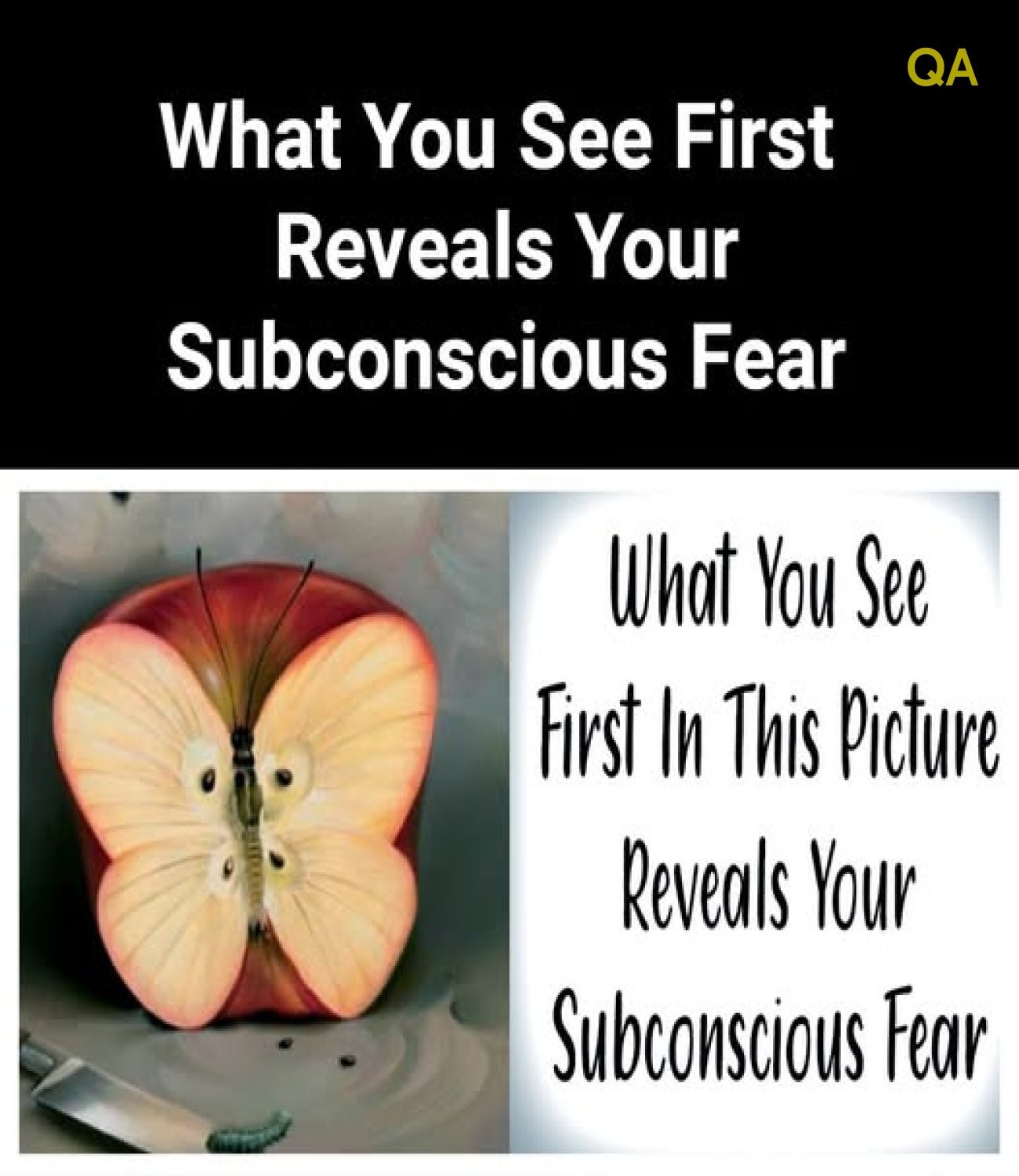
Consider the following mental exercise. After glancing at a composite picture for a few seconds—composed of elements like a butterfly, a caterpillar, an apple, and a knife—participants are asked to note which object they noticed first. Each item is associated with its own symbolic meaning and can be linked to powerful subconscious fears.
Interpretations of Visual Cues: What Did You See First?
When analyzing what we see first in a complex image, the object that captures our attention can reveal distinctive fears based on established psychological frameworks. Below, we break down the common interpretations associated with each element.
The Apple: Fear of Loss and Death
If your attention was drawn first to the apple, psychological theories suggest a subconscious fear of death—not necessarily your own, but the loss of loved ones. This fear is deeply rooted in human relationships and attachment. Many find the thought of losing family or friends more distressing than their own mortality. Such fears are heightened by personal experiences of bereavement.
Grief specialists note that after losing someone close, people can develop a persistent anxiety about further loss. This emotion is recognized by mental health professionals and is considered a natural response to trauma. Coping mechanisms may involve community support, therapy, and cultivating resilience through meaningful connections.
The Caterpillar: Anxieties About the Unknown and Vulnerability
Noticing the caterpillar first may indicate a subconscious fear of intangible threats, such as ghosts, unexplained phenomena, or feelings of vulnerability. Some experts interpret this as a fear of paralysis—being unable to act or defend oneself, whether physically or emotionally. The unpredictability of “bad spirits” or things that go bump in the night reflects anxieties about losing control.
Psychologists highlight that people with these fears often develop rituals or superstitions to create a sense of security. In many cultures, beliefs about spirits and the unknown are woven into social practices, further influencing how these fears manifest.
The Butterfly: The Trauma of Betrayal
If the butterfly was your initial focus, your subconscious may be most concerned about betrayal. The butterfly is often associated with transformation and delicate beauty, but seeing it first can signal fears about being hurt by those closest to you. In psychological research, feelings of betrayal are among the most impactful stressors in one’s life.
Betrayal is commonly rooted in previous experiences of trust being broken, which can lead to difficulty forming relationships or forgiving past wounds. Counselors recommend strategies like open communication and boundary setting to build trust and reduce anxiety about betrayal.
The Knife: Fear of Terminal Illness and Suffering
The knife symbolizes a fear of terminal illness and the suffering associated with it. Those who notice the knife first may harbor anxieties about health, disease, or the prospect of prolonged pain. This is a common fear in modern society, where media coverage of illness and medical uncertainty can amplify perceptions of vulnerability.
Medical professionals stress that such fears are valid and encourage proactive health screenings, balanced information sources, and support networks. Discussions about illness are increasingly destigmatized through public health campaigns that promote awareness and empathy.
Collectively, these interpretations provide insight into the diverse and multifaceted nature of human fear. While each visual cue signifies a different anxiety, they all represent a need for security, connection, and understanding.
Psychological Background and Theories
Numerous psychological frameworks have been developed to explain how subconscious fears influence behavior. Sigmund Freud’s work on the unconscious mind posited that hidden anxieties manifest in dreams and impressions, while Carl Jung argued that archetypes—universal symbols—shape our internal worlds. Modern cognitive psychology builds on these theories, noting that automatic processes underlie many emotional responses.
Visual tests, like those used in projective psychology (e.g., the Rorschach inkblot test), are designed to reveal latent fears and beliefs. Studies published by the American Psychological Association indicate that people’s interpretation of ambiguous images often aligns with their personal histories and current life stressors.
Expert Views on Coping with Subconscious Fears
Experts suggest that awareness is the first step toward coping with deep-seated fears. Mental health practitioners recommend methods such as mindfulness, cognitive behavioral therapy (CBT), and peer support to help individuals process and manage their anxieties. Journaling and engaging in creative expression are also widely recognized as effective tools for self-reflection.
According to Dr. Judith Beck, a leading CBT specialist, identifying irrational fears and confronting them with evidence-based approaches can reduce their power. Public educational campaigns, peer groups, and online resources further empower individuals to seek help and normalize conversations about emotional health.
Global Perspectives and Societal Reactions
Cultures around the world approach fear in unique ways, with local traditions, religious beliefs, and societal norms shaping responses. For example, in some societies, open discussions about death, illness, and betrayal are considered taboo, while others embrace rituals or ceremonies to address these anxieties. International public health organizations like the World Health Organization (WHO) and Centers for Disease Control and Prevention (CDC) have launched initiatives to promote mental wellbeing, decrease stigma, and improve access to care.
Recent global events—such as pandemics, climate change, and sociopolitical shifts—have heightened many individuals’ fears, prompting new research and policy responses. Media coverage plays a critical role in informing the public and providing reliable information about coping strategies.
Empathy, Community, and Emotional Support
Empathy and supportive relationships are powerful antidotes to loneliness and isolation, which can exacerbate fears. Communities, families, and peer groups offer spaces for sharing experiences and gaining perspective. Online platforms and helplines have become increasingly important resources, especially for those struggling with difficult emotions.
Practitioners emphasize that acknowledging fear is not a sign of weakness but a step toward emotional maturity. Building resilience involves facing anxieties, seeking help when needed, and fostering meaningful connections that provide reassurance and strength.
Reflection: What Does Your Subconscious Fear Reveal?
Ultimately, the first element you notice in a multifaceted image is less about the object itself and more about the context of your emotional life. Reflecting on these cues can guide personal growth and inspire new ways of facing challenges. By recognizing and addressing the origins of our fears, we can cultivate greater empathy, resilience, and wellbeing.
When exploring your own subconscious fears, consider how they fit within your unique experiences and aspirations. Tools like meditation, journaling, and outreach to professionals can support your journey toward emotional balance and inner peace.

Conclusion
Fear, whether conscious or subconscious, defines much of the human experience. Through analyzing our reactions to visual cues and seeking expert guidance, we gain insight into the inner workings of our minds. With reflection and support, fears can be addressed, managed, and overcome. In a world facing constant change and uncertainty, understanding and compassion are essential for fostering mental health and emotional resilience.
Sources
- BBC Health
- Reuters Health
- World Health Organization (WHO)
- Centers for Disease Control and Prevention (CDC)
- Mayo Clinic Mental Health
- American Psychological Association (APA)
- The Guardian: Mental Health
Disclaimer: This content is intended for entertainment purposes only and is not based on real events.