Before Electric Pop-Up Toasters: The History and Evolution of the Turnover Toaster
Introduction to Turnover Toasters
Today, making toast is a simple, seamless part of breakfast. With modern pop-up toasters, you place a slice of bread inside, select a setting, push the lever down, and in a few minutes, enjoy evenly browned toast. However, the path leading to this convenience was paved with inventive appliances reflecting both the needs and limitations of their era. Among the most pivotal of these historical implements was the turnover toaster—a transitional kitchen device that introduced electric heating to toasting, yet still required careful human oversight. This article explores the rise, design, operation, and legacy of turnover toasters, as well as their influential role in shaping contemporary breakfast routines.
The Predecessors to Modern Toasters
Before widespread domestic electricity, people used simple methods to toast bread. In most households, bread was toasted by holding it over an open flame or placing it on a metal frame near a hearth. These rudimentary methods required practice and constant attention to avoid burning the bread. With the arrival of electricity in homes during the late 19th and early 20th centuries, inventors began to envision new appliances for the kitchen, including electrical devices intended to simplify and improve the toasting process.
These early efforts aimed to harness the controllable heat of electric current, but designers still had to address issues such as even heating, safety, and convenience. The turnover toaster would become one of the first significant attempts to merge electricity with an everyday kitchen task.
How Turnover Toasters Worked
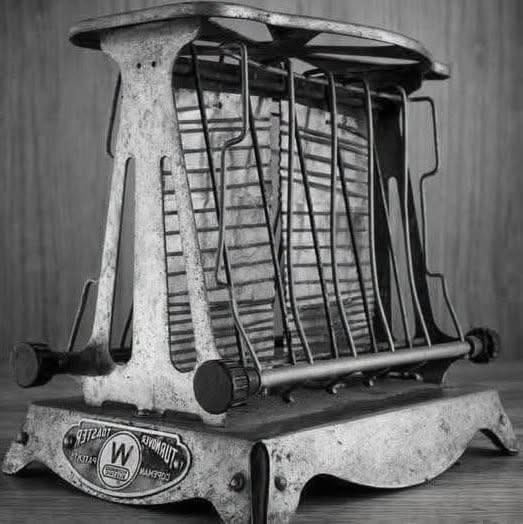
The turnover toaster’s primary innovation was the use of exposed electric heating elements to brown slices of bread. Instead of placing bread inside a closed compartment, these devices typically featured a metal frame on which slices could be positioned directly beside wires or rods that glowed with electrical heat. The openness of the design allowed users to watch the bread closely as it toasted.
However, unlike today’s automatic toasters, the turnover toaster did not eject or turn the bread for the user. Once one side was browned, the operator needed to flip the slice manually to ensure even toasting. This is why the term “turnover” became associated with these models—the key step in the process was actively turning the bread over to finish the job. The task required visual judgment and frequent interaction, giving users full control but also demanding constant attention to avoid burning.
Design and Practical Features
Physically, turnover toasters often looked quite different from what we expect in the modern kitchen. Their structures varied, but the fundamental components included:
- A sturdy metal base housing the electrical connections
- Exposed heating elements made from nickel-chromium alloy (nichrome) for effective, consistent heat
- Removable or pivoting arms or racks to hold bread in proximity to the heat source
- Handles or levers for manually flipping the bread
Some models had slots for two or four slices at once, while others were more compact. The open construction not only facilitated manual flipping, but made it easy for users to gauge the progression from pale to golden brown. Although practical, this open design heightened the risk of accidental burns if touched, as well as increased potential for electrical hazards—particularly in households unfamiliar with the handling of heated metal and wires.
The turnover toaster’s mechanical simplicity reflected the early stage of kitchen electrification. Every element served a clear purpose: stabilizing the bread, focusing heat, or easing movement for turning. While safety standards would progress substantially in the following decades, each feature illustrates the focus on hands-on practicality and reliability for the time.
The Cultural and Technological Context
The turnover toaster must be appreciated within its historical moment. In the 1910s and 1920s, electric appliances were still novel luxury items. According to appliance historians, the turnover toaster was often marketed as a convenient leap forward, especially for the fast-paced mornings of growing middle-class families.
Yet, the manual action required mirrored broader trends in early electric appliances, where human attention and skill remained integral. Like early electric irons, stoves, and washing machines, turnover toasters did not attempt to replace the cook—they were designed as a partner in the process, enabling but not automating the task.
The development of the electric heating element, spearheaded in 1905 by Albert Marsh, is credited as a key innovation that made domestic electric toasting possible. Many manufacturers entered the market, each offering slightly different mechanisms for flipping and holding bread, but all focused on safety, reliability, and the gradual easing of breakfast preparation.
The Evolution from Manual to Automation
Technological progress in the kitchen often centers around a single theme: making life easier. After the turnover toaster’s debut, inventors quickly sought ways to reduce even more of the manual effort required. In the late 1920s, pop-up toasters made their debut. These devices included a mechanical ejector, popping bread out when the optimal toasting cycle was detected—no manual turning required and much less risk of burning either the bread or the fingers operating the device.
This shift represented an important milestone in the journey toward effortless breakfast preparation. With the pop-up toaster’s appearance, attention could shift elsewhere as bread toasted unattended. The once labor-intensive morning ritual had become nearly passive in nature. Yet, turnover toasters were essential precursors, demonstrating both the demand for and the challenges inherent to electric toasting technology.
Societal Impact and Changing Routines
Turnover toasters may seem quaint, but they transformed daily life. Their presence signaled the electrification of the kitchen—the growing expectation that electricity could enhance even humble tasks like toasting bread. For many early 20th-century families, acquiring a turnover toaster reflected both status and a commitment to modern living.
The device’s hands-on nature fostered a certain engagement with breakfast preparation that many now find nostalgic. At a time when convenience foods and appliances were gradually building a new relationship between people and their kitchens, the turnover toaster rebalanced convenience with involvement, emphasizing human judgment in appliance operation.
Today, most people would find the turnover toaster cumbersome in comparison to the fully automated models that dominate modern countertops. Still, the care required when using these devices could also be seen as an opportunity for mindfulness—a small ritual and connection to the meal being prepared.
Safety and Today’s Perspective
In an era governed by rigorous electrical and fire safety standards, the turnover toaster’s open heating elements and manual operation appear risky by today’s measures. Modern toasters include insulation, automatic shutoff features, cool-touch exteriors, and protection against electrical surges and fire hazards. Any antique turnover toaster should be regarded as a collectible or display item unless fully restored and inspected by a qualified professional.
Museums, collectors, and historians often display turnover toasters to trace the evolution of home technology. Their design tells the story of invention, adaptation, and the sometimes awkward steps toward greater household convenience.
The Legacy of Turnover Toasters
Although turnover toasters are rare in modern homes, their legacy remains relevant. These artifacts remind us that every technological breakthrough is built on incremental improvements—each generation’s appliance standing on the foundation laid by its predecessors. The turnover toaster played a pivotal role in proving that electric heat could efficiently and safely brown bread. It also offered invaluable insights into design, usability, and safety, which directly informed the engineering of the pop-up toaster and beyond.
In tracing the story of the turnover toaster, we gain a window into moments of domestic change and advancement, when new technology gradually altered not just routine chores, but the rhythms and expectations of home life. As we enjoy our quick slice of toast today, it is worth pausing to appreciate both the ingenuity and the diligence required by those who came before us.
Conclusion
The turnover toaster serves as a fascinating example of how technology and domestic life have evolved in tandem. By bridging the gap between manual and automated cooking, it stands as both a practical device and a symbol of its era—a time when electrification promised progress, but still relied on human skill. Exploring the turnover toaster’s history not only illuminates a familiar household task, but also celebrates the ingenuity and ambition of early 20th-century inventors and families who embraced modernization, slice by slice.
Sources
Disclaimer: This content is intended for entertainment purposes only and is not based on real events.