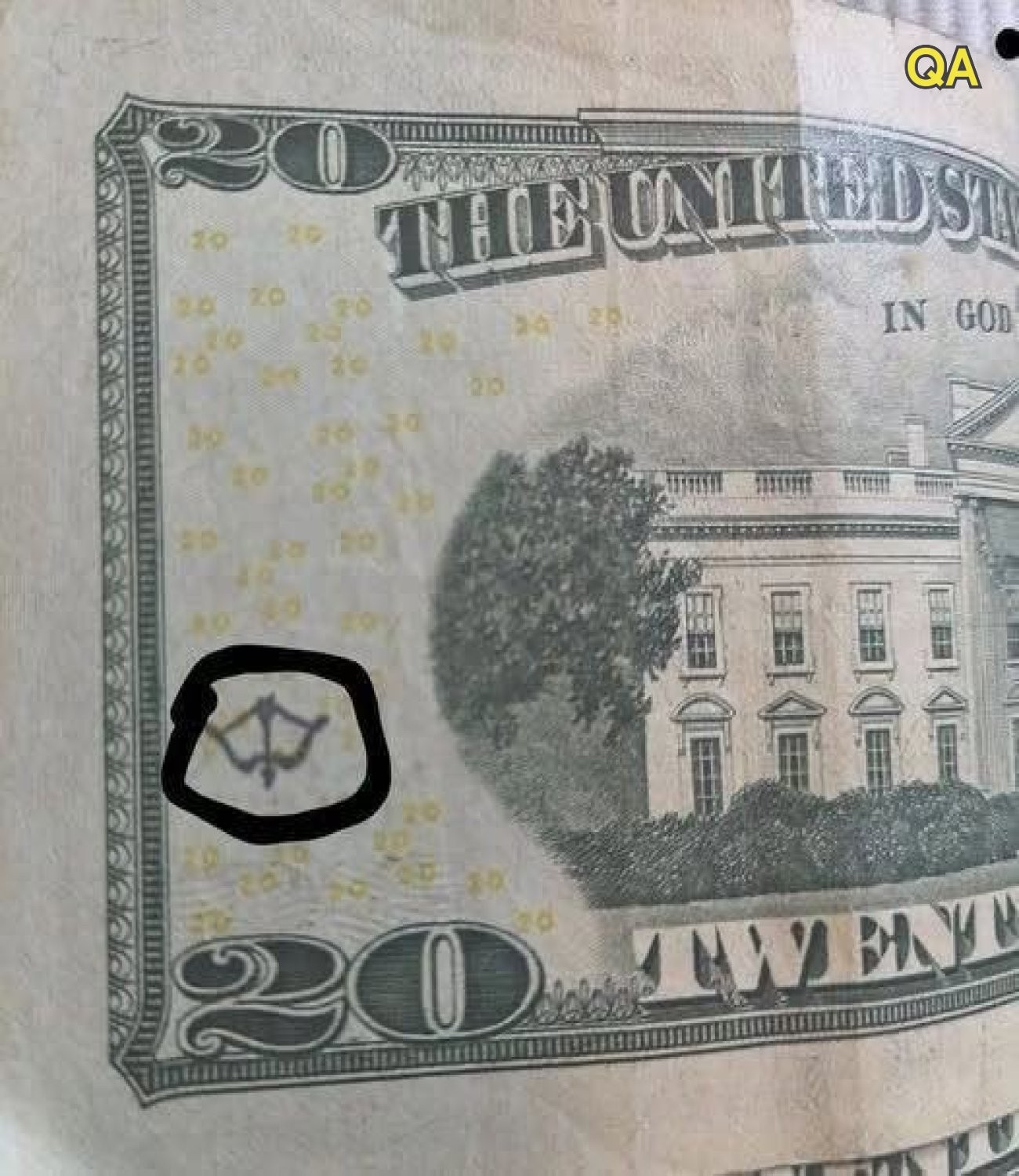
A Small Mark on a $20 Bill: How Unusual Currency Markings Can Lead to Big Surprises
Currency is a part of daily life, passed from hand to hand without much thought. However, a closer look at an ordinary bill can sometimes reveal peculiarities—small symbols, stamps, or marks—that turn routine transactions into moments of curiosity and discovery. When a mark appears in an unusual place on a $20 bill, it may go unnoticed by most. For currency enthusiasts and collectors, though, such details invite a deeper investigation. This article delves into why unusual markings appear on money, how they are assessed by collectors, and what makes certain bills more valuable than others.
The Story Behind an Unusual $20 Bill
With millions of bills in daily circulation, it is not uncommon for people to come across currency that bears marks or symbols not typically seen. This article explores a hypothetical scenario: someone encounters a $20 bill with a distinct mark, unlike a typical smudge or random doodle. The mark is neatly drawn and positioned in an area that is usually unmarked, drawing immediate attention.
Instead of quickly spending the $20, the owner decides to set it aside for further inspection. This careful decision leads to the involvement of a local currency collector—someone versed in the nuances of currency production, alteration, and collection.

Origins of Unusual Currency Markings
According to experts, marks on currency can originate from a variety of sources. Some are introduced unintentionally during the production process. Others are added post-production, either for practical reasons such as handling and tracking, or for more mundane purposes such as doodling or stamping during routine transactions.
Authentic Production Errors: Occasionally, errors happen during the printing process. These can include misaligned prints, ink smears, or even objects getting between the plates and the paper. Genuine errors are relatively rare, making affected currency especially appealing to collectors. Errors verified by reputable grading services such as the Professional Coin Grading Service (PCGS) or Paper Money Guaranty (PMG) can command high prices in the marketplace.
Post-Issuance Modifications: Most unusual marks found in circulation are made after the bill leaves the mint. These include stamps from businesses, handwritten notations, or symbols used by organizations for internal tracking. While these may intrigue some collectors, they usually do not add significant value unless associated with a noteworthy historical event or institution.
Evaluating the Value: What Collectors Look For
The world of currency collecting, or numismatics, is governed by a set of guidelines that help establish the value of an item. When examining a bill with an unusual mark, collectors consider several criteria:
- Authenticity and Origin: Is the mark an official printing error, or was it added later? Official errors registered by the Bureau of Engraving and Printing (BEP) are far more valuable than random pen marks.
- Location and Appearance of the Mark: If the mark is precisely applied or in an unexpected location, it may pique greater interest, especially if no obvious reason for its presence is apparent.
- Rarity: Has this kind of mark been seen before on other bills from the same series? The rarer the occurrence, the higher the potential value.
- Condition: Like other collectibles, the bill should be as close to pristine as possible. Folds, tears, or excessive wear generally reduce value, even for unusual finds.
- Serial Number and Production Year: Low serial numbers, repeating patterns, or ‘radar notes’ (where the serial number reads the same forwards and backwards) can increase desirability, especially when combined with other anomalies.
In the fictional scenario, the collector’s expert eye determines the unusual mark, combined with several other distinguishing features, made the bill appealing within a niche community of collectors. Eventually, an offer of $250 is made—well over the face value of $20. Such valuations, however, depend heavily on supply, demand, and collector interest in the specific oddity found on the bill.
Examples of Collectible Currency Marks
There are a number of real-world examples where currency has fetched high prices due to unusual marks or errors:
- Double Prints: Bills printed twice by accident, resulting in ghost-like images or doubled serial numbers. These can fetch prices far above face value.
- Misaligned Printing: When design elements aren’t properly aligned or are partially missing.
- Obstructed Prints: Sometimes foreign material blocks part of the design, leading to blank areas.
- Replacement Notes: These are bills printed to replace misprints and are marked with a star in the serial number (“star notes”). Not an error per se, but considered collectible and sometimes valuable.
Some collectors also value “binary notes” (with serial numbers using only two digits) and “fancy serial numbers” (such as 00000001 or 12345678).
Advice for Those Who Find Unusual Currency
So, what should you do if you come across a $20 bill—or any denomination—with a strange or notable mark? Here are a few steps for determining whether your find is worth seeking expert advice:
- Don’t Spend It Immediately: Set the bill aside until you’ve had the chance to research its features. Spending it removes the possibility of discovering a hidden value.
- Inspect for Supporting Features: Check for serial numbers with unusual patterns, crispness of the printing, or anything that looks out of place in the design or alignment.
- Research Online: There are many online forums and communities dedicated to currency collecting, such as the PCGS Currency forums or Collectors Universe. Uploading a photo and asking for opinions often yields helpful insight.
- Consult a Local Expert: Professional numismatists and hobby shops can assess the bill’s condition and help verify unusual characteristics. If the mark is determined to be an official error, they may advise submitting it to a grading service for authentication.
- Evaluate Offers Carefully: If your note is deemed valuable, only consider offers from reputable dealers or auction houses. Be aware that niche collectibles may take time to find the right buyer willing to pay a premium price.
The Broader Appeal of Currency Oddities
The hobby of collecting coins and paper money goes back centuries, with enthusiasts fascinated by rare and unusual specimens. The appeal goes beyond monetary gain; collectors are drawn by the history, artistry, and the stories embedded in each banknote or coin. Currency with unusual marks, errors, or serial numbers carry an extra narrative—a snapshot of an unplanned moment in the otherwise meticulous process of money production.
Globally, the collecting community highlights and shares unique finds through social media and at conventions, fueling curiosity and excitement. Not all marked currency has value beyond its face, but for those that do, the stories and history they reflect enhance their worth.
International Perspectives and Notable Finds
While the U.S. dollar is familiar to collectors worldwide, every country produces its own currency with occasional oddities. For example, in the United Kingdom, famous printing errors on Bank of England notes have spurred collector excitement. In Canada and Australia, polymer notes occasionally show rare manufacturing defects that generate global interest. Central banks periodically issue commemorative banknotes with special designs, holograms, or security features that become instant collectibles.
Conclusion: A $20 Bill’s Journey from Ordinary to Extraordinary
Unexpected marks on currency can transform a routine transaction into a collector’s adventure. While most marked bills remain spent and unremarkable, a rare few—due to production errors or unique variations—catch the eye of keen observers. For collectors, the thrill lies not only in potential financial gain but also in the historical and artistic stories these bills tell. Ultimately, the next time you spot a strange mark on your money, it could be an opportunity to explore the fascinating world of numismatics—and perhaps uncover a hidden treasure in your wallet.
Sources
Disclaimer: This content is intended for entertainment purposes only and is not based on real events.