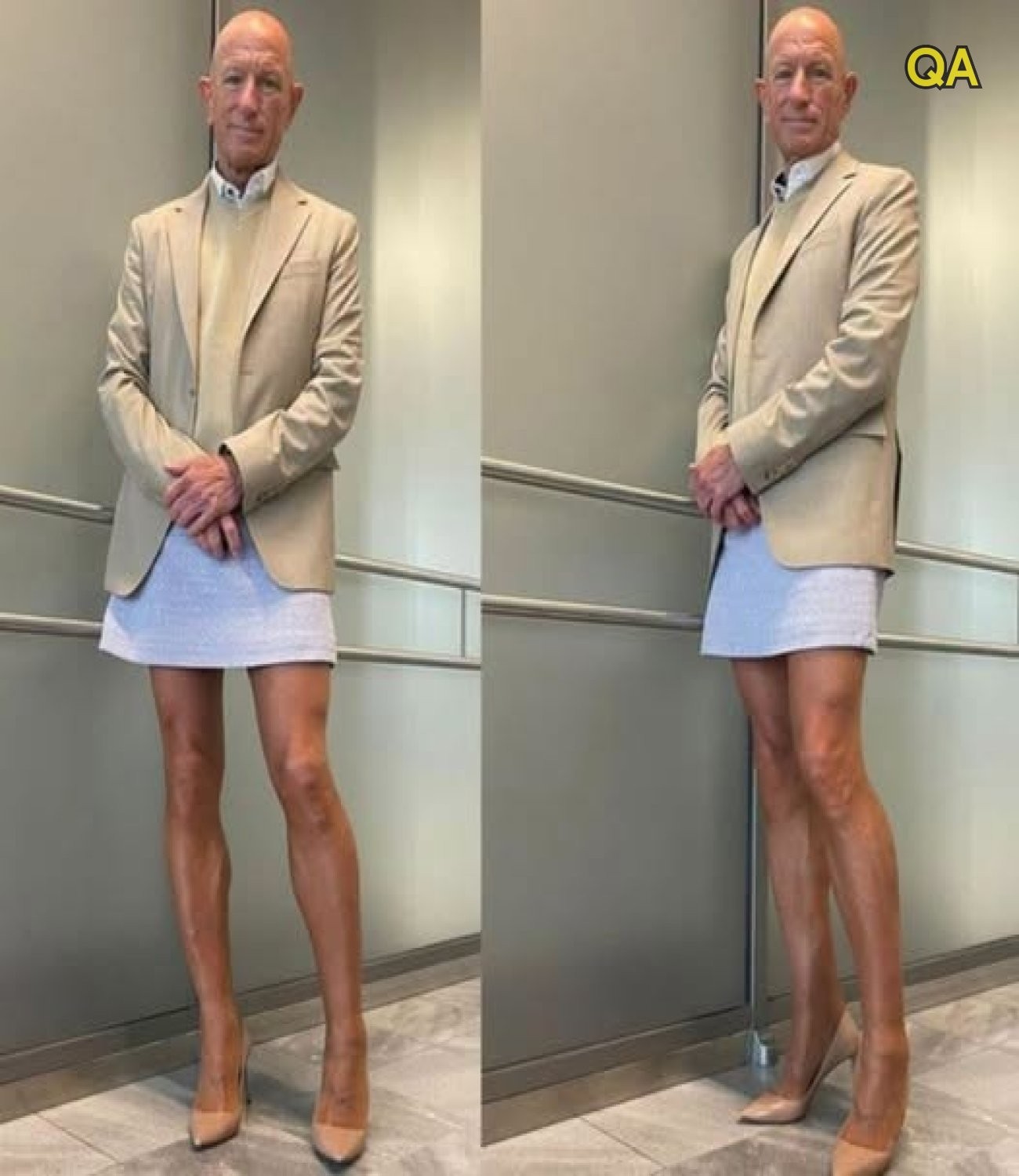
Robotics engineering is synonymous with precision, logic, and structured thinking. These principles guide the professionals who innovate in this domain. For Mark Bryan, a 61-year-old engineer residing in Germany, this rational approach extends beyond technical problem-solving into his daily life—including his choice of attire. Bryan’s morning routine is governed strictly by practicality: if a garment fits, suits a professional environment, and provides more variety than the typical pair of slacks, Bryan sees no reason to avoid wearing it. These criteria have led him to select pencil skirts and four-inch stilettos, challenging conventions regarding professional dress.
The Making of a Digital Sensation
Mark Bryan has found himself at the center of an international conversation about fashion, gender, and identity. His Instagram account, featuring nearly 660,000 followers, has become a platform showcasing both his professional persona and his unique sartorial choices. Each post presents Bryan as the embodiment of classic professionalism—a committed father of three and a respected expert in his field—except for his distinct wardrobe.
Combining tailored blazers and ties, usually seen as masculine-coded, with feminine-coded pencil skirts and high heels, Bryan’s style confronts preconceptions about how engineers are expected to dress. His daily outfits have sparked considerable debate and admiration, positioning him as a unique voice in challenging the limitations of gendered clothing.
Fashion and Gender: A Historical Perspective
The distinction between “masculine” and “feminine” fashion is a relatively recent social construct. Historically, clothing styles have evolved in response to cultural, economic, and practical needs. For instance, men in the 18th century commonly wore ornate garments, including wigs and heels, which today are almost exclusively associated with women’s fashion. Over time, rigid norms developed, categorizing attire and accessories by gender.
Social scientists and fashion historians note that these divisions often reflect power dynamics and social hierarchies rather than inherent practicality. In many workplaces, strict dress codes reinforce conformity and social expectations. Bryan’s approach—prioritizing fit, professionalism, and personal comfort—raises questions about the true meaning and necessity of these conventions.
Engineering Logic Applied to Fashion Choices
Bryan’s rationale for his wardrobe is grounded in logic. Engineering, his field of expertise, is about finding efficient solutions to complex problems. By approaching his wardrobe in the same analytical manner, Bryan employs criteria such as comfort, variety, and professionalism—challenging the notion that only slacks and loafers are suitable for the workplace.
This analytical approach resonates with many looking for alternative ways to express identity at work. In interviews, Bryan has emphasized that his goal is not to be provocative but to highlight the arbitrary nature of assigning gender to clothing. “I simply wear what I like,” he explains, inviting others to question the assumptions underlying fashion norms.
Global Conversations and Societal Impacts
Bryan’s Instagram has become a focal point for discussions on gender expression. Comments flood his posts from people around the world, many expressing admiration for his confidence and authenticity. The variety of reactions—from supportive messages to thoughtful debates—reflects a growing awareness about gender identity and self-expression.
Experts in social psychology, such as Professor Jennifer Smith of the University of Berlin, point out that Bryan’s public persona encourages greater inclusivity. “His choices create a broader dialogue in society about the difference between gender identity and the social scripts linked with clothing,” Smith says. This trend aligns with a global movement toward diversity in both fashion and workplace environments.
Professionalism Redefined: Beyond Surface Appearances
Bryan’s career in robotics is marked by excellence and professionalism. His dress has not detracted from his contributions to the field; rather, colleagues often express respect for his technical knowledge and work ethic. In some interviews, Bryan has described positive workplace dynamics—where colleagues focus on his expertise rather than his appearance.
Modern businesses and institutions are increasingly recognizing the importance of diversity and self-expression. Many multinational corporations now emphasize inclusion, offering flexible dress codes and creating safe spaces for personal identity. Bryan’s story is part of a broader narrative, shifting attention from appearance to ability and merit.
Parenthood and Example Setting
Bryan is not only a professional but also a father of three. His approach to fashion and self-expression serves as a model for his children, encouraging them to question societal norms and embrace individuality. In interviews, Bryan has discussed the importance of teaching children about respect and acceptance—values that reach far beyond clothing.
“I want my children to see that happiness and self-respect begin with being true to yourself,” Bryan has said. This message resonates with families worldwide, prompting conversations within households about identity, acceptance, and confidence.
The Role of Social Media: Advocacy and Accessibility
Social media platforms play a crucial role in amplifying Bryan’s story. Instagram enables users to share content globally, facilitating discussions and connections that would be difficult to achieve otherwise. Bryan’s posts inspire followers from diverse backgrounds—some seeking advice, others curious about fashion, and many looking for solidarity in their own journeys toward self-expression.
As digital communities increasingly influence global culture, stories like Bryan’s highlight the power of social media in shaping perceptions and fostering challenging conversations. The accessibility and reach of these platforms have made it possible for individuals and advocates to find support and share their experiences.
Expert Perspectives on Breaking Gender Barriers in Fashion
Fashion experts and LGBTQ+ advocates emphasize the importance of representation. According to Dr. Susan Carter, a sociologist specializing in gender studies, visible role models like Bryan have a measurable influence on public attitudes. “When professionals like Bryan openly challenge gender rules, they make space for others who may feel constrained by conventional norms,” Carter explains.
Organizations like the Human Rights Campaign note that increased visibility leads to greater acceptance and policy change. In many places, corporate diversity training now includes topics related to gender identity and expression, reflecting the shifting landscape of workplace culture.
International Reactions and Broader Implications
Bryan’s story has been covered extensively by international media, prompting responses from audiences in Europe, North America, Asia, and beyond. While reactions may vary culturally, the overall trend is toward greater openness and curiosity about breaking fashion boundaries and redefining gender roles.
Some societies continue to maintain strict customs regarding clothing. However, global fashion brands and designers increasingly cater to a diverse clientele, offering products that challenge binary distinctions. Bryan’s visibility has encouraged major retailers to expand their lines and rethink their marketing strategies.
Future Directions: The Evolution of Workplace and Fashion Norms
The trajectory of Bryan’s influence suggests continuing shifts in attitudes. As workplaces become more inclusive and media representation diversifies, clothing is likely to be reimagined as a tool for self-expression rather than a marker of conformity. Engineering, traditionally seen as a conservative field, demonstrates that innovation can extend to all aspects of identity and presentation.
Industry leaders and policymakers are increasingly aware of the role of personal expression in employee satisfaction and productivity. Bryan’s logic-driven approach offers a blueprint for future generations: focus on competence and authenticity, challenge arbitrary boundaries, and embrace individuality in every context.
Conclusion: Rethinking Logic and Identity
Mark Bryan’s journey illustrates the intersection of logic and creativity, professionalism and self-expression. His attire, rooted in rationality and personal comfort, invites society to reconsider the arbitrary constraints of gendered fashion. As digital platforms amplify his story and experts weigh in, Bryan’s example is inspiring a new wave of dialogue—one that celebrates both precision and individuality.
Sources
Disclaimer: This content is intended for entertainment purposes only and is not based on real events.