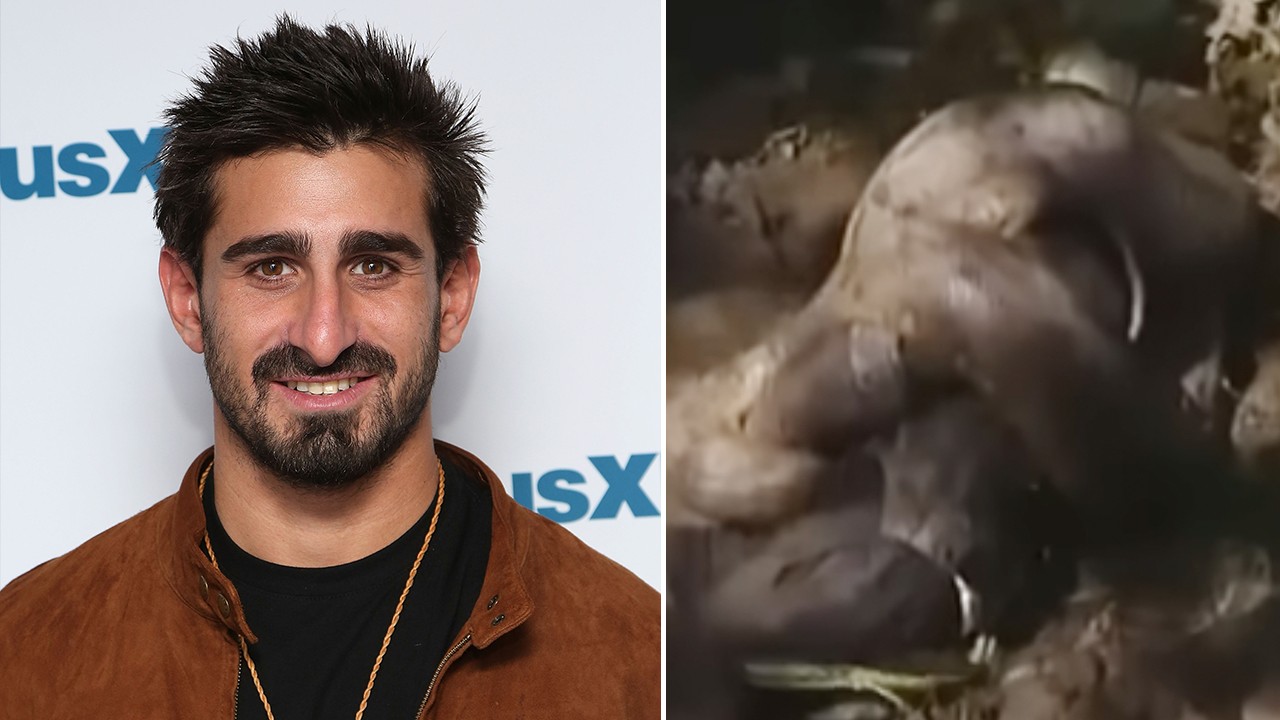
Paul Rosolie’s Extreme Amazon Encounter: From Anaconda Constriction to the Puss Caterpillar Sting
Paul Rosolie voluntarily spent more than an hour in the crushing grip of an anaconda, but the worst pain of his life came from a tiny creature that he said resembled “Trump’s hair.”
The Adventurous Life of Paul Rosolie
Paul Rosolie, aged 39, is a prominent conservationist, author, and explorer who has dedicated much of his life to understanding and protecting the Amazon rainforest. Over decades, Rosolie has developed deep expertise regarding the region’s unique ecology and wildlife, often placing himself in challenging and sometimes hazardous situations to support his conservation mission.
Rosolie is particularly recognized for his innovative approaches to raising public awareness about environmental issues affecting the Amazon. His career has been marked by immersive fieldwork, research, and public advocacy, drawing attention to endangered habitats and species through storytelling, books, and media appearances.
‘Eaten Alive’: A Daring Conservation Stunt
In 2014, Rosolie gained global attention when he agreed to participate in Discovery Channel’s special titled Eaten Alive. The program was designed as a dramatic and controversial experiment: Rosolie would allow himself to be constricted—and potentially swallowed—by a giant anaconda. The aim was not mere spectacle but to create a discussion about conservation priorities and the destruction threatening the Amazon rainforest, commonly referred to as the “lungs of the Earth” for its pivotal role in global oxygen production and climate regulation.
According to Rosolie, the inspiration for the stunt stemmed from his frustration with the lack of widespread concern about rampant deforestation. Witnessing vast tracts of rainforest burned and cleared, he wanted to do something extraordinary that would capture public imagination and spark urgent conversations on environmental preservation. “I want to do something that’s just going to grab people’s attention,” Rosolie explained in an interview with Today show, emphasizing the shock factor as a tool to amplify conservation messaging.
The Ecological Importance of the Amazon Rainforest
The Amazon rainforest is the world’s largest tropical forest, encompassing millions of square kilometers and a vast diversity of species. Scientists and environmentalists often refer to it as the “lungs of the Earth” due to its essential role in absorbing carbon dioxide and producing oxygen. Its biodiversity is unparalleled: the Amazon is home to more than 400 billion individual trees, countless plants, birds, mammals, insects, and freshwater fish species.
Deforestation and habitat destruction threaten this ecosystem. According to recent studies published by international environmental organizations and research institutes, the loss of forest cover in the Amazon has significant implications for global climate stability, regional water cycles, and species extinction. Conservationists like Rosolie argue that urgent action is needed to address unsustainable logging, mining, agriculture, and urban expansion that endanger both the ecosystem and indigenous cultures within the region.
Preparing for the Anaconda Encounter
The technical and biological challenges involved in orchestrating Rosolie’s encounter with a giant anaconda were substantial. Anacondas are elusive animals, well-adapted to remote swamps and riverbanks, making them difficult to locate and observe under controlled conditions. Rosolie and his team invested nearly a decade documenting potential sites and animal behavior, ultimately conducting the experiment after nearly 60 days of searching “in the swamp day and night,” as he told People.
To minimize risk, Rosolie wore a specially engineered carbon-fiber suit designed to withstand the crushing power of the anaconda’s constriction. The suit covered most of his body; however, part of his arm was left exposed inadvertently. The team used pig’s blood to provoke an attack response, simulating natural prey. Throughout the process, medical personnel and veterinarians monitored Rosolie’s vital signs and ensured the welfare of the snake.
The Constriction: Physical and Psychological Challenges
Once the nearly 20-foot anaconda initiated its constriction, Rosolie described the sensation as “being caught in a wave.” The force was overwhelming, with everything becoming black as the snake’s mouth closed around him. However, the exposed part of his arm quickly became a point of vulnerability. The tightening pressure led Rosolie to fear a potential fracture or serious injury, prompting an emergency signal to his team to halt the experiment.
Rosolie later emphasized how crucial it was to prevent harm to both parties involved—the human and the snake. Animal welfare experts and veterinary observers were present to ensure the snake wasn’t harmed during the stunt, reflecting modern conservation ethics that prioritize animal safety alongside educational outreach.
Not the Worst Pain: A Surprising Encounter with the Puss Caterpillar
While the physical sensation of being constricted by a giant anaconda would rank as a harrowing ordeal for most people, Rosolie experienced an even more excruciating pain from a far smaller Amazonian inhabitant: a venomous caterpillar.
During a 2023 appearance on The Joe Rogan Experience podcast, Rosolie recounted his accidental encounter with a yellow caterpillar, remarking that its appearance was reminiscent of “Trump’s hair.” He was aware that direct contact with exotic caterpillars could be risky, so he attempted to transfer the insect carefully using a leaf. Unfortunately, the leaf buckled, causing the caterpillar to fall onto his hand.
The effects were immediate and severe: Rosolie described the sensation as “immediate, like, electroshock, like, pain waves,” quickly outstripping the pain of even a bullet ant sting, which is widely considered among the most potent insect stings known to science.
The caterpillar’s defense mechanism consisted of microscopic barbs, often described as “Christmas tree barbs,” which delivered venom through skin contact. The consequences lasted days, as Rosolie and his team examined the caterpillar and attempted to ease the pain.
The Puss Caterpillar: Science Behind the Sting
The fuzzy yellow caterpillar Rosolie encountered was identified as a member of the puss caterpillar family, which eventually matures into the southern flannel moth. The larvae’s distinctive feature is its thick coat of “fur,” which conceals venomous spines capable of delivering agonizing stings to humans and animals alike.
Puss caterpillars, also called “asp caterpillars,” are native to various regions of North and South America, including Texas and the Amazon. According to Texas A&M AgriLife extension, contact with the hairs or spines can inject toxins that cause symptoms like intense local pain, burning, swelling, and blistering. Experts recommend using adhesive tape to repeatedly lift spines from the skin as an immediate first aid measure.
Rosolie stressed that the pain of the puss caterpillar sting was categorically worse than most known insect stings, including bullet ants, which are notorious for their severity. His experience highlights the diversity of defensive mechanisms among rainforest species and underscores the risks faced by those working in extreme environments.
The Amazon’s Hidden Dangers and Human Impact
Rosolie’s firsthand accounts shed light on both the physical dangers faced by explorers in the rainforest and the remarkable adaptations of its species. From constricting snakes to venomous insects, the Amazon is filled with organisms evolved for survival in an intense natural landscape.
His willingness to undergo unique ordeals also serves as a broader metaphor for the challenges facing conservationists worldwide. Extreme stunts and immersive storytelling can catalyze public interest, translating into increased awareness and vital funding for rainforest protection.
Expert views within the scientific community have been largely supportive of Rosolie’s efforts, endorsing responsible advocacy as essential in combating environmental apathy. However, some conservation organizations emphasize the importance of ethical standards and the need to ensure that such activities prioritize both human and animal welfare, as well as scientific rigor.
Societal and International Reactions
The Eaten Alive special triggered broad discussion internationally. Environmental advocates praised Rosolie’s dedication to raising awareness, while some viewers and experts criticized the use of sensational media and questioned the ethics of involving both human and animal subjects in dangerous experiments.
Nonetheless, the program succeeded in bringing attention to deforestation, illegal wildlife trade, and habitat loss in the Amazon. It prompted renewed dialogue about conservation strategies and responsible eco-tourism, with many organizations using the increased visibility to bolster fundraising and advocacy campaigns. Major news outlets, including Reuters, BBC, and The Guardian, reported on the event and its outcomes, linking it to wider environmental challenges.
Rosolie’s later interviews and public appearances, including his podcast retelling, have continued to shape discourse around biodiversity and human impact on tropical ecosystems, reaffirming his status as a committed conservation communicator.
Conclusion: The Enduring Message of Conservation
Paul Rosolie’s extraordinary experiences in the Amazon—from surviving the crushing force of an anaconda to enduring the venom of a puss caterpillar—highlight the sheer power and complexity of the rainforest’s ecosystem. His willingness to face danger speaks not only to the remarkable adaptations of its wildlife but also to the urgent needs of environmental protection.
These stories remind us of the far-reaching consequences of habitat loss and the critical role of advocacy in preserving our planet’s remaining wilderness. As research continues and conservationists innovate in both fieldwork and public discourse, Rosolie’s message endures: The Amazon needs our attention, respect, and action now more than ever.
Sources
- Reuters
- BBC News
- Al Jazeera
- The Guardian
- Texas A&M AgriLife Extension
- World Health Organization (WHO)
- Centers for Disease Control and Prevention (CDC)
Disclaimer: This content is intended for entertainment purposes only and is not based on real events.