The Power of Small Acts: How Kindness Transforms Lives
Introduction: Compassion in Everyday Life
Kindness possesses the ability to subtly transform lives, offering hope where uncertainty lingers and forging bonds where isolation prevails. The story of Nura and the author, sparked by a simple act of generosity involving children’s outgrown clothes, exemplifies how ordinary moments can become catalysts for profound change. In a world often marked by challenges, grief, and transition, acts of compassion—no matter how modest—often ripple outward, making an impact that extends beyond the sender and the recipient. This article examines the emotional journey of two mothers, the context of their struggles, expert views on the significance of giving, and how such exchanges reverberate across wider society.
Small Gestures Amid Personal Upheaval
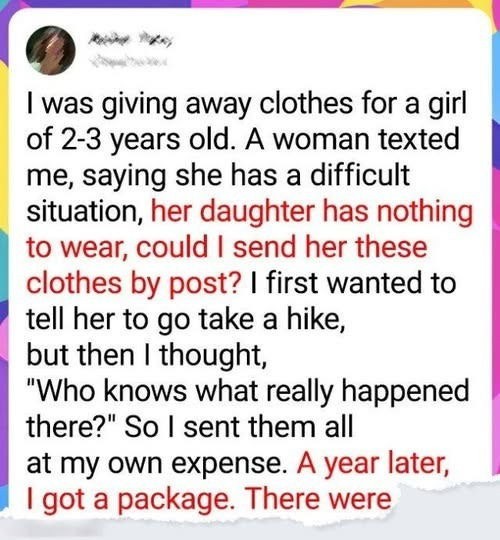
The narrative begins in a period of upheaval, following the death of the author’s mother. Seeking solace and semblance of order, the author posts a giveaway of her child’s outgrown clothes, a move intended to bring control in the aftermath of loss. The gesture becomes an unintended lifeline for Nura, a stranger whose request for warmth is accompanied by a promise to repay someday. Initially, the author considers ignoring the message but ultimately decides to respond with empathy. The choice to mail the bundle is made, unremarkable at the time, but sets in motion a chain of events that challenges both women to reconsider the meaning of community and support.
The early phase of their interaction underscores the vulnerability inherent in asking for help. According to studies in psychology and social care, seeking assistance is often fraught with feelings of shame and inadequacy, especially for people in marginalized circumstances (see BBC). Nura’s hesitancy, rooted in her own struggles with isolation and survival, sets the stage for why small gestures matter in critical moments.
Returning Kindness and the Healing Journey
A year later, the story evolves as Nura sends a package back to the author containing the same clothes, now softened by use, along with a handwritten note. Inside the box is a crocheted duck—a childhood keepsake that the author hadn’t realized was included in the original shipment. According to Nura, it protected her daughter from nightmares and “it was time it comes home,” signaling not just gratitude, but an emotional return—a cycle of giving and receiving that moves beyond material value.
The emotional weight of this moment is palpable; the author, overwhelmed by the unexpected gift and recognition of her own vulnerability, finds herself in tears. Experts in bereavement and recovery note that seemingly small objects can carry significant psychological meaning, especially when tied to memories or periods of emotional distress (source: Mayo Clinic). The crocheted duck is emblematic of loss, protection, and the enduring nature of empathy.
Connections Formed in Adversity
The story advances with the exchange of a phone number, leading to a conversation that reveals the deeper context behind Nura’s request. She shares her journey—escaping from an abusive partner, seeking refuge in a shelter, and nearly refraining from messaging the author due to feelings of shame. Such experiences speak to the widespread reality of domestic instability, where access to resources and community support remains critical for both recovery and survival. Globally, shelters and social services serve as crucial nodes in the safety net for vulnerable families (reference: Reuters).
The subsequent communication between the author and Nura extends past the initial act, marked by shared photos, job listings, and late-night exchanges. Over time, their families blend together—visits, soup shared, courage borrowed—demonstrating how meaningful support sustains recovery and fosters friendship. This evolution underscores research findings that interpersonal networks built on trust and reciprocity are essential to resilience, especially among individuals facing hardship (source: CDC).
Reciprocity: Mutual Support in Times of Need
As winter arrives, roles shift and the author herself faces uncertainty, with work hours cut and financial strain mounting. Nura, now in a more stable position, responds swiftly by sending €300 to the author, urging her to accept help. This reversal highlights the dynamic quality of generosity—how relationships are sustained through alternating roles of “receiver” and “giver.” Psychological studies attest to the cyclical nature of support, where those once helped often become the helpers, creating a self-sustaining ecosystem of compassion (see The Guardian).
Nura’s decision to provide financial aid, despite her own ongoing recovery, demonstrates compassionate risk-taking—the willingness to invest in another’s welfare without certainty of outcome. Experts refer to this as “prosocial behavior,” a fundamental trait linked to mental health, community stability, and positive developmental outcomes in children (source: WHO). Acts of giving, even when resources are scarce, have been shown to foster well-being, increase feelings of purpose, and solidify social bonds.
Celebrating Achievement and Renewed Hope
The friendship grows across seasons, culminating in moments of joy and mutual celebration. The author cheers Nura into culinary school, reflecting pride in her friend’s perseverance and progress. Their daughters, who now refer to each other as cousins, represent the next generation’s inheritance of these values. The crocheted duck, passing between homes, becomes a shared symbol—a “quiet blessing” marking their ongoing journey and the cyclical nature of kindness.
Planning a trip by the coast symbolizes optimism and hope, demonstrating how acts of generosity can create new traditions and memories. The story, rooted in individual experience, echoes a broader truth: that compassion breeds safety, dignity, and belonging. When faced with everyday requests, the author’s decision to remember Nura reinforces this lesson—how even small acts tilt lives toward hope and healing.
Expert Views: The Science of Giving and Resilience
Research in behavioral science underscores the transformative impact of prosocial actions:
- Social connection: Friendly, supportive communities are linked to reduced stress and greater fulfillment (Mayo Clinic).
- Mutual aid: Reciprocal support sustains resilience; families engaged in giving and receiving report higher recovery rates from trauma and loss (CDC).
- Identity and belonging: Acts of generosity reinforce shared identity, reduce shame, and foster belonging—especially for those navigating instability (WHO).
International organizations highlight the societal importance of empathy in rebuilding fractured communities. Whether through donations, volunteering, or informal outreach, everyday kindness is a resilient thread woven through global efforts to support vulnerable populations.
Societal Reactions: Generosity as a Pathway to Hope
The resonance of Nura’s story reaches beyond individual experience. Globally, initiatives like community “giveaways,” mutual aid networks, and grassroots support define modern responses to hardship. In times of crisis—natural disaster, economic downturn, or personal grief—small donations, shared resources, and emotional outreach serve as lifelines.
Organizations and governments increasingly recognize that material assistance, combined with compassionate accompaniment, lays the foundation for social recovery. The transformation seen in Nura and the author’s friendship mirrors the larger societal movement toward inclusive support systems, one where dignity, empathy, and reciprocity are valued alongside financial and material charity.
Conclusion: How Everyday Kindness Redefines Community
The narrative of Nura and the author illustrates that generosity is not merely a fleeting gesture but an enduring force, capable of redefining family, healing grief, and restoring hope. Their story affirms what countless experts and organizations advocate: every act of kindness—no matter how small—has the power to anchor lives, build connection, and shape the future.
As communities face continuing challenges, including economic uncertainty, migration, and public health crises, the lessons from this story urge individuals to respond with openness and empathy. Whether through a cardboard box, a phone call, or a shared meal, the decision to act can mark the beginning of renewed possibility, dignity, and trust. Whenever we hesitate, remembering stories like Nura’s may remind us that generosity is not only a gift for others, but a blessing returned—and often a lifeline found even in the ordinary.
Sources
Disclaimer: This content is intended for entertainment purposes only and is not based on real events.