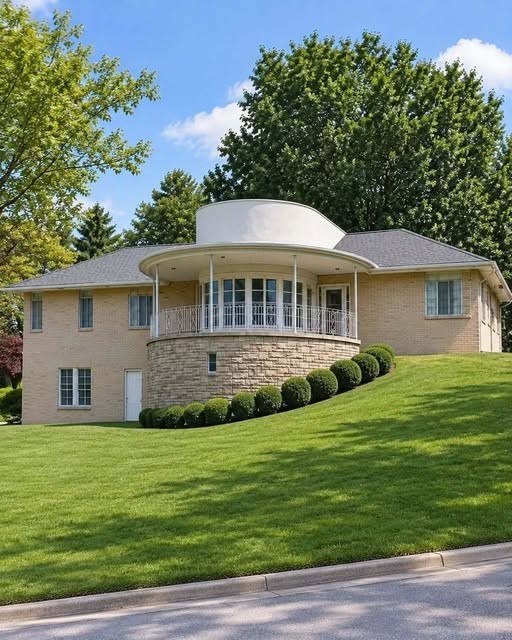
A Strange House on a Hill: Bargain or Expensive Trap?
Introduction: The Mystery of the Futuristic Hilltop Home
High on a quiet, grassy hill, an unusual house has captured the attention of real estate watchers, architecture enthusiasts, and curious local residents alike. Listed at just $65,000, this extraordinary property has elicited both excitement and caution in equal measure. Its striking, futuristic design distinguishes it from standard neighborhood residences, raising pressing questions about its true value and the vision behind it. Is this home a rare architectural bargain, or could its low price mask hidden complications and demanding restoration costs? In this article, we analyze every facet of this one-of-a-kind property, contextualize its place in broader housing and design trends, and seek insights from housing experts and preservation advocates.
Architectural Features: A Vision from the Future
The house in question stands as a testament to bold, imaginative design. With nearly 3,000 square feet of living space, it offers three spacious bedrooms and three bathrooms—all enclosed within walls that eschew the typical angles and lines of contemporary homes. The building’s architecture features sweeping curved glass facades, softly rounded walls, and a prominent cylindrical tower rising above its core. These distinctive elements evoke comparisons with observatories, science fiction film sets, and utopian visions of future living.
The overall aesthetic draws from Art Deco influences, reimagined through a lens of mid-century futurism. The geometric and curved details suggest that the original designer intended the house to stand out and prompt conversation, rather than blend in. From a distance, sunlight reflects from the glass like a beacon, making the structure impossible to overlook and fueling speculation about its origins and prior inhabitants.
Interiors: Potential and Pitfalls
Crossing the threshold reveals a property at a crossroads. The house is not in move-in-ready condition; instead, it feels like a blank canvas—unfinished in places, awaiting the touch of a determined and creative owner. The rooms are generous in size, and the abundance of natural light brings warmth into every corner. Yet the unfinished aspects dominate: bare walls and open ductwork tell the story of a dream interrupted or a renovation left incomplete.
For enthusiasts of architectural restoration, this is where opportunity lies. The unconventional layout provides design challenges and possibilities rarely found in the standard market. The open spaces, dramatic window placement, and unique lines lend themselves to customized solutions, whether the goal is to honor the original vision or introduce contemporary upgrades. With a sensitive restoration, the home could emerge as a true architectural gem, balancing its historic personality with modern comforts.
The Art Deco Connection: Historical Context
The Art Deco movement, which first flourished in the early 20th century, was celebrated for its bold geometry, stylized forms, and forward-looking embrace of modern materials. While most Americans associate Art Deco with urban skyscrapers or iconic theaters, its principles sometimes entered residential design—albeit rarely with the boldly futuristic approach seen in this home. Throughout history, architects aspiring to create signature works have occasionally pushed residential boundaries, challenging buyers with unconventional layouts and unique construction methods.
Preservationists often argue that such homes deserve careful restoration, as they embody cultural and artistic aspirations of their era. In major architectural cities worldwide, local governments and nonprofits have stepped in to safeguard architectural oddities, turning former design risks into prized heritage assets. In the case of this hilltop home, the tension between preservation and reinvention mirrors broader debates about how best to honor architectural innovation in residential real estate.
The Financial Equation: Hidden Costs and Real Estate Calculations
The home’s $65,000 price tag is, on its face, remarkably low—especially considering its square footage and striking features. However, real estate experts caution that the cost of acquisition is only the first chapter in the story. A property requiring significant restoration will entail substantial expenditure on materials, skilled labor, potential structural reinforcement, and code compliance.
Permitting and utility upgrades can add tens of thousands of dollars. Additionally, retrofitting unique architectural details to meet modern energy standards—especially with so much glass—may increase both costs and complexity. Bob Vila, a respected home renovation specialist, estimates that comprehensive restorations in unusual properties often exceed initial projections by large margins due to uncertainties and surprises as work progresses.
For prospective buyers, the challenge is to realistically assess their restoration budget and timeline. Will the final result justify the investment, either as a primary residence, a resale opportunity, or an income-producing rental? Financial institutions tend to scrutinize such purchases; securing renovation loans or mortgages for nontraditional properties can be more difficult and expensive.
The Allure of Unfinished Homes: Why Buy a Project?
Despite the risks, “project properties” like this futuristic house attract a certain breed of buyer. According to a survey by the National Association of Realtors, a rising generation of homeowners sees value in customization, expressing interest in homes where they can influence layout, finishes, and features. For these individuals, buying a property that needs work is not a deterrent but rather an invitation for creativity and personal imprint.
Moreover, the opportunity to live in a truly unique statement property is irresistible to those who prioritize character and history over turnkey convenience. Restorers and preservationists may also feel a sense of mission, motivated to save a distinctive home that might otherwise face demolition or permanent alteration.
Real Estate Context: Unconventional Properties in Today’s Market
The broader real estate market offers important context for understanding the appeal—and complexity—of such a listing. Across the United States and internationally, low interest rates in recent years spurred heightened demand for all types of housing, driving up prices even for unusual and challenging properties. Now, as rates fluctuate and affordability becomes a concern, buyers seek alternative paths to homeownership.
Real estate websites such as Zillow and Realtor.com report spikes in interest for fixer-uppers and architecturally unique properties, reflecting a willingness among buyers to consider homes outside the mainstream. Social media platforms and design blogs further enhance the desirability of “one-of-a-kind” homes, highlighting before-and-after stories that inspire others to take similar leaps of faith.
However, the risks are real. Neighborhood comparables may be limited, which can affect appraisals and eventual resale. The credit market for unconventional homes remains strict, and unexpected repair costs can stress both budgets and patience.
Expert Opinions: Preservation versus Practicality
The divide between preservation and practicality is at the heart of the discussion about the house on the hill. Architectural historians emphasize the value of preserving such rarities, arguing that properties with unusual forms teach us about design experimentation and the mindset of their creators. These homes provide a tangible link to the evolution of architectural thought and can serve as inspiration for future generations.
On the other hand, real estate agents and contractors caution buyers about underestimating the time, money, and expertise required for sympathetic restoration. Sometimes, the only viable path is to reimagine or significantly alter the original, blending preservation with necessary modernization. Balancing ambitious design with livable function is a challenge that requires vision, commitment, and considerable resources.
Ultimately, decisions about preservation or reinvention often depend on the identity and goals of the buyer: Are they a collector, a creative visionary, an investor, or a practical homeowner?
Societal Impact: The Value of Architectural Diversity
At a societal level, homes like this one contribute more than just quirky neighborhood landmarks. They remind communities of the value of architectural diversity and the importance of maintaining spaces that challenge conventional aesthetics. As urban and suburban environments grow more homogeneous, preserving distinctive homes can foster a stronger sense of place and history.
Local governments sometimes play a role in encouraging preservation through tax credits or heritage designations. Nonprofit organizations and community groups may also support efforts to maintain or restore unusual homes, sometimes opening them to the public for education and inspiration. Internationally, cities like Barcelona, Tokyo, and Los Angeles have championed preservation policies that reward innovation while ensuring safety and sustainability.
Conclusion: A House Awaiting Its Next Chapter
As the unusual house waits above the tree-lined streets, it presents a riddle—and an opportunity. For prospective owners and the community, it is both a symbol of unfinished dreams and a canvas for future creativity. Whether restored to its original glory or transformed into something entirely new, the property encapsulates the risks and rewards of owning architectural curiosities. The answer to whether it is an incredible bargain or an expensive trap will ultimately depend on the vision, resources, and passion of its next owner.
Sources
- Realtor.com
- Zillow
- National Association of Realtors
- BBC News – Business
- Architectural Digest
- The Guardian
Disclaimer: This content is intended for entertainment purposes only and is not based on real events.