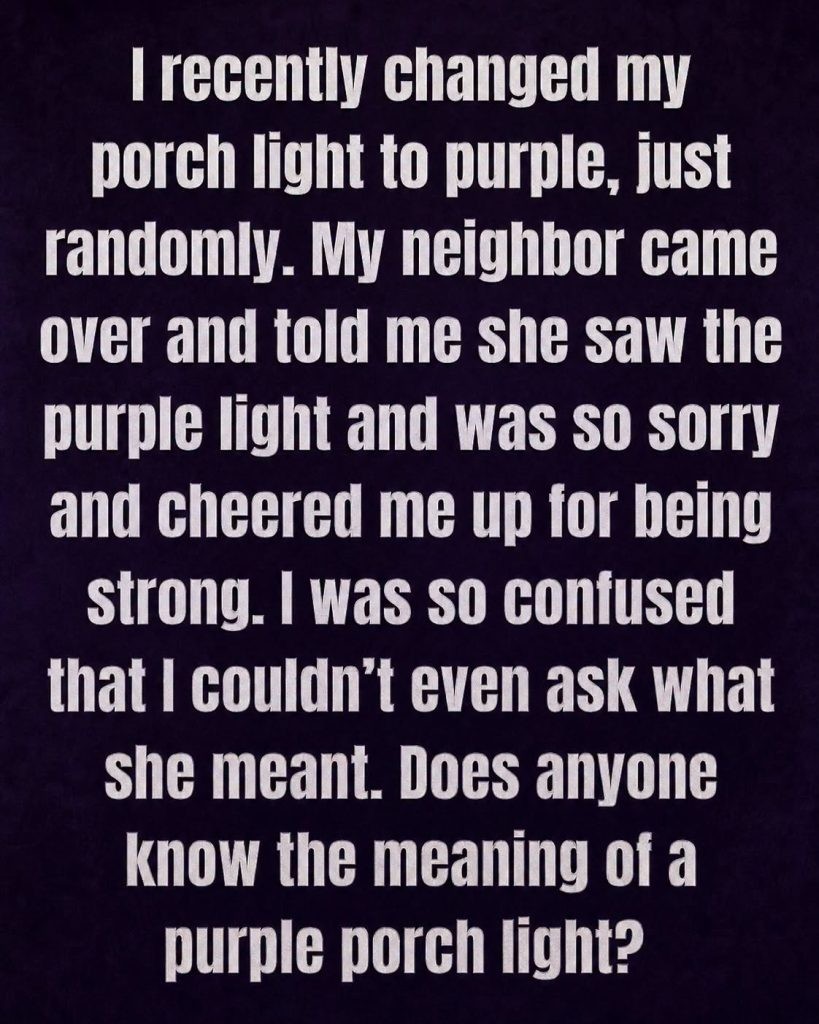
The Meaning Behind the Purple Porch Light: Raising Awareness of Domestic Violence
Introduction: The Quiet Symbolism of Purple Porch Lights
Across neighborhoods in the United States and other parts of the world, purple porch lights have emerged as quiet yet powerful symbols. At first glance, they seem nothing more than an unusual color choice, but beneath their steady glow lies a profound meaning—one that is rooted in empathy, awareness, and solidarity with survivors of domestic violence. Unlike banners or loud signals, the purple light neither flashes nor screams for attention. It simply emanates a gentle radiance that prompts onlookers to pause and wonder about its significance.
The Origins and Purpose of the Purple Light
The association of the color purple with domestic violence awareness can be traced back to ongoing advocacy efforts. Purple was chosen by several organizations, including the National Domestic Violence Hotline and domestic violence awareness initiatives, for its symbolic value. Historically, purple has represented courage, survival, and peace—values closely aligned with the resilience of survivors. During Domestic Violence Awareness Month, which occurs every October in the United States, individuals and communities are encouraged to display purple, including through porch lights, in order to foster dialogue and offer visible support.
A Tribute and Warning for Communities
For some, the soft purple glow symbolizes remembrance—a tribute to those who have endured abuse, or to families honoring someone whose life was tragically affected by domestic violence. For others, the light serves as a precautionary signal, quietly communicating that the issue is present within their community. Unlike more overt advisories, the purple porch light is often visible only to those who understand its meaning, making it a contemplative invitation for neighbors and passersby to consider the realities that exist behind closed doors.
Challenging Misconceptions About Domestic Violence
One of the most persistent misconceptions about abuse is that it must be obvious and visible. However, domestic violence frequently hides beneath everyday routines, cordial exchanges, and homes that appear peaceful and safe during daylight hours. The purple light acts as a reminder that abuse is often invisible and that survivors may conceal their experiences out of fear, shame, or concerns for their safety. This awareness can inspire communities to reconsider preconceived notions and look beyond surface appearances when thinking about safety and wellbeing.
Signals of Support: Moving Beyond Symbolism
For those who know the story behind the purple light, it is more than a symbol—it is an indication that a home or family is a safe space, ready to listen, believe, or guide someone towards help without judgment. The awareness created by purple porch lights can lead to tangible actions, including checking in on neighbors, sharing hotline numbers, initiating conversations about safety, and supporting local shelters and advocacy programs. A single light cannot resolve systemic issues, but it can trigger incremental changes in awareness and community response, making people more vigilant and supportive.
The Impact of Awareness Campaigns
Domestic Violence Awareness Month and related campaigns have mobilized individuals, civic groups, schools, businesses, and local governments to take visible stands against domestic violence. By encouraging the use of purple—even in the form of clothing, ribbons, or porch lights—these efforts hope to bridge the gap between silence and visibility. Such campaigns are often accompanied by educational events, survivor stories, advocacy training, and fundraising for shelters and support centers. The porch light is just one aspect of a larger movement aimed at breaking the cycle of abuse and empowering survivors.
International Perspectives and Societal Reactions
While the purple light tradition is prominent in the U.S., similar methods exist worldwide. In Australia, the “Purple Ribbon Campaign” focuses on awareness and prevention efforts. Organizations in the United Kingdom and Canada also use purple to highlight domestic violence issues. International agencies such as the World Health Organization (WHO) recognize the global scale of domestic violence, emphasizing that it affects victims regardless of nationality, socioeconomic status, or cultural background.
Globally, the purple light and other symbolic gestures contribute to shifting public attitudes. Increased visibility encourages more victims to seek help and motivates communities to confront difficult conversations about prevention and protection. The symbolism varies by region, but the message remains consistent: awareness saves lives, and even a small act can signal empathy and support for those in need.
Expert Views on Symbolism in Activism
Experts in sociology, psychology, and public health agree that visual symbols can have significant impact. According to Dr. Jacquelyn Campbell of Johns Hopkins University, visual cues such as purple lights offer a starting point for conversation and serve as tools for breaking stigma. Mental health professionals note that survivors often feel isolated, and such symbols reinforce the notion that their experiences are acknowledged, understood, and taken seriously.
Advocates emphasize that, while awareness is important, it should be complemented by concrete measures: education, access to counseling and support services, proper law enforcement training, and community-wide commitment to prevention. The purple porch light encourages vigilance, but it is most effective when paired with action.
How Communities Can Support Survivors
Community support is critical in addressing domestic violence. By spreading awareness, sharing resources, and fostering environments where survivors feel safe speaking out, neighborhoods can play a role in breaking cycles of abuse. Initiatives may include hosting informational sessions, distributing educational materials, supporting local shelters, and promoting confidential avenues for reporting incidents. The National Domestic Violence Hotline, for example, provides 24-hour access to help and information for anyone affected by domestic violence.
Many communities host events such as awareness walks, candlelight vigils, and fundraising drives, often featuring the color purple. Partnerships between law enforcement, social services, and civic groups further strengthen protection efforts. Education programs in schools and workplaces also help identify patterns of abuse and create supportive environments for early intervention.
The Limitations and Opportunities of Symbolic Gestures
While the purple porch light is a powerful symbol, experts caution against viewing it as a substitute for direct action. Symbolism opens dialogue, but meaningful progress lies in changing societal attitudes and institutions. Education about the warning signs of abuse, establishing safe reporting channels, and ensuring access to support are essential steps. The light is an important reminder, but comprehensive activism involves ongoing commitment.
There is also a risk that symbolism may be misunderstood or overlooked. For maximum effectiveness, communities should accompany visual gestures with public outreach, resources, and education, so more individuals understand what the light represents and how they can help.
Conclusion: The Power of Visibility
The purple porch light is more than a decorative glow—it stands as a beacon of hope, remembrance, and vigilance. Through its steady presence, it shifts awareness from silence to visibility, signaling that communities are prepared to acknowledge and confront domestic violence. Awareness inspired by the light prompts questions, fosters dialogue, and encourages small but meaningful actions. As more neighborhoods adopt the tradition, the message grows stronger: survivors are not alone, and every community can play a role in protecting members from harm and supporting those who seek a way forward.
Ultimately, the purple porch light reminds us that even the smallest signal can inspire change, offer comfort, and help someone realize that there is always hope and support in moving toward safety and healing.
Sources
- BBC
- Reuters
- The Guardian
- Al Jazeera
- World Health Organization (WHO)
- National Domestic Violence Hotline
Disclaimer: This content is intended for entertainment purposes only and is not based on real events.