Crabsticks: The Truth Behind the Popular Snack Shocking the Internet
For decades, crabsticks have occupied a staple spot in households and restaurants around the globe. Their popularity—driven by convenience, affordability, and their reputation as a seafood snack—has endured through generations. However, recent viral content has brought their production process into question, sparking renewed debate about food processing and transparency in labeling. This article delivers an educational, detailed examination of how crabsticks are made, their nutritional and culinary context, and the robust reactions from consumers and health experts worldwide.
Understanding Crabsticks: Origins and Popularity
Crabsticks, often labeled as “imitation crab” or “crab-flavored sticks,” originated in Japan in the 1970s as a result of surimi technology. Surimi—meaning “ground meat” in Japanese—is a centuries-old technique used to process white-fleshed fish into a fine, versatile paste. The modern mass production of surimi products, including crabsticks, began after the development of machinery that could rapidly process large volumes of fish.
Today, crabsticks are found in sushi, seafood salads, sandwiches, pasta dishes, and a variety of ready-to-eat meals. Their mild seafood flavor and affordability have made them popular in North America, Europe, and Asia.
The Viral Video: Exposing the Manufacturing Process
Crabsticks have typically been embraced as a convenient alternative to real crab meat. However, a viral video recently exposed the step-by-step process in which these familiar orange-and-white sticks are produced in factories—a revelation that shocked countless viewers and raised questions about food transparency.

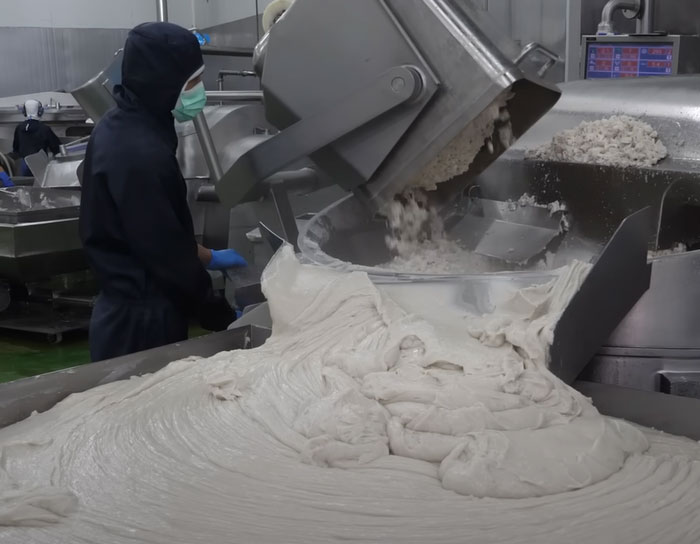
The video, filmed inside a large industrial facility, begins with blocks of frozen fish meat—usually Alaskan pollock, a species caught mainly in cold northern waters. Contrary to what consumers may assume, no crab meat is used in this process. Instead, the defrosted fish is placed into industrial mixers, where it’s ground into a homogeneous, soft, and pale mass. Additional ingredients, such as egg whites and wheat starch, are mixed in to act as binding agents and to impart the desired smooth, moldable texture. The result is a pasty, clay-like substance that serves as the foundation for the final product: surimi.
Surimi: The Science Behind Imitation Seafood
Surimi’s discovery dates back centuries, but its current factory-processed form relies on large-scale automation and meticulous ingredient selection. After being blended, surimi takes on a thick, somewhat grey or beige appearance, which many viewers found off-putting in the viral footage. It is important to note, however, that this stage of food processing is not unique to crabsticks—similar industrial procedures are used for other processed meats and seafood analogs.
Once the surimi mixture achieves the required consistency, it’s shaped in machines that press and flatten the paste into continuous, uniform sheets. These sheets are then rolled and layered to duplicate the stringy, flaky texture of crab or lobster meat.
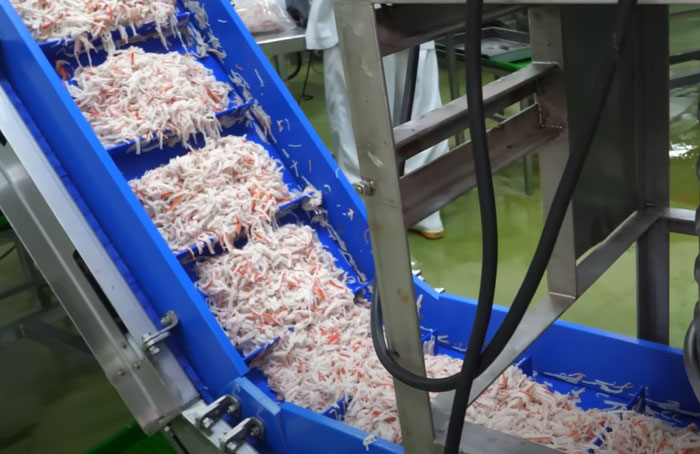
This method allows the finished crabsticks to mimic the natural appearance of genuine crab meat, even when pulled apart by hand. An orange-tinted coating is added as a final touch, perfectly emulating the distinctive color gradation found on cooked crab legs.
Ingredients and Flavor: How Crabsticks Imitate Real Crab
Once manufactured, the crabsticks are cut into neat segments, packaged, and distributed to supermarkets and restaurants worldwide. The key ingredients—fish, starches, and flavorings—are what separate imitation crab from the real thing. The flavor is perfected through the addition of fish extracts, sugar, salt, and sometimes monosodium glutamate (MSG), which emulate the mild sweetness and umami taste characteristic of real crab. While this lends authenticity to the eating experience, the absence of actual crab meat has led to confusion and, for some buyers, disappointment.
Social and Consumer Reactions: Disgust, Acceptance, and Debate
The viral video triggered a wave of reactions across social media and comment platforms. Many viewers expressed disgust, shock, or even betrayal after learning that crabsticks lack any meaningful crab content. “I will never purchase this ever again! Thank you for opening my eyes!” stated one user, echoing a widespread sentiment of disillusionment. Others admitted they had always perceived crabsticks as an artificial product, drawing comparisons to other highly processed foods like sausages and hot dogs, which involve similarly engineered production models.
Despite the strong negative reactions from some, not all responses were critical. There is a segment of consumers who acknowledge the realities of modern food production and are unbothered by the engineered nature of crabsticks. “I know how it’s made, but I still love crabsticks in my sushi. It’s not real crab, but it tastes good and that’s enough for me,” remarked a pragmatic viewer, reflecting continued acceptance among fans.
Manufacturing Standards and Industry Response
One of the most important clarifications following the viral video is that the process, while visually unappealing to some, is not unsafe or unhygienic. Food safety authorities such as the U.S. Food and Drug Administration (FDA) and various international agencies regulate production standards for surimi and imitation seafood. Ingredients used in crabsticks are generally recognized as safe, and manufacturing facilities are required to comply with strict cleanliness and food-handling protocols. Thus, the main issue is not safety but consumer perception and expectation management.
Industry associations and seafood companies have responded by emphasizing the food safety and nutritional merits of surimi-based products. They note that crabsticks—though low in real crab—provide a source of protein and can be incorporated into a balanced diet. The affordability and accessibility of imitation crab are highlighted as positive factors, especially for regions where authentic seafood may not be readily available.
Global Consumption and Versatility
Crabsticks have achieved international fame by serving as an economical and widely available alternative to real crab. They are featured in sushi menus, incorporated into salads and appetizers, and even used in home cooking for quick, convenient meals. In Japan, surimi products are so prevalent that entire aisles of grocery stores are devoted to them, while in Western cuisines, imitation crab appears commonly in California rolls and seafood salads.
The industry’s push toward the development of alternative proteins and substitutes for expensive seafood has played a role in ensuring that a broader cross-section of society can enjoy the flavors and textures of luxury foods like crab at affordable price points. This context helps explain the enduring popularity of crabsticks despite controversy about their ingredients and manufacturing methods.
Labeling, Marketing, and Misinformation
Historically, the labels on crabstick packaging have often described the product as “crab-flavored” or “imitation crab,” but many consumers admit to overlooking these cues—prompted in part by marketing that emphasizes ocean imagery and natural flavors. After the revelations of the viral video, there is increased scrutiny on how clearly manufacturers communicate the true nature of these foods. Regulatory bodies in the United States, Europe, and Asia require accurate ingredient lists, but consumer advocates suggest going further to ensure transparency.
Expert and Health Community Views
Nutritionists and food scientists have weighed in, highlighting both the benefits and drawbacks of crabsticks. On the positive side, they are low in fat and calories compared to many natural seafood products, and—thanks to enrichment efforts—may provide essential micronutrients. On the negative side, crabsticks can contain high levels of sodium and food additives, which may be a concern when consumed in large quantities. Experts generally recommend that consumers enjoy processed foods, including imitation seafood, in moderation and as part of a diverse, nutrient-rich diet.
Broader Implications for Food Transparency
The case of crabsticks underscores a broader debate in food science and policy: how much information do consumers need to make choices they feel good about? While processed and alternative foods offer convenience and accessibility, they also generate ethical questions about authenticity, labeling, and the extent to which food processing should be disguised or celebrated. The viral response to the crabstick video shows that people want, and increasingly expect, an honest look at how their food is made.
Crabsticks and the Future of Imitation Seafood
As interest in plant-based and alternative proteins continues to rise, the success and controversy of crabsticks serve as a precursor for similar products. Advances in food technology may yield even more convincing imitations of seafood, meat, and dairy products. The key will be openness with consumers and a commitment to maintaining high standards in quality, nutrition, and labeling.

Conclusion
The viral revelations about how crabsticks are made have prompted many to reconsider what they put on their plates. Whether viewed with curiosity, disgust, or indifference, the process behind this popular food sheds light on the balance between affordability, taste, and transparency. For some, the new understanding means crabsticks are off the menu; for others, their enjoyment is undimmed. Ultimately, crabsticks stand as a fascinating lens on the broader story of processed food in the modern world—reminding us that there is often more than meets the eye behind the food we love.
Sources
- BBC – The secret science of surimi
- Reuters – Global seafood industry trends
- CDC – Sodium in processed foods
- U.S. Food and Drug Administration – Food industry standards
- Mayo Clinic – Processed foods and your health
Disclaimer: This content is intended for entertainment purposes only and is not based on real events.