Early mornings offer a unique tranquility. With a steaming cup of coffee in hand, stepping outside to greet the day is a cherished ritual for many. The soft rustle of leaves, the melodic calls of birds, and the gentle sway of the grass together compose an atmosphere of calmness and familiarity. Yet, sometimes, it is in these moments of peace that we notice subtle disruptions—acts that, while seemingly small, challenge our sense of privacy and boundaries.
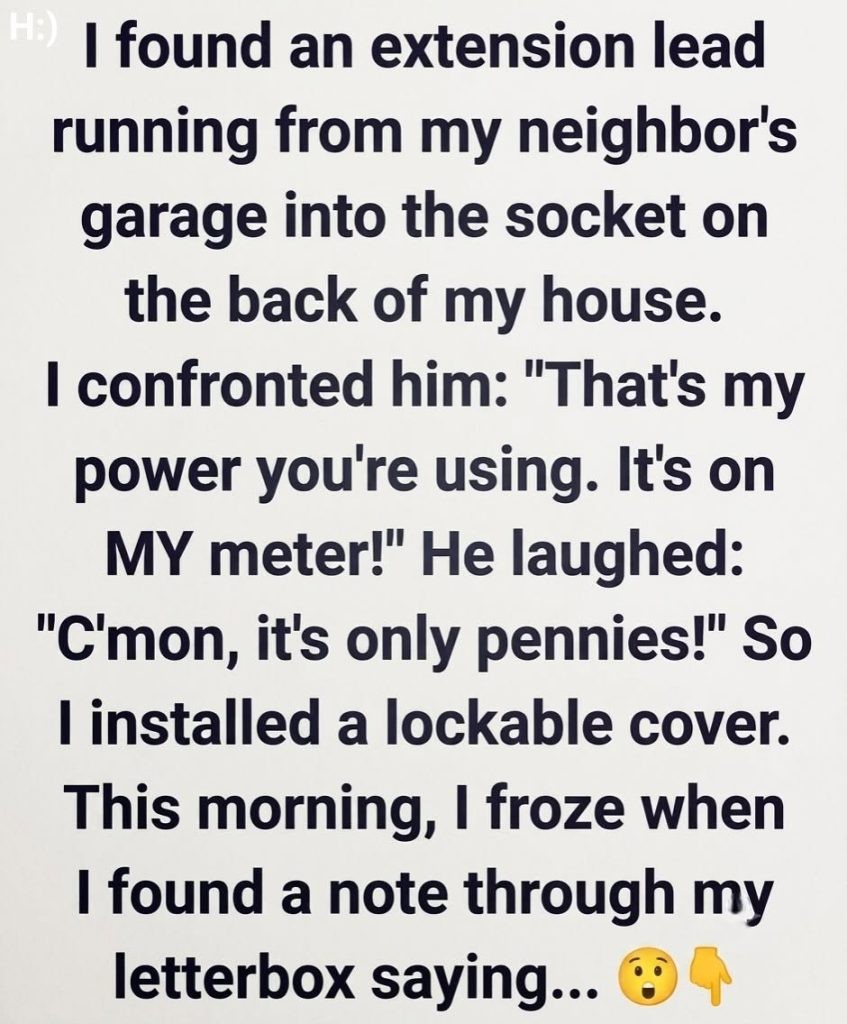
In a typical suburban yard, such a disruption presented itself: a vivid orange extension cord, one end plugged into an outdoor outlet, the other disappearing into a neighbor’s garage. This visual interruption was not just a matter of utility usage, but an unspoken assertion crossing previously uncharted lines. The incident, though small in scale, sparked an important conversation about the significance of boundaries and communication between neighbors.
Recognizing Boundary Crossings: A Universal Experience
The moment of discovering the extension cord was a turning point. At first glance, many homeowners might assume a mundane explanation—perhaps temporary, perhaps accidental. As the minutes passed, the realization grew more uncomfortable. The discomfort did not stem solely from the physical act of using someone’s electricity, but from the presumption embedded within it: the expectation that such an arrangement would be permissible without prior conversation.
Boundary crossings between neighbors are a widespread phenomenon. From borrowing tools without asking to parking across property lines or even planting hedges that grow into adjacent yards, the examples are endless. According to experts in community mediation, such small acts often serve as flashpoints, revealing deeper issues of respect and expectations.
The Power of Communication in Neighborhoods

Initially, there may be a strong temptation to avoid addressing minor conflicts to preserve peace. This inclination is natural—many wish to sidestep potentially awkward conversations or minor confrontations. However, ignoring small infractions can let frustration fester over time, potentially leading to larger conflicts that become much harder to resolve.
In the extension cord scenario, internal debates continued throughout the day. Should the situation be left alone for the sake of neighborly harmony, or was it necessary to establish a clear stance? Ultimately, direct yet calm communication prevailed. By addressing the matter with a neutral, matter-of-fact tone, the situation was diffused before it could escalate.
Setting Healthy Boundaries: Practical Solutions
After the initial conversation yielded only a dismissive response, a practical step was taken: installing a lockable outlet cover. This action was not a punitive measure, but a preventive one. Lockable covers are widely recommended by home improvement experts as a non-confrontational way to secure outdoor power sources and prevent unapproved use.
The response to this safeguard—a handwritten apology note—demonstrates a key principle. Most people, when confronted with the reality of their actions in a civil manner, are open to acknowledging oversights and making amends. Face-to-face follow-up conversations restore a sense of understanding, diffusing tension and paving the way for respectful coexistence.
Expert Insights: Why Boundaries Matter
Sociologists and psychologists alike emphasize that boundaries—in all kinds of relationships, and especially in neighborhoods—are essential for maintaining mutual respect, trust, and predictable routines. Boundaries are not barriers; rather, they clarify expectations and protect the autonomy of all parties involved.
According to Dr. Roberta Satow, a noted psychoanalyst and author, respecting boundaries “creates goodwill and trust,” foundations upon which healthy relationships are built. When boundaries are clearly articulated, misunderstandings can be headed off before they snowball into resentment or ongoing disputes.
Furthermore, community mediation specialists highlight the value of proactive conversations. If something about a neighbor’s behavior causes concern, addressing it sooner rather than later can prevent escalation. Such discussions should be framed calmly, positively, and with an openness to understanding the other party’s perspective.
Common Boundary Issues in Neighborhoods
The scenario described is hardly unique. Across neighborhoods worldwide, certain themes routinely emerge as catalysts for conflict or discomfort:
- Shared driveways: Issues can arise if one party parks or blocks access without communicating.
- Property lines and landscaping: Overgrown trees, hedges, or gardens that spill onto neighboring property often lead to boundary disputes.
- Noise: Persistent loud music, parties, or pets create tension if expectations are not shared.
- Shared utilities: Incidents like borrowing power, hoses, or internet connections without explicit permission highlight the need for communication.
Almost all homeowner associations and neighborhood councils list such issues among the most frequent complaints brought to mediation.
Resolving Conflict: Steps for Effective Communication
When personal boundaries are crossed, the key steps in resolution include:
- Stay Calm: Approach your neighbor calmly and without accusation. Share your observations and feelings, rather than launching into blame.
- Be Direct and Honest: Explain the specific behavior, why it poses an issue for you, and what outcome you would like. Use “I” statements to keep the focus on your perspective.
- Listen Actively: Give your neighbor a chance to explain. Sometimes, actions are unintentional or motivated by a temporary emergency.
- Work Toward Agreement: Discuss what boundaries and behaviors will be respected moving forward. Whenever possible, put new agreements in writing to avoid future misunderstandings.
These steps, recommended by organizations such as the National Conflict Resolution Center, help foster constructive discussions instead of lingering resentment.
Community and Societal Reactions
Societal attitudes towards boundaries and privacy have evolved, particularly as urbanization brings neighbors into closer proximity. The rise of neighborhood social media groups, homeowners associations, and community mediation programs underscores the growing recognition that healthy neighborhoods depend on ongoing communication.
Internationally, research shows that communities with higher social cohesion—where neighbors know each other and communicate expectations—enjoy lower rates of minor disputes and higher reported happiness. Public campaigns in places like the United Kingdom and Canada have encouraged simple gestures, such as introducing oneself to new neighbors or sharing local guidelines, to pre-empt conflicts.
The Lasting Impact of Boundaries and Clear Communication
What might have lingered as silent frustration was quickly transformed into an opportunity for mutual understanding. Installing a lockable outlet covered a practical need and sent a message: boundaries exist to serve everyone. The written apology and follow-up conversation restored a sense of trust and goodwill.
This anecdote highlights the reality that boundaries, both physical and psychological, are foundational to peaceful coexistence. Communication about those boundaries—open, honest, and respectful—ensures that when inevitable misunderstandings occur, they become foundations for connection rather than causes for conflict.
In every neighborhood, minor challenges will arise. How they are handled—not just what is done, but how it is communicated—shapes the quality of neighborly relations for years to come. Setting and respecting boundaries is not only an act of self-respect but also one of goodwill to those nearby.
Sources
Disclaimer: This content is intended for entertainment purposes only and is not based on real events.