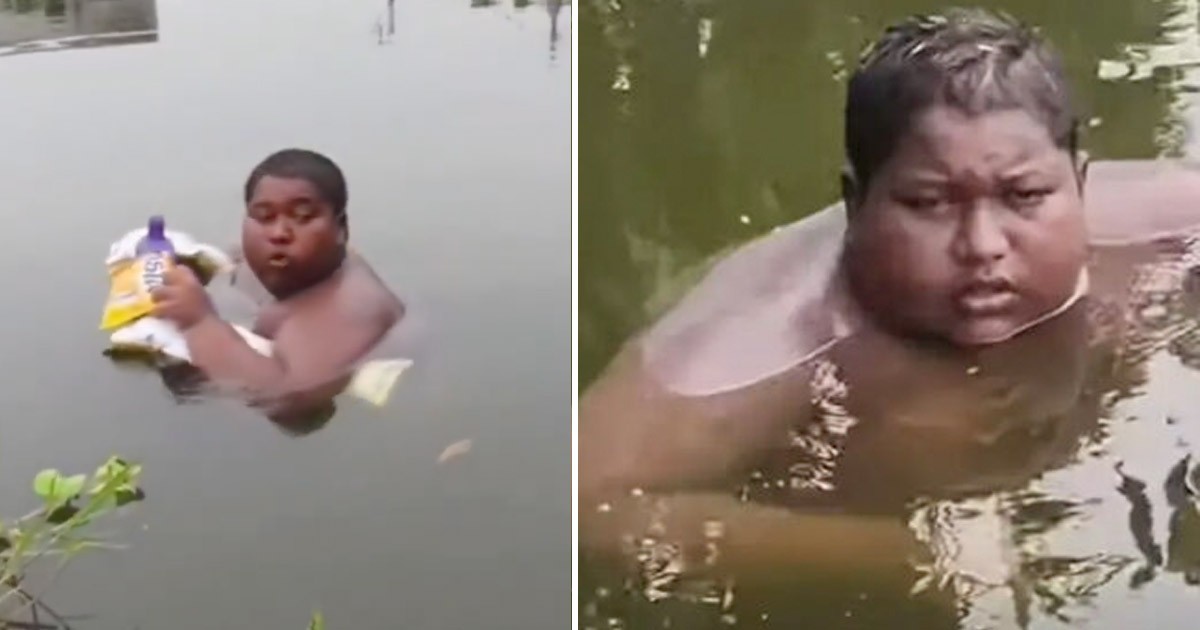
For most people, stepping out of a pond means returning to normal life.
For 16-year-old Iqbal Sheikh, it has been the opposite.
For years, the teenager from Murshidabad in West Bengal, India, has reportedly spent much of his waking time sitting in ponds and rivers because being out of the water brings on an intense burning sensation across his skin.
The cool water provides temporary relief.
So he returns to it.
Again and again.
What began as a desperate way to manage unexplained symptoms eventually became such a large part of his life that videos of the teenager sitting in a pond began circulating widely online.
Now, after years of searching for answers, Iqbal has finally been taken to Mumbai for specialist medical evaluation.
His case has attracted widespread attention, but doctors are emphasizing an important point: the exact cause of his symptoms has not yet been confirmed.
When Water Became His Only Relief
According to reports about his case, Iqbal experiences a severe burning sensation whenever he spends time out of the water.
Other reported symptoms have included dizziness and blurred vision.
The discomfort can become so difficult for him that remaining in cool water provides the relief he is looking for.
For more than five years, this unusual routine reportedly became part of his daily life.
Instead of spending his days like most teenagers, Iqbal would spend extended periods sitting in ponds around his village.
Images and videos showing him partially submerged, sometimes even eating while in the water, eventually spread across social media.
The attention brought something his family had been searching for over a long period of time:
specialist medical care.
A Long Search for a Diagnosis
Iqbal’s family had reportedly sought help from different doctors and traditional healers over the years.
But despite those efforts, they were unable to obtain a clear explanation for why his symptoms occurred.
That uncertainty can be especially difficult when symptoms are unusual.
A person may know exactly what they feel, but describing the sensation does not necessarily reveal its cause.
Burning skin, changes in temperature sensation, dizziness, visual symptoms, and relief from cooling can potentially occur in different medical conditions.
That is why doctors need to look at the complete picture rather than assuming that one unusual symptom automatically points to one diagnosis.
In Iqbal’s case, specialists in Mumbai are now investigating the problem in greater detail.
How Did He Finally Reach Mumbai?

The teenager’s story gained wider attention after videos of him spending long periods in pond water circulated online.
According to multiple reports, the case eventually came to the attention of Anant Ambani, who reportedly helped arrange Iqbal’s transfer to Mumbai for specialist treatment.
Iqbal was taken to Sir HN Reliance Foundation Hospital, where doctors are evaluating his condition and conducting further investigations.
For his family, the move represents an important opportunity.
After years of uncertainty, Iqbal is now receiving attention from specialists who can investigate possible explanations using more extensive medical testing.
The goal is not simply to give the condition a name.
It is to understand what is actually happening inside his body and determine how his symptoms can be managed.
Doctors Are Considering Erythromelalgia
One condition that has been discussed in connection with Iqbal’s symptoms is erythromelalgia.
But this distinction is important:
erythromelalgia has not been confirmed as his diagnosis.
Doctors still need to investigate the cause of his symptoms. Recent reporting has also described specialists considering other possibilities involving temperature regulation, sweating, nerve function, and pain perception.
Erythromelalgia itself is a rare disorder that can cause episodes of burning pain, increased skin temperature, and redness.
According to Cleveland Clinic, symptoms may also include swelling, itching, sweating changes, tingling, and unusual skin temperature changes.
Symptoms can come and go and may be triggered by situations that increase body temperature.
For some people, cooling provides temporary relief.
That aspect of the condition may help explain why doctors are considering it as one possible explanation for Iqbal’s experience.
But a possible explanation is not the same as a confirmed diagnosis.
Why Cooling Can Feel So Important

The relationship between temperature and symptoms is one of the most interesting aspects of erythromelalgia.
According to Cleveland Clinic, flares can be associated with increased body temperature, exercise, stress, dehydration, warm environments, and certain foods or drinks.
Cooling the affected areas can sometimes reduce symptoms.
That may sound straightforward.
But there is an important medical distinction between cooling and prolonged immersion in very cold water.
People experiencing intense burning may understandably want to cool their skin as much as possible.
However, Cleveland Clinic warns that using ice water or ice baths to manage suspected erythromelalgia can cause additional skin problems and may make the situation more difficult to manage.
This is particularly relevant to Iqbal’s story because his solution has not been a brief cool shower.
He has reportedly spent extraordinarily long periods immersed in outdoor water.
The Pond May Relieve Symptoms, But It Is Not a Treatment
The fact that water provides Iqbal with relief does not necessarily mean that remaining in a pond is treating the underlying condition.
It may simply reduce the sensation temporarily.
That distinction is important.
If a symptom disappears when the body is cooled, the underlying reason for the symptom still needs to be investigated.
Doctors also have concerns about prolonged exposure to water.
Extended immersion can affect the skin barrier and create conditions in which irritation and infections become more likely. Reports about Iqbal’s case say doctors have raised concerns about the effects of spending so much time submerged.
For Iqbal, however, the situation is complicated by the fact that the water has been his source of relief.
Taking him out of the pond without addressing the underlying symptoms would not solve the problem.
The long-term answer requires finding out why leaving the water causes such intense discomfort in the first place.
What Exactly Is Erythromelalgia?
Erythromelalgia is uncommon and can be difficult to diagnose.
The name comes from words associated with redness, limb, and pain.
The classic symptoms involve episodes in which affected skin becomes warmer, redder, and painful, with the pain often described as burning.
The condition can affect the feet and hands, although other areas may also be involved.
There is no single test that automatically confirms the condition.
Doctors generally consider a person’s symptoms, medical history, physical examination, and other test results.
Depending on the circumstances, additional investigations may be used to rule out other conditions.
Some cases have a genetic component, while others can occur in association with another underlying condition.
That is another reason why identifying the exact cause matters.
A diagnosis is not simply a label.
It can determine what doctors look for next and which treatments might be appropriate.
Why Iqbal’s Case Is So Difficult
One reason the teenager’s story has attracted so much attention is the unusual relationship between his symptoms and his environment.
The water appears to provide relief.
Dry land appears to make his symptoms much worse.
But that unusual pattern does not automatically reveal the underlying mechanism.
Doctors may need to consider several possibilities involving the skin, nerves, blood vessels, temperature regulation, sweating, and other systems.
Recent reporting from Mumbai indicates that specialists are conducting further assessments rather than treating one suspected diagnosis as established.
That approach is important.
Rare symptoms require careful evaluation because several different conditions can sometimes produce overlapping experiences.
The Risks of Spending Years in Water

There is another side to the story that is easy to overlook.
For Iqbal, remaining in water has been a way of coping with discomfort.
But prolonged exposure can create its own health concerns.
The skin normally provides an important protective barrier.
Repeated or extended exposure to water can contribute to irritation and changes in the skin’s protective function.
Doctors have therefore expressed concern about possible skin damage and infections after years of prolonged immersion.
This does not mean the water caused Iqbal’s original symptoms.
Rather, it highlights how one coping strategy can create additional challenges when it becomes part of everyday life.
That is why specialist treatment is so important.
A Teenager’s Life Put on Hold
There is also a deeply human side to Iqbal’s story.
At 16, most teenagers are thinking about school, friends, hobbies, family, and what they might want to do in the future.
Iqbal’s daily routine has instead been dominated by finding relief from an unexplained physical sensation.
For his family, the problem has not simply been finding a diagnosis.
It has also been finding access to the right kind of medical care.
Reports about his case indicate that financial difficulties made it difficult for the family to pursue prolonged specialist treatment earlier.
The attention surrounding his story has therefore changed something important.
It has connected the teenager with specialists who can investigate his condition more comprehensively.
What Happens Next?
The most important step now is diagnosis.
Doctors need to determine exactly what is causing Iqbal’s symptoms before deciding on the most appropriate long-term treatment.
If erythromelalgia is confirmed, treatment can involve different approaches depending on the cause and severity of the symptoms.
Cleveland Clinic notes that management may include avoiding individual triggers, carefully managing temperature, and using medications or other therapies when appropriate.
But those recommendations should not be interpreted as a treatment plan for Iqbal specifically.
His doctors must first determine whether erythromelalgia is actually responsible for his symptoms.
Until then, his case remains under investigation.
The Bigger Lesson Behind Iqbal’s Story
The most important part of this story may not be the unusual image of a teenager sitting in a pond.
It is what happened before that image reached the internet.
A young person experienced symptoms that were difficult to explain.
His family searched for answers.
The symptoms continued.
And eventually, a much larger audience became aware of the situation.
That attention helped connect Iqbal with specialist medical care.
His story is also a reminder that unusual symptoms can sometimes require patience and careful investigation.
A condition does not become understandable simply because it has an unusual appearance.
And a viral video cannot replace a medical evaluation.
For Iqbal, the hope is that specialist doctors can finally determine what has been causing his symptoms and find a safer, more sustainable way for him to manage them.
Beyond the Viral Images
It is easy to look at a photograph of Iqbal sitting in a pond and focus on how unusual the scene appears.
But behind that image is a teenager who has spent years trying to find relief from something he does not fully understand.
The pond is not the real mystery.
The mystery is why leaving the water causes such intense symptoms in the first place.
Now, with Iqbal receiving specialist care in Mumbai, doctors have an opportunity to investigate that question more carefully.
Whether the final diagnosis turns out to be erythromelalgia or another condition, the medical goal remains the same: understand the cause, manage the symptoms, and help him build a life that does not depend on spending most of his time in a pond.
Sometimes the most unusual stories are not really about something strange.
They are about someone who has been searching for an answer for far too long.
And for Iqbal Sheikh, that search may finally be entering a new chapter.
Sources
-
Cleveland Clinic — Erythromelalgia: symptoms, diagnosis, triggers, and treatment considerations.
-
Mumbai Mirror — Iqbal Sheikh’s medical evaluation: reporting on the specialists investigating possible causes and emphasizing that a diagnosis has not yet been confirmed.
-
Business Today — Iqbal Sheikh’s transfer to Mumbai: reporting on the teenager’s case and Anant Ambani’s involvement in arranging specialist care.
-
IBTimes UK — Iqbal Sheikh’s case: reporting on his years of seeking relief in ponds and his transfer to Mumbai.
-
Newsner — Major health update: the original source material describing Iqbal’s symptoms and specialist treatment.