Air fryers have quickly become one of the most popular appliances in modern kitchens.
They are fast, convenient, and capable of turning ordinary ingredients into crispy meals without the need for large amounts of cooking oil. From french fries and vegetables to chicken and fish, an air fryer can make dinner feel almost effortless.
But there is one simple habit worth reconsidering: leaving your air fryer plugged in when you are not using it.
That doesn’t mean every plugged-in air fryer is about to become a fire hazard. Modern appliances are designed with safety features, and serious incidents are relatively uncommon.
However, an air fryer is still a high-powered electrical appliance. A damaged cord, faulty component, overloaded outlet, poor electrical connection, or manufacturing defect can potentially create a dangerous situation.
And because problems can occur when nobody is watching, unplugging the appliance after use is a simple extra precaution.
The Problem Isn’t Just the Air Fryer
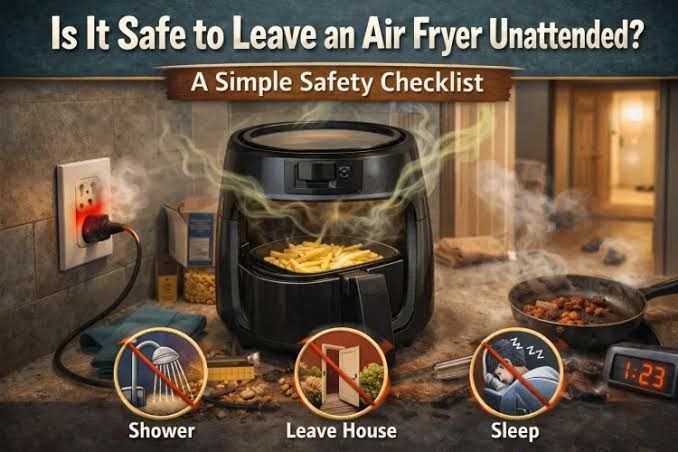
One of the biggest misconceptions about kitchen appliance safety is that the appliance itself is always the only thing that matters.
The electrical connection matters too.
Air fryers typically consume considerable electrical power while operating. That means the appliance, plug, cord, and wall outlet all need to be in good condition.
A loose connection or damaged electrical component can generate heat.
If that heat continues to build up, it can potentially damage surrounding materials or create an electrical hazard.
That’s why electrical safety experts generally recommend paying attention not only to the appliance but also to the condition of the outlet and power cord.
What Can Make an Air Fryer Dangerous?

Several problems can increase the risk associated with any high-powered kitchen appliance.
Damaged Power Cords
Inspect the cord regularly.
Look for:
-
Frayed insulation
-
Exposed wires
-
Cuts or cracks
-
Burn marks
-
Melted sections
-
Unusual discoloration
A damaged cord should not be ignored.
Continuing to use an appliance with visible electrical damage can create unnecessary risk.
If the cord is damaged, follow the manufacturer’s instructions for repair or replacement rather than attempting an improvised fix.
A Hot or Damaged Plug Is a Warning Sign

One particularly important warning sign is an unusually hot plug.
Electrical plugs may become somewhat warm during normal use depending on the appliance and electrical load.
But a plug that becomes very hot, discolored, melted, smells burnt, or shows signs of arcing should not be treated as normal.
A hot plug can indicate a poor electrical connection, an overloaded circuit, damaged wiring, or another electrical problem.
If you notice this, stop using the appliance and disconnect it safely if you can do so without touching a dangerously hot or damaged component.
If you see smoke, sparks, flames, or signs of an electrical fire, leave the area and contact emergency services.
Don’t Ignore a Burning Smell
A strange burning smell coming from your kitchen appliance deserves attention.
Sometimes the smell may simply come from food residue or grease.
But an electrical or plastic-like burning odor can be a warning sign that something is overheating.
If an air fryer suddenly smells like burning plastic or electrical components, don’t simply continue cooking and hope the smell disappears.
Turn it off and investigate once it is safe to do so.
Persistent burning odors should be evaluated by the manufacturer, a qualified technician, or another appropriate professional.
Why Unplugging Can Be a Good Habit
Unplugging an air fryer after use isn’t necessarily required by every manufacturer under normal conditions.
However, it can be a simple precaution.
When an appliance is unplugged, it is no longer connected to the household electrical supply.
That eliminates the possibility of certain electrical faults occurring while the appliance is unattended.
This is particularly sensible when:
-
You’re leaving the house
-
You’re going to bed
-
The appliance has visible damage
-
The outlet or plug feels unusually hot
-
You notice unusual smells or sounds
-
The appliance has recently malfunctioned
The goal isn’t to panic about every kitchen appliance.
It’s simply to avoid leaving potentially faulty electrical equipment connected to power when nobody is around.
Don’t Use an Extension Cord Unless the Manufacturer Allows It
Another important consideration is how the air fryer is connected to the electrical system.
People sometimes use extension cords or power strips because the kitchen outlet isn’t conveniently located.
However, high-powered appliances can place substantial demands on electrical circuits.
Using an unsuitable extension cord or power strip can create overheating or other electrical problems.
Always follow the air fryer’s manufacturer’s instructions regarding electrical connections.
If the manufacturer specifically warns against extension cords or power strips, don’t use them.
When in doubt, plugging the appliance directly into an appropriate wall outlet is generally the safer approach.
Avoid Overloading the Outlet
An air fryer shouldn’t necessarily share an outlet with multiple other high-powered appliances.
Kitchen appliances such as microwaves, toaster ovens, kettles, and other heating devices can draw substantial electrical power.
Running several high-demand appliances from the same circuit can overload it.
Repeatedly tripping a circuit breaker is a sign that something needs attention.
Don’t simply keep resetting the breaker without understanding why it is tripping.
If an electrical circuit repeatedly becomes overloaded, consider asking a qualified electrician to inspect the setup.
Keep Your Air Fryer Away From Flammable Materials
Air fryers generate substantial heat.
That means their location matters.
Keep the appliance on a stable, heat-resistant surface and follow the manufacturer’s clearance recommendations.
Avoid placing it directly beneath cabinets or immediately next to materials that could be damaged by heat.
Keep paper towels, curtains, kitchen towels, cardboard, and other flammable materials away from the appliance while it is operating.
Good ventilation is also important because air fryers need adequate space around their vents.
Clean the Appliance Regularly
Food residue and grease can accumulate inside kitchen appliances.
Over time, buildup can produce smoke, unpleasant odors, or other problems when exposed to high temperatures.
Regular cleaning according to the manufacturer’s instructions can help keep the appliance functioning properly.
However, never immerse an electrical air fryer or its electrical components in water unless the manufacturer specifically says that a component is designed for washing.
Always allow the appliance to cool before cleaning it.
Never Leave an Air Fryer Cooking Unattended
One of the most important rules is surprisingly simple:
Don’t leave a cooking air fryer unattended for extended periods.
Even if you’ve used the appliance hundreds of times without a problem, an electrical or mechanical fault can occur unexpectedly.
If something goes wrong while you’re nearby, you have a much better chance of noticing smoke, unusual noises, burning smells, or other warning signs quickly.
When you’re asleep or away from home, you may not notice a developing problem until it has become much more serious.
What About Air Fryers That Are Turned Off but Still Plugged In?
This is where things can become confusing.
Many appliances consume little or no meaningful power when switched off, depending on their design.
Simply being plugged in doesn’t mean an air fryer is continuously heating.
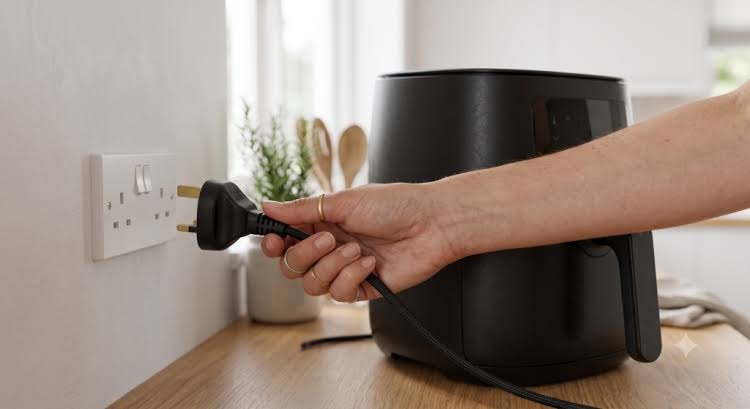
The important point is that the appliance remains electrically connected to the household supply.
If the appliance, plug, cable, or internal components develop a fault, electrical current can still be involved.
Unplugging the appliance removes that connection.
For that reason, some people choose to make unplugging their air fryer part of their normal kitchen routine.
It’s a small habit that costs almost nothing.
What Should You Do If Your Air Fryer Starts Smoking?
If an air fryer begins producing unexpected smoke, don’t panic.
First, stop the appliance if it is safe to do so.
If you can safely disconnect it from the power supply without touching damaged or overheated electrical components, do so.
Do not continue using an appliance that is smoking or showing obvious signs of electrical failure.
If there are flames or a suspected electrical fire, do not throw water onto it.
Leave the area and contact emergency services.
Only use an appropriate fire extinguisher if you know how to use it safely and have a clear escape route.
Don’t Ignore Recalls
Manufacturers sometimes discover defects after an appliance has already been sold.
For this reason, it’s worth keeping track of your appliance’s brand, model number, and purchase information.
If you hear about a safety recall, check whether your specific model is affected.
Never assume that a recall doesn’t apply simply because your appliance appears to be working normally.
A defective component may not produce obvious symptoms before failure.
A Simple Air Fryer Safety Checklist
Before using your air fryer, take a few seconds to check:
The cord:
Is it intact and free from damage?
The plug:
Is it clean and undamaged?
The outlet:
Does it look normal, without discoloration or burn marks?
The smell:
Does the appliance smell normal when operating?
The surface:
Is the air fryer sitting securely on a suitable surface?
The ventilation:
Are the vents unobstructed?
The surroundings:
Are towels, paper, curtains, and other flammable materials safely away?
The appliance:
Has it recently behaved unusually?
If something doesn’t look or smell right, don’t take the risk.
Should You Unplug Your Air Fryer Every Time?
There is no need to believe that every air fryer is dangerous simply because it remains plugged into an outlet.
Millions of people use these appliances safely.
Nevertheless, unplugging an air fryer after use is a reasonable precaution, particularly before going to bed or leaving home.
It’s especially important if you have noticed signs such as overheating, a damaged cord, a hot plug, unusual smells, sparks, smoke, or repeated electrical problems.
In those situations, the answer isn’t simply to unplug the appliance and continue using it later.
The appliance should be inspected, repaired, replaced, or otherwise addressed according to the manufacturer’s safety guidance.
The Small Habit That Can Give You Peace of Mind
Air fryers are incredibly convenient, but convenience shouldn’t replace basic electrical safety.
You don’t need to be afraid of your kitchen appliances.
Instead, develop a few simple habits:
Use the appliance according to its instructions.
Keep the cord and plug in good condition.
Avoid overloaded outlets.
Keep the appliance away from flammable materials.
Clean it regularly.
Never ignore smoke, burning smells, sparks, or unusual heat.
And when you’re finished using it, consider unplugging it—especially if you’re going to sleep or leave the house.
It takes only a few seconds.
That small habit won’t eliminate every possible household electrical hazard, but it can remove one unnecessary connection between an unattended appliance and your home’s electrical supply.
Sometimes the simplest safety precautions are the ones worth making a habit.