There is something quietly fascinating about reaching your 80s.
For some people, it may begin with a morning walk around the neighborhood. For others, it might be a phone call from an old friend, tending to a garden, preparing breakfast for a loved one, or simply sitting down with a favorite book.
At this stage of life, the number itself may become less important than the feeling of everyday life.
What does a normal morning look like?
Is there something to look forward to?
Are there people to talk to?
Can you still move comfortably enough to do the things you enjoy?
And perhaps most importantly, does life still feel meaningful?
Aging does not follow a single path. Some people remain active and socially engaged well into their 80s, while others naturally become quieter as their circumstances change. Health, genetics, environment, financial circumstances, relationships, and lifelong habits can all influence how someone experiences later life.
There is no single secret to aging well.
But research increasingly points toward several factors that may help support a satisfying and independent life as people grow older.
Among them are purpose, social connection, physical activity, and the ability to maintain meaningful routines.
Growing Older Is Not the Same for Everyone

Two people can reach the same age while experiencing life in completely different ways.
One 85-year-old may still enjoy regular walks, meet friends every week, travel occasionally, and participate in community activities.
Another may prefer a quieter lifestyle at home.
Neither experience automatically represents a better way to age.
Aging is influenced by many interacting factors. Genetics may play a role, but so do lifestyle, access to healthcare, social circumstances, physical activity, nutrition, sleep, and the environment in which someone lives.
This is why searching for one “magic” explanation for healthy aging can be misleading.
There is no single gene, food, exercise, or daily ritual that guarantees a particular outcome.
Instead, aging well often appears to involve many small factors working together over a long period.
And some of those factors are surprisingly simple.
Having a Reason to Wake Up in the Morning
One of the most interesting ideas associated with healthy aging is purpose.
During working years, purpose can sometimes come automatically.
There is a job to attend.
Children may need attention.
Bills need to be managed.
Projects need to be completed.
There are deadlines, responsibilities, and countless reasons to get out of bed each morning.
Later in life, some of those structures naturally disappear.
Retirement may remove a long-established professional identity. Children may become independent and create households of their own. Daily responsibilities may become less demanding.
For some people, this creates an unexpected question:
“What am I doing this for?”
Having something meaningful to look forward to can help create structure and motivation.
Purpose does not have to involve a major mission.
It can be remarkably ordinary.
A person may care for plants.
They may volunteer.
They may look forward to meeting friends for coffee.
They may enjoy cooking.
They may spend time with grandchildren.
They may read, paint, sew, walk, teach, write, or care for a pet.
The activity itself matters less than the sense that it has personal meaning.
What Does Purpose Mean in Later Life?

Purpose is sometimes misunderstood as having one grand ambition.
But purpose can be much smaller and more personal.
For one person, it might be helping a neighbor.
For another, it could be maintaining a garden that has been part of the family for decades.
Someone else might find meaning in preparing Sunday meals for relatives.
These activities may not look impressive from the outside.
Yet they can provide structure and a reason to remain engaged with everyday life.
Research has associated a stronger sense of purpose with several positive health and psychological outcomes in older adults. Some longitudinal studies have also found associations between purpose in life and longer survival.
However, these findings should be interpreted carefully.
An association does not prove that purpose alone causes someone to live longer.
People with a strong sense of purpose may also differ in other ways, such as their social relationships, health behaviors, financial circumstances, or access to resources.
Still, the broader idea is compelling.
Feeling that your life has meaning may be an important part of psychological well-being at any age.
The Japanese Idea of Ikigai

The Japanese concept of ikigai is often translated loosely as “reason for being” or something that gives life meaning.
In popular discussions about longevity, ikigai has become closely associated with Okinawa and other regions known for relatively high longevity.
However, the relationship between ikigai and longevity is more nuanced than many simplified articles suggest.
Ikigai can refer to the things that make life feel worthwhile, meaningful, or enjoyable. It does not necessarily mean finding a single perfect career or life mission.
For an older person, ikigai might come from family, friendships, hobbies, community involvement, creativity, or everyday routines.
That interpretation makes the concept particularly relevant to aging.
A meaningful life does not have to become smaller simply because someone’s professional life has ended.
Instead, purpose can change form.
A career may become mentorship.
Parenting may become grandparenting.
A lifelong hobby may become more important.
A community role may become a new source of connection.
The goal is not necessarily to remain busy.
It is to remain engaged with things that matter.
Why Social Connection Becomes So Important
Imagine an older person spending an entire week without speaking to anyone outside their home.
There may be nothing obviously wrong with that day.
The house is comfortable.
There is food in the kitchen.
The television is on.
But over time, the absence of meaningful interaction can become emotionally significant.
Human beings are social creatures, and relationships remain important throughout life.
Older adults may experience changes in their social networks for many reasons. Friends may move away. Family members may become busy. Retirement can reduce daily interactions with colleagues.
Some people may also become less mobile or have fewer opportunities to participate in social activities.
This is why maintaining even modest social contact can be valuable.
A weekly phone call can matter.
A conversation with a neighbor can matter.
A regular community activity can matter.
Meeting someone for coffee can matter.
These interactions may seem small, but together they can create a sense of belonging.
The Importance of Small Social Interactions
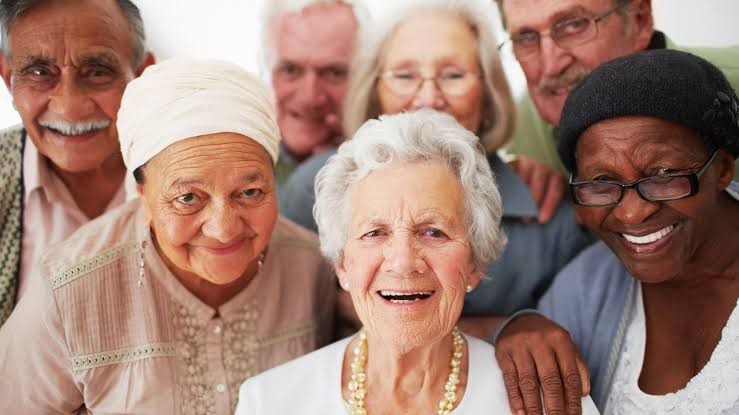
Not every social connection needs to be a deep friendship.
Sometimes a short conversation is enough to break up an otherwise quiet day.
A familiar face at a local shop.
A neighbor asking how your garden is doing.
A weekly exercise group.
A community class.
A family video call.
These small interactions can provide routine and social stimulation.
Researchers studying loneliness and social isolation have found associations between limited social connection and various health concerns in older adults.
Again, this does not mean that every person who enjoys solitude is unhealthy.
Some people genuinely prefer quiet environments and spend considerable time alone without feeling lonely.
The important distinction is between chosen solitude and unwanted isolation.
Being alone can be peaceful.
Feeling disconnected can be much more difficult.
Movement Matters More Than Perfection
Another important part of aging well is physical activity.
As people grow older, maintaining muscle strength and physical function becomes increasingly important for everyday independence.
That does not mean everyone needs an intense exercise program.
For many older adults, appropriate movement can be surprisingly simple.
Walking is one example.
Gentle strength exercises, balance activities, stretching, swimming, dancing, gardening, and other forms of movement may also be useful depending on a person’s abilities and health.
The best activity is often one that someone can perform safely and consistently.
A person does not need to become an athlete at 80.
The goal is to maintain as much comfortable movement and functional ability as possible.
Why Strength Becomes Especially Valuable With Age
Muscle mass and strength naturally tend to change with aging.
This can affect everyday tasks such as standing from a chair, carrying groceries, climbing stairs, or walking longer distances.
Regular physical activity can help support muscle function and physical capacity.
Strength-focused activities may be particularly useful because they challenge muscles in ways ordinary daily movement may not always provide.
However, exercise should be adapted to the individual’s condition.
Someone who has been inactive for years may need to begin gradually.
Anyone with significant health concerns or uncertainty about what activities are appropriate should discuss exercise plans with a qualified healthcare professional.
The goal should always be sustainable movement rather than competition.
Sleep, Routine, and the Rhythm of Everyday Life
Purpose and social connection are not the only pieces of the puzzle.
Daily routines can also provide stability.
Going to bed and waking at relatively consistent times, eating regular meals, getting daylight exposure, staying active during the day, and maintaining social activities can all contribute to a structured lifestyle.
For an older adult, routine can make the day feel predictable without becoming boring.
A morning walk can become a small ritual.
Breakfast can become a moment to read the newspaper.
A weekly lunch with friends can become something to anticipate.
A garden can provide a reason to step outside.
These routines may appear insignificant, but they can give shape to time.
Aging Well Is About More Than Living Longer
Longevity is often measured in years.
But years alone do not tell the whole story.
Many people care not only about how long they live but also about how they experience those years.
Can they participate in activities they enjoy?
Can they maintain meaningful relationships?
Can they make everyday decisions for themselves?
Can they continue learning?
Can they laugh with friends and family?
Can they wake up with something to look forward to?
These questions shift the conversation from simply extending lifespan toward supporting quality of life.
That distinction is important.
Aging well is not about trying to remain young forever.
It is about adapting to change while preserving as much independence, connection, and meaning as possible.
There Is No Perfect Formula for Growing Older
It is tempting to search for a universal formula.
Eat this food.
Follow this routine.
Walk this many steps.
Think positively.
Move every morning.
But human aging is far too complicated for one checklist.
What works beautifully for one person may not suit another.
Someone with limited mobility may need different activities.
Someone who loves social gatherings may thrive in a busy community.
Another person may prefer a small circle of close friends.
Some people find purpose through family.
Others find it through creativity, learning, volunteering, spirituality, nature, or personal projects.
There is no requirement to follow someone else’s version of a meaningful life.
The Small Things May Become the Big Things
Perhaps one of the most encouraging lessons about aging is that meaning does not have to be dramatic.
A person does not need to start a major organization at 82.
They do not need to travel around the world.
They do not need to achieve a new professional milestone.
Sometimes purpose is simply making breakfast for someone you love.
Sometimes it is watering the flowers.
Sometimes it is calling an old friend.
Sometimes it is taking a slow walk and noticing the changing seasons.
The value comes from the meaning the activity has for the individual.
As life changes, priorities can change with it.
What once seemed ordinary can become deeply valuable.
A Different Way to Think About Your 80s
Reaching your 80s does not have to be viewed simply as a number on a calendar.
It can be a stage of life in which priorities become clearer.
Some responsibilities may disappear.
Others may emerge.
Friendships may change.
Family relationships may evolve.
Physical abilities may require greater attention.
But there can also be new opportunities to focus on what genuinely matters.
Purpose can provide direction.
Relationships can provide connection.
Movement can support independence.
Routine can provide structure.
And curiosity can keep the mind engaged with the world.
None of these guarantees a particular health outcome.
Together, however, they offer a useful framework for thinking about what it means to age well.
The Real Meaning of Aging Well
Perhaps the most important lesson is that aging well does not mean avoiding every challenge.
It means finding ways to continue participating in life despite change.
There may be quieter mornings and slower walks.
There may be new limitations to accept.
There may also be more time for conversations, hobbies, family, reflection, and experiences that were difficult to fit into earlier years.
Growing older is not simply about adding years.
It is about continuing to give those years meaning.
A phone call can matter.
A morning walk can matter.
A favorite hobby can matter.
A weekly visit can matter.
A reason to get dressed, step outside, and begin another day can matter.
Human beings have always been curious about longevity. We want to know why some people seem to remain energetic and engaged deep into old age while others experience a very different journey.
Science can help us understand some of the factors involved, but there is no single answer.
Perhaps that is part of what makes aging so fascinating.
The healthiest and most meaningful life is rarely created by one extraordinary secret. More often, it is built quietly through relationships, movement, purpose, routines, curiosity, and countless small choices repeated over time.
And sometimes, the most important question is not simply, “How long will I live?”
It is, “What will make tomorrow worth waking up for?”