Sometimes, the most memorable discoveries happen in the most ordinary places.
For me, it happened in the kitchen while I was cooking with my mother-in-law.
We were preparing her beloved goulash, a recipe she had perfected over many years. The kitchen smelled warm and familiar, and every ingredient seemed to have its own place in the process. She moved confidently from one step to another, adding ingredients almost instinctively.
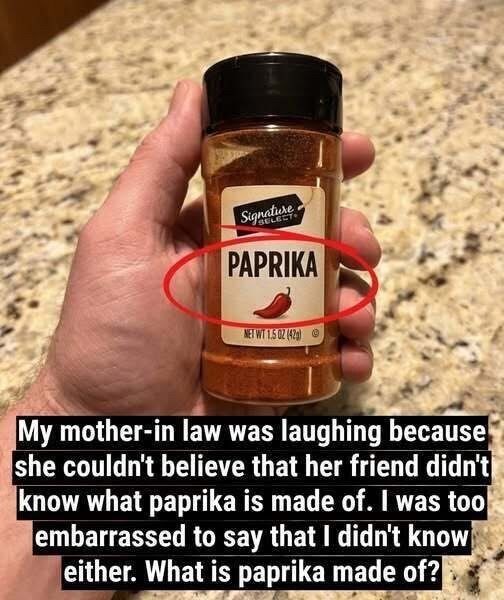
Then I reached for the paprika.
I paused for a moment and looked at the bright red powder sitting in the small container.
“What is paprika actually made from?” I asked casually. “Is it made from a root? Bark? A seed?”
My mother-in-law stopped what she was doing and looked at me with an amused smile.
“Paprika is just ground-up red peppers.”
I blinked.
That was it?
Red peppers.
After years of using paprika in soups, scrambled eggs, roasted vegetables, sauces, and countless other dishes, I had somehow never stopped to think about where it came from.
I had imagined that such a colorful and distinctive spice must come from something complicated or unusual.
Instead, the answer was remarkably simple.
Paprika begins with peppers.
That small discovery changed the way I looked at one of the most familiar spices in my kitchen.
What Is Paprika Made From?
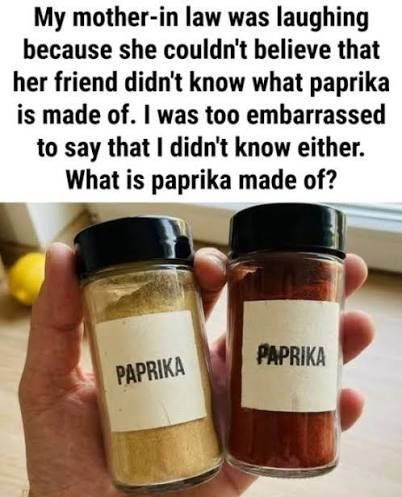
Paprika is a powdered spice made from dried peppers belonging to the Capsicum family.
Depending on the variety of pepper used and how it is processed, paprika can have different colors, aromas, and levels of heat.
This is an important distinction because not every paprika tastes the same.
Some varieties are mild and slightly sweet, while others can have a noticeable warmth. Some are valued primarily for their vivid red color, while smoked paprika is known for its distinctive smoky aroma.
The peppers are generally dried before being ground into a fine powder.
The result is the familiar red-orange spice that appears in kitchens around the world.
So when you sprinkle paprika over roasted potatoes or stir it into a stew, you are essentially using dried peppers that have been transformed into a convenient seasoning.
It sounds simple, but the transformation is part of what makes paprika so interesting.
Why Did I Never Know Where Paprika Came From?
Looking back, my assumption seems almost funny.
Perhaps it was because paprika looks so different from a fresh pepper.
A whole red pepper is colorful, recognizable, and obviously a vegetable or fruit used in cooking. Paprika, on the other hand, sits quietly in a spice jar as a fine red powder.
Once an ingredient has been processed, it can become difficult to recognize its original form.
This happens with many foods.
We may know flour without thinking about wheat, olive oil without picturing olives, or vanilla extract without considering the plant it comes from.
Paprika simply happened to be one of those ingredients I had never questioned.
The conversation with my mother-in-law reminded me how easy it is to overlook the stories behind everyday foods.
The Difference Between Sweet, Hot, and Smoked Paprika
One of the most interesting things I learned afterward was that “paprika” does not describe a single flavor.
Different varieties can taste remarkably different.
Sweet paprika is generally mild and is often used to add color and a gentle pepper flavor. It is especially useful in dishes where you want warmth and color without making the food noticeably spicy.
Hot paprika contains peppers with more heat. The exact level can vary depending on the peppers used and the production method.
Then there is smoked paprika.
Smoked paprika is known for its deep aroma because the peppers are dried or processed in a way that gives them a smoky character. It can add a richer flavor to dishes without requiring a long list of additional seasonings.
This variety can be especially enjoyable in roasted vegetables, soups, stews, beans, and other savory dishes.
The differences demonstrate how much flavor can come from the choice of pepper and the way it is processed.
Paprika and Hungarian Cooking
Paprika has become strongly associated with Hungarian cuisine, and its cultural importance goes far beyond simply adding a red color to food.
It plays a major role in traditional Hungarian dishes, including goulash and other hearty preparations.
That made my mother-in-law’s recipe feel even more meaningful.
The spice in front of me was not simply another item from the pantry. It was connected to culinary traditions that have developed over generations.
Paprika became particularly important in Hungarian cooking after peppers were introduced to Europe from the Americas following the Columbian exchange.
Over time, peppers adapted to European agriculture and became deeply connected with regional food traditions.
Hungary eventually developed a particularly strong paprika culture, with different growing regions and styles becoming associated with particular characteristics.
Today, Hungarian paprika is recognized around the world as an important part of the country’s culinary identity.
How Peppers Become Paprika

The process of making paprika is relatively straightforward, but it requires careful handling.
Fresh peppers contain a substantial amount of water. To transform them into a stable powdered spice, they must first be dried.
Drying removes moisture and concentrates many of the flavors and pigments found in the peppers.
Once sufficiently dried, the peppers can be ground into powder.
The final characteristics depend on several factors, including the pepper variety, growing conditions, drying process, and degree of grinding.
Some producers may remove portions of the pepper before grinding, while others process different parts together.
These choices can influence the final flavor, color, and heat.
It is fascinating to think that the small amount of powder we sprinkle onto dinner represents an entire process of growing, harvesting, drying, and grinding peppers.
Why Is Paprika So Red?
The striking color of paprika comes from natural pigments found in peppers.
One important group of compounds responsible for the red coloration is carotenoids.
Carotenoids are naturally occurring pigments found in many colorful fruits and vegetables.
Some carotenoids also have nutritional significance.
For example, beta-carotene can be converted by the body into vitamin A, an essential nutrient involved in normal vision and immune function.
However, it is important not to exaggerate the nutritional role of paprika.
Paprika is typically consumed in relatively small quantities. A sprinkle can contribute nutrients and plant compounds to a meal, but it should not be viewed as a replacement for a balanced diet.
Its greatest everyday contribution may simply be the flavor, aroma, and color it brings to food.
Does Paprika Contain Capsaicin?
This depends on the variety.
Capsaicin is the compound primarily responsible for the characteristic heat associated with chili peppers.
Sweet paprika generally contains very little capsaicin compared with hotter pepper varieties, while hot paprika can contain more.
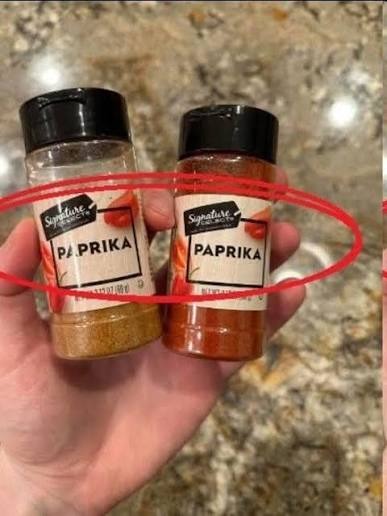
This explains why two containers labeled “paprika” can produce very different sensations.
One might add mostly color and mild pepper flavor, while another introduces noticeable warmth.
Capsaicin has been studied by researchers for various biological effects, but it is important to distinguish scientific research from strong health claims.
Research into capsaicin is ongoing, and findings from laboratory or controlled studies do not automatically mean that eating ordinary amounts of paprika will produce a particular health outcome.
For everyday cooking, the most reliable reason to use paprika is simple: it makes food more flavorful and visually appealing.
Paprika Contains Plant Compounds With Antioxidant Properties
Paprika contains various naturally occurring plant compounds, including carotenoids.
Some of these compounds have antioxidant properties.
Antioxidants are substances that can help protect cells from oxidative processes. Many fruits, vegetables, herbs, and spices contain naturally occurring antioxidant compounds.
This is one reason colorful plant foods are often included as part of a varied diet.
However, nutrition is rarely about one ingredient.
A healthy eating pattern generally depends on consuming a wide variety of foods that provide different nutrients and beneficial plant compounds.
So while paprika can contribute to the overall nutritional quality of a meal, it is best appreciated as one small part of a diverse diet.
More Than a Spice: Paprika as a Cultural Ingredient

The longer I thought about my mother-in-law’s answer, the more interesting it became.
Paprika is an example of how food can carry culture across generations.
A recipe may be written on paper, but much of its meaning comes from the people who prepare it.
Perhaps a grandmother adds paprika without measuring.
Perhaps a parent teaches a child how much to use by sight.
Perhaps a family recipe changes slightly over time but keeps the same familiar aroma.
These small traditions can become powerful reminders of home.
Food is rarely just about nutrition.
It can also represent memory, identity, celebration, geography, and family history.
That is why a simple question about a spice unexpectedly became a memorable moment for me.
The Beauty of Ordinary Ingredients
We often search for extraordinary discoveries.
We look for unusual ingredients, rare foods, complicated recipes, and hidden culinary secrets.
But sometimes the most satisfying discoveries are right in front of us.
Paprika is a perfect example.
It begins with something as familiar as a pepper.
Through drying and grinding, that ordinary ingredient becomes a versatile spice capable of transforming the appearance and character of a dish.
Its color can make a simple meal look more inviting.
Its flavor can add warmth and depth.
Its aroma can remind someone of a particular recipe or place.
And its history connects everyday cooking with centuries of agricultural and culinary traditions.
That is quite a story for something sitting inside a small spice jar.
What I Think About Every Time I Reach for the Paprika
Now, whenever I open that little red container, I remember the conversation with my mother-in-law.
I no longer see paprika as some mysterious ingredient whose origins I never considered.
I see dried peppers.
But I also see something more.
I think about the journey from fresh pepper to powdered spice. I think about Hungarian cooking and the generations of cooks who turned paprika into an important part of their culinary traditions.
Most of all, I think about how easily we can overlook the stories hidden inside ordinary things.
A spice does not need to be rare to be interesting.
A recipe does not need to be complicated to have history.
And a simple question in the kitchen can sometimes lead to a surprisingly meaningful discovery.
A Simple Spice With a Bigger Story
My mother-in-law’s answer lasted only a few seconds.
“Paprika is just ground-up red peppers.”
Yet those few words made me look at a familiar ingredient differently.
Paprika’s story combines agriculture, food science, cultural tradition, and everyday cooking. Its varieties demonstrate how different peppers and processing methods can create different flavors and aromas.
Its nutritional profile adds another layer of interest, particularly because it contains naturally occurring plant compounds such as carotenoids.
But perhaps its greatest value is simpler.
Paprika makes ordinary food more enjoyable.
And sometimes, that is enough.
We spend so much time looking for something extraordinary that we forget how fascinating ordinary life can be. A red powder in a kitchen cupboard can connect us to plants, history, science, tradition, and family memories.
That may be the real surprise.
The next time you reach for paprika, take a moment to remember where it began.
Not in some mysterious laboratory or exotic ingredient, but with a humble pepper, carefully dried and ground.
Sometimes the smallest questions lead to the most delightful discoveries.
Sources
National Center for Home Food Preservation, University of Georgia: information on food preservation and drying practices. National Center for Home Food Preservation
National Human Genome Research Institute, for general information about genetics and human biology. National Human Genome Research Institute
U.S. Department of Agriculture FoodData Central, for nutritional information about peppers and spices. USDA FoodData Central
Encyclopaedia Britannica, background information on paprika, peppers, and culinary history. Encyclopaedia Britannica
National Institutes of Health Office of Dietary Supplements, general nutrition information about vitamin A and its role in normal vision and immune function. NIH Office of Dietary Supplements